Mobile moves closer to passenger rail service to New Orleans with new funding
New federal and regional funding moved Mobile closer to restoring passenger rail service to New Orleans, with a $33 million grant boosting the Gulf Coast.
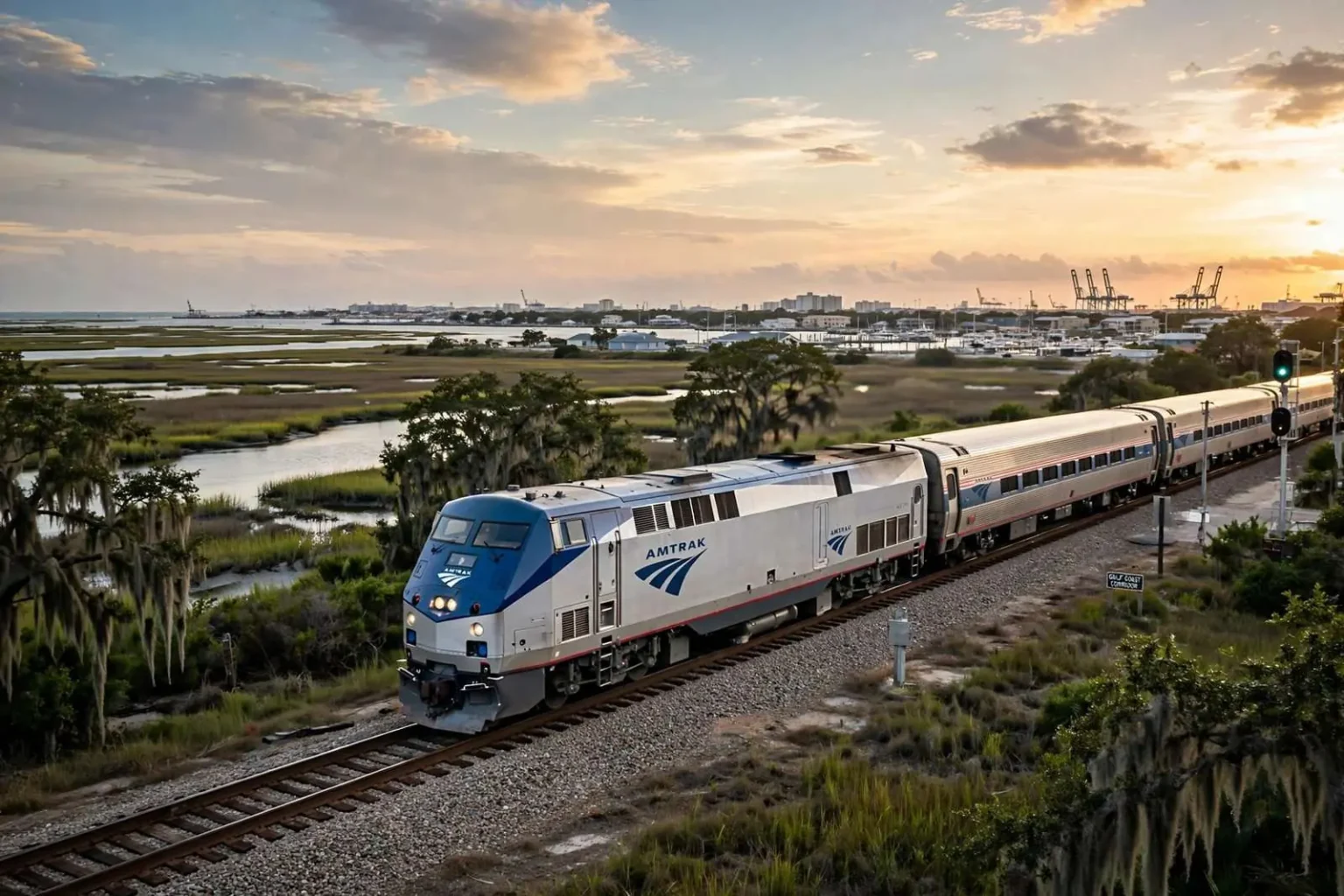
BILOXI, Miss. — Mobile moved a step closer to regaining passenger rail service to New Orleans, with new federal and regional funding pushing a long-stalled project toward reality. U.S. Sen. Roger Wicker of Mississippi secured a $33 million grant for the effort, and combined with $33 million committed by the Southern Rail Commission, the total exceeds the $60 million estimate needed for rail improvements along the Gulf Coast corridor.
If the work stays on track, advocates said passenger trains could be running between Mobile and New Orleans within about 24 months, restoring a link that had been absent for years. The route would reconnect Mobile — Alabama’s only major port city — to the national passenger network at a time when Gulf Coast communities have been campaigning for the return of the service Amtrak discontinued after Hurricane Katrina.
The funding package represents the most concrete progress the corridor has seen since passenger service ended. With roughly $66 million now committed against a $60 million construction estimate, the project has the money it needs to upgrade track, signals and stations along the route that runs through Bay St. Louis, Gulfport, Biloxi and Pascagoula before reaching Mobile.
How the Gulf Coast lost its trains
Passenger rail along the Gulf Coast ended in August 2005, when Hurricane Katrina devastated the region and destroyed much of the track infrastructure east of New Orleans. Amtrak’s Sunset Limited, which had carried passengers between Orlando and Los Angeles with stops in Mobile, Biloxi and Gulfport, never resumed east of New Orleans after the storm. Track was repaired — freight trains returned quickly — but the passenger service did not, and for the years that followed, the Gulf Coast remained one of the largest regions in the country without passenger rail.
The loss was more than symbolic. The corridor’s cities — New Orleans, Slidell, Bay St. Louis, Gulfport, Biloxi, Pascagoula and Mobile — had depended on the trains to connect residents to medical care, colleges, airports and family visits without a long drive. Restoring service became a regional cause, championed by mayors, chambers of commerce and the Southern Rail Commission, the federally chartered body created to promote passenger rail across the Gulf South states of Louisiana, Mississippi and Alabama.
The money and the plan
Wicker’s $33 million grant, secured through federal channels with the senior Mississippi senator’s clout on the Appropriations Committee, matched the $33 million the Southern Rail Commission had already committed, pushing the combined total past the $60 million estimated cost of the corridor improvements. Those improvements focus on the track and signal upgrades required to let passenger trains share rails safely and reliably with the heavy freight traffic that now owns the line.
The project’s centerpiece has long been an agreement with the freight railroad that controls the track — the same kind of arrangement that governs passenger operations elsewhere in the country, where Amtrak trains run over freight-owned rails under negotiated terms covering scheduling, dispatching and liability. The $60 million in corridor work addresses the physical infrastructure: passing sidings that let trains meet, signal improvements that permit reliable passenger speeds, and station readiness in the cities along the route.
With funding in place above the cost estimate, the project’s remaining steps are administrative and contractual — finalizing the operating agreement, completing engineering work and scheduling construction. Advocates’ 24-month timeline for trains running between Mobile and New Orleans reflects that phase: once agreements are signed, the physical work is measured in months rather than years.
What the restored service would mean for Mobile
For Mobile, the return of passenger rail would restore a connection the city has lacked since 2005 — and mark the first scheduled passenger service at the city’s historic rail station in more than a decade. Mobile’s dependence on New Orleans runs deep: the two ports anchor the central Gulf Coast’s economy, and thousands of travelers move between them for cruises — New Orleans is one of the nation’s busiest cruise home ports — for medical care, for university visits and for connections to Amtrak’s national network, which reaches Chicago, Atlanta and the West Coast from the New Orleans hub.
A two-hour train ride would also serve the corridor’s own traffic. The Interstate 10 drive between Mobile and New Orleans is among the region’s most congested — roughly 150 miles that routinely stretch to three hours or more, with bridge work on the I-10 twin spans east of New Orleans adding delays for years. A passenger train running the route would offer an alternative to one of the Gulf Coast’s least reliable drives, and advocates have pointed to hurricane evacuation as another argument: when I-10 jams with storm traffic, rail capacity becomes part of the region’s safety planning.
The economic case extends to tourism. Mississippi’s coastal casinos, beaches and seafood towns — Bay St. Louis, Long Beach, Gulfport, Biloxi, Ocean Springs — have marketed themselves to drive-in visitors for two decades, and a rail stop in each would let visitors come and go without a car. Mobile’s own tourism push, built on its history as the birthplace of Mardi Gras in America and its expanding downtown entertainment district, would gain the same access from the west.
The Southern Rail Commission’s role
The Southern Rail Commission has been the institutional engine behind the restoration campaign. Chartered by Congress and funded through federal grants, the commission brings together appointees from Louisiana, Mississippi and Alabama — governors’ offices, state legislators and citizen rail advocates — to plan and promote passenger service across the region. Its work on the Gulf Coast corridor has included ridership studies, engineering assessments and the unglamorous negotiation of the operating terms a restored service would run under.
The commission’s $33 million commitment to the corridor reflected years of budget discipline and federal support, and its partnership with Wicker — whose Senate positions made him one of the most influential voices on transportation funding — produced the two-pot funding structure now in place. Mississippi’s congressional delegation has backed the project steadily, and Alabama’s officials, while later to the effort, have supported Mobile’s inclusion as the route’s eastern terminus.
What riders can expect
The service that advocates describe would resemble the regional trains that operate elsewhere in the Gulf South: scheduled daily round trips, stations in the downtowns along the route, and ticketing through Amtrak’s national system. Travel time between Mobile and New Orleans on the restored corridor has been projected at roughly two hours, with intermediate stops giving the coastal cities direct access to both endpoints.
Details of schedules, fares and equipment remained to be finalized as the project moved from funding to implementation, and the 24-month timeline advocates cited depends on the work staying on track — the operating agreement signed, the construction completed and the route certified for passenger service. But for the first time since Katrina, the Gulf Coast corridor had its funding in hand: $33 million from the federal government through Wicker, $33 million from the Southern Rail Commission, and a total that exceeded the $60 million the improvements were estimated to cost.
If the trains roll within two years as advocates hope, Mobile will regain a link to New Orleans that generations of Gulf Coast travelers once took for granted — a connection lost to a hurricane, campaigned for across three states, and finally funded for restoration.
Mobile’s rail history
Mobile’s connection to passenger rail is long and storied. The city was a rail terminus almost from the industry’s beginnings in the South, with lines radiating toward Montgomery, New Orleans and the coast, and its Union Station — the brick depot that still stands downtown near the government plaza — hosted the streamliners that carried travelers through the mid-20th century. Amtrak’s later Gulf Coast service kept the station alive until Katrina, and the building has since served other civic uses while awaiting the trains’ return.
Restoring service would put Mobile back on the national passenger map for the first time in the post-Katrina era. East of Mobile, the Sunset Limited continues to run between New Orleans and Los Angeles on its western legs, which means the Gulf Coast corridor is the missing eastern link — the gap between Mobile and the national network. Its restoration would leave Mobile connected not just to New Orleans but, through connections there, to destinations across the country.
Local leaders have argued the timing favors the project. Mobile’s downtown has been revitalized over the past two decades — the cruise terminal, the entertainment district, the revitalized waterfront — and a rail station serving visitors arriving without cars fits the city’s push to become a walkable destination. The route’s terminus would deliver passengers directly into that district, something no highway improvement can do.
The corridor’s other stakeholders
The freight railroad’s cooperation is the pivot on which the project turns. Modern passenger restorations succeed when the freight host sees a benefit or a fair deal — track payments, capacity investments and liability terms that reflect who owns and who operates. The $66 million in corridor funding gives the negotiations substance: money for the physical improvements that expand capacity benefits freight operations too, and the agreement structure lets both railroads share the upgraded infrastructure.
The coastal cities along the route have been the project’s most consistent advocates. Mayors from Pascagoula to Bay St. Louis have lobbied for stations in their downtowns, arguing that rail access differentiates their communities and connects their residents to jobs and hospitals. Gulfport and Biloxi, the corridor’s largest markets between Mobile and New Orleans, anchor the ridership projections that underpin the service plan, and their casino-and-tourism economies give the route a steady demand base beyond daily commuters.
For now, the project stands at the point advocates have worked toward for years: funded above its estimated cost, with a two-year horizon for trains between Mobile and New Orleans. The next milestones — agreements signed, work begun, service scheduled — will determine whether that horizon holds. What is certain is the commitment: $33 million federal through Wicker, $33 million from the Southern Rail Commission, and a Gulf Coast corridor that is closer to seeing passenger trains than it has been since Hurricane Katrina severed the line in 2005.