
Mobile police identify man killed in East Rue Maison shooting
The Mobile Police Department has identified the man killed in a shooting on East Rue Maison in Mobile, Alabama. The investigation remains active.
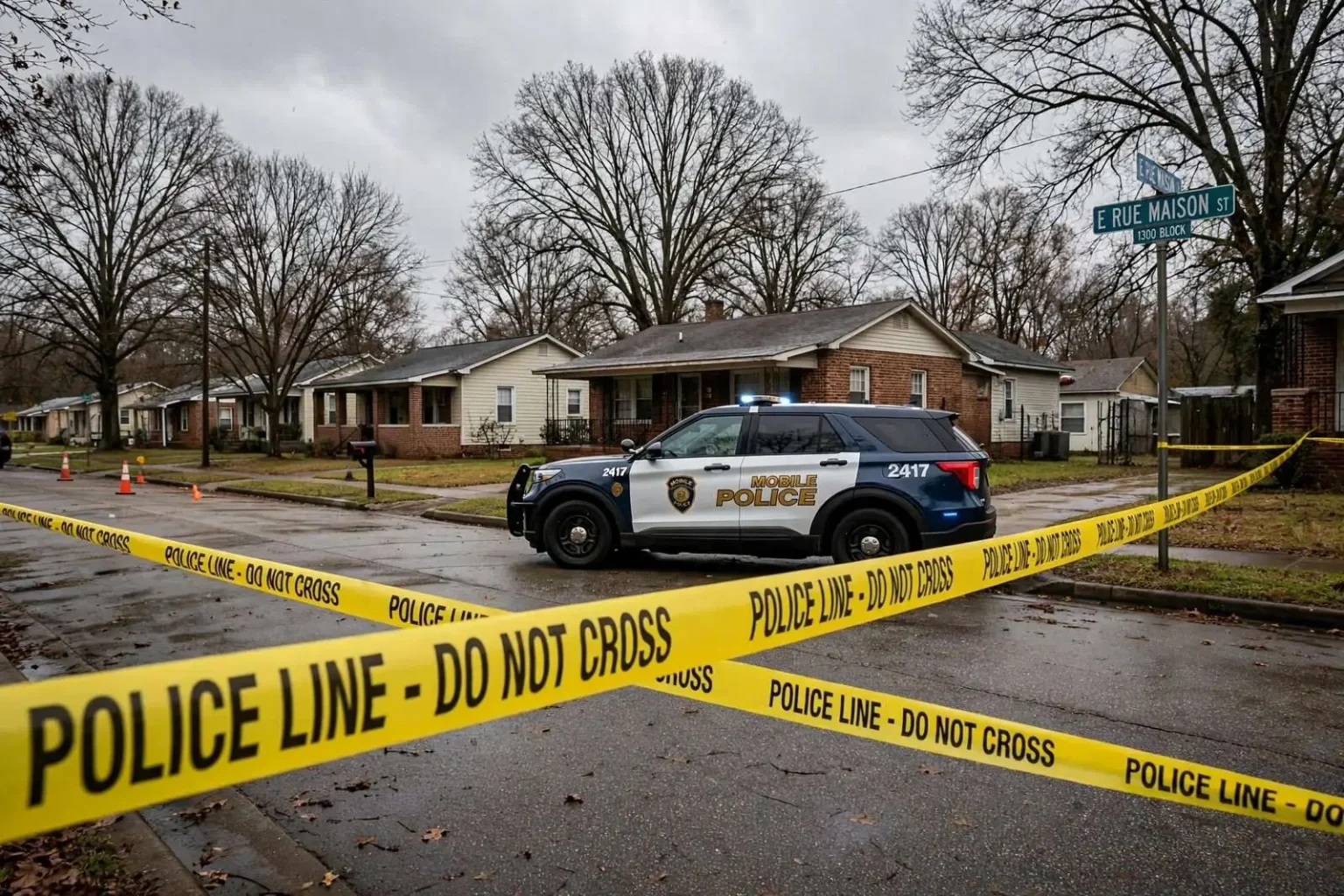
The Mobile Police Department has identified the man killed in a shooting on East Rue Maison in Mobile. According to a release from the Mobile Police Department, the fatal shooting took place in February. The department identified the victim but did not release additional details about the circumstances of the shooting. The investigation remains active. Anyone with information about the incident is asked to contact the Mobile Police Department.
The announcement that detectives have identified the victim marks a step in a case that has remained under investigation since the shooting occurred. Identifying a person killed in a shooting is a formal process: officers must locate and notify next of kin before a name is made public, and the department’s release confirms that step has been completed even as the circumstances of the killing remain undisclosed. Authorities released no information about a possible motive, suspects, or whether any arrest is near.
Homicide investigations in Mobile follow a well-established path. Patrol officers secure the scene and begin the initial canvass, then the department’s major investigations units take over, assigning detectives to work interviews, evidence, and leads. Cases can take weeks or months to resolve, and departments typically say little in public while they work, both to protect the integrity of the investigation and to respect the family of the person killed.
How Mobile investigates a fatal shooting
When a shooting death occurs in Mobile, the first hours belong to patrol officers, who seal off the location, render aid if anyone can be helped, and hold the scene for investigators. Evidence technicians document everything — shell casings, bullet damage, vehicles, and any personal items — because details that seem minor on the first night often matter months later. Detectives then begin the slow work: interviewing neighbors and witnesses, pulling surveillance video from homes and businesses in the area, and tracing any vehicles or individuals connected to the scene.
The Mobile Police Department investigates homicides through its criminal investigations division, supported by the department’s forensic technicians and, when needed, partner agencies such as the Mobile County District Attorney’s Office and the Alabama Law Enforcement Agency. The district attorney’s office reviews the evidence detectives gather to determine what charges, if any, can be sustained in court, which is one reason departments are cautious about releasing details that could later complicate a prosecution.
February shootings in Mobile occur against a citywide backdrop that police officials and community leaders have confronted for years. Mobile, a port city of roughly 185,000 residents, records dozens of homicides annually, and the vast majority are concentrated among a small number of locations and circumstances. Each case, however, is investigated on its own facts, and departments in Alabama do not close a homicide file simply because time passes; cold cases remain open indefinitely, and advances in forensic technology have allowed investigators across the country to revisit old evidence with new tools.
The role of tips in solving Mobile homicides
Police departments across Alabama consistently identify community tips as one of the decisive factors in whether a homicide is solved. Witnesses to fatal shootings are sometimes reluctant to come forward, worried about retaliation or about becoming entangled in the court system. Mobile Area Crime Stoppers exists to lower that barrier: the program accepts anonymous tips, pays cash rewards for information that leads to arrests, and passes what it receives to investigators without revealing a tipster’s identity.
Detectives working a fatal shooting also lean on the routine machinery of modern investigation. Search warrants obtain phone location data and communications records. Surveillance footage is requested from cameras along routes into and out of the neighborhood. Ballistics testing compares shell casings or recovered bullets against regional databases that connect weapons to other shootings. None of that is fast, but each element builds toward the point where investigators can establish who was present and what happened.
The months between a February shooting and an identification announcement are typical of the pace of major-case work. Families of homicide victims often describe the period as one of waiting for information that comes slowly and incompletely. Victim advocates, including those attached to prosecutor’s offices and nonprofit organizations in Mobile, work with families during this stage, helping them understand the process and connecting them to counseling and funeral assistance resources.
Gun violence and its footprint in Mobile neighborhoods
Every fatal shooting in Mobile lands in a specific neighborhood with specific consequences. Research on gun violence consistently shows that homicides depress property values, increase turnover, and strain the mental health of residents who live closest to the scene, particularly children. Mobile’s community organizations have responded over the years with a range of interventions — mentorship programs, violence interruption efforts, and partnerships between police and churches — aimed at the small number of people and places where violent incidents cluster.
The city’s leadership has also emphasized the connection between solving cases and preventing future violence. When shootings go unsolved, confidence in reporting drops and retaliation becomes more likely; when arrests follow quickly, the cycle is interrupted. That logic is behind the repeated public appeals in cases like this one, where police ask anyone with information to contact the Mobile Police Department even if the detail seems insignificant.
For investigators, the identification of the victim is a foundation, not a conclusion. The next milestones in a case like this — an arrest, charges, a trial — may be weeks or years away, and some never arrive. But the case remains open on the department’s books, and the release that confirmed the identification also confirmed the essential message: the investigation is active, and the department still wants to hear from anyone who knows something about what happened on East Rue Maison in February.
What residents can do
The Mobile Police Department’s standing guidance applies directly here. Anyone with information about the fatal shooting is asked to contact the department directly. Those who prefer not to speak with police can reach Mobile Area Crime Stoppers, which accepts anonymous tips and offers rewards in qualifying cases. Residents with security cameras near the scene who have not yet been contacted can also volunteer footage, since recordings are often overwritten within days.
Until investigators announce more, the confirmed facts remain spare: a man was shot and killed on East Rue Maison in February, the Mobile Police Department has now identified him, no circumstances have been disclosed, and the case is still being worked. For the neighborhood where the shooting occurred and for the city as a whole, the appeal stands — the people who know something are the ones who can bring the case closer to an answer.
Why details stay limited while a case is active
The absence of information about how the East Rue Maison shooting happened is not unusual, even months after the fact. Investigators withhold circumstances for several reasons: releasing a victim’s injuries or the location where evidence was found can compromise witness interviews; describing a suspect inaccurately can derail tips; and anything said publicly becomes part of the record a defense attorney will examine if an arrest leads to trial. Departments also defer to families, who often learn details through investigators before they appear in any public accounting.
What the public release does confirm is that the case is moving. Identification of the victim means detectives can pursue the personal connections that often matter most in fatal shootings — who the person was, where they had been, and who might have had reason to harm them. Detectives reconstruct a victim’s final days through phone records, financial transactions, and interviews with friends and relatives, and that work proceeds largely out of public view.
Residents of the East Rue Maison area, meanwhile, live with the questions that follow any shooting on a residential street. A fatal incident on a block changes how people use their own front porches, how children are supervised outside, and how neighbors talk to one another. Police departments encourage residents to share what they know precisely because local knowledge — who visits which house, what cars are unfamiliar, what arguments were overheard — is often the thread that unravels a case.
The neighborhood where the shooting occurred, like other residential streets across Mobile, will be watching for the next update. Homicide cases announced with an identification and few details tend to reappear in the news at milestones — an arrest, a court appearance, a conviction — and each of those steps depends on the investigative record that detectives are building now. In the meantime, the department’s request is unchanged and unremarkable in its phrasing but significant in its effect: contact the Mobile Police Department if you know something about what happened.
Anyone with information can also ask to speak with the detective assigned to the case, and those who wish to remain unnamed can use the Crime Stoppers channel. What matters most to investigators is volume and specificity of information in the early and middle stages of a case — the times when memories are still accessible and leads are still fresh enough to be checked.


