Mobile woman applies for nursing home job just to see her mom
Mobile real estate broker Sheila Yarborough applied for a weekend job at her mother's nursing home after not seeing her 84-year-old mom in five months.
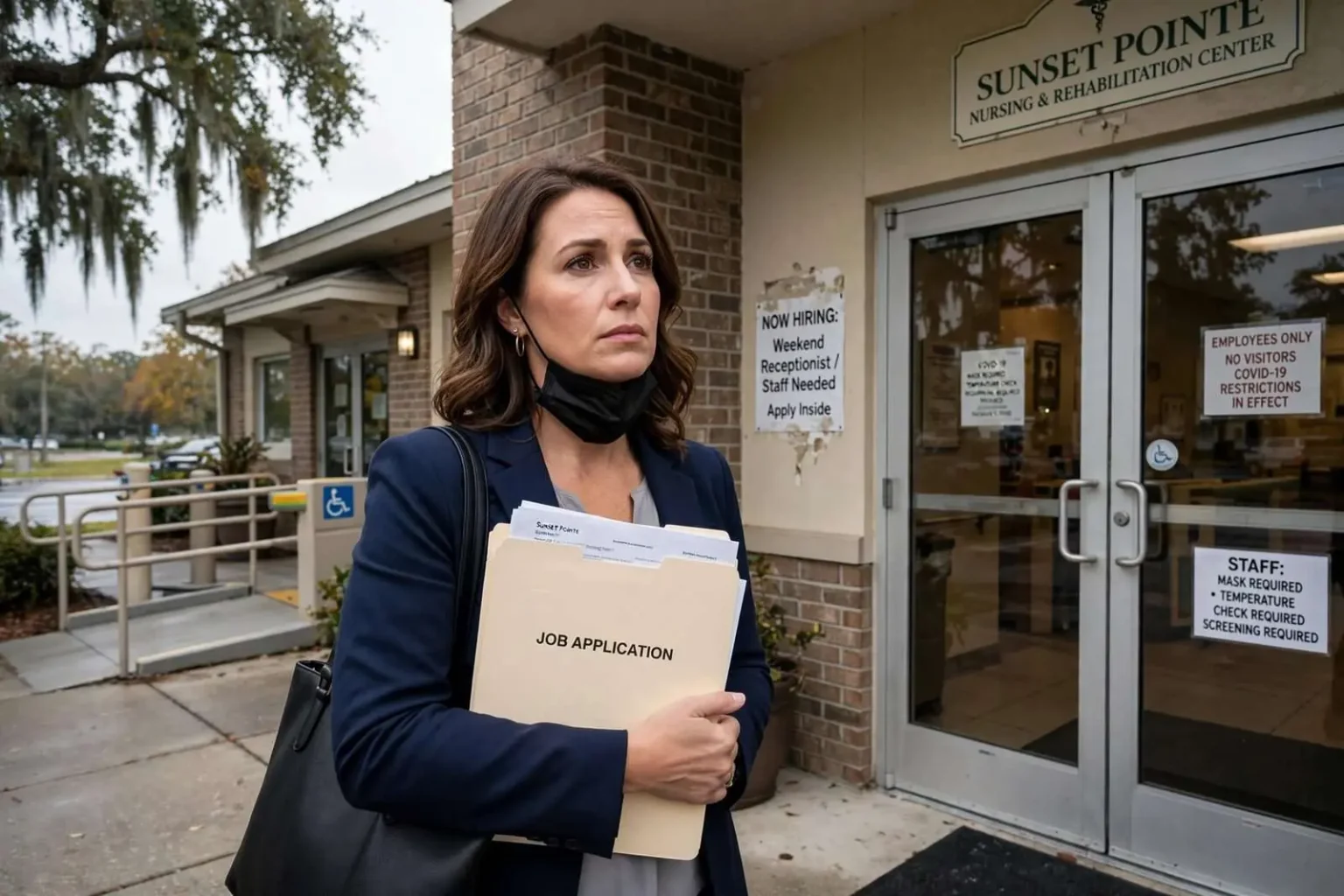
A Mobile real estate broker is applying for a job at her mother’s nursing home for one reason: she wants to be allowed inside to see her. Sheila Yarborough said she has not seen her 84-year-old mother, Emma Sumrall, in five months, separated by the visitor restrictions that nursing homes across the Gulf Coast and the nation put in place during the coronavirus pandemic.
Because only employees are permitted inside the facility, Yarborough decided to apply for work there herself. “I want to go to work here. I can sweep, I can cut grass, I can do whatever needs to be done so that I can see my mom,” she said, adding that the plan was for the home to hire her as a weekend receptionist.
The months apart have not been easy ones. Yarborough said she was shaken three weeks earlier when the nursing home called around midnight to say her mother had fallen out of bed and needed a CT scan at the hospital. A week later, Sumrall tested positive for COVID-19, adding illness to the long separation.
Yarborough said she knows the staff is doing all it can to care for residents during the outbreak, but she is ready to get inside and see her mother for herself. Her application, she said, is simply the one door the rules leave open.
The rules that keep families apart
Yarborough’s situation is not unusual along the Gulf Coast or anywhere else in the country. In the spring, federal health officials directed nursing homes to restrict visitation except in limited circumstances, such as end-of-life care, as the coronavirus spread through long-term care facilities nationwide. Alabama’s public health orders have kept those restrictions in place as the state has worked to slow transmission, and facilities have had little room to make exceptions for family members, however urgent the circumstances.
The restrictions were written for good reason. Older adults and people with chronic medical conditions face the highest risks from COVID-19, and a nursing home brings dozens of vulnerable residents under one roof, sharing dining rooms, hallways and aides. A single infection carried in by a visitor can spread through a facility before anyone shows symptoms. Since the virus first reached long-term care facilities in Alabama, outbreaks have forced homes to quarantine residents, isolate entire wings and test staff repeatedly.
For residents, the cost has been measured in separation. Families have gone months without in-person visits, relying instead on window visits, telephone calls and video chats arranged by activity directors. Birthdays, anniversaries and holidays have passed with loved ones waving through glass or talking on a screen. For residents with memory loss, the absence of familiar faces can be disorienting in ways that families say no phone call can bridge.
For families, the restrictions have produced a particular kind of helplessness: they cannot check on a parent’s condition with their own eyes, cannot see whether a loved one has lost weight, and cannot judge the mood of a facility from the hallway. That is the gap Yarborough is trying to close — not with a complaint or a lawsuit, but with a job application.
Working inside the walls
Applying for a receptionist position on weekends would place Yarborough inside the facility in a limited but meaningful way. Receptionists answer phones, greet visiting medical personnel and log deliveries — and, under current rules, they are among the only civilians allowed past the front door. She has said she is willing to take on any work available, from sweeping floors to cutting grass, if it means getting through the entrance.
Whether the home hires her is up to the facility, and nursing homes have their own screening requirements for staff during the outbreak. Employees are typically tested for the virus, screened daily for symptoms and required to wear protective equipment as they move between residents. Facilities have struggled in many places to keep staffing levels steady during the pandemic, as aides and nurses quarantine after exposures or stay home with their own children. The hiring needs that exist are real, which is part of why Yarborough’s plan is not as far-fetched as it might sound.
The job would also put her in the position many families have wished for: a legitimate, regular presence in the building. An employee sees the hallways, the dining room and the mood of the staff every shift. For a daughter who has spent five months imagining her mother’s days from a distance, that visibility is the point of the plan.
A scare that made the separation harder
The midnight phone call three weeks earlier is the kind of moment families under visitation bans dread. Instead of a call from a nurse after a fall that could be discussed face to face, Yarborough got the news in the middle of the night, and her mother went to the hospital for a CT scan while she waited outside the process entirely. Families in Mobile and across Alabama have described similar experiences during the outbreak — learning of hospital transfers, infections and health declines by phone, with no ability to sit at a bedside.
The positive test that followed a week later compounded the worry. Residents who contract COVID-19 are typically isolated within the facility or transferred to a hospital or dedicated care unit, depending on the severity of their symptoms. Recovery can be slower for older adults, and even patients who avoid the worst outcomes often face weeks of fatigue. Through all of it, families remain on the other side of the glass, dependent on staff updates between their own work shifts.
Hospital systems along the Gulf Coast, like most across the country, have also restricted visitors during the pandemic, which means even a hospital stay offers no guarantee of contact. The result is that a parent can move from a nursing home to an emergency room and back again while her children wait at home for phone calls — the sequence Yarborough’s family has just lived through.
What families can do under the restrictions
Advocates for long-term care residents suggest several avenues for families in Yarborough’s position. Nursing homes are required to keep residents’ family members informed, and facilities have set up scheduled video calls and window visits as substitutes for in-person contact. Family members can also request care conferences by phone, ask for updates from nurses or social workers, and raise concerns with the facility administrator.
Alabama, like every state, operates a long-term care ombudsman program that advocates for residents of nursing homes and assisted living facilities. Ombudsmen help families navigate complaints and questions about care, and during the pandemic they have been a key channel for relatives trying to understand how a facility is handling visitation, testing and communication. They do not replace family, but they provide an official set of eyes and a phone number to call when a question is not getting answered.
Some relief has been discussed as the outbreak has evolved. Professional groups representing long-term care providers, along with federal health officials, have encouraged facilities to allow compassionate-care visits in limited situations and to expand outdoor and window visits when weather and staffing permit. Each facility’s policies depend on its own outbreak status, staffing and county-level spread of the virus, which is why the rules that keep one family out may be relaxed at another home across town.
None of those options amount to sitting in a mother’s room, holding her hand or watching the nurses come and go. That is what Yarborough is after, and it is why she went to the front desk with a job application instead of a complaint.
Real estate work during the pandemic
Yarborough’s profession has been upended by the same crisis. Real estate brokers across the Gulf Coast have spent the year adapting to virtual showings, electronic closings and safety protocols for in-person appointments. The work is flexible enough that a weekend schedule could fit around it, which is part of what makes her plan practical: weekend receptionist shifts would leave weekdays open for her brokerage clients.
That flexibility is exactly what the arrangement depends on. Nursing homes that have had to hire during the outbreak often struggle to fill weekend and evening shifts, the least popular hours in any care facility. A capable, motivated applicant who specifically wants those hours is an unusual find, and it is the reason the idea of hiring family members to fill open positions has surfaced at facilities around the country — sometimes welcomed by administrators, sometimes not, but always with the same motive Yarborough describes.
Waiting for the door to open
For now, the application is in, and a mother and daughter remain five months and one front door apart. Sumrall is 84, recovering from a fall and a coronavirus infection, in a facility that her daughter trusts but cannot enter. Yarborough has said she knows the staff is doing all it can. She just wants to be there to see it herself — to sweep a floor, answer a phone, cut the grass if that is what it takes to walk through the door her mother went through five months ago.
Her story has resonated because it captures the trade-off families everywhere have been asked to make: restrictions that protect residents from a dangerous virus also cut them off from the people who know them best. Until visitation returns, the only path through the front door for many relatives will be the one Yarborough has taken — an application, an interview, a badge, and the hope that a weekend at the front desk is close enough.