
Mobile’s 20,000 Leagues Under the Sea Plot a New Album After Kickstarter Win
Hot on the heels of a successful Kickstarter campaign, Mobile's 20,000 Leagues Under the Sea is at work on a new album, with band member David Maclay (the .
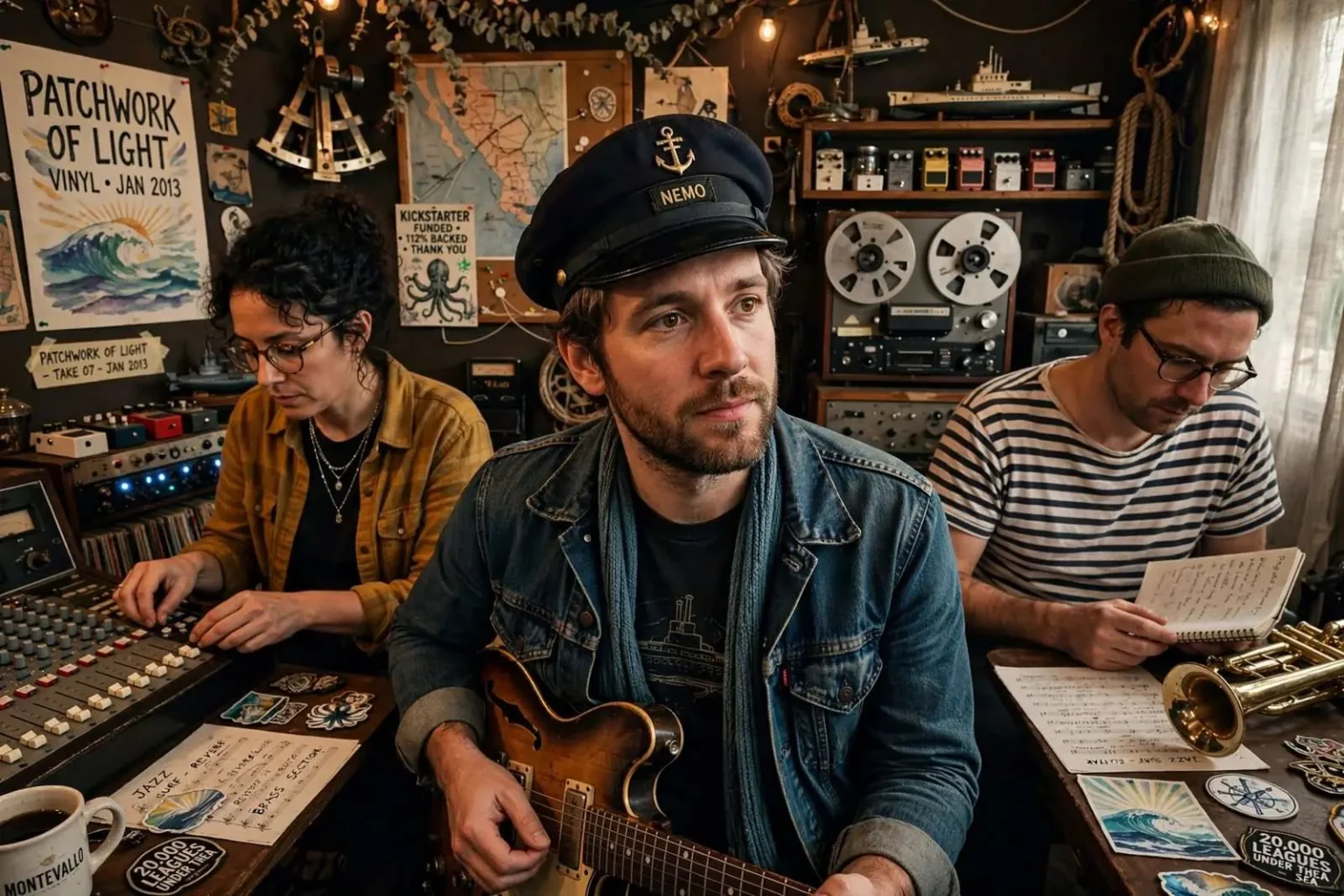
Hot on the heels of a successful Kickstarter campaign, Mobile’s 20,000 Leagues Under the Sea is at work on a new album, with band member David Maclay (the group’s “Nemo”) detailing what fans can expect.
The band’s name alone announces its sensibility: literary, playful, and a little surreal, which is a fair description of the record it is building. Crowdfunding gave the project its engine, and the band’s members turned to the network they had cultivated over years of playing local stages — artists for the packaging, photographers for the visuals, and a studio connection ready to put the songs on tape.
From Kickstarter to the Studio
The band recorded its first album in winter 2010 with Douglas Robertson before touring to BOMBfest in Connecticut. For the new record — the band’s sophomore album — the members lined up handmade merch, artist and photographer friends, and a studio connection in Montevallo, then launched a Kickstarter page. “All we had to lose was our pride,” Maclay said.
The crowdfunding approach has become the standard route for independent bands in the years since platforms made it easy, but the mechanics still reward exactly what 20,000 Leagues brought to the table: a committed fanbase willing to pre-pay for a record, and rewards — handmade merchandise in this case — that money alone cannot buy. For a Gulf Coast band without label backing, the campaign converts social capital into studio time, pressing costs, and the ancillary expenses that sink self-financed projects. Maclay’s wry assessment of the risk reflects the economics: the band invested sweat and reputation rather than cash it did not have.
The road to the new album ran through the first one. The winter 2010 sessions with Douglas Robertson established the band’s recording identity, and the trip to BOMBfest in Connecticut put Mobile’s name on a festival lineup far from home — the kind of credential that matters when a band asks strangers to fund its next record. Touring beyond the Southeast also hardened the live set that the new recordings would capture.
The Sound of Patchwork of Light
The upcoming album, Patchwork of Light, blends the traditional jazz Maclay learned in New Orleans with the reverbed organs and guitars he absorbed in San Francisco’s surf-rock scene. It was recorded at No Cool Studio in Montevallo, with a vinyl release expected at the end of January 2013. “In this album, I’m keeping aspects of the traditional jazz I learned in New Orleans but adding sounds of reverbed organs and guitars I heard in San Francisco,” said Maclay, the band’s frontman, who drew on time spent in Northern California.
That pairing of influences describes a genuine musical family. New Orleans’ traditional jazz — the parade-ground improvisation of brass bands and early combos — and California’s surf rock share a mid-century DNA, from the tremolo-drenched guitars of the West Coast to the second-line grooves of the Gulf. A band that marries them gets the swing of one and the shimmer of the other, and the title Patchwork of Light suggests the album knows its own collage nature.
Maclay’s biography explains the blend. Time spent learning traditional jazz in New Orleans means absorbing a repertoire and a rhythmic language that players spend lifetimes mastering; time in San Francisco’s surf-rock scene means living inside a culture of reverb, Fender organs, and guitar tones engineered to sound like breaking waves. Few musicians carry both dialects, and fewer still record with them in balance.
Choosing No Cool Studio in Montevallo ties the project to Alabama’s small but sturdy network of independent studios. Montevallo, home to the University of Montevallo, sits in the geographic center of the state and has long had a student-driven arts scene that supports recording spaces, galleries, and the college-town venue circuit. For a Mobile band, recording there means affordable rates, focused time away from home distractions, and a connection to the central Alabama scene that the band has already cultivated through shows.
The vinyl release plan at the end of January fits the album’s aesthetic and the economics of its funding campaign. Vinyl has re-emerged as the format of choice for independent acts — a physical object worth buying in an age of streaming, and a natural reward tier for Kickstarter backers. Handmade merchandise plus a pressing of the record gives supporters artifacts that reinforce the band’s hand-built identity.
Beyond the Record
The band also started a project called “Straight to VHS,” a roughly 30-minute movie of short art films and music videos featuring 20,000 Leagues and Plains. Maclay cited the Growlers’ “Empty Bones” as his favorite song ever recorded, and the group continues to play around Mobile and Montevallo, including plans for another Psychedelic Night at the Blind Mule.
The “Straight to VHS” project extends the band’s do-it-yourself ethos into film. A thirty-minute collection of art films and music videos — featuring both 20,000 Leagues and fellow Mobile band Plains — treats the visual side of music with the same seriousness as the recordings themselves. In an era when any band can upload a video, committing to a half-hour program with multiple films signals an artistic ambition beyond promotion: the movie is a work, not an advertisement. Collaborating with Plains also deepens the ties among the region’s independent acts, building the shared scene that lets small bands pool fans, equipment, and stages.
Maclay’s citation of the Growlers’ “Empty Bones” as his favorite song ever recorded says something about the band’s taste. The Growlers built a following on what they call beach Goth — reverb-heavy, melody-forward rock that shares the surf DNA running through Patchwork of Light. A musician’s favorite song is usually a map of his own ambitions, and the choice fits the album’s blend of California atmosphere and Gulf Coast rhythm.
The Psychedelic Night Tradition
The planned return of Psychedelic Night at the Blind Mule points to the venue-side of Mobile’s independent scene. The Blind Mule, a downtown Mobile institution, has served as a home for local and regional acts, and themed nights like Psychedelic Night give the city’s experimental musicians a curated showcase — a bill assembled around a sound rather than a genre chart. For bands like 20,000 Leagues, whose music resists easy classification, such nights are where their audience actually forms.
The band’s routine of playing both Mobile and Montevallo maps the two scenes that sustain it: the hometown Gulf Coast market where it developed, and the college town where it recorded and found collaborators. Bands that shuttle between two communities build overlapping audiences, and the crowdfunding success suggests 20,000 Leagues has done exactly that — the backers of a Kickstarter campaign are, in effect, a mailing list of fans across both cities.
What the Album Means for Mobile’s Scene
Independent releases like Patchwork of Light matter beyond the band that makes them. When a Mobile act records, presses vinyl, and tours regionally on its own resources, it demonstrates a path for the acts coming up behind it — proof that the city’s musicians can produce work with national aesthetics without leaving the region. The band’s blend of New Orleans jazz training and West Coast guitar culture is itself a statement about Gulf Coast music: situated between the two, Mobile bands can claim both traditions as their inheritance.
The handmade merchandise, the art-film project, and the vinyl pressing all point in the same direction. 20,000 Leagues Under the Sea is building a complete artistic identity — sound, image, objects, and film — the way bands did before the streaming era flattened music into background noise. When the album arrives at the end of January, fans who funded it will hold the evidence, and Mobile’s scene will have another example of what its musicians can do when they treat their city as a starting point rather than a limit.
Between now and the release, the band’s local dates — including the planned Psychedelic Night at the Blind Mule — offer previews of the record’s material, the traditional way albums were road-tested before their formal arrival. For a band that named itself after a Jules Verne voyage and funded its journey through the goodwill of its listeners, the route from a Kickstarter page to a January vinyl release is the newest chapter in a distinctly Mobile story.
Crowdfunding and the New Economics of Indie Bands
The Kickstarter campaign that funded Patchwork of Light represents the financing model that replaced the record label advance for bands of 20,000 Leagues’ size. Under the old system, an act signed to a label, received money for recording, and spent years paying it back out of meager royalties. Crowdfunding inverts the arrangement: fans become patrons up front, the band keeps ownership of the master recordings, and the relationship between artist and audience becomes direct — backers get handmade merchandise and a record, and the band gets creative control.
The model rewards preparation, and the band’s campaign reflected homework. Lining up artists and photographers before launching meant the rewards were real at announcement, not hypothetical. Having the Montevallo studio connection secured meant the money had a clear destination. The handmade merch — items crafted by the band and friends rather than ordered from a catalog — matched the aesthetic of a group whose whole identity rests on personal craft, from the literary name to the art-film side project.
Maclay’s comment that all the band had to lose was pride also captures the psychological hurdle every crowdfunding musician faces: asking. Asking fans for money feels like a confession that a band lacks resources, but in practice campaigns signal momentum — only acts with real followings can fund records this way. A successful campaign is itself publicity, and the story of a Mobile band funding an album with handmade goods and a Virginia-class work ethic travels further than any advertisement could.
The Road Already Traveled
The band’s history to this point — a winter 2010 album with Douglas Robertson, the BOMBfest trip to Connecticut — frames the new record as a second step rather than a debut gamble. First albums establish a band’s sound; second albums test whether it can grow. The decision to record outside Mobile, at No Cool Studio in a college town four hours up the road, suggests the band wanted the focus that comes with being away from home, where sessions run to schedule because there are no day jobs calling mid-take.
For listeners, the promised vinyl at the end of January is the tangible payoff of the campaign, and the live shows around Mobile and Montevallo in the meantime are the album’s proving ground. The planned Psychedelic Night at the Blind Mule gives hometown fans the first structured listen, and the “Straight to VHS” film will put visuals alongside the songs. Taken together — record, film, merchandise, shows — the project amounts to the most complete statement yet from a Mobile band that has made imagination its business plan, funded by the community that watches it grow.