Mobile’s “Peanut Guy” Keeps a Southern Roadside Tradition Boiling at Cottage Hill and Demetropolis
A Mobile street vendor known as the Peanut Guy has built a loyal following at Cottage Hill and Demetropolis for his boiled Valencia peanuts, a Southern roadside tradition with roots stretching back thousands of years.
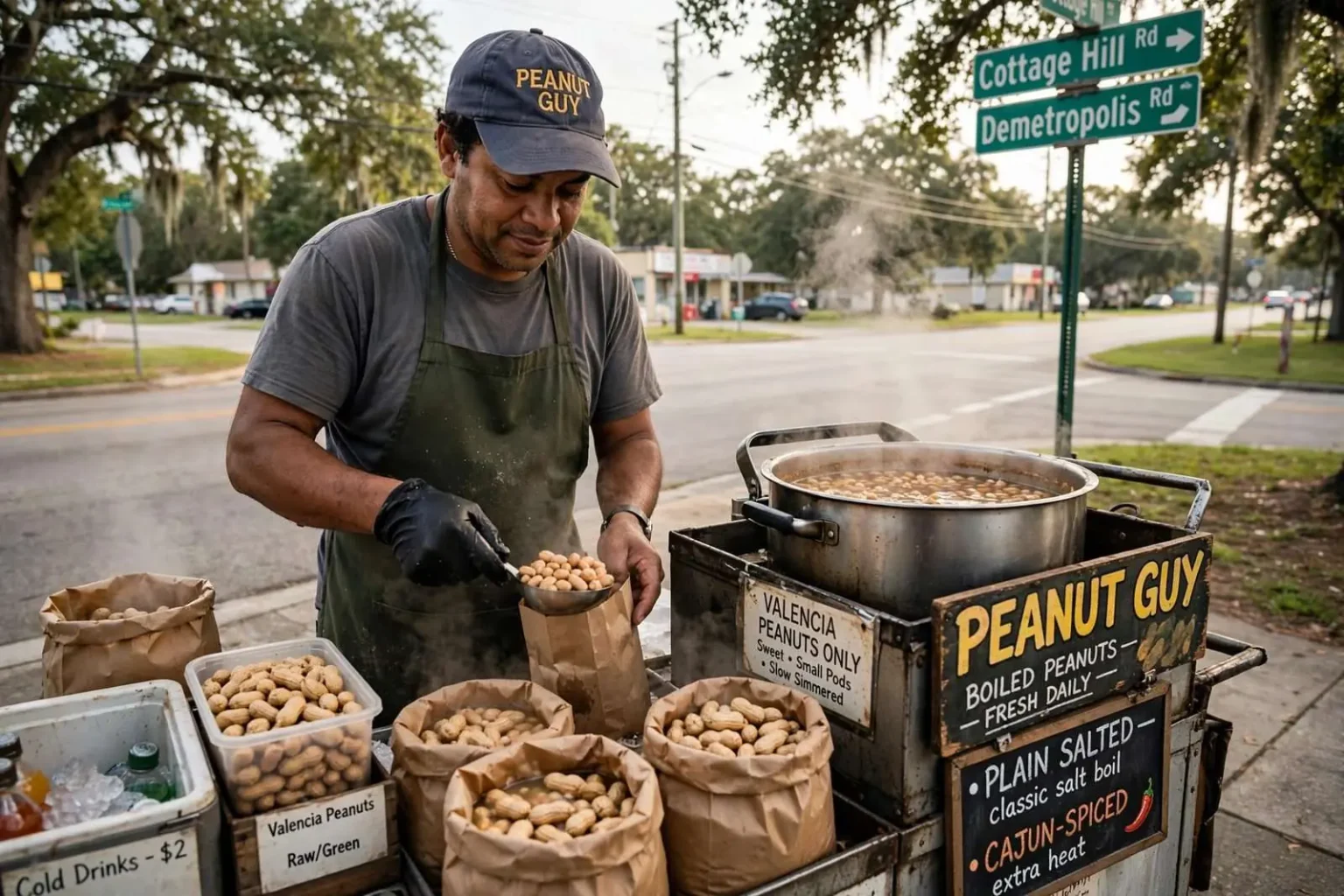
For years, Mobile drivers knew the shade of the live oaks along Government Street as the territory of a beloved local fixture selling roasted peanuts to passersby. These days, a new vendor has taken up the peanut torch at a different corner of town, and he has traded the roaster for a boiling kettle. At the intersection of Cottage Hill Road and Demetropolis Road, a street vendor known simply as the Peanut Guy has built a loyal following for his boiled peanuts, a snack with deep roots in Southern food culture and a devoted following across the Gulf Coast. What began as one man, one cart and one kettle has become a regular stop for west Mobile commuters, families running weekend errands and curiosity seekers who heard about the corner from a friend.
Boiled peanuts occupy a different place in the Southern pantry than the dry-roasted nuts long associated with ballparks and corner stores. Instead of being roasted until the shells turn brittle and the kernels go nutty and dry, boiled peanuts are simmered for hours in seasoned water until the shells soften and the nuts inside take on a tender, almost bean-like texture. The process transforms the peanut entirely: the brine works its way through the softened shell, so every bite carries the seasoning, and the finished nut is eaten straight from the shell while still warm. Anyone who grew up around a roadside boil knows the ritual — the wet bag, the stained fingers, the warning from a grandmother to suck the brine out of the shell before eating the nut inside.
The Peanut Guy sells his peanuts straight from a cart, offering both a plain, salted version and a Cajun-spiced take for customers who want extra heat. The plain version lets the peanut itself do the work, salt and long simmering drawing out a sweetness that roasting would disguise. The Cajun version builds on the same base with a spiced boil that leaves a slow burn on the back of the tongue, and regulars argue heatedly about which one deserves first place. Regulars say the appeal is part nostalgia and part craftsmanship: turning a raw, green peanut into a properly boiled one takes patience and a practiced hand, since undercooked peanuts stay tough and overcooked ones turn to mush.
The Valencia difference
The Peanut Guy insists on using only Valencia peanuts for his boil, a variety prized for its sweetness and its smaller, three-to-four-seed pods. Valencias are one of four peanut types grown commercially in the United States, alongside the Spanish, Runner and Virginia varieties, but they are less common in supermarkets than the larger Virginia peanuts typically sold roasted or in the shell. Most grocery-store roasted peanuts come from Runners, the workhorse variety of the commercial industry, which makes a Valencia-only boil a deliberate and uncommon choice. Sourcing a single variety in the quantities a busy cart requires takes persistence, and it is the kind of detail that separates a serious peanut vendor from someone with a kettle and a folding table.
Choosing to work exclusively with Valencias reflects a level of dedication that longtime boiled-peanut fans say sets a good vendor apart from the rest. The smaller pods mean more nuts per shell and a more consistent texture after hours in the pot, and the natural sweetness of the variety stands up to both the plain salt boil and the aggressive Cajun seasoning. Boiled peanut connoisseurs can tell within a handful whether a vendor sweated the details, and the crowd that gathers at Cottage Hill and Demetropolis on a Saturday suggests this one does.
Peanuts themselves have a surprisingly long history in the human diet. Archaeologists have traced peanut cultivation back roughly 7,600 years, and the crop eventually became a cornerstone of Southern agriculture across the coastal plain. The legume traveled from South America through the broader Atlantic world before finding its great American home in the sandy soils of the Southeast, where growers learned that peanuts enrich the soil they grow in and thrive in the hot summers that would wilt other row crops.
Alabama’s own connection to the peanut runs deep thanks to Tuskegee’s George Washington Carver, the agricultural scientist and inventor who developed hundreds of uses for the peanut in the early 20th century and helped convince Southern farmers to diversify away from cotton. Carver’s work at the Tuskegee Institute turned a lowly rotation crop into an economic engine for the state’s farmers, and his name remains attached to peanut heritage across Alabama more than a century later. Southeastern Alabama’s peanut country sits a couple of hours up the highway from Mobile, which means the green peanuts that fill kettles along the Gulf Coast are, more often than not, homegrown — a genuinely local product in an era when most snacks travel thousands of miles to reach a counter.
Boiled peanuts remain a fixture of roadside food culture across Alabama and the broader Gulf South, sold from coolers, carts and pop-up stands alongside other regional favorites like fresh-boiled crawfish and roadside satsuma stands. The green peanut season shapes the calendar: fresh, uncured peanuts arrive in late summer and fall, and vendors who can get them sell out fast, because a boiled peanut made from a truly green peanut is a different product from one made from stored raw peanuts. Mobile County’s coastal climate also makes the roadside trade a year-round proposition, with vendors adjusting their menus to the season and their hours to the traffic that flows past their corners.
The Peanut Guy’s corner sits at a natural crossroads for the trade. Cottage Hill Road carries steady neighborhood traffic through west Mobile’s residential districts, and Demetropolis Road feeds commuters between the airport corridor and the growing subdivisions to the south. A cart positioned where those routes meet catches the same drivers at roughly the same times each week, and the result is the kind of regular customer base that street vendors live on — people who honk, wave, and pull over on autopilot when they spot the kettle steaming.
A taste of home
For many locals, a bag of hot boiled peanuts and a cold drink on a Saturday afternoon is as much a taste of home as it is a snack. The boiled peanut carries the weight of family memory across the Gulf South — tailgates, ballfields, river trips, front porches — and vendors like the Peanut Guy keep that memory in circulation one bag at a time. In a city that has watched beloved roadside institutions come and go, the arrival of a new one is worth celebrating, and west Mobile has done exactly that.
Customers looking to try the Peanut Guy’s boiled peanuts for themselves can find his cart at the corner of Cottage Hill Road and Demetropolis Road, typically on weekends. Both the plain and Cajun-spiced varieties are available, and locals recommend pairing either with an ice-cold beverage for the full effect. First-timers should come hungry and plan to eat the bag warm, straight from the shell, the way the snack was meant to be enjoyed — standing at the corner, fingers salted, in the shade Mobile’s street vendors have always made their own.
The craft behind the kettle is easy to underestimate. A proper boil starts well before the cart opens: raw peanuts are rinsed, soaked and loaded into the kettle with salt and seasoning, then held at a slow simmer for hours while the shells drink in the brine. Timing is everything, and so is water level — too little and the top layer dries out, too much and the flavor thins. Vendors judge doneness by feel and by shell, squeezing a sample nut to check whether the inside has gone soft all the way through. It is hot, steady work performed over a steaming pot in the Gulf Coast humidity, and the vendors who last are the ones who treat the boil as a discipline rather than a shortcut.
The Peanut Guy’s corner trade also fits into a longer Mobile tradition of street food done simply and done well. The city’s roadside vendors have always tracked the rhythms of the working week — lunch crowds downtown on weekdays, errand traffic and ballfields on Saturdays, church letting out on Sundays — and the best of them build a following by showing up at the same corner at the same times until the corner and the vendor become one thing in the minds of regulars. That loyalty is what allowed the original Government Street peanut vendor to become a local fixture, and it is what the new Peanut Guy is now earning at Cottage Hill and Demetropolis, one warm bag at a time.
Word of mouth has done the rest. Regulars photograph the cart, send friends, and coach first-timers on which variety to order, which keeps new customers arriving without any advertising at all. In an age when most food moves through drive-through lanes and delivery apps, there is something durable about a vendor who stands over a kettle at a busy intersection and sells a snack older than the city itself — a snack with a 7,600-year history, a Tuskegee legacy and a Gulf Coast following that shows no sign of shrinking.