

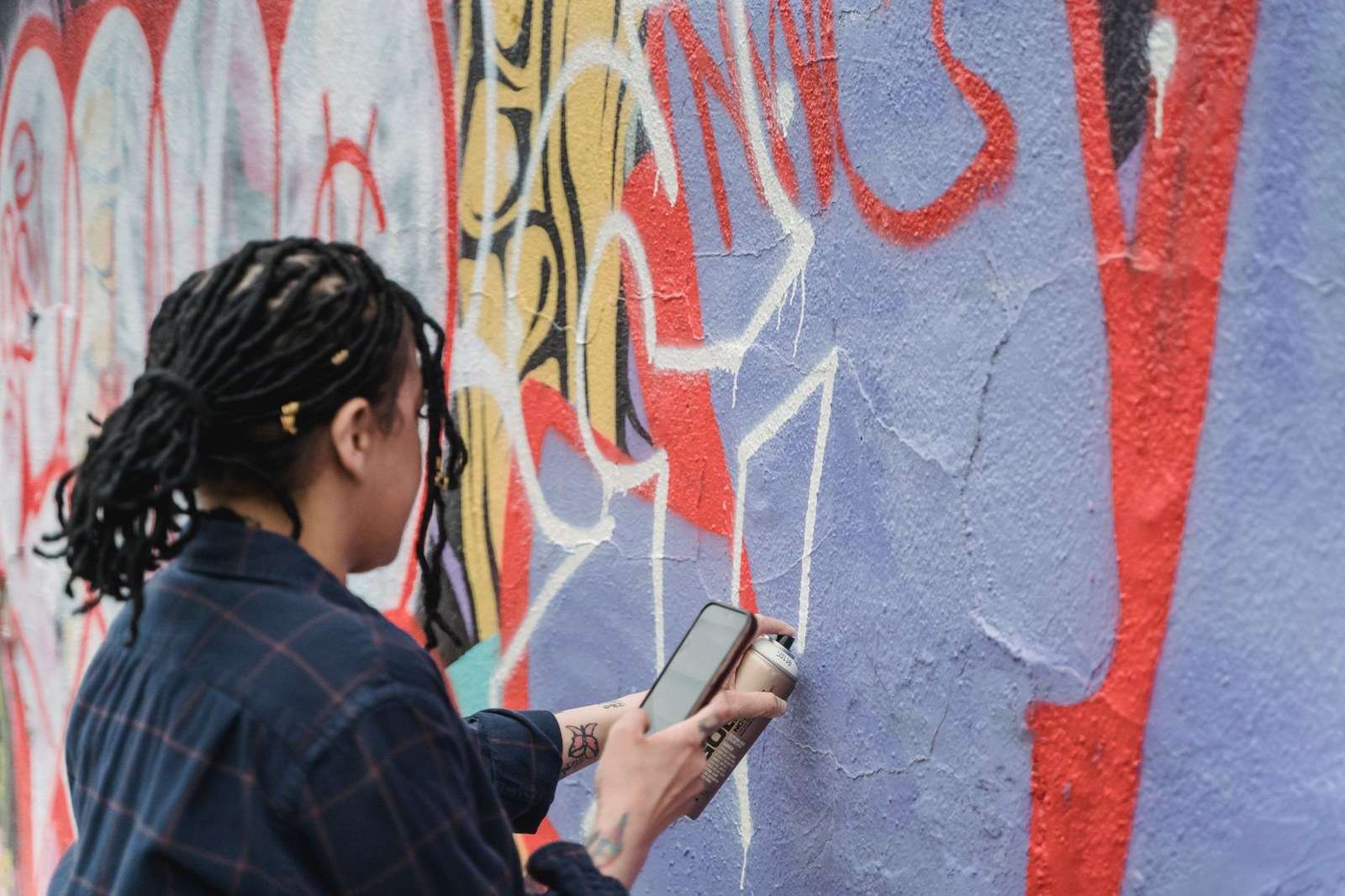
Downtown Mobile spent Saturday being painted and serenaded at the same time. The inaugural Mobtown Mural Festival put 15 artists on walls and portable panels across the city center, while a few blocks of that same footprint hosted the fourth annual Son of a Sailor Festival — a backyard Buffett party that has grown into the anchor of Mobile’s September tribute to its most famous musical son.
Both converged on Cedar Street Social Club, and the combination produced a day in which the soundtrack and the scenery were being made simultaneously, in public, by people you could walk up to.
Fifteen Artists, Including Eight Students
Fifteen artists worked on murals around downtown Saturday. Eight of them were students from Barton Academy.
That ratio is the detail worth pausing on. More than half the participating artists at the festival’s debut were high school students working alongside professionals on public art that will remain in the city after the weekend. Festivals in their first year tend to program conservatively, booking known quantities to guarantee the result. Mobtown Mural Fest did the opposite.
The practical effect is that a group of Mobile teenagers now has permanent work on display in their own downtown, produced under the eye of working muralists and in front of whoever happened to walk past.
Where the Work Is
Artists continued painting Sunday. The pieces can be found — or, during the festival, watched in progress — at four locations:
- National Maritime Museum of the Gulf, 155 South Water Street — artist Gary Brady
- Cedar Street Social Club, 4 North Cedar Street — featured artist Hannah Legg
- Innovation Portal, 358 St. Louis Street — artist JD Swiger
- Cooper Riverside — portable murals by Apollo, Jenyes, Rachel Schewmin, Brian Tan, David Rojas Pacheco, Greg Crimmins, Christy LeGros and Barton Academy students
The portable murals painted at Cooper Riverside will be distributed to different parks across downtown. That approach solves a chronic problem with mural festivals: the supply of suitable walls is finite, and the walls that exist are not always where you want the art to be. Painting on movable panels decouples the making from the placing, which means the festival can produce more work than it has walls and put it where it will actually be seen.
‘People Love Watching Painting in Real Time’
Hannah Legg, the featured artist at Cedar Street Social Club, brought the idea to Mobile after encountering similar festivals elsewhere and meeting the muralists who work them.
“Mobile is such a creative community already that this is something that is just kind of adding to that,” Legg said.
Her reasoning about the format gets at why mural festivals have spread across American cities over the past decade.
“I think people love watching painting in real time,” Legg continued.
That is the entire premise. A finished mural is a thing you drive past. A mural being made is an event — one with a beginning, a middle and an end, visible progress, and an artist standing right there who can be asked what they are doing. The festival format converts a static outcome into a weekend of live performance, and the mural remains afterward as a record of it.
Legg also described how she arrived at her subject, which involved a negotiation between civic enthusiasm and her own specialty.
“We were talking about bringing in Mobile sports, but I’m primarily a wildlife artist. So we found this really good medium, highlighting the return of the Mobile Mysticks by painting a dragon, which worked out well for me.”
The solution is neat. The Mysticks, Mobile’s incoming Southern Professional Hockey League franchise, gave her a local subject with current relevance. A dragon gave her a creature to render. The two requirements met in one image, which is generally how good commissioned work gets made.
There was no hard-set theme for the festival, though artists were encouraged to lean toward marine life — an appropriate default for a port city and one that leaves considerable room to move.
The Buffett Party Next Door
At Cedar Street Social, the fourth annual Son of a Sailor Festival ran alongside the painting. Six bands played through the day, working a blend of honky-tonk, reggae, rock and classic Buffett material, and drawing local and visiting Parrotheads into downtown Mobile.
Event planner Joseph Brennan traced the festival back to the days immediately after Jimmy Buffett’s death.
“We started four years ago, right after Jimmy passed,” Brennan said.
“The next day, we got together and put together a second line,” he continued. “Jimmy Buffett is the patron saint of Gulf Coast music.”
The second line is a Gulf Coast funeral tradition — a procession with a brass band that turns grief into a parade — and reaching for it in the days after Buffett died is a specifically regional response. It treats him not as a celebrity who died but as a local figure being buried properly.
Four years later, that improvised procession has become an annual festival, and this year it arrived in the middle of a much larger civic moment.
“It almost kind of culminates with this year of the having this sort of concerted party for Jimmy,” Brennan said. “The museum opening, the statue unveiling, We had the second line last night.”
A Weekend Stacked on Purpose
Brennan’s list describes a September that Mobile assembled deliberately: a waterfront statue unveiled, a permanent 6,000-square-foot museum exhibit opened at the National Maritime Museum of the Gulf, a second line down Dauphin Street, a festival of Buffett-adjacent bands, and a mural festival in which one of the painting sites is the museum itself.
The Son of a Sailor weekend opened Friday with that second line parading down Dauphin Street behind the Blow House Brass Band, followed by a late-night jam at Cedar Street Social.
Programming several events into a single weekend is a well-understood strategy for a city trying to pull visitors from beyond its own metro area. One event is a reason to come downtown. Four events across three days is a reason to book a hotel room.
What Remains After the Weekend
Festivals end. Bands pack up, food trucks leave, streets reopen. What distinguishes a mural festival from most of the rest is that its principal output stays.
The walls at the maritime museum, Cedar Street Social Club and the Innovation Portal will carry Saturday’s work indefinitely. The portable panels from Cooper Riverside will turn up in downtown parks, in locations that had no public art before. Eight Barton Academy students will be able to point at it.
Mobile spent a weekend in September celebrating a musician who wrote about this coast, and painted a good deal of the coast onto its own walls while doing it.