
Mod Mobilian TV Episode 3 Digs Into the Show’s ‘Secret Origins’ on JagTV
Episode 3 of Mod Mobilian TV reveals the show's secret origins, with a short film by Ryan Jetten and Timothy Dixon and music from The Cimarron Club.
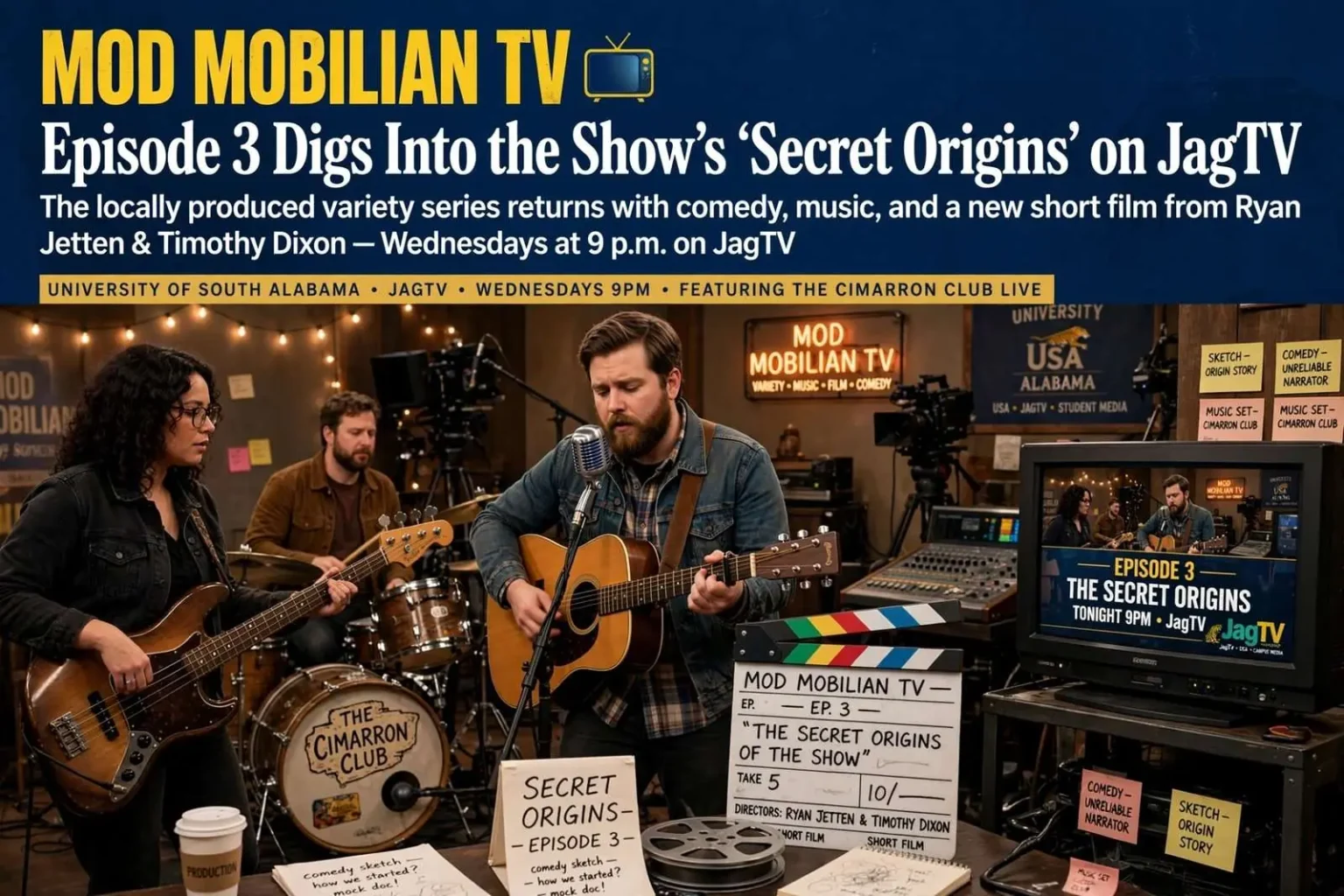
The locally produced variety series Mod Mobilian TV rolls out its third episode, “The Secret Origins of the Show,” continuing its weekly run on the University of South Alabama’s campus station, JagTV. The installment promises a tongue-in-cheek account of how the series may — or may not — have come to be, told in the show’s signature blend of comedy and music. Episodes air Wednesdays at 9 p.m. on JagTV, giving area bands, filmmakers and comedians a recurring televised showcase.
The episode also features a short film from Ryan Jetten and Timothy Dixon and a musical performance from Mobile’s own The Cimarron Club. The third episode keeps up the series’ pace of pairing sketch segments with live local music each week, a formula that has made the show a gathering point for the Port City’s independent creative community.
A Show About Itself, Played for Laughs
Turning the camera on the show’s own backstory is a well-worn device in comedy, and Mod Mobilian TV leans into it with the third episode’s title theme. A “secret origins” story gives the cast room for mock-documentary framing, unreliable narration and self-aware jokes about the messy reality of launching a weekly program. For a series built on comedy and music, an episode about how the series began is also a nod to the audience that has followed along since the first installment.
The self-referential approach reflects the loose, experimental spirit of local variety television. Without network formulas to follow, the production can treat each episode as a playground, moving from sketch to short film to musical set with whatever pacing serves the material. That freedom is part of what distinguishes community-produced television from commercial programming, and it is a tone that campus stations like JagTV have historically encouraged.
The Mod Mobilian Lineage
The series takes its name and sensibility from Mod Mobilian, the long-running Mobile arts and culture outlet that has spent years documenting the city’s music, food, art and offbeat characters. A television adaptation of that sensibility was a natural step: Mobile has a deep bench of comedians, filmmakers and bands, but relatively few local broadcast outlets where their work can appear on a regular schedule. Mod Mobilian TV was built to fill that gap, packaging the city’s creative output into a weekly hour.
The choice to build the show around a variety format is more than nostalgia. Variety programming gives each episode multiple entry points for viewers — a comedy sketch for one audience, a live song for another, a short film for a third — and it gives local performers a low-barrier way to reach a broadcast audience without mounting a full production of their own. For a city the size of Mobile, that shared platform is a practical piece of cultural infrastructure.
JagTV as a Home for Local Production
JagTV, the campus television station operated through the University of South Alabama’s student media structure, has long functioned as both a training ground and a broadcast outlet. Students gain hands-on experience in cameras, lighting, audio, directing and studio production, while community producers gain access to professional facilities that would be difficult to assemble independently. Programming that airs on the station reaches viewers across the university community and beyond.
For Mod Mobilian TV, the Wednesday 9 p.m. weekly slot provides something rare for a local production: a dependable schedule. Weekly airing builds viewing habits, gives contributors firm deadlines and lets the show develop a rhythm that audiences can rely on. The third episode arriving on schedule signals that the production has moved past the launch phase and into the steady cadence that keeps a variety series alive.
Campus stations across the country have historically played exactly this role for hometown scenes, airing local music shows, public affairs programs and offbeat comedy long before streaming platforms existed. JagTV’s willingness to carry a locally produced variety series continues that tradition in Mobile, pairing university resources with independent creativity.
The Cimarron Club Brings the Music
Each episode’s musical performance is a centerpiece of the format, and the third installment features Mobile’s own The Cimarron Club. Live-in-studio performances give local bands something a club gig cannot: a broadcast-quality recording and a television audience that includes viewers who may never make it out to a bar or venue on a weeknight. For the band, the appearance doubles as promotion for future shows and recordings.
Mobile’s music scene runs deep, from the city’s historic role in early rock and rhythm and blues to the circuit of venues, festivals and listening rooms that supports working musicians today. Bands in the Port City move between styles — country, soul, rock, jazz and Gulf Coast hybrids — and a variety show that books a different act each week mirrors that range. Placing local music on a weekly broadcast also preserves performances in a way that a single night’s gig never can.
The pairing of sketches with live music each week gives the show its structure, and it mirrors the way the local scene itself works, where comedians, filmmakers and musicians share bills and audiences. The Cimarron Club’s appearance in episode three continues that cross-pollination, putting a Mobile band in front of a camera and handing the show a soundtrack made in the city it covers.
A Short Film From Jetten and Dixon
The episode also carries a short film from Ryan Jetten and Timothy Dixon, continuing the series’ practice of showcasing work from local filmmakers. Short films are the natural currency of community television: they fit cleanly into a variety program’s running time, and they give directors, writers and crews a finished product that can travel from one screen to another. Airing on JagTV puts such work in front of an audience beyond festivals and online feeds.
For filmmakers in a market without a large production industry, outlets like Mod Mobilian TV matter practically. Every broadcast credit helps build a portfolio, and every screened project helps crews find one another. A weekly show that routinely schedules short films functions as a connective thread for a scene that is otherwise spread across individual projects and social media pages.
The short-film segment also balances the episode’s comedic spine. Where sketches lean on the show’s own cast and voice, featured films bring in outside perspectives and styles, keeping the series from turning inward even when the theme of the week is the show itself.
Why Local Variety TV Still Matters
In an era when most viewing has shifted to streaming and social platforms, a weekly local broadcast might seem like a throwaway — but the format solves problems that algorithmic feeds do not. A television slot gives Mobile’s creative community a shared stage with a fixed time, a common audience and an editorial hand curating the mix. Residents who tune in on Wednesday nights get a cross-section of the city’s talent without having to know where to look for it.
The show also documents the scene as it exists right now. Performances filmed for broadcast become part of the record of Mobile’s cultural life in this era, the way local music programs of past decades preserved the acts of their day. Years from now, episodes like “The Secret Origins of the Show” will serve as snapshots of who was performing, joking and filming in the Port City.
With three episodes aired and a steady Wednesday home at 9 p.m. on JagTV, Mod Mobilian TV has established the pattern that will define it: comedy from its own cast, music from the city’s stages and films from its filmmakers, week after week. Episode three, with its tongue-in-cheek creation story, short film from Ryan Jetten and Timothy Dixon, and a set from The Cimarron Club, is the series’ clearest statement yet of what it wants to be.
Behind the Weekly Grind
Producing a variety show on a weekly schedule is a heavier lift than the finished episodes suggest. Each installment requires booking talent, rehearsing segments, coordinating studio time, shooting and editing sketches, and assembling the whole package before Wednesday night. The fact that episode three arrived on schedule with a coherent theme suggests a production team that has settled into a working rhythm after the inevitable rough edges of a debut month.
Local variety productions also depend on goodwill across the scene. Musicians agree to perform without the pay scale of a touring act, filmmakers lend finished work, and comedians write material for a room far smaller than a theater. What they receive in return is exposure, a professional credit and the experience of working in a studio environment, a trade that has sustained community television for as long as local stations have existed.
The show’s growth also reflects well on the collaboration between Mod Mobilian and the University of South Alabama. Partnerships of that kind give students a look at how independent media actually gets made, and give independent producers a pipeline of crew members learning the craft. Both sides inherit each other’s audiences: students discover the local scene, and scene regulars discover the station.
What to Watch For Next
With the origin-story episode behind it, the series can point its format at anything the city offers: more bands from the local circuit, more short films from area crews and more sketches built on Mobile characters and habits. The variety structure is flexible enough that no two episodes need resemble each other, which is precisely the point of the format.
For viewers who have not yet tuned in, episode three is a straightforward entry point. It explains, in the show’s own comic register, what the series is and where it came from, then demonstrates the mix that defines it — a Jetten and Dixon short film on one end, The Cimarron Club on stage at the other, and the cast’s comedy holding it together. New episodes air Wednesdays at 9 p.m. on JagTV, and the show’s weekly rhythm means there will be another one along soon.


