
Boxes Off the Shelf and Straight Out the Door: Moss Point Man Charged in Ulta Beauty Theft on Airport Boulevard
Mobile police say a man grabbed multiple boxes of merchandise from the Ulta Beauty on Airport Boulevard and left without paying. A 35-year-old Moss Point, Mississippi man has been arrested and charged.
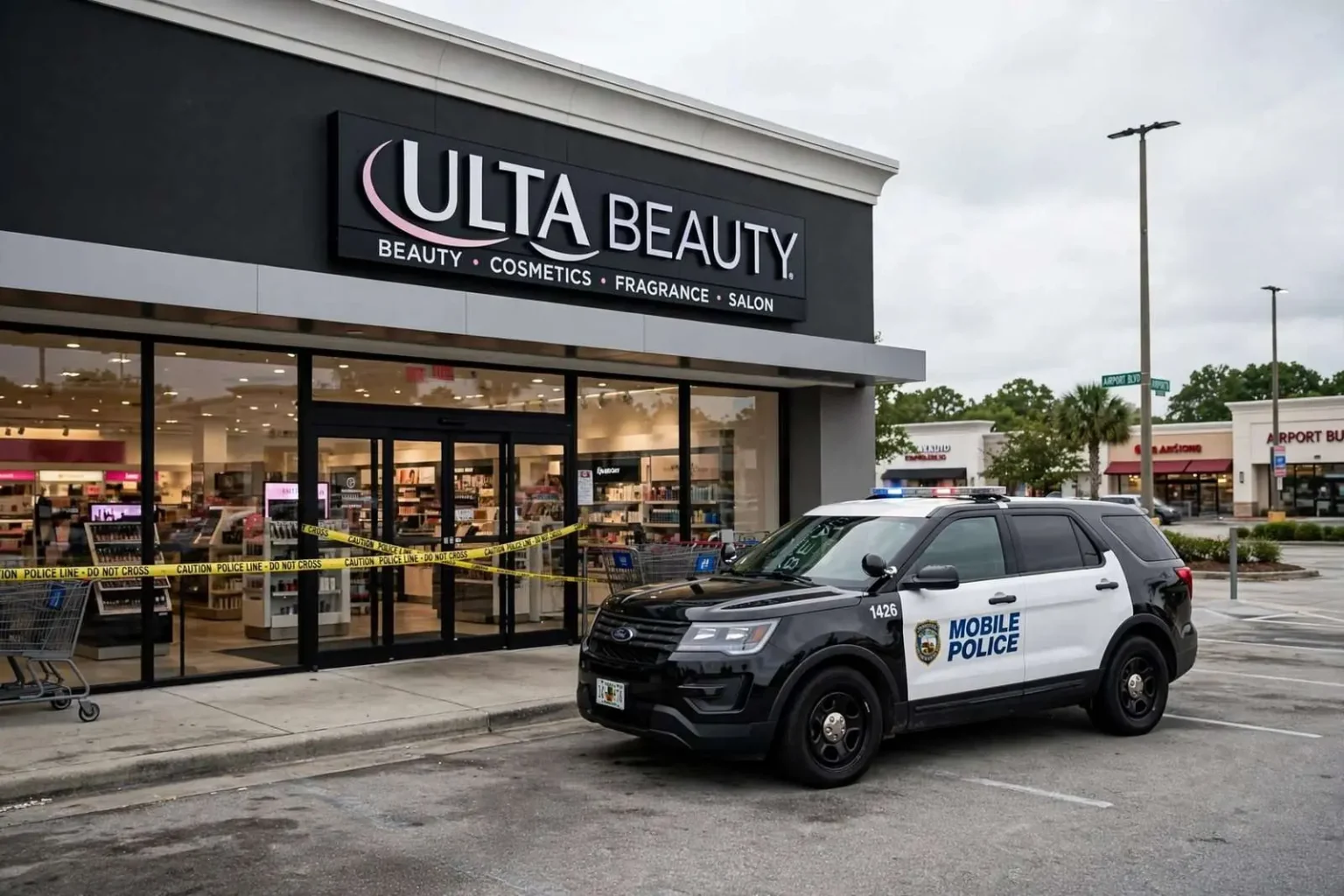
A Moss Point, Mississippi man is in Mobile County Metro Jail after police say he cleared merchandise off the shelves at a west Mobile beauty retailer and walked out without paying for any of it. The arrest adds Mobile to the list of Gulf Coast cities dealing with a pattern of high-volume retail theft that has grown familiar to law enforcement across the region.
According to a Mobile Police Department news release, officers were sent to the Ulta Beauty at 7765 Airport Boulevard around 2:36 p.m. on Saturday, July 12, in response to a report of theft. The store sits along one of the city’s busiest retail corridors, in the cluster of shopping centers west of downtown where Airport Boulevard runs past a dense concentration of national chains, restaurants, and strip malls serving neighborhoods from Spring Hill to the western city limits.
When officers arrived, employees told them a man had grabbed multiple boxes of merchandise and left the store without paying. No weapon was reported and no injuries were mentioned in the police account — the theft was, by its description, a straight grab-and-go: enter, sweep merchandise from the shelves, and exit before staff could stop it. It is a method retailers along the corridor have seen before, and it is one that leaves little for employees to do in the moment but observe and call police.
The Arrest
Officers were able to identify the suspect and made an arrest. Nickolas Tolbert, 35, of Moss Point, Mississippi, was charged with second-degree theft of property and taken to Mobile County Metro Jail. The identification and arrest, coming shortly after the report, suggest that police had enough to work with quickly — typically a combination of store surveillance footage, witness descriptions, and any trail the suspect left behind, such as a vehicle used to leave the scene.
Second-degree theft of property in Alabama is a Class C felony, generally covering thefts where the value of the goods falls in the mid range — above the misdemeanor threshold but below the highest tier. The charge suggests the value of the merchandise taken was substantial rather than incidental. In practical terms, the felony classification means the case will be handled in the state circuit court system rather than municipal court, and a conviction could carry a sentence of a year and a day to ten years in prison, along with fines. The charge also reflects how retailers and prosecutors have pushed to treat high-volume shoplifting as the serious property crime it is, rather than as the petty offense the term “shoplifting” can imply.
Moss Point, the suspect’s home city, sits just across the state line in Jackson County, Mississippi, about thirty minutes west of Mobile along Interstate 10. The short drive between the two cities is part of what makes corridor retail theft a regional problem: suspects can move between jurisdictions in minutes, and a store like the Ulta on Airport Boulevard — sitting near the interstate and surrounded by other shopping destinations — is an easy target for someone passing through the metro area from either state.
A Pattern Retailers Along Airport Boulevard Know Well
Beauty retailers have become a recurring target for high-volume theft nationally, in part because cosmetics and fragrance are small, expensive per ounce, and easy to resell. A single shopping bag of prestige makeup and designer perfume can carry a retail value running into the hundreds of dollars, and the goods are compact enough to conceal quickly and light enough to carry in quantity. Stolen product moves through resale channels — online marketplaces, informal street sales, and discount resellers — where the connection to any individual store theft is difficult to trace.
The Airport Boulevard corridor, with its concentration of national chains and quick interstate access, sees a steady share of these cases in Mobile. The road functions as the city’s principal east-west retail spine, lined with shopping centers that draw customers from across the metro area on weekend afternoons — precisely the hours when stores are busiest, staff are stretched, and a person walking out with a bag of merchandise is hardest to stop. Retailers in the corridor have responded over the years with added security presence, camera upgrades, and closer coordination with police, but the fundamental vulnerability remains: open shelves and self-serve floor layouts are the industry standard, and they invite exactly this kind of loss.
National chains like Ulta Beauty have adjusted to the pattern in various markets by locking high-value display cases, tagging merchandise, and training staff to prioritize safety over confrontation during a theft in progress. Those measures reduce losses from casual shoplifters, but a determined thief clearing shelves in bulk is a different problem — one that usually ends, as it did here, with a police report, surveillance footage, and an investigation that continues after the suspect has left the building.
How Mobile Police Handle These Cases
Mobile police continue to encourage retail employees to report thefts promptly rather than attempting to intervene, and to preserve surveillance footage, which is frequently the deciding evidence in identifying a suspect who has already left the property. The guidance reflects a hard reality of retail security: a loss-prevention employee or salesperson who physically confronts a departing thief faces injury risk and potential liability, and most store policies explicitly direct staff not to chase. The safer and more effective path is observation, immediate reporting, and good footage.
Modern surveillance systems have changed what those reports can produce. High-resolution cameras over entrances, aisles, and registers capture faces, clothing, and sometimes license plates outside, and retailers can share that material with responding officers within minutes. In cases like the Ulta theft, where the suspect allegedly left with boxes of merchandise in broad daylight on a busy Saturday, the combination of store cameras and the surrounding corridor’s traffic patterns is usually enough to develop a lead. That the arrest in this case came quickly suggests that system worked as intended.
The Mobile County Metro Jail booking process that followed creates a paper trail of its own. Suspects are photographed, fingerprinted, and entered into county and state databases, which matters beyond the individual case: repeat offenders are flagged, outstanding warrants surface at booking, and prosecutors can build patterns from arrest histories. For retailers tracking the theft problem along Airport Boulevard, each booked arrest adds a data point to the larger picture of who is committing these crimes and how often.
What Happens Next in the Case
After a felony arrest of this kind, the case moves through the district court for a preliminary proceeding before heading to a grand jury in state circuit court, where prosecutors will decide whether to present the charge for indictment. The value of the merchandise — the factor that determines the theft degree under Alabama law — is typically established through the retailer’s inventory records and pricing, which is why stores are asked to document missing items carefully after a theft. prosecutors may also consider whether the suspect has prior theft convictions, since Alabama’s theft statutes allow prior offenses to affect how a case is charged.
The Regional Dimension of the Problem
Because Mobile sits directly on the Mississippi line, retail crime in the city often involves suspects from out of state, and coordination between Mobile police and agencies like the Moss Point and Pascagoula departments can determine whether cases get solved. The Interstate 10 corridor connecting Mobile to the Mississippi Gulf Coast carries tens of thousands of vehicles a day past some of the region’s largest shopping areas, and the same convenience that serves legitimate shoppers serves offenders looking for a fast exit across a jurisdictional line. Regional cooperation — shared intelligence, multijurisdictional warrants, and coordinated retail-theft enforcement — has become an increasing priority for police departments on both sides of the state line.
For shoppers along Airport Boulevard, the practical takeaways from a case like this are mostly about awareness. Store employees are trained to observe and report, and customers who witness a theft in progress are safest doing the same rather than getting involved. Retail theft of this scale is not a victimless convenience either: losses from organized and high-volume shoplifting get priced back into merchandise, and repeat incidents can push chains to reduce hours, thin staffing, or reconsider locations — outcomes that would hit the corridor’s shoppers and its tax base alike.
The Ulta Beauty store at 7765 Airport Boulevard resumed normal operations after the July 12 incident, and the case now sits where most such cases do: with the police report, the store’s documentation, and the court system. For the defendant, the second-degree theft charge carries real consequences if proven. For the corridor’s retailers, the arrest is one small win in a pattern that continues — and a demonstration that when employees follow the protocol of reporting promptly and preserving footage, the system that catches shelf-clearing thieves still works.