Eighteen Years of Country Cooking on Blackburn Drive
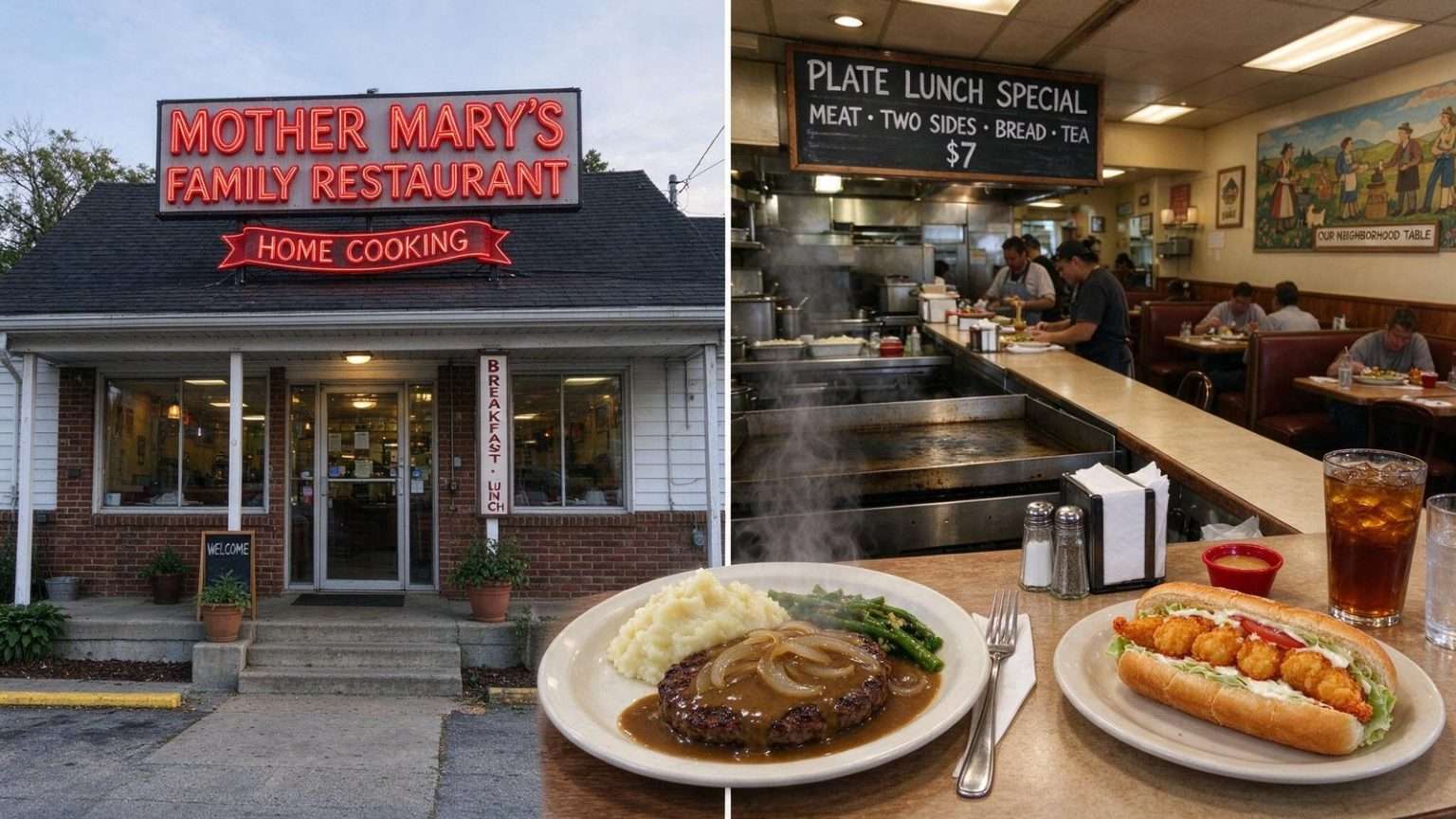
On Mobile’s west side, Mother Mary’s Family Restaurant on Blackburn Drive has been feeding hungry customers for 18 years with no-frills, made-to-order country cooking. “We are just catering to the everyday people, we are not trying to be ‘high-class,’ just your basic country cooking,” said owner Sherie Frei, who describes the restaurant as a meat-and-potatoes style breakfast and lunch spot. The formula has proved durable: in a market crowded with national chains, an independent kitchen serving plate lunches and hand-formed burgers has held onto its crowd for nearly two decades.
The restaurant takes its name from Frei’s mother, Mary, who helped her daughter launch the business. A veteran of the food service industry, Frei said she decided to go into business for herself rather than keep working for someone else. “And it worked out, so far,” she said. Eighteen years later, the name remains a tribute to the family partnership that got the doors open, and the dining room still runs on the working routines of the neighborhood around it.
Regulars have come to count on the familiar menu and steady prices. The club sandwich, hamburger steak and the daily plate lunch are among the most popular items. Hamburgers are hand-formed from fresh meat and cooked to order on a char broiler, and the daily lunch special includes meat, two sides, bread and tea for $7 — a combination that has become the backbone of the restaurant’s midday business.
The Thirty-Minute Crowd
The loyalty of working customers has helped keep the dining room busy. “A lotta guys who come here only have thirty minutes for lunch,” Frei said. “They know they can come in, sit down, get it, and be gone.” That promise — fast, hot and predictable — is the quiet engine of a meat-and-three style operation. Customers who work nearby know the rhythm of the kitchen, order their favorites without reading the board, and are back at work before the hour turns.
Serving that crowd shapes everything from menu design to staffing. Plate lunches are assembled for speed, breakfast is built for early shifts, and the counter works on a first-name familiarity that corporate chains try to simulate with scripted greetings. At Mother Mary’s, the recognition is organic: the same faces have been ordering the same plates for years, and the staff knows it.
Consistency at a Cost
Staying consistent has not always been easy. Frei said she did not change her menu prices for three years even as her food costs rose repeatedly — a decision that ate into margins but preserved the trust of customers who count every dollar on a workingman’s budget. In the restaurant trade, holding a price line that long is a gamble: ingredients, labor and utilities all march upward, and an independent operator has no corporate pricing committee to absorb the shock.
Competition from corporate fast-food chains that opened nearby ultimately forced the restaurant to trim its operating hours, but by focusing on its core breakfast and lunch crowds, Frei said she has still managed to turn a profit. The calculation was unsentimental: rather than chase dinner traffic against chains with national advertising budgets and late-night drive-through windows, Mother Mary’s doubled down on the meals it does best and the customers who show up for them.
The trade-off reflects a survival strategy common among independent restaurants. Fast-food competitors can undercut on speed and spend on promotion, but they cannot replicate a plate lunch with two sides and bread for $7, or a hamburger steak with gravy and onions made to order. The independents that last are the ones that give customers something the chains cannot — and then hold the line on price and quality long enough for word of mouth to do the advertising.
A Mural and a Following
One longtime fan even volunteered to paint a mural in the dining room — a gesture that says as much about the restaurant’s place in the neighborhood as any review could. Volunteers do not paint murals in restaurants they merely tolerate. The artwork stands as evidence that Mother Mary’s regulars see the place as theirs, a landmark of their workday worth beautifying with their own hands.
That kind of following does not develop by accident. It accumulates over years of consistent food, steady prices and a staff that treats customers as regulars rather than transactions. Eighteen years of it has made the restaurant a fixture of Mobile’s west side, known to the people who work nearby and the families who have made it a habit.
The Meat-and-Three Tradition
Mother Mary’s belongs to a restaurant tradition that runs deep across Alabama and the South: the meat-and-three, where a diner chooses a meat and a set of sides from a daily board and eats a full meal at a workingman’s price. In Mobile, that tradition fed generations of dockworkers, shipbuilders, nurses and tradesmen who needed a real meal in the middle of a shift. Chains have encroached on the territory, but the plate lunch persists because it offers quantity, variety and comfort that a sandwich in a paper wrapper cannot match.
The economics of the $7 special — meat, two sides, bread and tea — are punishing by design. It is a volume play: serve hundreds of plates at a slim margin, keep the line moving, and make the profit on consistency rather than markup. Operators who survive it, as Frei has for 18 years, do so by managing food costs relentlessly and counting on repeat traffic to keep the seats full through every service.
West Mobile’s Changing Landscape
The commercial corridors of west Mobile have transformed repeatedly over the decades the restaurant has been open. New retail strips, national chains and shifting traffic patterns have rearranged the market around Blackburn Drive, and every wave of development brings both new customers and new competitors. An independent restaurant that survives 18 years through those cycles has outlasted plenty of well-financed rivals that opened with more fanfare and closed within a few seasons.
The trimmed operating hours, in that light, read less like retreat than like discipline. By concentrating on breakfast and lunch — the meals that built the clientele — the restaurant matched its payroll to its revenue instead of subsidizing empty dinner seats. It is the same arithmetic that keeps neighborhood cafes alive everywhere: be excellent at what the neighborhood actually wants, and stop pretending to be everything else.
Still the Daily Special
In an era of quick-serve chains, Mother Mary’s remains a place where the plate-lunch special and a friendly face are the daily special, and a hungry diner can still sit down to a hamburger steak with gravy and onions, or a fully dressed fried shrimp po-boy, for a working man’s price. The club sandwich still comes stacked, the burgers are still hand-formed from fresh meat and cooked on the char broiler, and the tea is still included with the plate.
Eighteen years after Mary helped her daughter open the doors, the restaurant named for her continues to do exactly what it set out to do — feed the everyday people of Mobile’s west side without pretense. “We are just catering to the everyday people,” as Frei puts it. On Blackburn Drive, that turns out to be a business plan after all.
What Keeps a Neighborhood Cafe Alive
The restaurant’s endurance offers a case study in the economics of small, independent food service. National research on the industry regularly shows how steep the failure rates are in the first years of operation, which makes an 18-year run on Mobile’s west side a genuine accomplishment. Survival in that business comes down to a handful of disciplines: controlling food cost, matching staffing to traffic, keeping prices predictable, and building a customer base so loyal that marketing costs stay near zero.
Mother Mary’s checks every box on that list. Frei’s willingness to hold prices for three years bought goodwill that advertising could not purchase; the trimmed hours matched expenses to the demand that actually existed; and the volunteer-painted mural is the kind of customer investment no corporate chain can generate. The result is a business that competes not on scale but on belonging.
Breakfast Before the Lunch Rush
While the plate lunch draws the most attention, the breakfast side of the operation carries its own weight in the daily schedule. Early customers — many headed to job sites or shift work across west Mobile — set the tone of the day in the dining room long before the midday crowd arrives. A meat-and-potatoes breakfast menu fits the same clientele as the plate lunch: hearty portions, familiar preparations and prices that fit a weekly budget rather than an occasional splurge.
Running breakfast and lunch back to back is a demanding rhythm for a small kitchen. The morning service must close out, the lunch specials must be staged, and the dining room turns over between two distinct crowds within a few midday hours. Restaurants that manage it — and manage it for decades — earn their reputations one service at a time.
A Legacy Named for Mary
There is also a family story at the heart of the business that customers have watched continue over the years. A restaurant named for the owner’s mother carries a different weight than one named for a franchise concept; it is a standing acknowledgment of who made the start possible. Regulars who have eaten there since the beginning have watched the name outlast economic downturns, rising ingredient costs and the arrival of every new chain up the road.
For the west side of Mobile, Mother Mary’s has become the kind of place that defines a stretch of road: when longtime residents describe the neighborhood, the restaurant appears in the description. That is the real measure of 18 years of country cooking — not just the meals served, but the place held in the daily routines of the people it feeds.