
MPD Recap: Grandmother Arrested After Leaving 2-Month-Old in Parked Car
Mobile Police report a grandmother's arrest after a 2-month-old was found in a locked car, plus a burglary arrest and a pursuit that ended in crashes.
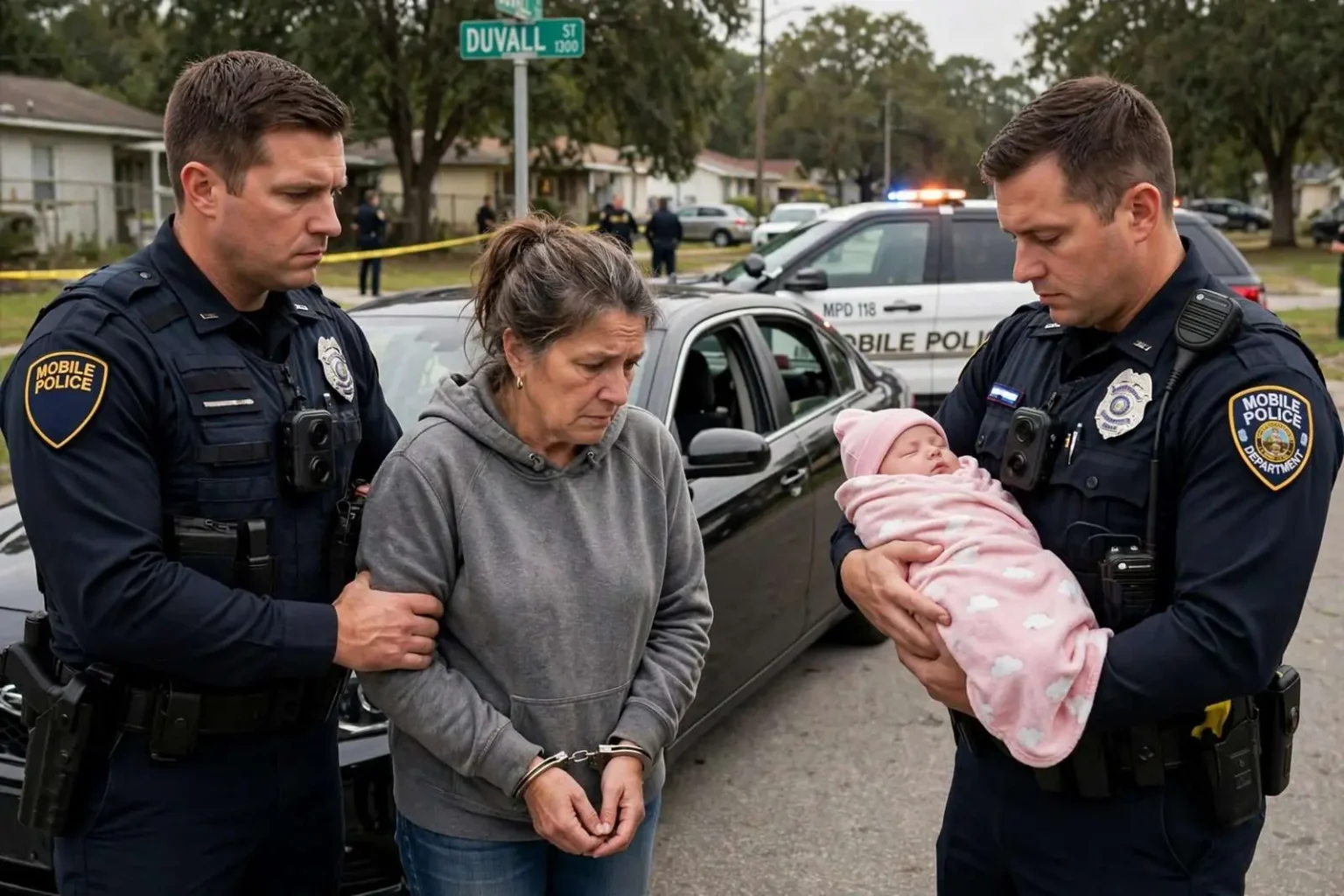
The Mobile Police Department’s overnight recap for April 13 includes the arrest of a grandmother accused of leaving her infant granddaughter inside a parked car with the windows rolled up and the ignition off. The case stands out even among the night’s other incidents for the age of the child involved and for how long the baby was reportedly left alone.
Police say 54-year-old Michelle Atwood was arrested after officers responded around 2:30 p.m. to the 1300 block of Duvall Street, where the 2-month-old had been left alone in the vehicle. Atwood told police she remembered roughly 30 to 45 minutes later that the child was still outside. Officers took the infant from the car and had the child taken to a hospital, where she was reported stable and in good condition.
The case illustrates a danger that safety officials warn about repeatedly: parked cars can become hazardous for young children within minutes, even on days that do not feel especially hot. A vehicle’s interior can heat rapidly when the windows are up, and an infant left unattended cannot regulate body temperature or signal distress the way an older child can. Departments across the country treat unattended-infant calls as emergencies for that reason, and Mobile officers’ decision to have the child evaluated at a hospital follows that standard practice even when a child appears well.
Leaving a young child unattended in a vehicle can lead to criminal charges in Alabama, and the decision to arrest rests with officers based on the circumstances of each case. Investigators will typically consider how long the child was alone, the conditions inside the vehicle and the child’s age when determining what charges apply.
Burglary arrest on Pinehill Drive
Earlier that night, at about 10:45 p.m., officers responded to a burglary in progress in the 600 block of Pinehill Drive. The call came while the suspected break-in was still underway, which allowed officers to treat the response as an active call rather than an after-the-fact investigation.
The timing of the report mattered. Burglary calls placed while a suspect is still at the scene give officers a chance at an on-site arrest and a far stronger case, since distance from the scene is often the weakest link in identifying a suspect after the fact. The Pinehill Drive response unfolded exactly the way those calls are supposed to: description in hand, officers swept the surrounding blocks and located the man within moments.
Responding officers were given a description of the suspect, who was located about a block south and apprehended without further incident. Police identified him as Brandon Bush, 26. In-progress burglary calls are among the most time-sensitive calls officers handle, because a suspect located within minutes of the report is far easier to connect to the scene — through proximity, direction of travel and what witnesses saw — than one apprehended hours or days later.
Arrests made near the scene of an in-progress call also reduce the risk of further losses for the resident. Property taken during a burglary is often recovered when the suspect is caught quickly, and the rapid response on Pinehill Drive reflected the department’s emphasis on treating those calls as priorities.
Vehicle strikes and a parking lot injury
In another case, a woman reported being struck by a vehicle around 4:45 p.m. in the parking lot of a restaurant on Airport Boulevard. She told police she was retrieving belongings from her trunk when the driver pulled away, causing a minor injury to her arm before leaving in a black Nissan Altima.
Parking lot incidents like this one are more common than many drivers realize. Low speeds and crowded lanes make lots a frequent setting for pedestrian strikes, and drivers pulling out of spaces often fail to check for people moving behind or between vehicles. Airport Boulevard, one of Mobile’s busiest commercial corridors, sees heavy restaurant traffic throughout the day, and its parking lots concentrate that movement into tight quarters.
Because the driver left the scene, the case remains an investigation into a hit-and-run, which carries its own penalties under Alabama law when a driver fails to stop and provide information after striking someone. Investigators will typically look for witnesses, business surveillance footage and any identifying details — such as the vehicle description the victim provided — in working the case.
Menacing complaint and a pursuit on McVay Drive
Police also responded to a menacing complaint on Mango Drive around 4:05 p.m., where a man allegedly pulled a handgun on a repo driver. The report added another layer to the department’s already busy overnight tally, and the events that followed turned a complaint call into a citywide pursuit.
The repo driver’s line of work — repossessing vehicles on behalf of lenders — puts agents into confrontational situations regularly, since recovering a car often happens in front of its owner, at unpredictable hours and without warning. Alabama law permits repossession of collateral under a security agreement, but brandishing a firearm at an agent is a serious criminal matter, which is why the complaint was treated as a menacing case rather than a civil dispute.
The driver fled from officers, leading them on a pursuit through the McVay Drive area that ended when he struck two vehicles — including one at an intersection — then hit a fence and escaped on foot. He remained at large as of the report.
Pursuits of this kind illustrate why vehicle chases are among the most unpredictable incidents officers respond to. A fleeing driver moves fast through streets lined with other motorists, and every intersection introduces risk for innocent drivers. The McVay Drive area, like much of west Mobile, mixes residential streets with busy connectors, and the crashes that ended this pursuit — at an intersection and against a fence — show how quickly a chase can turn into a public safety hazard even before it ends.
When a suspect flees on foot after a crash, the pursuit enters a second phase: setting a perimeter, calling in additional units and searching the surrounding area. Investigators will also work to identify the suspect from the repo report and the vehicle he was driving, and charges related to the pursuit — from attempting to elude to the property damage caused by the crashes — can follow once the man is located. As of the recap, identifying him remained the outstanding task.
The department publishes these overnight recaps as a running accounting of significant calls, arrests and investigations, giving residents a window into the volume and variety of incidents officers handle across the city each night. The April 13 recap covered the range: a call that saved an infant, an in-progress burglary that ended in an arrest, a parking lot strike-and-run, and a pursuit that began with a gun complaint and ended with a man still being sought. Together they trace the typical shape of a night’s police work in Mobile — mostly routine, occasionally urgent, and always moving from call to call across the city’s neighborhoods.
Mobile’s overnight police recaps serve a purpose beyond news: they document the incidents that shape the city’s daily sense of safety, and they regularly include cases that begin as routine calls and develop into larger investigations. The department compiles the recaps from incident reports and responds publicly to questions about the most serious cases, a practice that gives residents a way to follow the work of officers in their own neighborhoods.
The Duvall Street case drew particular attention because of the child’s age. Safety advocates note that infants are the most vulnerable passengers in any vehicle, and hot-car deaths and injuries are preventable with simple habits — checking the back seat before locking the car, keeping a visible reminder in the front, and asking caregivers to call if a child has not arrived as expected. Public health campaigns across the country urge adults who see a child alone in a car to call 911 immediately rather than wait, a message that applied directly to the callers who reported the child on Duvall Street.
That call likely made the difference in the outcome. A 2-month-old left in a closed car for an unknown additional stretch of time could have faced serious harm, and the report that the child was stable and in good condition after hospital evaluation represented the best possible ending to a situation that easily could have ended tragically.
The arrest also serves as a reminder that these cases reach every kind of household — in this instance involving a grandmother caring for a grandchild, not a stranger. Child safety experts stress that memory lapses around children in cars can happen to anyone under stress or routine disruption, which is why the advice centers on systems and habits rather than blame: lock cars when parked at home, keep keys out of children’s reach, and never leave a child unattended for any length of time, even for what feels like a quick errand.


