National Jellyfish Day Spotlights the Stinging Neighbors Swimmers Share With the Gulf Coast
National Jellyfish Day on Nov. 3 offered a reminder for Alabama beachgoers: moon jellies, cannonballs and sea nettles share local waters, and a purple flag signals dangerous marine life.
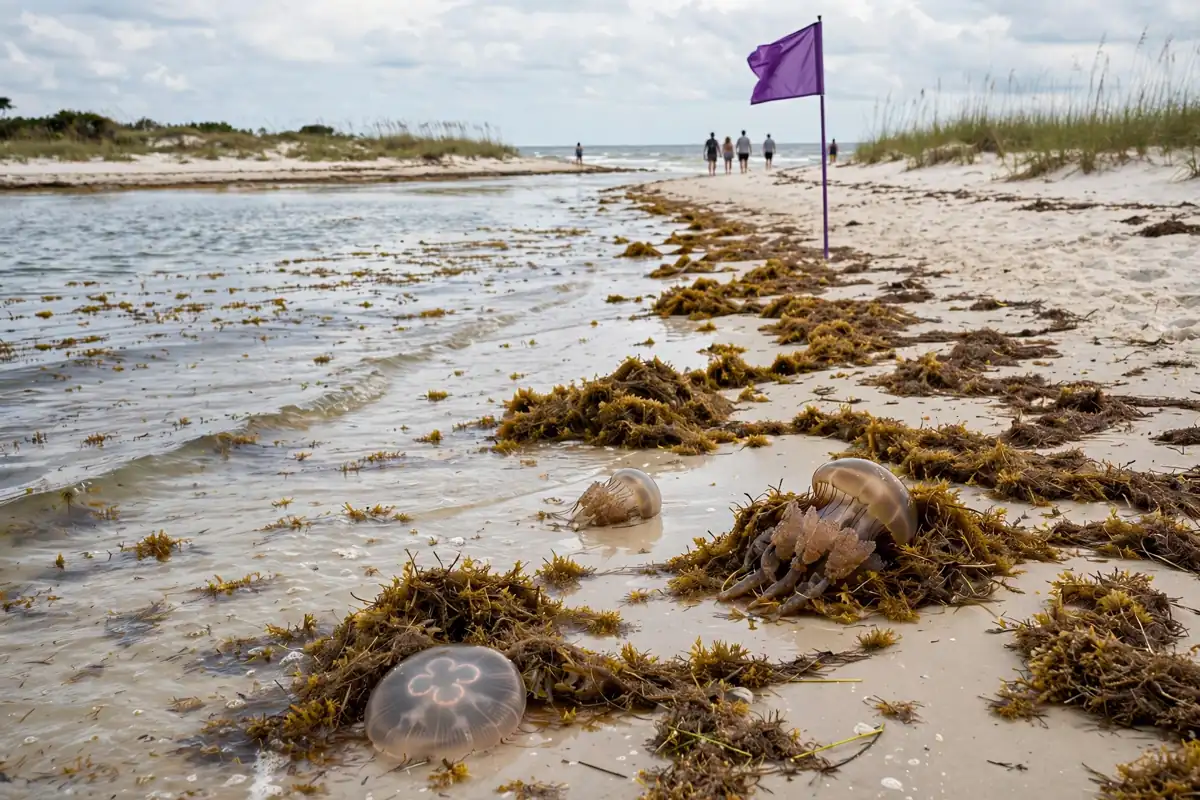
ORANGE BEACH, Ala. — National Jellyfish Day, observed nationwide Tuesday, Nov. 3, offered a reminder for Gulf Coast beachgoers about animals that are among the most recognizable in local waters, and that can still sting even after they wash ashore.
The annual observance is meant to raise awareness of jellyfish biology and behavior and their role in marine ecosystems. Jellyfish are found in every ocean and have been around for more than 500 million years.
Which ones turn up here
Several species move through the waters off Orange Beach and Gulf Shores each year. Moon jellyfish are among the most commonly seen along Alabama’s coast, while cannonball jellyfish and sea nettles appear seasonally.
They sometimes wash in tangled in sargassum, the brown floating seaweed that collects on Alabama beaches. That can make them harder for swimmers to spot in shallow water and along the shoreline.
Stings and flags
Stings are a common concern at area beaches, especially in warmer months, though most cause mild to moderate skin irritation. Beachgoers are advised not to touch jellyfish, including those lying on the sand.
Orange Beach and Gulf Shores post colored flags daily to warn of water and marine-life hazards. A purple flag signals dangerous marine animals, which can include jellyfish, stingrays or sharks. Flags can change during the day as conditions shift, so swimmers are encouraged to check them each time they head to the water.
Their place in the food chain
Jellyfish are also food for other Gulf animals. Sea turtles, including loggerheads, eat them, as do some fish and seabirds. Turtles are a familiar concern on this coast: Orange Beach’s Coastal Alabama Sea Turtle Facility was on the City Council’s Nov. 3 agenda for a medical equipment purchase.
Researchers have observed that jellyfish populations can grow in warmer water, and the animals are known to do well in nutrient-rich coastal areas. Some scientists link rising numbers in parts of the Gulf to changes in ocean temperature.
The day’s takeaway for beachgoers is simple: admire jellyfish from a safe distance.