Second Line Transit Ridership Up 8% in First Weeks, but Mobile Council Hears Service Concerns
Ridership on Mobile’s redesigned transit system grew 8% in its first three weeks, beating city expectations, as the council heard complaints from a dialysis provider and the provider keeps hiring drivers.
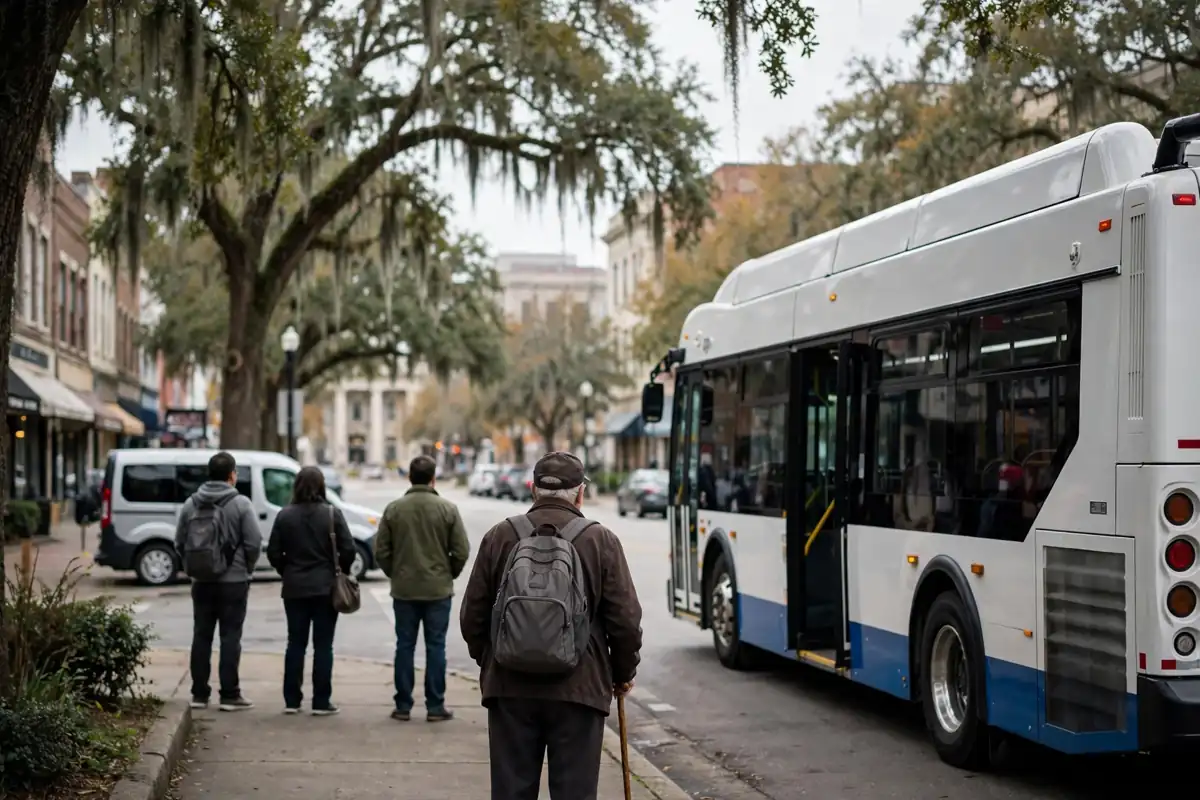
MOBILE, Ala. — Second Line Transit ridership rose 8% during the first three weeks of Mobile’s redesigned public transit system, a city administration representative told the City Council on Tuesday, more than triple the roughly 2.5% growth the city had expected.
The early numbers came at a Nov. 3 work session alongside a reminder of the system’s growing pains. A council member relayed complaints from a dialysis provider about late notice of service changes, and the city said it is working with its provider, Via, to keep up with demand and address service concerns.
What the new system looks like
Second Line Transit took the place of The Wave as the name and brand of the city’s public transportation system when it launched in late September. The redesigned network has nine high-frequency fixed routes along with microtransit, which lets riders book a trip through an app or by phone. Via is the city’s transit provider, under a contract the council approved last year.
The redesign also absorbed MoGo Rideshare, an on-demand service the Mobile Area Chamber Foundation started in 2024 to help residents reach jobs and training.
Before the launch, the city reported 561,000 riders from October through August and said Via had improved on-time performance by 60%.
Dialysis patients raise a concern
During Tuesday’s session, a council member said a dialysis provider with three clinics in Mobile has had trouble getting timely word of service or schedule changes, particularly during emergencies. The council member stressed that patients depend on transportation to reach their treatment.
The administration said it had passed the complaint along to Second Line Transit and would follow up. The clinics are in areas served by transit, officials said, but patients may rely on different options, including fixed routes, microtransit or MAP, a paratransit program that offers direct service. Some riders may not have enrolled in MAP, the administration said.
The complaint follows others raised soon after the launch. At a pre-council meeting on Oct. 14, Councilman Cory Penn said he had received emails and seen videos from frustrated riders and had asked the administration for information about the system. Residents told the council about late buses, missed work and longer walks to stops. One rider, Leroy Williams, said the new route left him almost a mile from his job.
Hiring to meet demand
The administration said Second Line Transit has hired 10 drivers and is training three more. The city expects the provider to bring on about five additional drivers to keep pace with ridership.
A system redesign can take about six months to work through early issues, the administration told the council, but the city is pushing the provider to resolve problems as quickly as possible. Second Line Transit also has a four-person community outreach team in addition to its local leadership, officials said.
Community leaders had flagged the adjustment before it arrived. Mobile County NAACP President Robert Clopton, who served on the steering committee for the transit changes, said in early October that his organization was taking a wait-and-see approach, with particular concern for riders in and around Prichard and on the outskirts of the city, where some areas rely on microtransit. He also said seniors and others would need training to use the new system.
Trolleys remain an open question
The look of the fleet could still change. Mayor Spiro Cheriogotis has said he wants to replace the city’s buses with trolleys, though that plan is not yet set.
The city is pursuing federal money for new trolleys and, if it gets the funding, could sell some of its buses. In September, the council approved an application for up to $1.36 million in Federal Transit Administration funds for five trolley-style buses, after District 4 Councilman Ben Reynolds urged the administration to “put the brakes on” and measure results first. The grant would require a $320,000 local match, and it had not been awarded as of last month.
The first trolley-style vehicle began carrying riders around the time of the launch. The city bought that used vehicle from Roanoke, Virginia. The mayor has said he hopes to have 10 to 12 trolleys and has argued that a small fleet would not be enough to prove the concept. If the federal grant comes through, he has said, the city would add a trolley route along Old Shell Road connecting downtown with Spring Hill College and the University of South Alabama.
The City Council also previously approved a $230,950 contract to update graphics across the transit fleet, covering 16 buses, 11 vans, 18 paratransit shuttles and one trolley, among other vehicles.