
No Midnight Lines: Pandemic Rewrites Black Friday Traditions at Mobile-Area Retailers
Major retailers stayed closed on Thanksgiving in 2020, quieting the usual Black Friday scene at Mobile and Baldwin County stores.
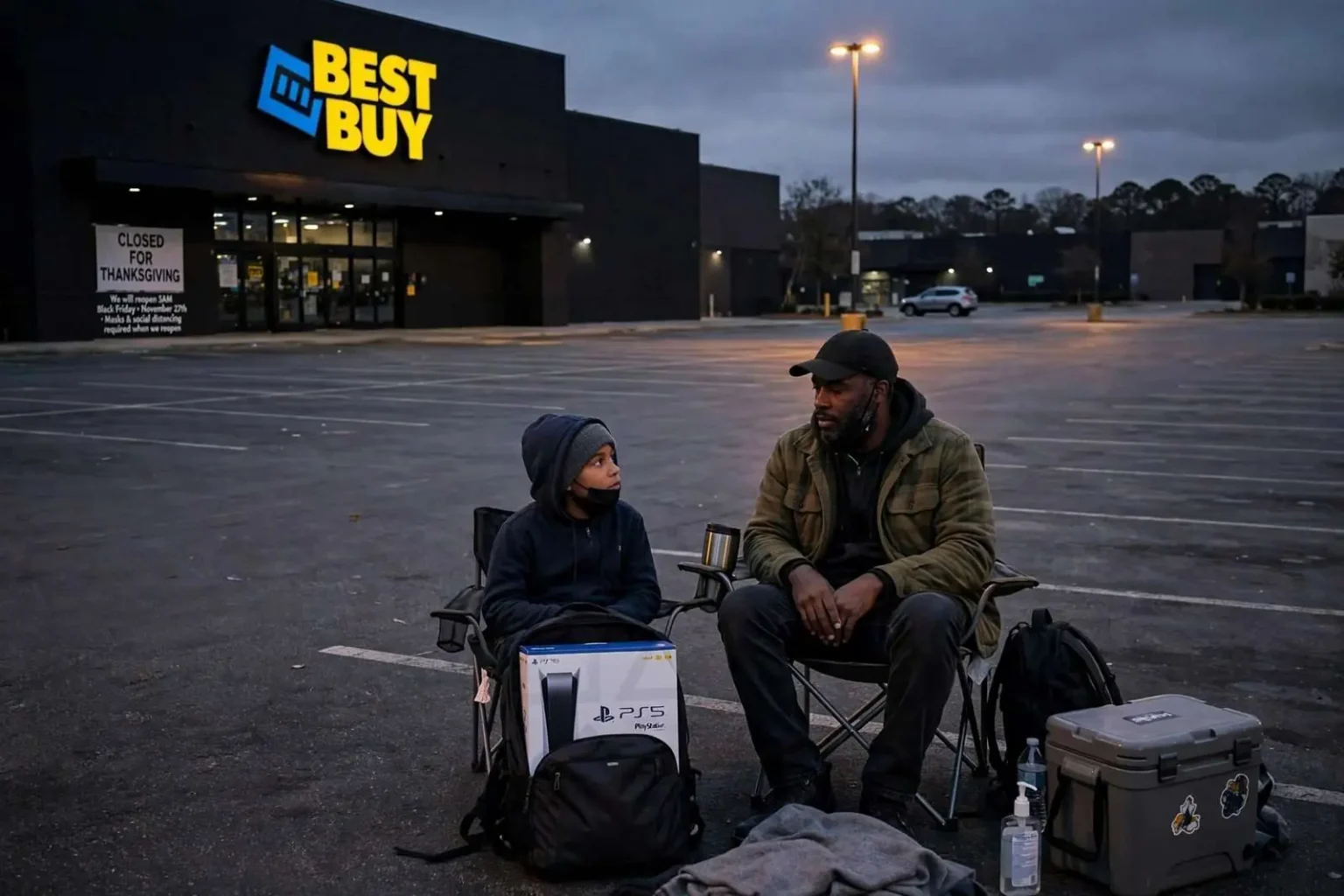
Black Friday looked different in Mobile in 2020. Several major retailers — including Best Buy, Target, Walmart, and Kohl’s — kept their doors closed on Thanksgiving Day, breaking with the years-long tradition of holiday evening doorbusters and doing away with the early lines that used to wrap around storefronts across Mobile and Baldwin County.
The change was the pandemic’s quiet rewrite of an American ritual. For years, the Thursday evening opening had been the most contested piece of the holiday shopping calendar, drawing criticism from workers and customers alike who argued that Thanksgiving should belong to families rather than to flat-screen deals. In 2020, the stores closed on the holiday not out of sentiment but out of necessity, and the change made for a quiet Thanksgiving evening outside local stores that older traditions had never known.
In previous years, Best Buy locations in the two counties opened at 5 p.m. on Thanksgiving. This year, shoppers had to wait until 5 a.m. on Black Friday itself — a shift of twelve hours that moved the start of the season from the end of one holiday to the morning after it, and left the parking lots along Airport Boulevard, Schillinger Road and the Eastern Shore’s retail corridors empty through the evening.
A quiet Thanksgiving night
By 6 p.m., only a father and son held a spot in line at one Mobile retailer, with the surrounding parking lot largely empty. The image would have been unthinkable in any recent year: in the seasons before the pandemic, the evening line at big-box stores had become its own local spectacle, complete with camp chairs, coolers, portable heaters and news cameras making the rounds from store to store.
“We’re getting a PlayStation 5 for my son,” said Dewayne Ballard of Mobile, who camped out for the hard-to-find console. The PlayStation 5 had launched shortly before the holidays and immediately became the season’s impossible purchase, with stores receiving tiny allocations that vanished within minutes and resale prices climbing online. For shoppers hunting one, camping out was no longer about doorbuster deals — it was the only way to be near the front when a handful of consoles went on sale.
Other shoppers expected crowds would still show up Friday morning despite coronavirus concerns. “Makes sense because of the corona and stuff like that, but people are still gonna want to shop,” said Jason McMillan. His prediction captured the gamble retailers were making: keep the crowds out on Thursday, and trust that the demand would still be there when the doors opened Friday. It was also, in its way, the plain-spoken summary of the entire season — a recognition that a pandemic could rearrange the calendar, but not the list of gifts waiting under the tree.
Why the stores closed on Thanksgiving
The Thanksgiving closure was a health measure before it was anything else. Crowds packed shoulder to shoulder outside a store at midnight, then surging through a single entrance, ran exactly counter to the social distancing guidance that governed every other part of life in 2020. Retailers also feared what had become obvious by November: an indoor crowd on the holiday could become a superspreader event bearing a store’s name.
The pandemic-era approach pushed the shopping season earlier and longer rather than later. Stores spent the fall steering customers online, offering curbside pickup, stretching deals across weeks instead of concentrating them into a single morning, and capping the number of shoppers allowed inside at any one time. The changes were designed to flatten the demand curve the way public health officials were flattening the infection curve — fewer people, in fewer places, at the same time.
What changed for local shoppers
For shoppers in Mobile and Baldwin County, the practical differences began well before Thanksgiving week. Deals that once required a 4 a.m. alarm appeared online days in advance. Curbside pickup, which had been a novelty in the spring, became the default for everyone from big-box chains to local boutiques along Dauphin Street and in Fairhope’s downtown. And the stores that did open early did so with occupancy limits, mask requirements and lines that stretched six feet apart down the sidewalk.
The result was a Black Friday with less of a stampede and more of a trickle. Employees at area stores described steady traffic rather than the morning crush, and parking lots that typically overflowed by 7 a.m. held open spaces deep into the day. Retail analysts had predicted the shift nationally, and Mobile’s experience tracked it: the money still flowed, but it flowed through screens, curbsides and spread-out hours rather than through a single chaotic morning.
Nothing illustrated the change better than the empty Thanksgiving evening. The holiday-openings tradition, which had crept earlier and earlier through the 2010s, dissolved in a single season. Whether it would return in future years was an open question even retailers were not answering — the closures were framed as a one-year response to the pandemic, but several chains found that skipping the Thursday opening cost them little in sales.
The PlayStation 5 scramble
The console hunt was its own storyline in a season without the usual storylines. The PlayStation 5, released in November 2020, arrived in quantities far below demand, the product of pandemic-disrupted manufacturing colliding with a holiday season in which home entertainment was one of the few things people were spending on. Retail stocks sold out in minutes, restocks were announced by rumor, and bots built for scalpers snapped up inventory before human shoppers could reach the checkout.
That scarcity is what put the Ballards in line on a holiday evening in front of a darkened Mobile store. Camping out had once been about catching the first doorbusters; by late 2020 it was about the simple arithmetic of supply and demand — the store would have a handful of consoles, and the people waiting longest would be first in line to buy one.
Local resale listings told the same story from the other side, with consoles offered online at multiples of their retail price. Consumer advocates spent the season warning buyers about the markup, while parents across the Gulf Coast weighed the difference between a sleepless night in a parking lot and a months-long wait for the next restock.
The retailers’ new playbook
For the chains involved, the 2020 approach was less a single decision than a rewrite of the entire season. Best Buy, Target, Walmart and Kohl’s each spent October and November announcing deals online, staggering them across weeks, and pushing shoppers toward app orders and curbside pickup. The doorbuster — a deal priced low enough to demand a midnight vigil — nearly disappeared, replaced by online-only pricing that changed by the hour.
The stakes for the chains were enormous. The stretch from Thanksgiving through Christmas delivers a disproportionate share of annual revenue for many retailers, and a season that disrupted the crowds threatened to disrupt the revenue. What the chains found, in Mobile as nationally, was that shoppers adapted faster than anyone expected — online sales surged, curbside pickup turned into a genuine consumer habit, and the Friday-after-Thanksgiving crowds that did appear spent less time fighting over flat-screens and more time crossing items off normal lists.
Local color from the line
The father and son holding the line at a Mobile retailer on Thanksgiving evening became, in miniature, the story of the season. Two people where hundreds once stood. A console hunt instead of a doorbuster dash. A camping chair on an empty lot where a small village of shoppers once gathered with heaters and cocoa.
Ballard’s mission — a PlayStation 5 for his son — was the common one of 2020. McMillan’s read on the crowds, that people would show up Friday despite the virus, was the counterweight. Both proved partly right: the Thanksgiving-evening crowd never materialized, but Friday morning brought shoppers back in numbers that were respectable if far from the old crush.
What the pandemic season left behind
The 2020 holiday season turned out to be a hinge. Some of what it forced — curbside pickup, the stretched-out deal calendar, the decline of the midnight line — survived the pandemic and became permanent parts of how Americans shop. The Thanksgiving-evening opening, meanwhile, never fully recovered its old grip; in the years that followed, most major chains kept the holiday closed, a change that had begun as a health measure and hardened into policy once retailers saw the sky did not fall.
For the shoppers of Mobile and Baldwin County, the season of the empty parking lots became the year the tradition was rewritten for them — quieter on the holiday, spread out across weeks, and, for one father and son with a camping chair and a console on the list, a memory of the strangest Black Friday the Gulf Coast had ever seen.


