O’Death Brings Its Rowdy Appalachian-Punk Sound to Alabama Music Box
Brooklyn's O'Death brings its Appalachian folk-punk sound and rowdy live show to the Alabama Music Box in downtown Mobile on Thursday, September 8, 2011.
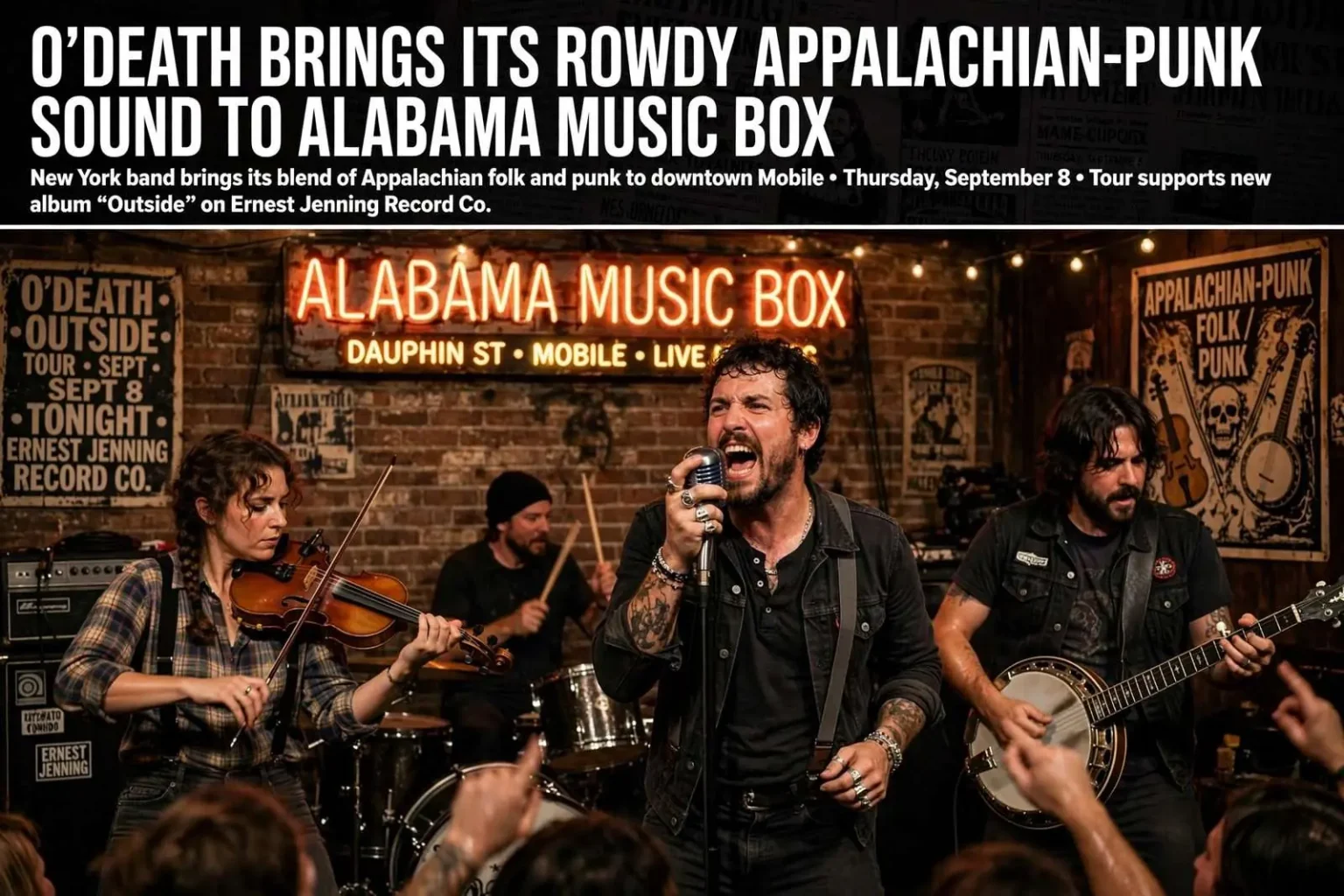
New York band O’Death brings its one-of-a-kind blend of Appalachian folk and punk energy to the Alabama Music Box in downtown Mobile on Thursday, September 8, as part of a national tour supporting the group’s latest album, “Outside,” released on Ernest Jenning Record Co. For a band whose live show has built its reputation, the stop offers Mobile audiences a straight shot of the group’s famously unhinged stage craft in a room built for close-quarters music.
The band has earned a national reputation for shows that feel equal parts punk rock concert and down-home jug band hoedown. Fiddles and banjos collide with overdriven guitars and pounding drums, and audiences that arrive curious routinely leave drenched. It is a formula few bands dare to attempt, and fewer still sustain for a career spanning multiple albums and seemingly endless national tours.
The New York Times described O’Death’s sound as drawing from “the starkness and spiritual purity of Appalachian folk, the menace of punk and the rowdy theatricality of Tom Waits” — a mix that has made the group’s rambunctious live performances its calling card. Critics have long struggled to file the band anywhere neat, which is part of the appeal: the group sits at a crossroads where old-time mountain music, garage punk and theatrical songcraft all meet.
The Album Behind the Tour
“Outside,” the record powering this national run, arrives on Ernest Jenning Record Co., the independent label that has long been home to idiosyncratic indie and punk-adjacent acts. An album cycle on an indie label typically means the band is playing smaller venues and building audiences city by city, which makes a Mobile appearance all the more notable — this is a tour designed to bring the band directly to listeners rather than chase radio play.
The record continues the band’s tradition of marrying dark, gothic imagery to music that makes audiences move. Longtime listeners know O’Death’s catalog for its marriage of murder-ballad storytelling and rave-up energy, and the new material slots naturally into a live set that has never been content to stand still.
A Rare Gulf Coast Booking
The September 8 stop gives Mobile music fans a rare chance to catch the critically praised outfit in an intimate downtown venue. Touring bands of this profile more often confine their Southeastern itineraries to Atlanta, New Orleans or Nashville, and Gulf Coast audiences sometimes drive hours to catch acts that skip the corridor. A downtown Mobile date collapses that drive.
The Alabama Music Box on Dauphin Street has become one of the city’s go-to rooms for touring indie and roots acts. The club’s stage has hosted a steady stream of national touring artists alongside the region’s own bands, and its size means there are no bad sightlines and no distant seats — the audience stands close enough to the performers to feel the kick drum.
This show continues a busy fall of national acts passing through the Port City. Dauphin Street’s club corridor has made downtown Mobile a dependable stop on Southeastern tour routings, with venues within easy walking distance of each other giving bands a compact night of music and giving fans a choice of shows on any given weekend.
The Sound of O’Death
The band’s musical toolkit comes straight out of the Appalachian tradition — fiddle, banjo, acoustic guitar, upright-feeling rhythm — but the delivery is pure punk rock. Songs that begin as waltzes can erupt into mosh-pit fuel, and quiet ballads sit beside tracks that sound like a barn dance collapsing into a riot. The contrast is the point: O’Death treats old-time music not as a museum piece but as living, dangerous material.
That approach has antecedents. The line from the citybilly movement — urban musicians reimagining mountain music with rock energy — runs through decades of underground Americana, and O’Death’s Brooklyn-era take on it added a gothic theatrical streak that set the band apart from gentler folk-revival acts. Where many revivalists polish, O’Death roughs up; the sawdust and sweat are left in on purpose.
Live, the band trades on that danger. Its shows are known for fiddle players climbing on the bar, audience members pulled into singalongs, and encores that feel less like performance than exorcism. It is the kind of act that converts first-timers on the spot, and the kind that existing fans will drive across state lines to see again.
Downtown Mobile’s Music Row
The Alabama Music Box sits in the heart of Dauphin Street’s entertainment district, the strip of bars, restaurants and clubs that anchors downtown Mobile’s nightlife. Over the past decade the corridor has grown into the Port City’s de facto music row, with club owners booking everything from touring singer-songwriters to metal and punk packages, and with foot traffic on show nights spilling from one doorway to the next.
For local music fans, the venue’s calendar matters beyond any single show. Every national touring act that books downtown Mobile demonstrates to agents and promoters that the city can draw a crowd, and each successful night makes the next booking easier. Cities of Mobile’s size often fight for a place on tour routings between New Orleans and the Florida panhandle; a healthy club scene keeps the Port City on the map.
Thursday shows carry their own appeal. A weeknight date keeps cover charges modest and rooms comfortable, and it leaves the weekend free — though regulars know that a touring band on a Thursday usually plays longer, looser sets than the same band would on a packed Saturday.
Opening Night Energy
With a national tour underway, the Mobile date lands in the stretch of shows where a band is at peak performing tightness — rehearsed enough to take risks, road-tested enough to land them. O’Death’s sets on album tours typically braid new material with fan favorites from across the catalog, and the band has never been precious about rearranging songs to suit the night’s mood.
Doors at the Alabama Music Box open in the early evening, with the band on stage later that night. Attendees should expect a loud room, a dancing crowd and a show that blurs the boundary between performer and audience — the very qualities that have made O’Death’s live reputation outlast trends in the indie scene that spawned it.
Why the Port City Embraces Oddball Acts
Mobile’s audience has long been friendlier to the strange and the rootsy than its size suggests. The city that invented America’s original Mardi Gras has a built-in tolerance for spectacle, and its clubs have historically welcomed acts — Cajun, zydeco, gypsy punk, psychedelic folk — that blur genre lines the way O’Death does. A band that plays like a front-porch jam session gone wrong is, in a real sense, playing to the home crowd.
The Gulf Coast’s own musical diet helps explain it. Between second-line brass traditions that drifted east from New Orleans, fife and drum ensembles in the river counties, and the honky-tonk and shoals-adjacent sounds that circulate across south Alabama, local listeners grew up with music that mixes reverence and rowdiness. O’Death’s hoedown-punk synthesis reads to a Mobile crowd not as novelty but as a dialect of something familiar.
The September 8 appearance also lands during the run-up to Mardi Gras season’s social calendar, when downtown Mobile begins filling with the first of the season’s balls and parades. A rowdy Appalachian-punk show fits the mood of a city gearing up to celebrate.
Ernest Jenning Record Co. and the Indie Circuit
The label behind “Outside” deserves its own note for Alabama music fans tracking the band’s trajectory. Ernest Jenning Record Co. has spent years releasing records by bands that major labels never quite know what to do with — acts with strong live followings and distinctive catalogs — and its roster has long been a tip-off for listeners who trust curation over genre labels.
Tours on labels like Ernest Jenning run on hustle: van, merch table, house-show alternatives when club dates fall through, and a route stitched together market by market. That a band with O’Death’s profile keeps this pace year after year is a testament to the endurance its live show demands, and it means the Mobile crowd on September 8 will see a group that has honed its performance to a fine edge through sheer repetition.
The Night Ahead
For the price of a weeknight cover, Mobile music fans get a band that the New York Times once framed in the same breath as Tom Waits, playing a room where the front row is an arm’s length from the fiddle player. Shows like this are the reason Dauphin Street’s club scene matters to the city’s cultural life, and they are the reason regulars mark their calendars when a national act announces a downtown stop.
O’Death’s blend of Appalachian folk, punk menace and theatrical rowdiness may never top a radio chart, but on a Thursday night in downtown Mobile, it will not need to. The Alabama Music Box will be full, the band will be loud, and the Port City’s fall concert season will roll on — one unforgettable, sweat-soaked show at a time.