On Bars: The Blind Mule, a Cornerstone of Mobile’s Music and Food Scene
On Bars: The Blind Mule, a Cornerstone of Mobile's Music and Food Scene — local South Alabama news from southalnews.com.
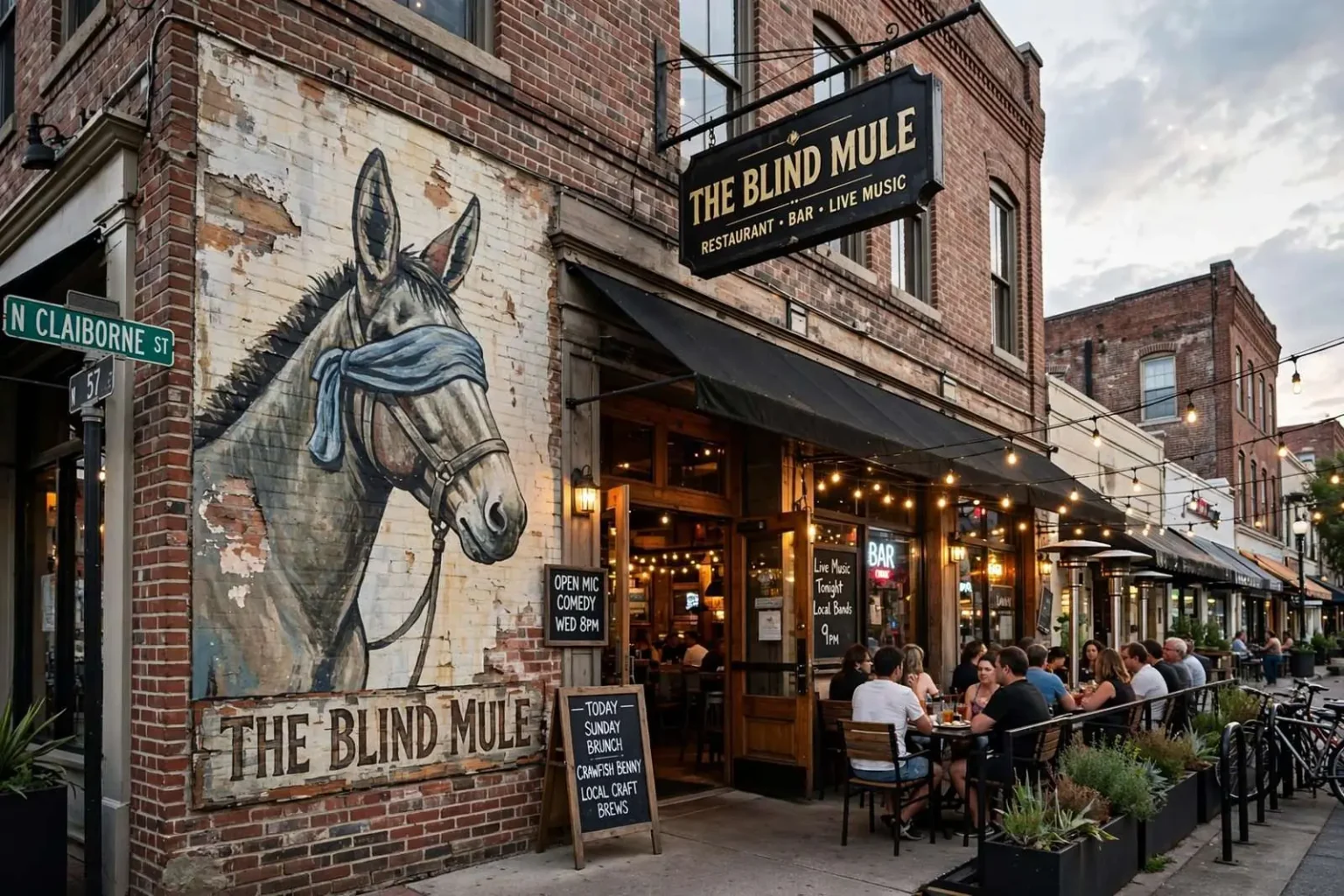
The Blind Mule Restaurant and Bar is a cornerstone of Mobile’s music, food and bar scenes. The building with the recognizable mule painted on the side draws a diverse crowd of all ages, ethnicities and backgrounds — one of the LoDa spots where everyone is welcome.
Few downtown establishments can claim that kind of standing across three separate scenes at once. Restaurants come and go on Mobile’s dining rows, bars cycle through openings and closings along Dauphin Street, and music venues struggle to keep the lights on between shows. The Blind Mule has managed all three roles simultaneously, and in doing so it has become less a business than a fixture — the kind of place residents point to when describing what downtown Mobile is supposed to feel like.
Its location in the LoDa district — Mobile’s Lower Dauphin arts and entertainment corridor — places it among the city’s most visible blocks, near the Saenger Theatre, Bienville Square and the galleries and performance spaces that give the area its artistic identity. That setting suits the venue’s character: the Mule is equal parts neighborhood bar, kitchen and stage, and it treats none of the three as secondary.
Food, Drink and Three Spaces
The Mule pairs one of the best burgers in Mobile with a popular Sunday Brunch featuring crawfish benny, plus a wide range of local and craft brews and spirits. The kitchen’s reputation rests on unpretentious food done well — the kind of menu that satisfies a late-night crowd and a weekend brunch crowd without changing its identity between them.
The Sunday brunch has become a draw of its own, with the crawfish benny giving out-of-towners a distinctly Gulf Coast reason to put the Mule on their weekend itinerary. Crawfish dishes sit comfortably in Mobile’s culinary tradition, where Louisiana influence runs deep across the local food scene, and the venue’s version has become one of the most requested plates in its rotation.
The drink program leans local and craft. The bar stocks a rotating selection of Alabama and regional brews alongside national craft labels and a full spirits lineup, a balance that serves both beer-focused regulars and cocktail drinkers stopping in after dinner elsewhere in the district.
Owner Ed Walker says the perk of an independent business is “the only person you have to answer to is yourself.” That independence shows in the venue’s programming choices — booking local bands that corporate bar chains would rarely consider, keeping the kitchen open late for show crowds, and letting the room’s personality develop organically rather than according to a franchise playbook.
Physically, the venue spans a dining room and downstairs bar, a patio, and the upstairs Attic with its own bar. The three-space layout is central to how the Mule functions: diners and after-work drinkers occupy the downstairs, the patio handles the open-air crowd that Mobile’s long warm season supports, and the Attic carries the music.
The patio deserves particular mention in a Gulf Coast city. Outdoor seating stretches the venue’s usable season across most of the year, and on weekend nights the patio often functions as a second social room, spilling conversation onto the sidewalk and adding to the street-level energy that makes the LoDa corridor feel alive after dark.
Where Local Bands Start
The Attic is where many local acts get their first stage, welcoming any genre from metal to hip hop. The upstairs room has served as an incubator for Mobile’s original music scene for years, giving young bands a real stage, a real sound system and a real audience at the point in their development when most rooms will not book them.
That openness to any genre is rarer than it sounds. Many venues narrow their bookings to a single style of music in search of a dependable crowd, but the Mule’s willingness to move from a metal bill on one night to a hip hop showcase the next has made it a home base for scenes that rarely overlap anywhere else in the city. A musician’s first taste of playing out in Mobile is likely to happen in that upstairs room, regardless of what they play.
The venue’s commitment extends to the festival calendar as well. The Blind Mule is a SouthSounds Festival mainstay, hosting showcases for the annual event that spotlights emerging artists from across the Southeast, and it is home to Mule Fest each spring — the venue’s own celebration that turns the building and its surrounding block into a multi-day music gathering.
SouthSounds in particular has become part of Mobile’s identity as a music city, drawing acts and audiences from across the region each year, and venues like the Mule are the reason the festival works. A city can only host a new-music festival if it has rooms that already know how to treat original music seriously — sound engineers who care, bookers who take chances and staffs that understand a band hauling its own gear.
For touring acts passing through the Gulf Coast, the Mule’s reputation travels. Regional bands route their tours through Mobile partly because rooms like this one exist — venues where a Tuesday-night bill of unknowns still gets promoted, staffed and paid with the same seriousness as a weekend headliner.
The Weekly Rhythm
Weekly happenings include Open Mic Comedy on Wednesdays, the Mobile Jazz Club on the third Thursday, and Trivia Night on the patio. That recurring calendar is the connective tissue between the venue’s bigger nights, keeping the building active on weeknights and giving regulars a schedule to organize their social lives around.
The Wednesday open mic has long served as a proving ground for local comedians, one of the few consistent stages in the area where new material can be tested in front of a live crowd. Comedy open mics work only when a venue commits to them week after week, and the Mule’s Wednesday night has built a following among both performers and audiences who want live comedy without a ticketed theater price.
The Mobile Jazz Club’s third-Thursday gatherings give the city’s jazz community a regular home. Jazz scenes survive on exactly this kind of recurring session — a dependable night where players sit in, listeners know to show up and the music stretches past what a one-off booking allows. Mobile’s deep musical traditions, from jazz to blues to the Carnival season’s brass sounds, find a slot on the Mule’s calendar alongside its rock and hip hop bills.
Trivia Night on the patio rounds out the week, drawing the quiz-team crowd that every bar scene depends on — groups who come early, order food and turn a weeknight into a full evening at the venue.
The People Behind the Bar
Bartender Courtney Wilkins says regulars become friends, and supporting the Mule with a meal or drink keeps its magic alive. It is a simple observation, but it captures the economics underneath every independent venue: the places that define a city’s character survive on repeat visits, not viral moments.
Staff longevity is part of what turns a bar into an institution. Bartenders who stay in one place accumulate a customer base that becomes a community — they remember orders, follow regulars’ lives and set the tone of the room. The Mule’s staff has been part of that dynamic, and the venue’s reputation as a welcoming spot owes as much to the people behind the bar as to the bands on the stage.
The crowd itself is the other half of the formula. The Mule draws a mix that spans ages, ethnicities and backgrounds in a way that few Mobile rooms match — college students sharing the downstairs bar with longtime downtown workers, music fans who came for a metal bill brushing shoulders with the brunch crowd from Sunday before. Venues that welcome everyone tend to last; venues that narrow to a single clique tend to fade when tastes shift.
What the Mule Means to Mobile
Independent venues across the country have faced years of pressure — rising rents, shifting drinking habits and the economics of live music that grow harder by the season. Against that backdrop, the Blind Mule’s continued standing says something about Mobile’s appetite for the kind of room it is: a place where a burger, a local beer and a band nobody has heard of yet can all share the same night.
The venue’s role in the local music pipeline is difficult to overstate. Every scene needs a first stage, and for generations of Mobile musicians that stage has been the Attic — a room where a new band’s earliest original songs meet their first audience. The bands that graduate from that room to festival stages across the Southeast carry the Mule’s name with them, and the venue’s yearly Mule Fest brings the cycle full circle each spring.
Its kitchen and bar do their own quiet work for downtown. Restaurants and bars anchor street life, and the Mule’s mix of dining room, patio and stage keeps activity on its block across lunch, dinner and late night — the kind of all-day presence that separates thriving entertainment districts from ones that go dark after five.
For visitors, the Mule offers a single-stop introduction to Mobile’s character: Gulf Coast food, Alabama beer and a live-music culture that punches above the city’s size. For locals, it is simply part of the routine — the Wednesday open mic, the third-Thursday jazz session, the Sunday crawfish benny, the show upstairs.
The Blind Mule Restaurant and Bar stands at 57 N. Claiborne St. in downtown Mobile, its painted mule watching over a block it helped make what it is. Supporting it, as Wilkins says, is how the magic stays alive — one meal, one drink and one show at a time.