One Year After Smith Lake Drowning, Dothan-Area Dive Team Shares a Water Safety Warning
One year after Kelsey Starling's drowning at Smith Lake, the Houston County Rescue Unit divers who recovered her share a Fourth of July water safety.
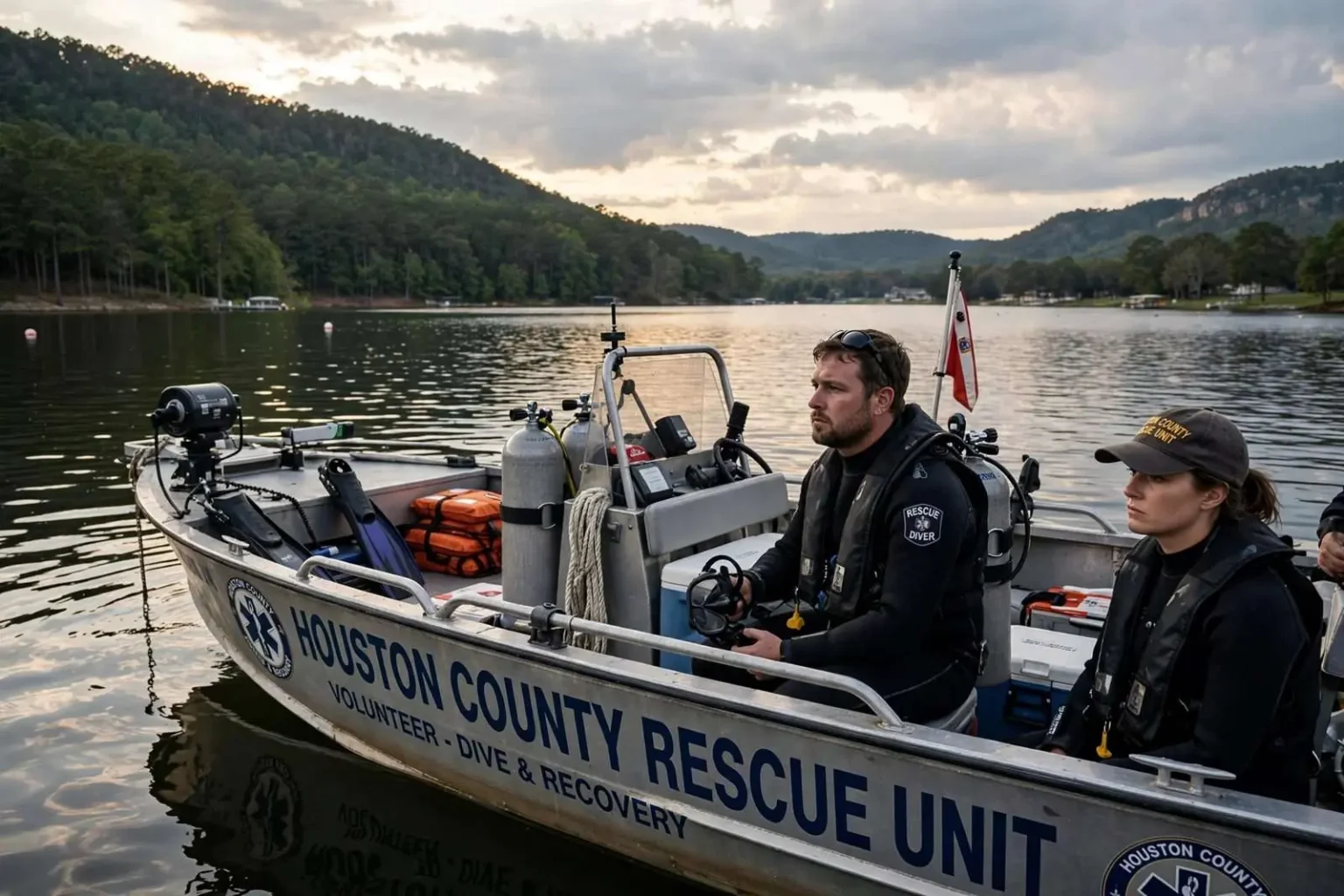
The Fourth of July weekend marked one year since a boating accident on Smith Lake claimed the life of Kelsey Starling, and the divers who spent three months recovering her body are marking the anniversary with a simple plea: be careful out on the water.
Starling, remembered by friends as a former cheerleader with a bright, outgoing personality, died in the July 2020 accident that set off an extensive recovery effort involving more than a dozen teams, volunteer divers and specialized equipment. What began as a holiday weekend on one of Alabama’s most popular lakes became, within hours, a search operation that would stretch on far longer than anyone involved wanted it to.
For the volunteer divers who worked the case, the anniversary is not an abstraction. They remember the water, the conditions, and the months of effort that ended with Starling’s recovery — and they want every boater heading out for a summer weekend to understand how quickly the same kind of day can go wrong.
A Recovery That Took Three Months
Chris Ball was the diver who ultimately found Starling nine months into the effort. He said the work is a sobering reminder of how fast a fun day on the lake can turn tragic. The search demanded repeated dives in water where visibility, depth, and underwater terrain all worked against the recovery teams, the kind of conditions that make Smith Lake searches notoriously difficult.
“People don’t think about what we do until they need us,” Ball said. “A lot of these things are preventable, just by being careful when you’re out there on the water.”
Ball never met Starling, but he said the Smith Lake community made clear how much she meant to her family and friends, describing her as someone with a bright future ahead of her. Recovery divers rarely know the people they search for, but in cases like this one the community’s grief reaches them all the same — through the families waiting at the boat ramps, the vigils on the shoreline, and the weight of knowing how many people are counting on them.
Recovery operations on large lakes are measured not in hours but in weeks and months. Divers depend on water clarity that north Alabama’s lakes rarely offer, on sonar surveys that can distinguish a human silhouette from a fallen tree, and on the patience to search the same grid repeatedly until the water gives up what it holds. More than a dozen teams took part in the effort, along with volunteer divers and specialized equipment brought in from across the region.
The Lake and Its Dangers
Smith Lake — known formally as Lewis Smith Lake — lies in the hills of Walker, Cullman, and Winston counties northwest of Birmingham, its deep, clear water drawing thousands of boaters every summer weekend. The lake’s submerged timber, steep channel drops, and coves that open suddenly into open water create conditions that catch inexperienced boaters off guard, particularly on crowded holiday weekends when traffic on the water peaks.
Boating accidents in Alabama follow a pattern that safety officials know well: high-speed impacts, falls overboard, and collisions in congested areas, often in the late afternoon when the water is busiest and the sun begins to drop. July 4 is consistently among the busiest weekends of the year on the state’s lakes, and it is also when law enforcement and rescue units brace for their heaviest call volume.
Message From the Rescue Unit
The recovery drew personnel from across the region, including the Houston County Rescue Unit, a Dothan-based volunteer team whose president, Ashton Davis, went to high school with Starling. For Davis, the case was personal long before his divers ever entered the water — a connection that made the months of searching both a professional obligation and a duty to someone he had known.
Davis said he remembers her energy most of all. “Life is fragile and all it takes is one mistake,” Davis said. “It takes a split second for the most unimaginable thing to happen.”
Volunteer rescue units like the Houston County team operate on that understanding year-round. Staffed by members who hold day jobs and respond to calls at all hours, they provide dive recovery, swiftwater response, and search capabilities that many rural Alabama counties could not otherwise afford. When a drowning or boating accident occurs, it is often teams like these that spend days — or, in cases like Starling’s, months — working the water.
Divers with the unit said they commit every available resource to each search they conduct. Their hope, they added, is that over holiday weekends like this one, they won’t be needed at all.
Boating Safety on Alabama’s Lakes
The anniversary comes each year at the height of boating season, when the message from divers and rescue units is aimed squarely at the crowds heading for the water. Alabama law requires life jackets aboard vessels for each person and mandates that children younger than 8 wear one while on the water, and boating safety courses are required for operators of most vessels. But rescue veterans say the equipment matters less than the decisions: watching speed near other boats, staying sober behind the wheel, and keeping a close eye on swimmers and riders.
Holiday weekends multiply every one of those risks. More boats on the water mean more wakes, more congestion near ramps and marinas, and more chances for a moment of inattention to become a collision. Rescue units across north and southeast Alabama plan their staffing around those weekends precisely because experience has taught them what the water can produce when the crowds arrive.
For the divers who found Kelsey Starling, and for the friends who remember the former cheerleader’s bright, outgoing personality, the plea one year later is unchanged. The lake will be crowded again this holiday weekend, as it is every summer. Their message to everyone heading out is the one that cost months of searching to earn: be careful out on the water, because a split second is all it takes.
Inside the Search
The search for a missing person in a lake the size of Smith begins with the hardest question in rescue work: where, in thousands of acres of water, to look. Teams start from the last known location and work outward, using sonar to map the bottom and divers to check every anomaly the scans produce. Underwater terrain on Smith Lake includes old road beds, standing timber, and channel drop-offs, all of which produce shadows and shapes that have to be ruled out one at a time.
Weather and water conditions dictate the pace. After heavy rain, visibility can drop to nearly nothing, forcing divers to search by feel in total darkness. Currents from inflowing creeks, boat wakes churning the surface, and the sheer physical strain of repeated deep dives all limit how long a team can work each day. That is why recoveries that families hope will take days can stretch into weeks and months, and why the involvement of more than a dozen teams mattered so much in this case.
Volunteer divers absorb those conditions on their own time and, often, at their own expense. The specialized equipment involved — dive gear rated for deep and low-visibility work, sonar units, boats, and the vehicles that move it all — represents thousands of dollars contributed through donations and fundraising by the units and their communities.
Remembering Kelsey Starling
The year that followed the accident saw the Smith Lake community hold tight to Starling’s memory. Friends recalled a former cheerleader whose bright, outgoing personality filled a room, someone with a bright future ahead of her — the same words her family and friends used when they spoke to the divers who never knew her in life but came to understand, through months of searching, exactly how much she was loved.
That connection between a community’s grief and a rescue unit’s persistence is a quiet feature of every prolonged recovery. Families visit the staging areas. Local residents bring food to the crews. Boat ramps fill with people who want to help but can only wait. The divers carry all of it with them into the water, and they say it is part of what keeps them returning to a search until it is finished.
What Boaters Should Carry — and What to Do
The anniversary plea from the divers comes down to basics that safety officials repeat every summer. Wear the life jacket rather than just carrying it aboard, because a jacket in a storage compartment cannot be put on after the accident happens. File a float plan with someone on shore so that searchers know where to look if a boat is overdue. Check the weather, watch the speed, and keep a sober, alert operator at the wheel for the entire day on the water.
If someone goes into the water and does not surface, the guidance is to call 911 immediately, throw flotation, and keep eyes on the spot — markers on the shoreline give rescuers a fixed search origin rather than a memory that drifts with the current. Those first minutes, rescuers say, are the ones that determine whether an incident ends in a rescue or a recovery.
A year after Kelsey Starling’s death, the teams who worked the search for months do not want to see another family on a shoreline waiting for news. Their hope is that the lake’s crowded holiday weekends pass without a single call — and that the plea they repeat each July is finally the one that boaters carry with them out onto the water.