Orange Beach City Schools Says Randy Wilkes Remains Superintendent Despite Social Media Claims
Orange Beach City Schools confirms Randy Wilkes remains superintendent despite viral social media claims tied to a federal lawsuit against the district.
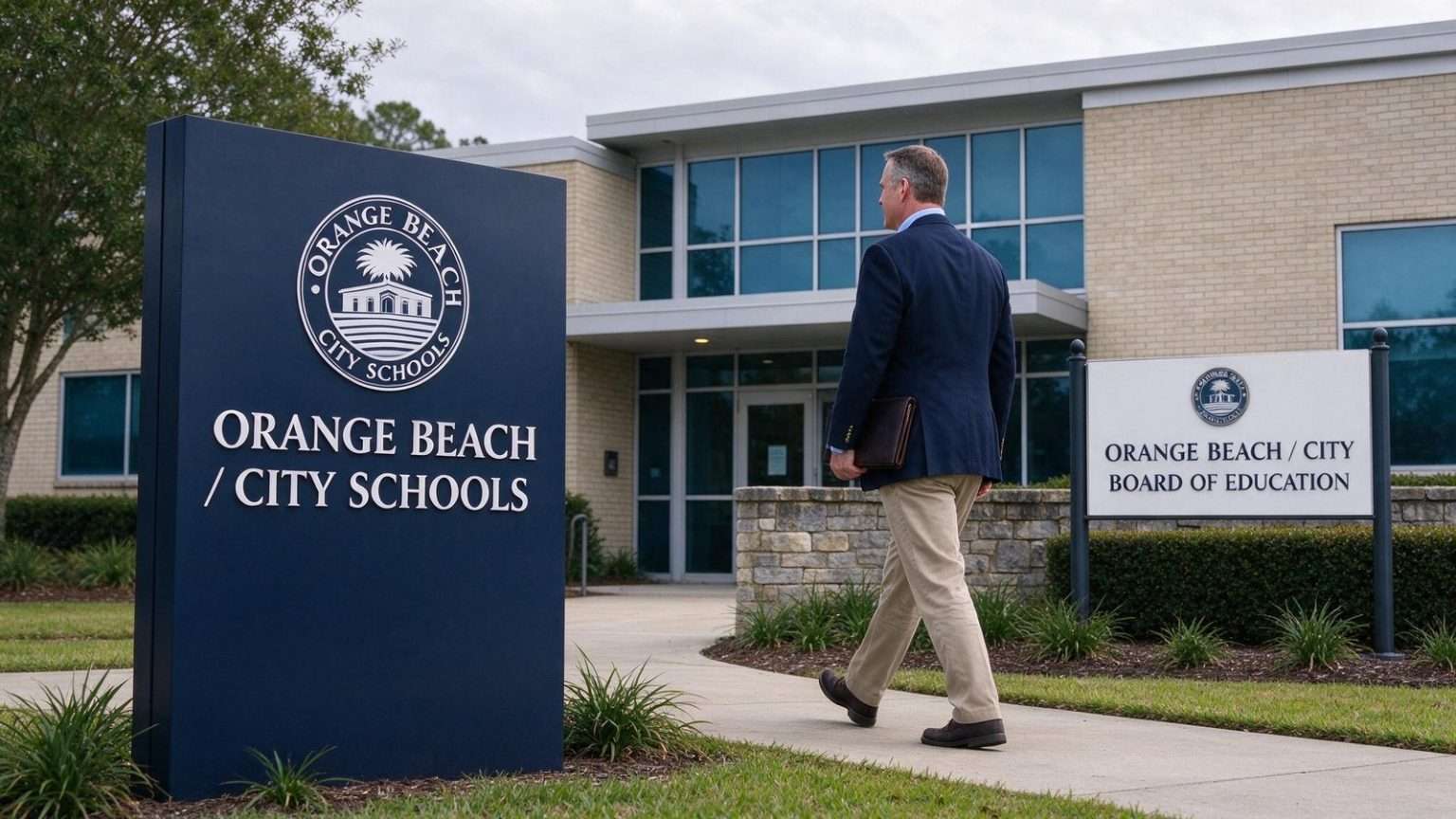
Orange Beach City Schools pushed back publicly against rumors circulating on social media that Superintendent Randy Wilkes had been dismissed, confirming that he continues to lead the Baldwin County school district. The district’s response came after speculation spread faster than any official information, a dynamic that has become familiar for institutions navigating both litigation and the rapid circulation of unverified claims online.
The speculation grew out of a widely shared online video posted by a local attorney, which referenced an ongoing federal civil lawsuit in the U.S. District Court for the Southern District of Alabama involving the Orange Beach City Board of Education, the school district and Wilkes. The suit, filed by a Florida family with two children enrolled in the district, stems from a bullying incident and raises claims including due process violations, First Amendment retaliation, breach of contract and defamation.
In a statement, the district said claims that Wilkes is no longer employed by the school system are false, noting that he has served as superintendent since July 1, 2022, and that there is no investigation involving him or any matter related to his employment. District communications staff reiterated the point directly, adding that any employment discussions would surface at a board meeting and that none occurred at the most recent one.
Where the lawsuit stands
Court records show that in June, Judge William H. Steele ruled on the defendants’ motion to dismiss, granting it in part and denying it in part. The court allowed the family’s due process claim to move forward, reasoning that while non-resident enrollment is discretionary, the district’s own policy limits expulsion to specific listed reasons — a distinction the judge found significant enough to let the claim proceed past the pleading stage.
Most of the case was permitted to proceed, though state-law money damage claims against the entity defendants were lost. Wilkes is named both individually and in his official capacity, a distinction that matters legally because individual-capacity claims are not shielded by the sovereign immunity protecting the board. In practical terms, the ruling means the case will continue toward discovery rather than ending at the courthouse door, while the scope of claims and defendants has been narrowed.
A motion to dismiss is a standard early test in federal civil rights litigation. Defendants argue that even if every allegation were true, the plaintiff still would not be entitled to relief. Judges apply a forgiving standard at this stage, accepting factual allegations as true, which is why claims that survive a motion to dismiss are far from guaranteed to succeed — but also why defendants cannot simply end the case before evidence is developed.
What the due process ruling means
The due process claim at the center of the ruling turns on a question that many Alabama districts have confronted as they enroll students from outside their city limits: what process is owed to a non-resident student facing expulsion? Enrollment of non-resident students is generally treated as a privilege the board may grant or revoke at its discretion, and districts typically reserve the right to end that enrollment. But once a district adopts a written policy that limits expulsion to specific listed reasons, courts can require it to follow its own rules — the same principle that binds any public institution to the procedures it publishes.
That reasoning is why the court allowed the claim to proceed despite the discretionary nature of non-resident enrollment. The family’s argument, accepted at the pleading stage, was that the district’s policy promised more protection than the students received. How the claim ultimately fares will depend on the facts developed in discovery, including what happened in the aftermath of the bullying incident that gave rise to the case and how the district’s disciplinary process was applied.
The First Amendment retaliation, breach of contract and defamation claims will move forward alongside it, subject to the judge’s partial dismissals. Defamation and retaliation claims against school officials in their individual capacities often become the focus of later motions, including assertions of qualified immunity, but those questions come later in the litigation timeline than the motion to dismiss that Judge Steele has now resolved.
Why the individual-capacity question matters
The distinction between official-capacity and individual-capacity claims is one of the more technical features of the case, and one of the most consequential. An official-capacity suit against a superintendent is, in effect, a suit against the government entity he represents, and it stands or falls with the entity’s immunities. An individual-capacity suit reaches the person himself, including his personal liability for his own conduct, and sovereign immunity does not automatically cover it. Federal employees instead raise qualified immunity, a defense that protects government workers from liability unless they violated clearly established constitutional rights.
For the defendants, that split means the litigation can proceed on different tracks. Claims against the board and the district face the full weight of state sovereign immunity doctrines, which have narrowed considerably in Alabama; claims against Wilkes individually will require a separate analysis of what he personally did and whether the law clearly prohibited it. This structure is common in suits naming school leaders, and it explains why a single ruling on a motion to dismiss can leave some defendants facing continued exposure while others exit the case entirely.
The district’s public response
School districts generally avoid commenting on pending litigation, which makes the rumors surrounding Wilkes’s employment an unusual situation. The district’s statement addressed the employment question — a matter separate from the lawsuit itself — and its communications staff went further, pointing to the public record of board meetings as the authoritative place where any change in a superintendent’s status would appear. Superintendents in Alabama city systems serve at the pleasure of their boards, and contracts are approved, amended or terminated in open session under the state’s open meetings law.
The episode illustrates how quickly a legal filing can be transformed into a viral claim that outruns the facts. The video that sparked the speculation referenced the federal case, but a lawsuit’s allegations are unproven claims, and a motion-to-dismiss ruling narrows but does not decide them. For parents in the district, the practical takeaway from the district’s response is that its leadership structure is unchanged: Wilkes remains in place, with the same duties he has held since mid-2022.
Context: Orange Beach’s city school system
Orange Beach City Schools is one of Alabama’s newer city school systems, having separated from the Baldwin County Public School System after local leaders concluded that the city’s rapid growth and tax base could support its own district. The split followed the path taken by neighboring Gulf Shores, and it left Orange Beach with control over its own curriculum, staffing, budget and facilities — along with the responsibilities and legal exposure that come with operating an independent system.
City systems of this kind are governed by a board that sets policy and hires a superintendent, and they answer to the state Department of Education for accreditation and standards. Because Orange Beach’s enrollment includes students whose families live outside the city — a common arrangement on the Eastern Shore, where district lines and housing patterns do not match neatly — questions about the terms of non-resident enrollment carry real weight for the system’s operations and finances.
The lawsuit now moving toward discovery will test how those enrollment terms interact with the district’s disciplinary policies. Whatever the outcome, the case is likely to be watched by other Alabama districts that accept non-resident students under discretionary policies with listed grounds for expulsion, because the Southern District’s ruling gives those districts a signal about how courts view the promises made in their own handbooks.
Council tensions in the background
The controversy landed amid broader friction between the city council and the school system, a dynamic that has played out publicly as Orange Beach has adjusted to operating its own district. Funding formulas, facility projects and oversight questions have all been subjects of discussion between the elected bodies, and the superintendent’s employment status is inevitably entangled with those relationships even when the immediate issue — as the district insists it is here — has nothing to do with the litigation pending in federal court.
For now, the district’s position is unambiguous: the rumors are false, no investigation involving Wilkes exists, and the board’s most recent meeting produced no employment discussions. The federal case, meanwhile, proceeds on its own schedule under Judge Steele, with discovery, possible further motions and, if necessary, trial still ahead — a timeline measured in many months rather than news cycles. Residents seeking reliable information about the district’s leadership can follow the board’s public meetings, which are open to the public under Alabama law, where any change would have to appear.