Pensacola woman arrested on DUI charge after found passed out in car with child inside
A Pensacola woman was arrested on a DUI charge after deputies found her passed out in the driver's seat with a child in the back seat.
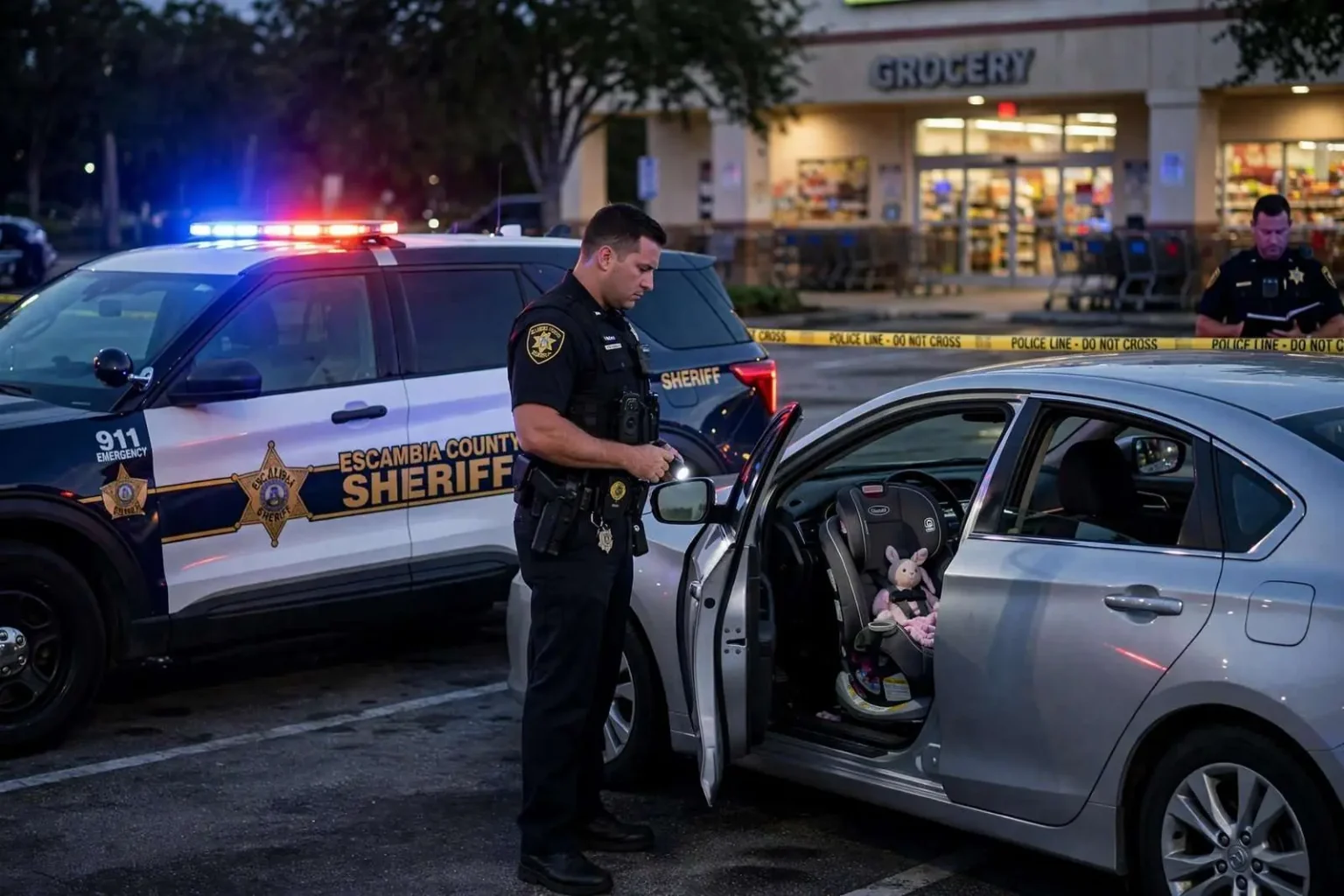
ESCAMBIA COUNTY, Fla. — A Pensacola woman has been arrested on suspicion of driving under the influence after deputies found her asleep behind the wheel of a car with a child in the back seat, according to the Escambia County Sheriff’s Office. Deputies responded Saturday to a location in the county and encountered Kannady Rahn, 33, asleep in the driver’s seat of the running vehicle. A man was also asleep in the passenger seat, and a child of unknown age was in the rear of the car, the report states.
The discovery set in motion the standard sequence that follows a DUI arrest in Florida: field contact, investigation of impairment, and booking into the county jail pending formal charges. Because a child was inside the vehicle, the case carries stakes well beyond a typical first DUI stop, since Florida law treats the presence of a minor as a factor that can sharply increase the penalties a court is allowed to impose.
What deputies found
The responding deputy described Rahn as having slurred speech, stumbling and appearing lethargic, according to the Sheriff’s Office. Those observations — the classic indicators deputies document in impaired-driving cases — form the evidentiary foundation prosecutors typically rely on when a case moves forward. The report also notes that both adults in the front seats were unconscious when deputies arrived, a detail that shaped how the scene was handled.
Situations of this kind put responding deputies in a dual role: investigating a possible crime and securing the welfare of a child who cannot speak for themselves. Deputies on such calls must determine whether anyone needs medical attention, arrange safe custody for the child if a sober caregiver is not present, and document the scene while the evidence is still fresh. The Sheriff’s Office did not immediately release further details about the child’s condition or about what arrangements were made after the arrest.
How the call came in
A woman who reported the incident told authorities she had stepped outside to load groceries into her car when she noticed the man and woman unconscious in the front seats and heard a child screaming, the report says. That bystander observation is what brought deputies to the scene, and it illustrates how often impaired-driving cases involving children are surfaced not by traffic stops but by ordinary residents who happen to notice something wrong.
Sheriff’s officials have stressed in past public advisories that residents who see an unconscious driver or an unattended child in a vehicle should call 911 immediately rather than attempt to wake or move the individuals themselves. A dispatcher can send the closest unit while keeping the caller on the line to gather details — the vehicle’s location, whether the engine is running and whether a child is visible — all of which matter to the responding deputy’s approach.
DUI law in Florida and the role of aggravating factors
Under Florida law, a driver is guilty of driving under the influence when operating a vehicle while impaired by alcohol, chemical substances or controlled substances. A first conviction carries fines, possible jail time, probation, vehicle immobilization and license suspension, but those baseline penalties can escalate quickly when aggravating circumstances exist. A blood-alcohol level well above the legal limit, a prior conviction, or the presence of a minor in the vehicle can each raise the mandatory minimums a judge must apply.
Prosecutors’ offices in Florida commonly treat a child’s presence in a DUI vehicle as grounds for enhanced charges or sentencing enhancements, and separate child-neglect allegations are possible when deputies conclude a child was left in circumstances that could endanger health or welfare. Whether any such enhancements apply in this case will depend on the results of the investigation and the decisions of the State Attorney’s Office for the First Judicial Circuit, which prosecutes cases from Escambia and neighboring Panhandle counties.
What happens next in the case
After booking at the Escambia County Jail, a defendant in a DUI case typically appears before a judge at first appearance, where bond conditions are set. The case then moves through the State Attorney’s review, potential plea negotiations or trial, and — upon conviction — sentencing that may include DUI school, community service, an ignition interlock device and supervision conditions. The Escambia County Sheriff’s Office did not immediately release further details about the child’s condition, and any decisions about the child’s placement would be handled separately from the criminal case.
The Escambia County Sheriff’s Office and impaired-driving enforcement
The Escambia County Sheriff’s Office is the primary law enforcement agency for Florida’s westernmost county, patrolling an area that stretches from the Perdido River on the Alabama line east toward Pensacola Bay. Like sheriff’s offices across the Panhandle, it conducts regular impaired-driving enforcement, particularly on weekends and holidays, when deputies staff saturation patrols and checkpoints funded in part through state highway-safety grants.
The county’s road network — a mix of beach-route corridors, suburban arterials and rural roads north of Pensacola — sees substantial late-night traffic, and deputies have long emphasized that DUI enforcement is a year-round priority rather than a holiday campaign. Cases involving children in the vehicle draw particular attention from both deputies and prosecutors, because the potential for tragedy is highest when an impaired driver loses control with a young passenger who has no ability to protect themselves.
A reminder for residents
Law enforcement agencies across the Gulf Coast repeat a simple message during busy weekends: impaired driving endangers everyone on the road, and children in the vehicle have no say in the decisions of the adults around them. Officials urge residents to plan transportation before drinking, to take keys from anyone who should not drive, and to report suspected impaired drivers or unattended children in vehicles right away.
The witness in this case did exactly that — noticing the unconscious adults, hearing the child and calling authorities, which put deputies on scene before anyone drove away. Rahn was taken into custody on the DUI charge, and the investigation remains with the Escambia County Sheriff’s Office, which has not announced additional charges. The report did not identify the man in the passenger seat or say whether he faces any allegations.
For now, the case stands as the kind of call deputies across the region respond to on ordinary weekends — one that began with a resident carrying groceries to a car and ended with a child safe and an arrest on the books. Anyone with information about similar situations is asked to contact the Escambia County Sheriff’s Office or call 911 in an emergency.
Child safety and the aftermath of these arrests
When deputies take a parent into custody with a child on scene, the immediate question becomes custody of the child. Options range from release to a sober relative who can take charge — in this case potentially the father once he was alert enough to accept responsibility — to involvement by the Florida Department of Children and Families when no appropriate caregiver is available. The Sheriff’s Office did not say which path was followed here, but the department’s silence on the child’s condition is standard practice in cases involving minors, whose identities and welfare details are withheld from public reporting.
Child advocates note that incidents like this one are rarely isolated events in a family’s life; they are often the moment a private problem becomes visible to authorities. Community resources across Escambia County — including substance-abuse treatment providers, family counseling services and support organizations for caregivers — exist precisely for households where alcohol has begun to endanger children. The courts, too, can order treatment as a condition of supervision, which turns a criminal case into a pathway toward intervention.
Why bystander reporting matters
The Escambia case is also a study in how much turns on one alert resident. A woman loading groceries could reasonably have assumed someone else would notice the situation, or that the adults would wake up on their own. Instead, she called it in, and the report she provided — the unconscious adults, the screaming child — became the account deputies worked from when they arrived. In impaired-driving cases that begin as parking-lot discoveries rather than traffic stops, that first caller is frequently the only reason the vehicle never reaches the road.
Sheriff’s officials across Northwest Florida have made the same request for years: when in doubt, call. The cost of a false alarm is a few minutes of a deputy’s time; the cost of an unreported impaired driver with a child aboard can be a catastrophe on a public road. The agency’s non-emergency line handles reports around the clock, and 911 dispatchers are trained to prioritize any call involving an unconscious adult or a child in danger.
As of the latest update, Rahn remained charged with driving under the influence, and no court dates had been announced. Further details — including the child’s condition and whether additional charges will be sought — may be released as the investigation and prosecutorial review continue.