Pier and shore fishing outlook: Redfish, pompano and croakers lead fall bite
After Hurricane Isaias and a sharp cold front, the Alabama coast's pier and surf bite is turning to bull redfish, pompano, big croakers and, soon, sheepshead.
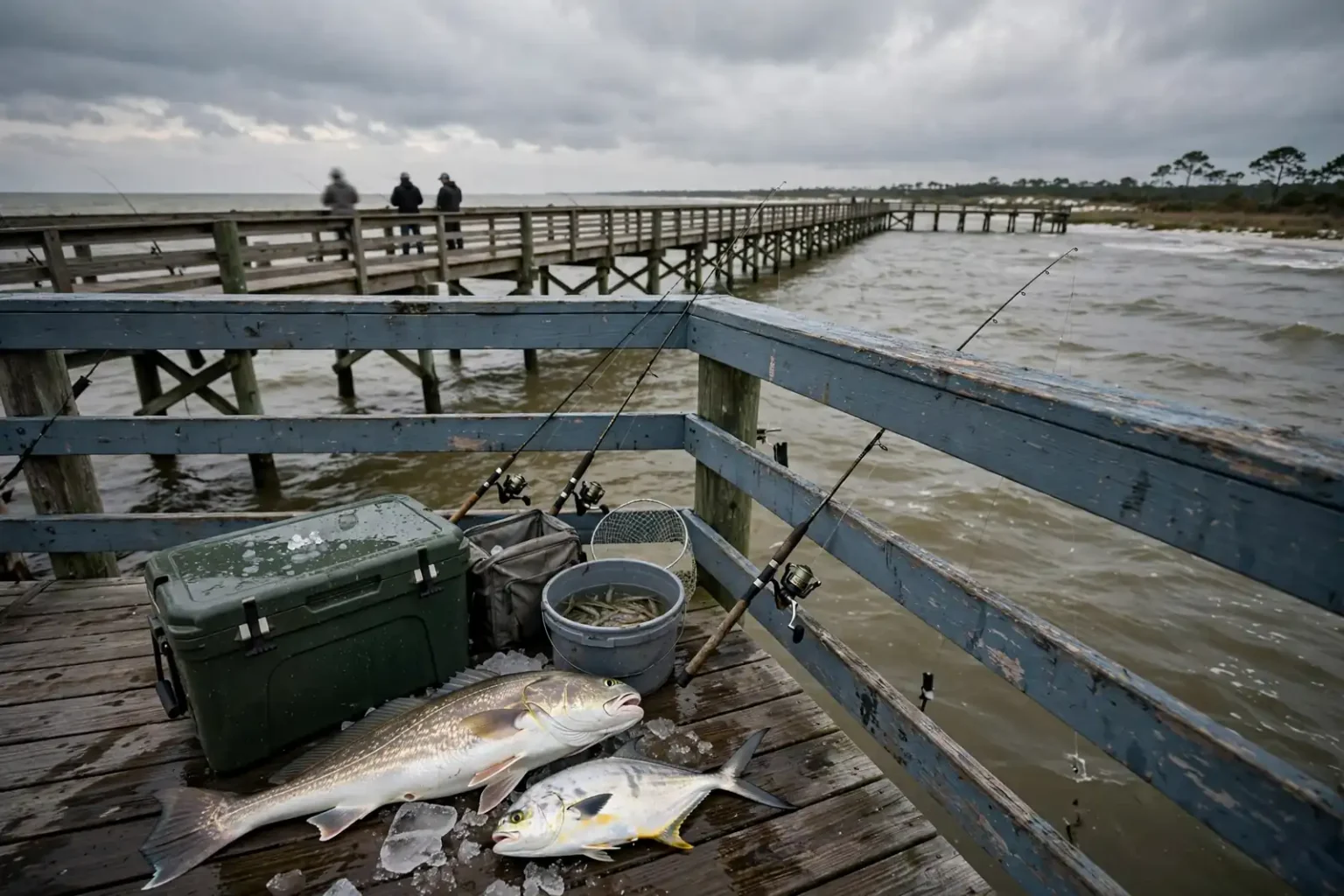
GULF SHORES, Ala. — Pier and shore fishing along the Alabama coast is shifting into its fall pattern after a turbulent few weeks that included a near miss from Hurricane Isaias, a quick reopening of the Gulf State Park Pier and a cold front that sent water temperatures tumbling. This week’s pier and shore fishing outlook points anglers toward redfish, pompano, big croakers and, soon, sheepshead as the season turns.
Coast spared the worst of Isaias
The stretch of coastline from Fort Morgan to Perdido Key came through Hurricane Isaias in far better shape than it might have, after the storm’s track shifted slightly east of the area.
Wave heights at the Gulf State Park Pier reached the level that could have knocked loose the pier’s floor panels. That damage was avoided because the panels over the bents, the groups of pilings that support the structure, had been removed ahead of the storm.
The area also caught a break from the wind. A strong northerly gale on the evening Isaias made landfall flattened the tops of the incoming swells and pushed sea level down by a couple of feet, reducing the storm’s impact on local shorelines.
Communities to the north and east were not as fortunate. Those areas took the brunt of the hurricane’s most destructive forces, and some residents there are still working to restore basic necessities and clear debris left in the storm’s wake.
Pier reopens to a mixed bag
The 1,540-foot Gulf State Park Pier reopened just a few days after the storm, to the delight of local and visiting anglers alike.
Once the Gulf water cleared, the pier produced an impressive variety of fish. Catches included:
- Spanish mackerel
- Large ladyfish
- Redfish and black drum
- Several huge croakers
- Mangrove snapper
- A few keeper-sized red snapper
- White trout
- Pompano
- A keeper-sized tripletail
Baitfish returned along with a stretch of near-perfect weather through most of that week, and the bite stayed strong as long as the bait was around.
Cold front chills the water
The change of seasons arrived abruptly with a cold front that brought much cooler air and dropped water temperatures in the back bays and the Gulf by 5 to 10 degrees or more. The sudden cooling put many species into thermal shock and left the area with stubbornly murky water for the rest of the two-week period.
Even so, the current Gulf water temperature of 78 degrees sits right at the 20-year average for late October. If the coming cold fronts arrive roughly a week apart, the swings in water temperature should moderate. That could open windows of clearer water between fronts, when fish are more likely to feed.
Mackerel window narrowing
Anglers are hoping baitfish return to the pier and to Perdido Pass in Orange Beach, followed by Spanish and king mackerel as those fish begin their eastward fall migration.
Historically, though, mackerel grow increasingly scarce after the end of October. They can show up in good numbers at a particular spot for a few minutes or even a few hours, but they become harder to pattern as fall deepens and the water keeps cooling.
Menhaden run sets up bull redfish action
One seasonal migration that often goes overlooked is the mass movement of menhaden out of the back bays, through the lower bays and into the Gulf, where the baitfish spend the winter. Cooling conditions like the ones the coast is seeing now trigger that movement.
Many predator species instinctively stake out the mouths of bays and inlets to intercept the menhaden, especially on falling tides. The runs of bull redfish near Perdido Pass and off the point at Fort Morgan from October into November are legendary among Gulf Coast anglers.
During those runs, schools of hungry redfish chase menhaden along the longshore sandbar, often close enough for pier anglers to reach. Nearly all of these fish are longer than 26 inches, the upper end of the slot limit. In past years, anglers kept many of the oversized fish, but that exemption has since been eliminated. As a result, most of these breeding-size redfish will now be released to live on for decades and produce more redfish for future generations of anglers.
Flounder closures protect the spawn
The fall migration of female flounder out of the back bays and lagoons to spend the winter and spawn in the Gulf is also well documented. That movement is the reason both states close flounder harvest in the fall. Florida’s closure runs for about six weeks, from Oct. 15 until Dec. 1, while Alabama’s covers the entire month of November.
Those seasonal closures are part of the reason anglers have seen better flounder catches over the past couple of years, because they allow more fish to survive and spawn. Anglers should check the latest rules from the Alabama Department of Conservation and Natural Resources and the Florida Fish and Wildlife Conservation Commission before keeping any fish.
Croakers on the move from Little Lagoon
A notable push of large croakers moved out of Little Lagoon in Gulf Shores on the hurricane’s flood tides. Little Lagoon Pass shoaled up soon after the winds died down, but dredging has since reopened it. The hope is that more croaker and flounder will now be able to exit through the pass into the Gulf for their seasonal move.
These big croakers, some measuring up to 16 inches, are excellent table fare and a favorite target of local anglers who know where to find them. They do carry a fair amount of fatty red meat, and each fillet has two or three small epipleural rib bones that extend into the upper part of the flank.
Old-timers nicknamed the fish “widow makers” because people cleaning croakers often missed those bones, and diners would choke on them. Anglers who take care to remove them will be rewarded: croaker is delicious deep fried, especially alongside cheesy grits, coleslaw and hush puppies.
Pompano picking up in the surf
Shore-based anglers have reported an uptick in pompano catches over the past few weeks. As pelagic species thin out in the surf zone, pompano, whiting, and red and black drum should make up a growing share of catches there.
Because shallow water cools fastest, the surf zone becomes increasingly attractive to pompano as fall progresses. Surf anglers have also reported a fair number of permit and even palometa recently, particularly along Perdido Key and the beaches of the Bon Secour National Wildlife Refuge off Fort Morgan Road west of Gulf Shores.
Biting flies have been less of a nuisance than usual this season, but anglers should stay on guard. The pests may linger until the first freezing weather arrives later in the fall.
Sheepshead on the horizon
Pier and jetty anglers should soon start seeing more sheepshead, which also leave the rivers and upper bays as those waters cool. Sheepshead tolerate cold and even fresh water better than many other species, so they tend to linger longer around hard structure in the lower bays.
That means they may take a while to reach the Gulf, and particularly the Gulf State Park Pier, which sits several miles from the nearest inlet. Many regulars there are already eager to tangle with these wintertime staples, so anglers should keep an eye out for their arrival.
In the meantime, there should be plenty of other species to keep most anglers busy on the pier and along the beaches.