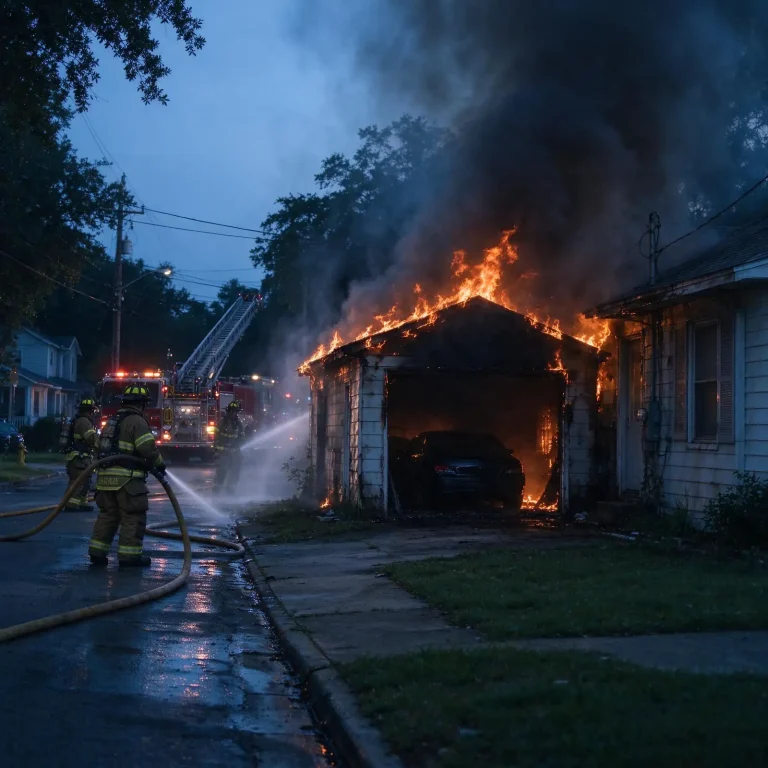
Prichard Gas Odor Traced to Odorant Line Issue in 2008
A 2008 WKRG report said an odorant-line problem near Whistler Station caused natural-gas fumes to be noticed around Prichard.
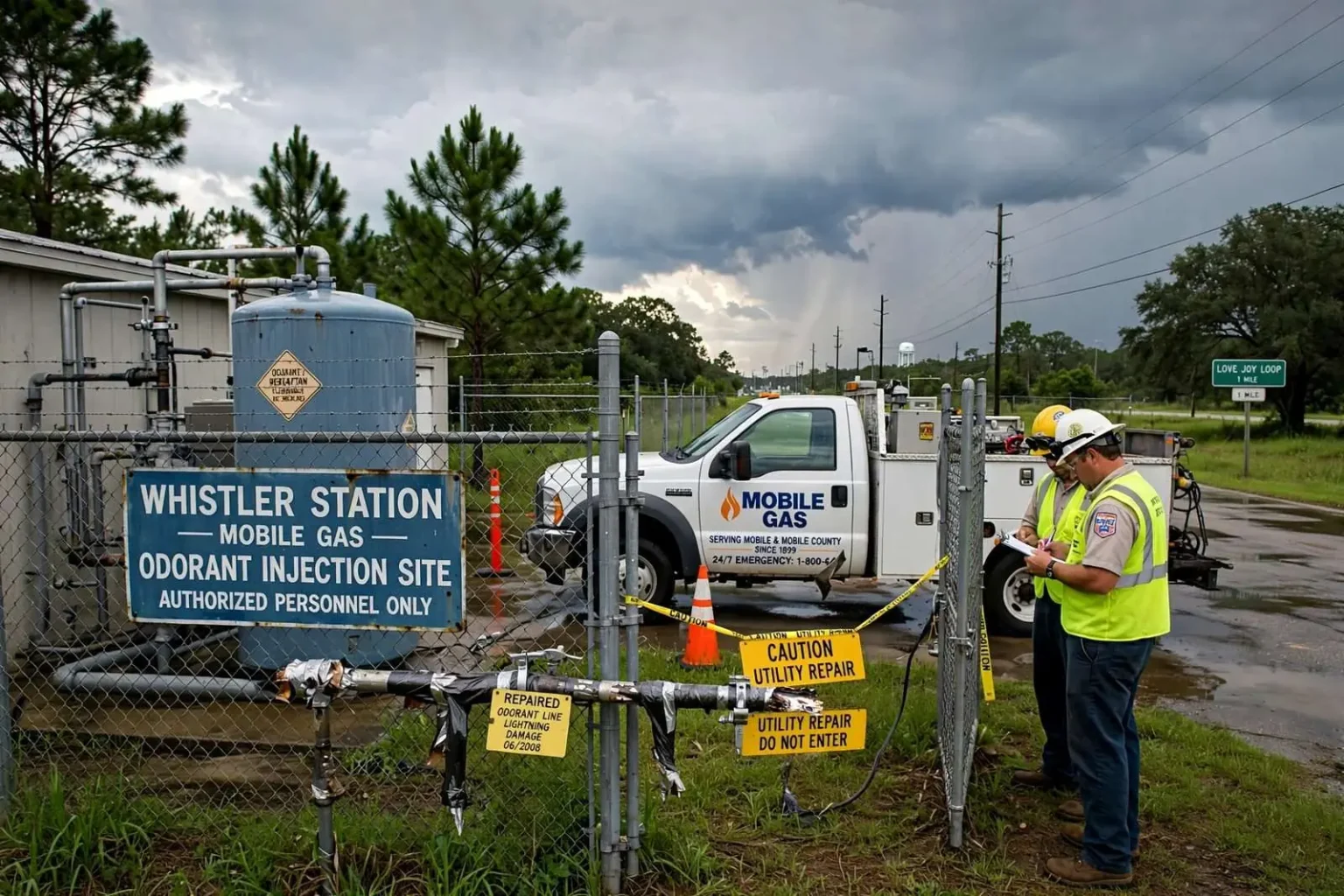
PRICHARD, Ala. — Prichard residents reported a natural-gas odor across several areas in June 2008, according to a local station, prompting concern in neighborhoods already accustomed to the industrial and utility infrastructure that threads through the Mobile County city. The reports reached Mobile Gas, the utility serving the area, which moved quickly to reassure the public: there was no gas leak. The company said lightning had struck a line that carries odorant to the gas pipeline near Whistler Station, causing the smell to be noticed around Eight Mile, Love Joy Loop, Lott Road, High Point Boulevard, Shelton Beach Road and Brunswick Drive.
The explanation pointed to a piece of infrastructure most gas customers never think about. Utilities add a chemical odorant — typically mercaptan, the compound responsible for the rotten-egg smell associated with natural gas — to their pipelines deliberately, because natural gas itself is odorless and a leak would otherwise go undetected. The odorant is injected at controlled points along the system, including facilities like the Whistler Station near Prichard. When lightning struck the odorant line, the company said, the disruption allowed the smell to escape and drift across nearby neighborhoods, even though the gas in the main pipeline remained fully contained.
Mobile Gas said crews had repaired the issue and that the odor did not pose a health risk. For residents who had spent the day calling the utility, opening windows and wondering whether to evacuate, the announcement closed out an unsettling episode with an unusual cause: a weather strike on a supporting system rather than a problem with the gas mains themselves.
How a gas system delivers odor
Natural gas distribution is a layered system. Large transmission lines bring gas into a service territory, and local distribution mains carry it through neighborhoods into homes and businesses. Because the gas itself is colorless and odorless, federal regulations require an odorant to be added at a concentration that lets a person smell it at levels well below any dangerous concentration in air. The odorant — most commonly a sulfur-based organic compound — is stored at stations and injected into the flowing gas at precise rates.
A dedicated odorant line is exactly what its name suggests: piping that moves the concentrated odorant chemical from storage into the injection equipment. It is a small but critical piece of the station. A lightning strike that damages such a line does not put customers’ gas supply at risk, but it can release the odorant itself into the air around the facility. Because mercaptan is detectable by the human nose at extraordinarily low concentrations — parts per billion — even a small release can produce a strong smell over a wide area, which is what Prichard residents noticed across the neighborhoods listed by the company.
Why the smell carried so far
The geography of the affected area explains the reach of the odor. Whistler Station sits near the Eight Mile community in northern Prichard, close to the intersection of U.S. Highway 45 and the highways that connect Prichard to Chickasaw and Saraland. Love Joy Loop, Lott Road, High Point Boulevard, Shelton Beach Road and Brunswick Drive all lie within a few miles of that corridor, an area of mixed residential streets, older commercial strips and utility right-of-ways. Summer weather in coastal Alabama — warm, humid air with light southerly flow — can carry a strong odor across exactly such a radius, spreading a smell from a single point of release over an entire neighborhood cluster.
Prichard itself is the larger of Mobile County’s two principal cities north of Mobile, with a long history tied to the railroads and industry that grew along the Mobile River’s northern reaches. Utility infrastructure of many kinds — pipelines, substations, rail lines — runs through and around the city, so residents are familiar with industrial sights and sounds. A gas odor, however, is the kind of thing that prompts immediate calls, because the potential danger of a real gas leak is well known.
What residents should know about gas odors
The 2008 episode, though ultimately harmless, illustrates why gas utilities take every odor report seriously. A genuine natural gas leak inside a home or from a buried main can create an explosion hazard, and the universal advice from utilities and safety agencies is the same: if you smell gas, leave the area immediately, avoid operating light switches or anything that could create a spark, and call the utility from a safe distance. Utilities maintain emergency lines around the clock and respond to every report, sending technicians to test the air and trace the source.
That protocol applies regardless of what the ultimate cause turns out to be. In the Prichard case, Mobile Gas investigated the reports, determined the odor was coming from the odorant line damaged by lightning rather than from leaking gas, and made the repair. Crews’ ability to distinguish between a distribution leak and an odorant release depends on instruments that measure combustible gas in the air — the odor alone cannot tell a responder which situation they are facing, which is why verification is always the first step.
The company’s public message in 2008 emphasized that the odor did not pose a health risk, a distinction between the smell of the odorant and the presence of the gas it normally announces. Mercaptan at the low concentrations residents encountered is an irritant at most, and once the line was repaired the smell dissipated. The episode stands as a small piece of Gulf Coast utility history: a lightning strike, a neighborhoods-wide false alarm and a repair that restored calm across Eight Mile, Love Joy Loop, Lott Road, High Point Boulevard, Shelton Beach Road and Brunswick Drive. This article records a historical 2008 public-information report, not current safety guidance.
Lightning and utility infrastructure on the Gulf Coast
The cause identified by Mobile Gas — a lightning strike — is a routine hazard for utility operators in southern Alabama. The Gulf Coast sits in one of the more lightning-active regions of the United States, with summer thunderstorms arriving on a near-daily basis during the warm months. Utility companies design for this reality: substations are ringed with grounding systems and surge arresters, transmission towers and poles carry shielding wires intended to intercept strikes, and control equipment is protected so that a strike on one component does not cascade through the network.
Even so, direct strikes find vulnerabilities. A strike on or near a facility like Whistler Station can damage instrumentation, puncture piping, trip protective relays or, as in this case, breach a secondary line that carries a specialized chemical. The incident in Prichard was unusual in its public visibility precisely because the damaged system was the one responsible for adding smell to the gas — so the failure produced an odor event rather than a service outage. Customers kept their gas service throughout; what they noticed was the telltale smell drifting across their streets without any actual leak behind it.
Mobile Gas and the regional gas network
Mobile Gas has served the Mobile area for well over a century, making it one of the older gas utilities in the region. Its system serves residential, commercial and industrial customers across Mobile and the surrounding communities, including Prichard and the northern part of Mobile County. Distribution utilities like Mobile Gas operate under regulation and federal pipeline safety rules administered through state authorities, with requirements covering odorization, leak surveys, emergency response times and records that document the condition of miles of underground pipe.
Odorization requirements are among the most consumer-relevant of those rules. Regulators specify that gas in a distribution system must carry a distinctive odor so that leaks are detectable at concentrations well below the lower explosive limit. That standard is why every home in the service territory learns the same lesson — the smell of rotten eggs means gas — and why a utility treats any deviation in odor as a matter of public safety. The flip side, demonstrated in Prichard in 2008, is that the odorant itself is a handled chemical, stored and piped at stations, and an accident involving that equipment can create a smell event all its own.
The response playbook
When odor reports began arriving from multiple neighborhoods at once, the pattern itself carried information. A single house call suggests a problem at one address; reports from Eight Mile, Love Joy Loop, Lott Road, High Point Boulevard, Shelton Beach Road and Brunswick Drive simultaneously pointed to something regional — either a major leak on a transmission or distribution line, or an airborne release from a facility upwind. Crews responded, tested for combustible gas, and traced the source to the Whistler Station odorant line damaged by the lightning strike.
Once the source was identified, the repair itself was mechanical: fixing the damaged piping and restoring the odorant injection system to normal operation. The communication side was just as important. Utilities in these situations issue public statements explaining what happened, whether there is any danger, and what residents should do — in this case, that the odor posed no health risk and that no evacuation or special action was needed. Clear communication prevents the secondary harms of such an event: unnecessary 911 calls that strain dispatchers, panic among residents and, historically in gas events, dangerous decisions made in confusion.
A remembered lesson
For Prichard, the June 2008 episode ended without injury or property damage, but it left behind a useful public lesson. The rotten-egg smell that every gas customer is taught to fear has its own infrastructure story — the chemical is deliberately added, metered and piped, and that system can itself be damaged by the Gulf Coast’s frequent storms. Residents who smell gas should always call the utility and treat the situation seriously; utilities, in turn, verify every report with instruments rather than assumptions, because the smell alone cannot distinguish a deadly leak from a harmless odorant release. This article records the events of a 2008 public-information report and is not a statement about current utility operations or current safety guidance.