Recovery Leaders Say a Year of Brain Healing Is Key to Beating Opioid Addiction
Alabama recovery advocates say yearlong programs give the addicted brain time to heal, offering hope in the fight against opioid addiction across the Gulf.
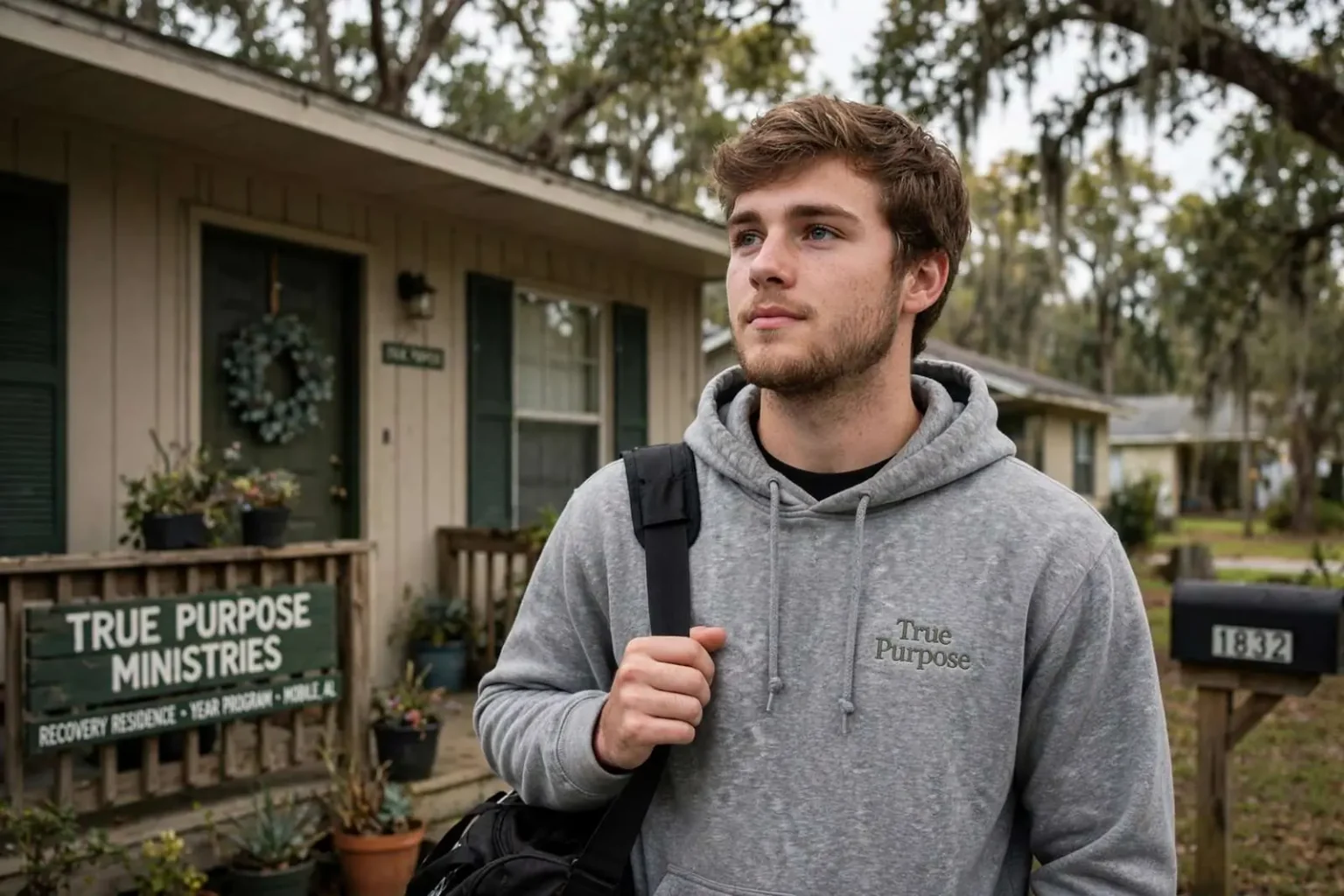
MOBILE, Ala. — As the opioid crisis continues to grip communities across Alabama, a growing number of recovery advocates are focusing their efforts on a less visible casualty of addiction: the brain itself. Their message is that lasting sobriety takes far longer than most programs allow, and that understanding how drugs rewire the mind is central to treatment.
One young Alabama man is living that lesson. Gage Titlow, 24, is moving into a new home that will serve as his residence for a full year as he works toward recovery from a decade-long struggle with drugs and alcohol. Titlow says he began drinking when he was just 14 or 15 years old, and that what once felt like fun gradually became misery.
By the time most people his age were finishing school or starting careers, Titlow had spent roughly a third of his life in active addiction. The yearlong residential commitment he is now making reflects a philosophy shared by a small but growing network of faith-based and peer-run programs across the Gulf Coast: that the first weeks of sobriety, the period most short-term programs cover, are only the beginning of the work.
The addicted brain, and why time matters
At the heart of his program is the concept of the addicted brain. Jeremy Graham, founder of True Purpose Ministries, says the ministry asks participants to commit to a full year of treatment because of the time the brain needs to recover. According to Graham, participants need that time both to heal and to learn how they became addicted in the first place — and how to deal with their addiction going forward.
The reasoning behind the one-year model runs counter to the common insurance-driven structure of American addiction treatment, in which detoxification lasts a matter of days and inpatient rehabilitation often runs 28 days or less. Recovery advocates argue that such short stays end just as the brain’s reward circuitry is beginning to recalibrate, sending people back to the same environments, stresses, and social circles that fed the addiction in the first place.
The science behind that approach is being championed by advocates like Tim Hilton of Birmingham, a national recovery advocate who travels the country speaking to groups about how addiction takes hold. Hilton points to triggers in the brain’s pleasure center and genetic predispositions that can run in families, and argues that opioids are especially destructive because they disrupt those neural pathways more quickly than other substances.
Under that framework, cravings, irritability, and the flatness many people feel in early sobriety are not character flaws but symptoms of a brain healing from chemical hijacking. Recovery educators use the explanation to reduce shame among new participants and to prepare families for a recovery timeline measured in months and years rather than weeks.
Alabama’s long struggle with opioids
Alabama has been at or near the top of national per-capita opioid prescribing rates for years, a distinction traced to the state’s history of high-volume pain management, its large rural population with limited specialty care, and the decade-long wave of prescription painkiller distribution across the Gulf South. As prescribers tightened access to pills, many users migrated to heroin and to illicit fentanyl, a synthetic opioid potent enough that even small amounts can be fatal, and overdose deaths across the state climbed steadily through the 2010s and into the 2020s.
The crisis has hit every corner of the state, but recovery workers say Mobile and the surrounding counties present a particular challenge: a port city with established drug trafficking routes, a dispersed suburban and rural population, and a treatment infrastructure that has historically been fragmented among hospitals, church-based ministries, and outpatient clinics.
Faith-based residential programs such as True Purpose Ministries fill a gap that neither insurance-funded treatment nor state-funded programs fully cover. They typically charge little or nothing, rely on donations and participant labor, and can accept people who have exhausted benefits, lost housing, or been through treatment multiple times before. The tradeoff is the long commitment: participants give up a year of employment and family proximity on the bet that structure, accountability, and time will succeed where shorter stints have failed.
Breaking the family cycle
Fighting generational cycles of substance abuse is a personal mission for many in recovery. Titlow acknowledges that addiction appears throughout his own family tree, though he says it was rarely discussed openly. He is determined to be the one who breaks the pattern, insisting that the cycle can end with his generation rather than being passed to another.
Recovery advocates say his situation is the norm rather than the exception. Children of parents with substance use disorders face elevated risks of developing addictions themselves, through a combination of genetic predisposition, early exposure, and the learned coping patterns that form in households shaped by active addiction. Programs built on the brain-healing model treat that family history as a clinical fact to be addressed directly — participants map their own exposure, identify the family patterns that normalized drinking or drug use, and build explicit plans for the situations most likely to pull them back.
The silence Titlow describes is also familiar to counselors across Alabama. In many families, particularly in small communities, addiction is discussed only in euphemism or not at all, which delays treatment, deepens shame, and leaves younger family members without a map for recognizing danger in their own lives. Advocates like Hilton argue that openly naming addiction as a brain condition, rather than a moral failure, is the first step in loosening that silence from one generation to the next.
State government has moved in the same direction, though unevenly. Alabama has expanded naloxone access, the overdose-reversal drug carried by police, paramedics, and increasingly by families themselves, and state and local agencies have pursued litigation against the pharmaceutical distributors and manufacturers blamed for flooding the state with opioids. Settlement funds flowing to Alabama counties and cities in the coming years are expected to pay for treatment capacity, recovery housing, and prevention programs — the kind of long-term residential support that programs like True Purpose Ministries already provide on shoestring budgets.
The gap between what the science suggests and what most Alabamians can access remains the central problem, recovery leaders say. Insurance coverage for residential care beyond a few weeks is scarce, waitlists for state-funded beds can stretch for months, and rural counties across the Black Belt and southwest Alabama may have no medication-assisted treatment provider at all within a reasonable drive. In that landscape, the argument goes, the programs that ask for a year are not asking too much of participants — they are asking for the minimum time the injury requires.
What a year in recovery looks like
A yearlong residential program moves through phases, and by design the later months look nothing like the first. Early weeks focus on detoxification stabilization, sleep, nutrition, and learning the house rules; the middle months add work assignments, service to other participants, structured study, and the gradual rebuilding of basic routines; the final stretch prepares a participant for the transition home, with employment help, family reconciliation where possible, and a relapse-prevention plan for the day the program ends.
The peer-support component is central to the model. Participants hold each other accountable daily, and senior residents mentor new arrivals — a structure that mirrors the sponsorship tradition of twelve-step programs like Alcoholics Anonymous and Narcotics Anonymous, which have long anchored recovery communities along the Gulf Coast. Advocates say the peer element is also what makes the year bearable, because participants who watched others relapse and return, or graduate and stay free, learn the difference between the two in concrete terms.
Why relapse risk outlasts treatment
Recovery leaders say short-term rehab stays often send people home before their brains have healed, raising the risk of relapse. Yearlong programs built around brain healing, peer support and relapse-prevention skills aim to give recovering addicts the time and structure needed for a durable recovery.
Relapse-prevention planning in the final months of a program gets specific: which streets, people, paydays, and emotions to watch for; who to call first; what to do in the first hour of a craving. Advocates emphasize that the plan matters most in the first months after leaving the residence, when the brain is still recalibrating and old triggers are strongest.
For Mobile, the stakes are measured in lives and in families. Emergency rooms, county jails, and coroner’s offices across the region see the downstream cost of a system in which treatment ends early and relapse follows quickly. The advocates pressing the brain-healing message — ministry leaders like Graham, national speakers like Hilton, and participants like Titlow — argue that Alabama’s response to the opioid crisis will ultimately be judged not by how many people pass through short programs, but by how many are still free a year, five years, and a decade later. For Titlow, the year ahead is both treatment and proof — evidence, first to himself, that the cycle that ran through his family can end where he stands.