Reversing sun damage: What really works for aging skin
A Mobile dermatologist explains which treatments can improve sun-damaged skin and why prevention and annual skin cancer screenings matter most.
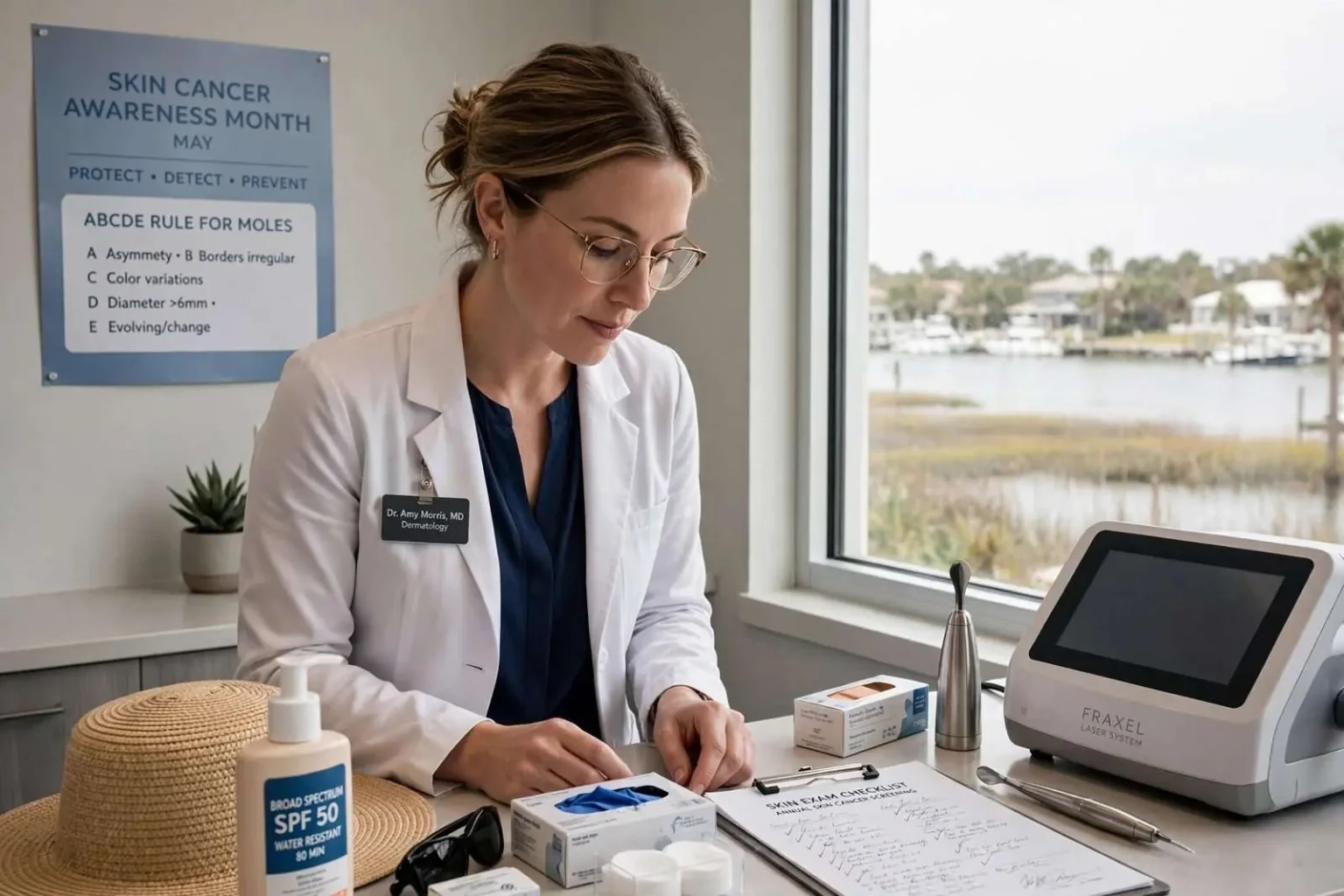
May is Skin Cancer Awareness Month, and dermatologists across the Mobile area are using the annual spotlight to talk about two sides of the same problem: protecting skin from the sun before harm is done, and addressing damage that has already accumulated over years of outdoor life on the Gulf Coast. In a region where boating, fishing, construction work, farming, and beach days put residents in the sun nearly year-round, the question of what can actually be done about sun-damaged skin is one of the most common heard in dermatology offices from Mobile to Baldwin County.
What Really Works on Sun Damage
Many products on pharmacy shelves claim to reverse sun damage, but the reality, according to local skin specialists, is mixed. Over-the-counter creams and serums may modestly improve the look and feel of the skin, but the treatments that produce genuine, noticeable change are medical procedures — and most come with a cost and some recovery time. Patients are advised to approach dramatic marketing claims with skepticism and to understand that real repair of skin injured by decades of ultraviolet exposure typically requires professional treatment rather than a single bottle.
Board-certified Mobile dermatologist Dr. Amy Morris has been one of the local voices walking patients through the realistic options. Among the most effective tools she described is the Fraxel laser, a fractional laser treatment that creates tiny micro-thermal zones in the skin. Each of those microscopic columns of treated tissue prompts the skin to repair itself by replacing old, sun-damaged cells with fresh, healthy ones, effectively accelerating the body’s own healing response in a controlled, deliberate pattern.
The Fraxel system works with two wavelengths, Morris explained, which allows it to do two different jobs at once: stimulate collagen production to improve texture and firmness, and fade the brown spots and pigmentation irregularities that mark years of unprotected sun exposure. Because only a fraction of the skin is treated at any given moment, the surrounding untouched tissue helps speed healing compared with the fully ablative laser procedures of earlier generations, which required far longer recoveries.
For patients who want improvement without significant downtime, a less invasive option is the BBL Photofacial, which uses broadband light to target the visible signs of sun damage on the face and the backs of the hands. The light energy is absorbed by the pigment concentrated in sun spots and by the small dilated blood vessels that come with chronic exposure, breaking them down gradually over a series of sessions. There is little to no recovery period afterward, which makes the procedure a frequent choice for working patients, though multiple treatments are usually needed to achieve the best outcome. Many patients schedule their sessions in the fall and winter, when shorter days make it easier to protect healing skin from fresh sun exposure.
Micro-needling has also become another popular choice for addressing pigmentation problems and fine lines. The procedure uses a device studded with fine needles to create controlled micro-injuries across the surface of the skin, triggering the natural production of collagen and elastin as the tissue heals. Dermatologists often pair micro-needling with topical serums, because the tiny channels opened in the skin allow active ingredients to penetrate more deeply than they otherwise could, multiplying the benefit of each session. The treatment is typically described as comfortable, with only brief redness afterward, and it appeals to patients who want a gradual, natural-looking improvement rather than a single dramatic change.
Dermatologists are quick to point out that none of these procedures is a substitute for daily protection. The same sun that created the damage in the first place will undo the results of expensive treatment if patients return to their old habits without sunscreen and shade, so any treatment plan is built around a commitment to better sun behavior going forward.
The Cost of Turning Back the Clock
For patients considering these procedures, the financial reality is a major factor in the decision. Fraxel treatments generally run between $500 and $1,000 per session, and because the laser works at a deeper level, there is real downtime involved — several days of redness, swelling, and peeling while the skin regenerates. BBL Photofacial sessions cost roughly $350 each, while micro-needling falls in the range of $300 to $350 per treatment. Even a lighter monthly facial treatment, the kind many patients use for maintenance between stronger procedures, runs around $150 per visit.
Because meaningful results almost always require a series of sessions followed by ongoing maintenance, the total investment can climb quickly. Patients considering any of these treatments are encouraged to consult a board-certified dermatologist first, both to confirm which procedure fits their type of damage and to rule out any lesions that need medical attention before cosmetic work begins.
Prevention Remains the Best Medicine
Above all, Morris stressed that prevention beats any correction now available. The statistics on sunburn are sobering: anyone who has had five or more sunburns in their lifetime more than doubles their risk of melanoma as an adult. Melanoma is the most dangerous form of skin cancer, capable of spreading quickly beyond the skin if it is not caught early, and along the Gulf Coast — where outdoor lifestyles and long summers are simply a way of life — dermatologists see the consequences of cumulative, unprotected exposure every single day.
Skin cancers generally fall into three main categories, and most of them trace directly back to ultraviolet exposure. Basal cell carcinoma is the most common and grows slowly, usually appearing as a pearly bump or a scaly patch on sun-exposed areas. Squamous cell carcinoma can be more aggressive and may spread if untreated. Melanoma, while less common, is by far the most lethal, which is why dermatologists devote so much energy to early detection and to habits that keep new damage from forming in the first place.
Her recommendations for keeping skin healthy are straightforward and inexpensive. Avoid the midday sun, when ultraviolet rays are at their strongest, and seek shade whenever possible when outdoors — whether at the ball field, on the water, or in the yard. Wear protective clothing, including long sleeves where practical, wide-brimmed hats, and sunglasses, along with a broad-spectrum sunscreen applied generously and reapplied throughout the day, especially after swimming or heavy sweating.
Broad-spectrum formulas matter because they protect against both of the sun’s harmful ultraviolet bands. UVA rays penetrate deeply into the skin and drive the aging, wrinkling, and spotting that patients come in trying to erase, while UVB rays cause the sunburn that signals acute damage has already occurred. A sunscreen labeled broad-spectrum with an SPF of 30 or higher, applied to all exposed skin and refreshed every couple of hours outdoors, remains the single most effective everyday defense available.
The Annual Skin Check
Morris also recommended that everyone see a board-certified dermatologist annually for a professional skin cancer screening. Regular full-body examinations catch suspicious moles and lesions early, when treatment is simplest and most effective. The appointment is quick, non-invasive, and covered by many insurance plans when performed for medical reasons, yet it is the step most often skipped by busy patients who feel perfectly healthy.
Dermatologists also teach patients to check their own skin between visits using what is known as the ABCDE rule for moles: look for Asymmetry, where one half of a spot does not match the other; Borders that are irregular, ragged, or blurred; Color that varies within the same mole; a Diameter larger than the size of a pencil eraser; and any Evolution, meaning a mole that changes in size, shape, or sensation over time. Any spot that fits one or more of those descriptions should be evaluated promptly by a professional rather than watched for another year.
Certain patients should be especially vigilant. Those with fair skin, light hair, and light eyes burn more easily and accumulate damage faster. A personal or family history of skin cancer raises the risk, as does a lifetime of outdoor work or recreation — a description that fits a large share of Gulf Coast residents, from dockworkers and roofers to fishermen, golfers, and weekend gardeners. For all of them, the combination of yearly professional screenings and monthly self-checks offers the best chance of catching any problem while it is still highly treatable.
The bottom line from Mobile’s dermatology community during Skin Cancer Awareness Month is consistent: the tools for repairing sun damage keep improving, and lasers, broadband light, and micro-needling can genuinely restore much of what the years have taken. But every one of those options costs money, takes time, and involves some degree of recovery, while prevention costs almost nothing. An ounce of sunscreen, a hat, a patch of shade, and one skin check a year still outweigh every laser and light device on the market.