Six Months After Sally, One Family Still Waiting on Their Insurer
A Pensacola-area family says $450,000 in Hurricane Sally damage sits unrepaired six months later with no payment from their insurance company.
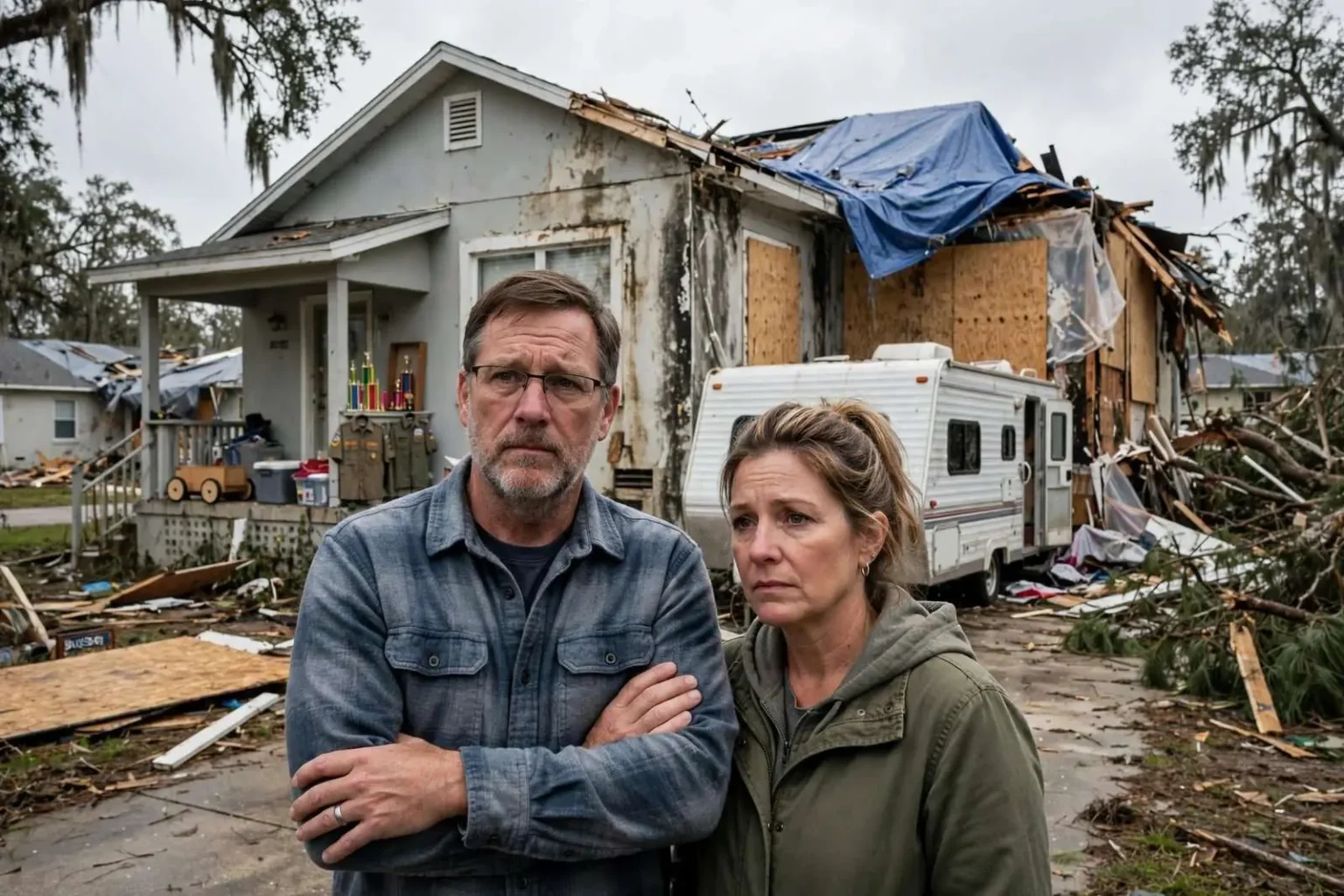
Half a year after Hurricane Sally tore across the Gulf Coast, a Pensacola-area family says the storm’s aftermath still fills their home — and their insurer still hasn’t paid them a dime. March 16 marked six months since Sally came ashore, and Doug and Wendy Underhill count themselves among the many residents still picking up the pieces. The couple estimates more than $450,000 in damage to their home that remains unrepaired.
Sally, which struck the Gulf Coast in mid-September as a slow-moving hurricane, pushed historic surge and flooding into neighborhoods along the coast, and six months later the evidence remained everywhere in the Pensacola area. For the Underhills, the storm’s damage is not a memory or a repair bill but the physical arrangement of their daily lives, lived out in the fraction of their house that remains usable.
Living in half a house
The losses are measured in rooms. “We have half the square footage we had,” Wendy Underhill said. The family lost three of its four bedrooms and two of its four bathrooms, along with the family room and utility room, a contraction that has reshaped every routine of household life, from where family members sleep to how laundry gets done.
The couple’s son, who was 17 when the storm hit and has since turned 18, has been sleeping in the family’s RV. “When he leaves he will be spending his last time with us not sleeping under the same roof,” she said, a detail that captures how the unfinished repairs have collided with the family’s own timeline, turning the son’s final months at home into a period spent without a bedroom of his own.
Bits of family life keep surfacing around the property — Boy Scout uniforms, medals, trophies, and most recently a son’s old pinewood derby car from Cub Scouts. Each discovery is a reminder of what the storm scattered and of the years of family history still packed away or damaged, surfacing in stages as the couple continues to work through what Sally left behind.
No check, no callback
According to the couple, their insurance company has paid nothing on their claims despite multiple filings and repeated calls, and communication eventually dried up entirely. The family has now hired an attorney, a step that converts their dispute from a customer service matter into a formal legal claim and signals how a growing share of Sally’s victims have spent the months since the storm.
“Simply to stop communicating, not only is that wrong but it’s so disrespectful and unethical,” Doug Underhill said. “You can say no and explain why it’s a no, but you can’t just stop picking up the telephone.” His account describes a pattern that recovery advocates along the Gulf Coast say became familiar after Sally: claims filed, adjusters delayed or disputes raised, and then silence from the insurer while the policyholder’s home sits unrepaired.
“We are going to fight for what’s right,” Doug Underhill said. “I don’t want one dollar beyond what’s right… I absolutely just want them to say what they are going to do and do what they said.” The family’s position, as he frames it, is not a demand for extraordinary treatment but for the contract to be honored as written.
Veterans of earlier storms
The Underhills are veterans of earlier Gulf Coast disasters, having ridden out Hurricane Ivan and the 2014 flood in the same area. Ivan, which struck the region in 2004 as a major hurricane, and the flooding that followed in later years gave the family a long view of recovery, and they say they had never seen this kind of silence from an insurer. Their experience across multiple disasters makes the current standoff stand out all the more sharply.
That history matters to how the family approaches the fight. Residents who have been through prior storms know the rhythm of claims, adjusters and repairs, and they know when the process has gone off-script. The difference this time, the couple says, is not the size of the loss but the absence of any engagement from the company on the other side of the policy.
A wider pattern after Sally
The Underhills’ situation reflects a broader strain that emerged across the Gulf Coast in the months after Sally. The storm’s slow track and heavy rainfall produced widespread wind and flood damage across Northwest Florida and South Alabama, overwhelming local adjusters and generating a volume of claims that tested every insurer writing policies in the region. Six months out, many homeowners remained in damaged homes, waiting on decisions that had not arrived.
Homeowners insurance and flood insurance operate on separate tracks, and the division between wind damage and water damage has historically been the fault line where disputes like the Underhills’ arise. Sorting which policy covers which loss takes inspection, documentation and time, and when an insurer goes quiet, the policyholder carries the burden of pressing the claim forward, often while living in the damage itself.
Attorneys who handle first-party insurance disputes say the escalation the Underhills chose, from repeated calls to formal legal representation, mirrors the path many Gulf Coast families followed after earlier storms. Legal representation changes the dynamic, imposing deadlines and discovery obligations on an insurer that has stopped responding, and courts in Florida and Alabama have seen waves of such cases after every major hurricane of the past two decades.
The six-month mark carries a practical significance as well. Policy deadlines for filing suit and for supplementing claims approach within the first year or two after a storm, which is why families who have been stonewalled often hire counsel as that window narrows. The couple’s $450,000 estimate of unrepaired damage represents not just their loss but their leverage, the number around which whatever resolution eventually comes will be measured.
What recovery looks like six months in
Six months after landfall, the region’s recovery presented a mixed picture. Roofs had been replaced across many neighborhoods, debris piles had largely cleared, and businesses had reopened along the main corridors. But for families like the Underhills, recovery is measured in rooms and square footage, and the milestones that matter are personal: a son who turned 18 sleeping in an RV, memorabilia still surfacing from the wreckage, and a house still missing half of itself.
The family’s message, carried through their account of the past six months, is aimed at both their insurer and their neighbors: keep records, keep calling, and be willing to escalate when communication stops. Their decision to fight, in Doug Underhill’s words, is not about a dollar beyond what’s right but about the principle that a policyholder who paid the premiums is owed an answer — and, eventually, the payment that answers the claim.
The mechanics of a stalled claim are worth understanding, because they explain how a family ends up living in half a house six months after a storm. A typical homeowners claim moves from initial filing to inspection to a adjuster’s scope of loss, the document that prices the repairs and drives the payment. When that process stalls, whether in scheduling, in disagreement over the scope or in a company’s internal backlog, the homeowner has no payment to contract with and no timeline to plan around, which is exactly the limbo the Underhills describe.
Multiple filings, as the family made, often reflect how storm damage surfaces in stages. Water intrusion reveals itself over weeks as materials dry and fail, and a claim that began with an initial report grows through supplemental filings as the full scope becomes clear. Insurers are accustomed to supplements, which makes an extended silence across multiple filings harder to justify from the policyholder’s point of view.
The couple’s history with Ivan and the 2014 flood also gives them standing to judge the current process. Escambia County residents who lived through Ivan’s devastation in 2004 remember a recovery that, for all its difficulty, ran on adjusters and checks that arrived on recognizable schedules. The 2014 flood tested the region again. Against that history, the couple says, the present silence is unprecedented in their two decades of Gulf Coast storms.
Living in an RV, as the family’s son has done, has become one of the defining images of the Sally recovery. Across the Panhandle, travel trailers and campers parked in driveways have served as bedrooms, kitchens and whole substitute homes while repairs wait on insurance. The arrangement works until it doesn’t: school years, family milestones and ordinary privacy are all difficult to sustain in a vehicle, and the months accumulate.
For the broader community, stories like the Underhills’ carry a practical warning about documentation. Homeowners navigating claims are advised to photograph everything, keep logs of every call and letter, and preserve the receipts that prove living expenses during displacement. The family’s attorney will build the case from exactly that record, and their diligence in filing multiple claims and documenting repeated calls will shape what the legal process can recover.
The emotional arithmetic of a half-repaired house compounds over time. Wendy Underhill’s account of the son who turned 18 sleeping outside the family’s roof, and of pinewood derby cars and Scout uniforms surfacing from the debris, describes a household paused mid-story. Recovery advocates say that the psychological toll of unfinished repairs is one of the most undercounted costs of a slow insurance process, lasting long after the storm itself has passed.
What the family wants, by their own account, is simple and unsympathetic to nuance: an insurer that says what it will do and does it. Until their claim is resolved, the $450,000 estimate stands unrepaired, the RV remains in the driveway, and the couple continues the fight they have now formally begun, six months after Sally came ashore and the water found their home.