Southwest Alabama Hunters Landed Record Alligator in 2008
An archived WKRG report covered a record alligator harvested during Alabama's 2008 regulated hunting season in the Mobile Delta region.
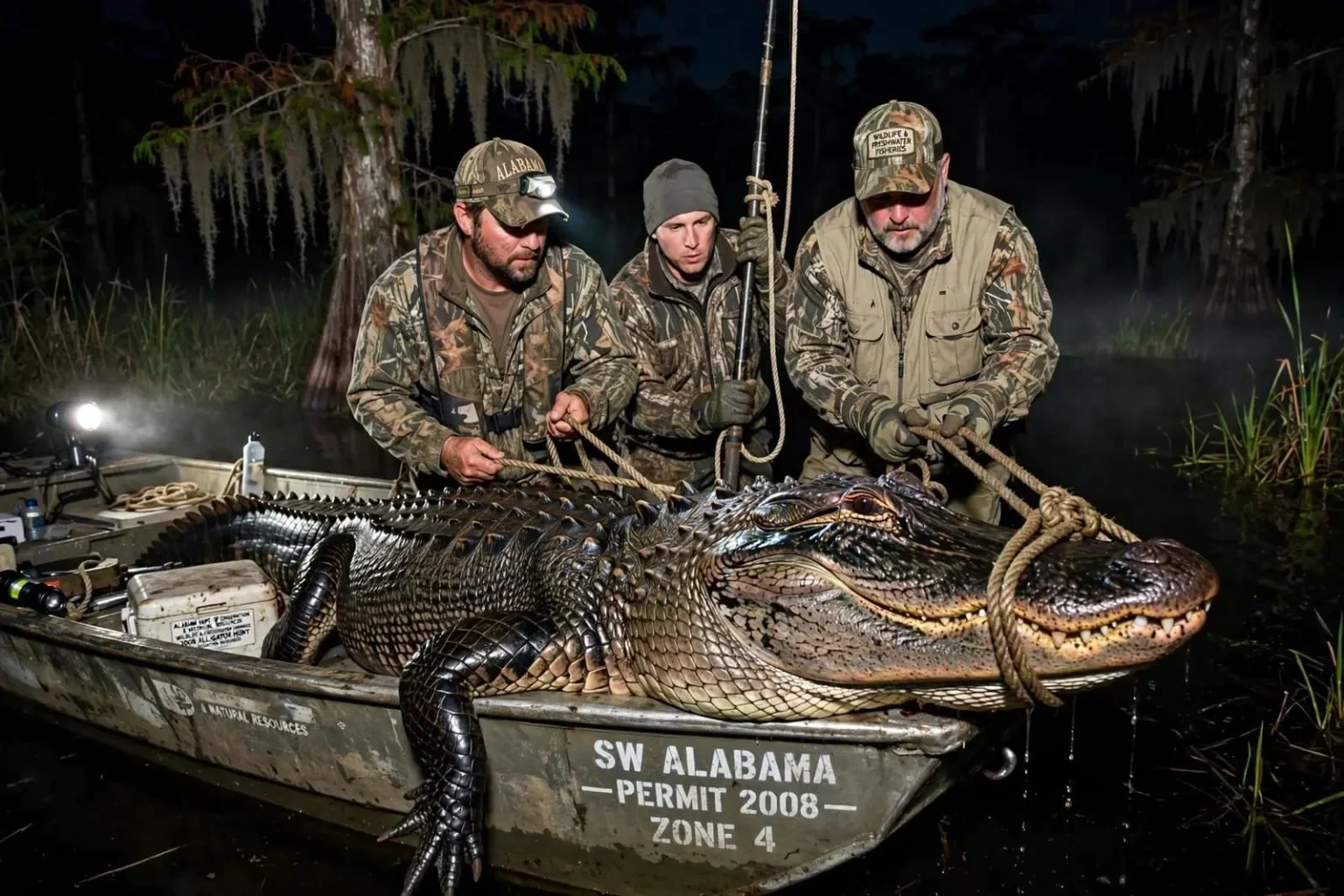
Historical report preserved from an archived 2008 local news story. An archived local news report covered a record alligator harvested during Alabama’s regulated 2008 hunting season in southwest Alabama. The harvest came in only the third year of the state’s modern alligator hunt, a program that had quickly become one of the most sought-after outdoors opportunities in the Southeast because of the sheer size of the animals swimming in the rivers and swamps of south Alabama.
Hunters described a difficult encounter after the animal dove beneath their boat. That kind of fight is part of what makes the Alabama alligator season distinctive: an adult alligator hooked on a baited line or snare can sound, dive, and run for long stretches, and landing one often takes hours of patience from a boat crew working at night. Hunters in the regulated season typically use rod-and-reel setups with weighted lines, harpoons, or snatch hooks to attach to the animal, followed by a restraining noose and a shot to the base of the skull once the alligator is secured against the boat. The process is regulated in detail by state wildlife biologists to keep it as quick and humane as possible.
State wildlife officials said 100 hunters across southwest Alabama had received permits for that year’s hunt. The permits were issued through a public drawing administered by the Alabama Department of Conservation and Natural Resources, with applications far outnumbering the available tags each summer. Winning a permit became something of a lottery prize for Alabama hunters, since the drawing fees were modest and the chance to take a trophy-sized alligator from an Alabama river drew thousands of applicants from inside and outside the state.
Officials said 17 alligators were caught on opening night. The first-night harvest gave the 2008 season a fast start and reflected both the skill of the permitted hunters and the density of the alligator population in the zone’s rivers, oxbow lakes, and delta waters. Each harvested animal had to be validated by state biologists, who measured and weighed the alligators and collected biological data used to manage the population.
Why Alabama Opened an Alligator Season
Officials said the hunts were important because of the growing alligator population. The American alligator had been removed from the federal endangered species list decades earlier, and by the mid-2000s the species had recovered so thoroughly across the Gulf Coast states that wildlife agencies were managing it as a robust game animal. In southwest Alabama, the network of rivers feeding Mobile Bay, including the Alabama, Tombigbee, Tensaw, and Mobile rivers, along with the Mobile-Tensaw Delta and countless oxbow lakes and swamps, provided ideal habitat where the population continued to expand.
The Alabama Department of Conservation and Natural Resources, working through its Wildlife and Freshwater Fisheries Division, opened the state’s first regulated alligator season in 2006 after years of study and growing complaints about nuisance alligators in populated areas. A limited, controlled hunt gave biologists a management tool, gave hunters a unique opportunity, and reduced conflicts between large alligators and people fishing, boating, and living along the waterways. Louisiana, Florida, Texas, and other Southern states had operated similar programs, and Alabama modeled its season on the same principles: restricted permits, defined zones, mandatory reporting, and biological data collection on every animal taken.
The southwest Alabama hunt zone covered the region where alligators were most abundant, drawing permit holders to the rivers and wetlands around Mobile, Baldwin, Clarke, Monroe, Washington, and surrounding counties. Biologists set the number of permits each year based on population estimates and harvest goals, keeping the take at a level the population could sustain. Hunters drew for either daylight training sessions or night hunts, with most harvest occurring after dark when alligators are actively moving and their eyeshine can be spotted across the water.
A Season Built for a Trophy Fishery of a Different Kind
Officials said the season had been extended to cover two full weekends. The expansion reflected both the demand from permit applicants and the realities of hunting a large, wary reptile: weather, high water, and the simple difficulty of getting a big alligator to the boat mean that not every permitted hunter succeeds, and a longer season gives tag holders more chances to use their permits responsibly.
The two-weekend format also spread hunters across the season rather than bunching all of the effort into a single night, which biologists preferred because it produced a steadier harvest picture and reduced crowding on popular boat ramps. For the hunters who drew permits, the weekends became expeditions in their own right, with crews scouting waters in daylight, rigging boats with lights and heavy tackle, and returning to the ramp well after midnight with animals that sometimes weighed more than the hunters themselves.
What a Record Harvest Meant in 2008
A record alligator in only the third season of the hunt underscored the quality of the animals in southwest Alabama’s waters. Alligators in the region grow large on a rich diet of fish, turtles, and other prey in the brackish and freshwater systems around Mobile Bay, and the state’s trophy potential had already drawn national attention to the young program. Biologists validating the 2008 harvest recorded lengths and weights that the department used both for public reporting and for the population models that would shape permit levels in future seasons.
The harvest data mattered to more than record keeping. Each animal taken provided samples that told biologists about growth rates, diet, and contaminant levels in the delta system, and the voluntary detail hunters provided about their hunts helped the division adjust season structure. The program’s early years were watched closely by wildlife managers across the Southeast, since Alabama’s approach, heavy on permits, validation, and night-hunting rules, offered a model for other states weighing their own returns to alligator hunting.
The Hunt’s Place in Southwest Alabama’s Outdoors Culture
For the communities along the rivers south and north of Mobile, the alligator season quickly joined deer season and turkey season as a fixture of the outdoors calendar. Hunters who drew permits put in long hours of scouting, and local guides, boat shops, and tackle dealers all felt the ripple of an economy built around the summer draw. Stories from successful hunts, including battles in which big alligators dove beneath boats and dragged lines across the river for hours, circulated through camps and hunting clubs for years afterward.
The 2008 season’s record harvest gave the young program its clearest evidence yet that southwest Alabama held animals rivaling anywhere in the species’ range. It also validated the department’s careful approach: a limited number of permitted hunters, a controlled harvest of 17 animals on opening night, and a season stretched across two weekends had all worked together to create a sustainable hunt on a growing population rather than a one-time giveaway of the state’s biggest reptiles.
This article records the 2008 hunt and is not current hunting guidance. Alligator seasons, zones, permit numbers, and regulations have continued to change as the Alabama Department of Conservation and Natural Resources adjusts the program year by year. Readers interested in today’s alligator hunting opportunities, application deadlines, or zone boundaries should consult the department directly for present-day rules and requirements before planning a hunt.
The permit drawing itself became a yearly ritual for Alabama hunters. Applications were submitted during a summer window, a modest fee covered the chance, and the department randomized selection among applicants who listed their preferred zone. Odds varied with the zone and the type of hunt requested, and many hunters applied year after year before hearing their names drawn. Those who did win faced a training requirement covering the legal methods of take, the rules for dispatching a secured alligator, and the tagging and validation steps that every harvest required before the meat and hide could be kept.
Safety rules were a central part of that training. A large alligator is a powerful animal even after it is hooked, and the department required hunters to bring equipment capable of controlling the animal before any dispatch, including catch poles and restraining nooses sized for the reptiles swimming in the delta. Hunters were reminded that the season took place in waters shared by anglers and recreational boaters, and that shot placement was limited to a small area at the base of the skull on a fully restrained animal. The strict structure was designed to keep the hunt safe for participants and bystanders alike.
The record animal from the 2008 season fit into a longer story of recovery. By the time Alabama opened its hunt, the American alligator had rebounded from near-extinction across much of its range, a comeback credited to federal protection, habitat conservation in the vast wetlands of the Gulf Coast, and careful state management. The swamps and rivers of southwest Alabama, largely protected inside the Mobile-Tensaw Delta and the public lands along the Alabama River, had quietly become one of the strongholds of that recovery, and the 2008 hunt let the public see, in dramatic fashion, just how far the population had come.