
St. Paul and the Broken Bones bring their soul to Mobile’s Alabama Music Box
Ahead of their November 15 show at the Alabama Music Box, St. Paul and the Broken Bones frontman Paul Janeway talks formation, soul, and what Mobile can.
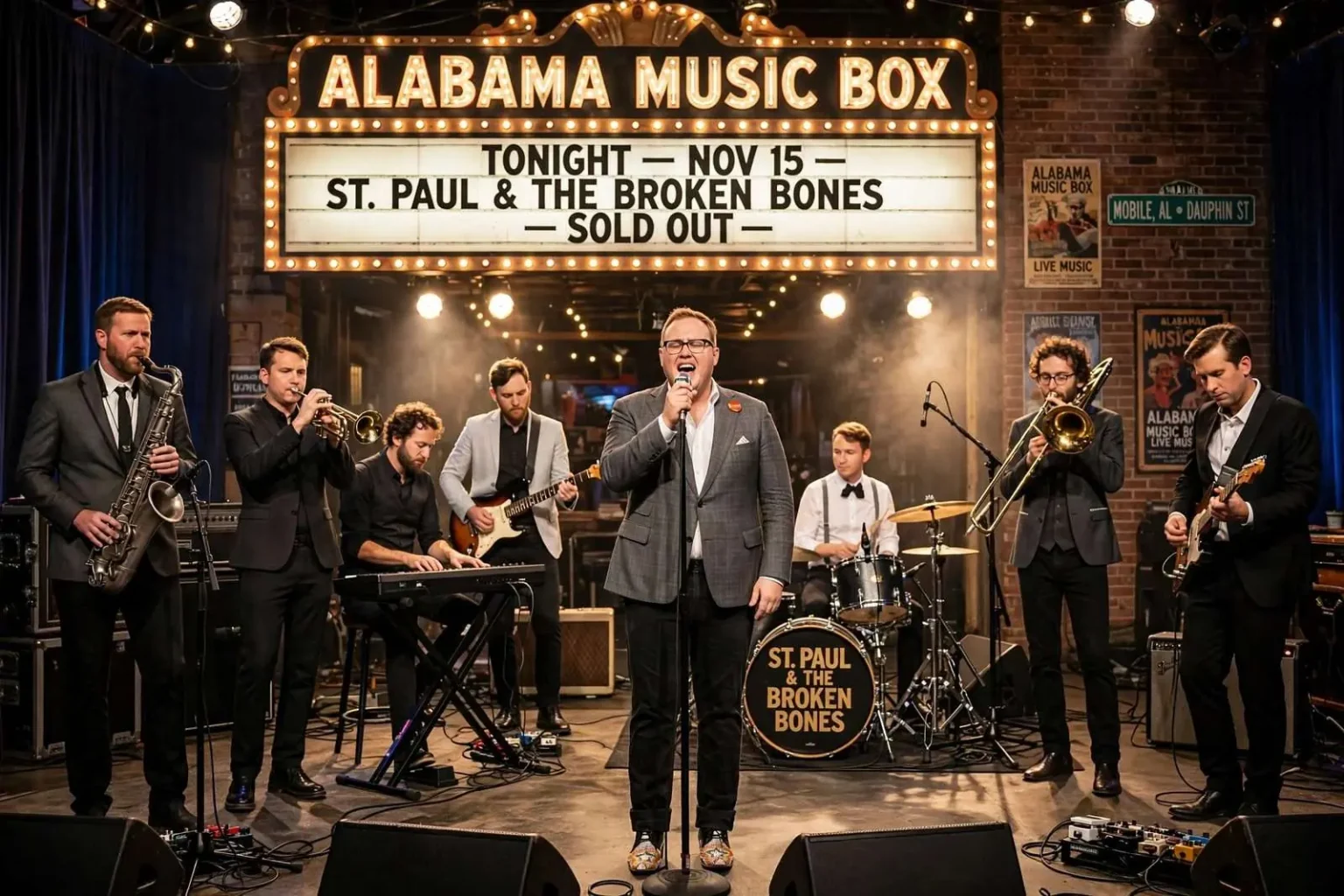
A Birmingham soul act finds its moment. Before a sold-out string of national dates turned them into a festival fixture, St. Paul and the Broken Bones were a Birmingham, Alabama band built on friendship and a shared love of soul.
Ahead of their November 15 appearance at the Alabama Music Box in Mobile, frontman Paul Janeway sat down to talk about how the group came together and what Gulf Coast audiences could expect. The stop was part of a run that had carried the young band from club stages in the Southeast to bigger rooms across the country, powered by word of mouth about a live show that has become the group’s calling card.
The band’s rise has been one of the more remarkable stories to come out of Birmingham’s recent music scene: a group of friends who came together almost by accident, found an audience quickly, and grew into one of the state’s most talked-about live acts in the span of a couple of years. For Mobile audiences, the November show marks a chance to see the band in a room sized to the kind of intimate, sweat-soaked performances that built its reputation.
How the band formed
Janeway explained that he and bassist Jesse had been friends for some time before they began recording in a Birmingham studio with an open-door policy, inviting musicians to drop in and track parts. Drummer Andrew was asked to record a song barely an hour before he played it — an improvised start that became typical of how the group came together. Guitarist Browan Loller came aboard after being invited to add a track to the band’s early “Greetings” EP and quickly fell for the material.
Horn players Allen Branstetter and Ben Griner were studying music at Samford University when they joined to add brass, giving the band the horn section that has become central to its sound. Janeway said the lineup’s fast chemistry still surprises him; a collection of players assembled through studio sessions and one-off invitations cohered into a working band far faster than anyone involved expected.
The open-door recording approach meant the band’s earliest music was shaped by whoever happened to be in the room, a loose process that suited the material. Rather than auditioning players and rehearsing for months, the group built itself in real time, taking the songs it had recorded straight onto stages around Birmingham and beyond while the lineup settled into place.
That origin story has become part of the band’s identity. The Broken Bones did not come together through management decisions or industry planning; they came together because friends kept showing up to play. Audiences who discover the band now are often surprised to learn how recently the members were still figuring out who would be in the room next.
Why soul
Asked what drew the band to soul, Janeway said his voice naturally does a certain thing and that he cannot sing anything halfway. The whole group, he said, approaches every performance with everything it has, and that full commitment is the essence of soul music — a genre built on giving a song everything the singer has in the moment rather than holding anything back for later.
Janeway’s singing has drawn comparisons to the great Southern soul voices of earlier generations, and the band’s sound draws on the tradition of horn-driven rhythm and blues that flourished across the South in the 1960s and 1970s. Alabama audiences come to that music with their own history: the state’s studios and singers helped define the genre, and regional crowds have consistently embraced the band’s take on a sound their parents and grandparents knew first.
The revival of interest in classic soul among younger listeners has made bands like St. Paul and the Broken Bones fixtures on festival bills, where their shows reach audiences who might otherwise never seek out the genre. Janeway’s onstage intensity — the pleading vocals, the dramatic pauses, the moments where a song seems to come apart at the seams before snapping back together — is the kind of performance that converts casual listeners into lifelong fans.
For the band, the commitment is practical as much as stylistic. Live performance is where the group has made its name, and every show is treated as an event rather than a rehearsal for something bigger. That approach has paid off in sold-out rooms and repeat bookings, as fans return to see what the band will do differently on any given night.
The bands he admires
On the bands he admires in the current Southern scene, Janeway pointed to labelmates Belle Adair and The Bear, the Birmingham hip-hop group The Green Seed, anything involving musician Chad Fisher, and Nashville’s DeRobert and the Half-Truths, whom the band shared a bill with not long before the interview. The list sketches a picture of a musician paying attention to his peers rather than competing with them, and of a regional scene with more cross-pollination than outsiders might expect.
Birmingham’s music community has grown tight-knit in recent years, with venues, studios and bands supporting one another across genres. Rock bands share bills with hip-hop acts; horn players move between soul groups and indie outfits; studios open their doors to whoever is recording that week. The band’s own formation grew out of that culture, and Janeway’s shout-outs to fellow Alabama and Tennessee acts reflect a scene that sees itself as building something together.
The relationships run in both directions. Younger Alabama bands coming up now cite St. Paul and the Broken Bones as proof that a band from Birmingham can tour nationally without leaving home base, and the band’s success has drawn more attention to the labels, venues and studios that nurtured it. A show at the Alabama Music Box brings that whole story through Mobile: a Birmingham band, on a label with Florence roots, playing a Gulf Coast room.
Mobile bound
Janeway played down any sense that the band has “made it,” saying he tends to carry a chip on his shoulder: once the group hits a goal, it is immediately on to the next one. He said he expects to look back one day and appreciate how far things have come, but the view from inside the band is still forward-leaning — more songs to write, more rooms to play, more audiences to win over one show at a time.
The November 15 date at the Alabama Music Box gives Mobile fans an early checkpoint in that climb. The venue, a longtime stop for touring bands on Dauphin Street, sits in the middle of downtown Mobile’s entertainment district, where late-night crowds move between clubs on weekends. A Saturday-adjacent soul show in that setting promises the kind of audience participation the band’s performances feed on.
For the Alabama Music Box show, Janeway promised a fun night. The band had played Callaghan’s in Mobile before, and the crowds they found there left a mark — small rooms with big voices, the kind of close-quarters shows where the band’s commitment to giving everything it has becomes obvious within the first song. Returning to Mobile on a bigger stage, the group brings the same approach: horns up, band locked in, and a frontman who cannot sing anything halfway.
Audiences who caught the band at Callaghan’s will recognize the difference scale makes. The songs stay the same, but a bigger room gives the horn section room to sound, the rhythm section space to move, and Janeway’s voice a longer runway. Fans of Southern soul, and anyone curious why a Birmingham band is selling out dates across the country, will find the answer on the Alabama Music Box stage this November.
Doors open in the evening ahead of the show, and early arrival is a reasonable strategy given the band’s growing reputation. What Mobile gets on November 15 is a band at the stage where every night matters to it — young, hungry, and playing soul music the way it was meant to be played.
Soul music’s Alabama roots
Part of what makes the band’s Alabama audiences special is the state’s own place in soul music history. The famous studios of the Shoals in north Alabama produced some of the genre’s defining records, and generations of Southern singers grew up with that sound in their churches, their kitchens and their car radios. Janeway’s own background follows that pattern: a North Alabama upbringing steeped in church singing, where a voice learns early that a song is something you give yourself to completely.
When the band plays rooms in Mobile, Birmingham, Huntsville or the Shoals, it is playing for crowds who hear the tradition underneath the revival. That connection shows in the response — Gulf Coast and Deep South audiences tend to meet the band’s energy with energy of their own, which is exactly what a soul performance feeds on. The music was built on the exchange between singer and congregation, and Alabama crowds carry that instinct.
The national appetite for the band says something broader about where popular music is right now. Listeners worn down by programmed perfection have shown a growing appetite for live bands, real horns and singers who sound like they mean it. St. Paul and the Broken Bones arrived at just the right moment with just the right sound, and Birmingham gave them a scene loose enough to let a pickup studio session become a band.
For now, the road continues. The dates between Birmingham and Mobile represent the band’s life as it is actually lived: load in, sound check, a room full of strangers who will not stay strangers for long, and an hour and a half of giving everything away. Mobile’s turn comes November 15 at the Alabama Music Box, and if the band’s history is any guide, the room will not leave disappointed.


