The Story Behind the ‘Battle Wagon,’ the Boat Sally Left Beside Highway 161
Hurricane Sally carried the Battle Wagon a mile from Zeke's Marina to the guardrail on Alabama 161 in Orange Beach. Its owner explains what the boat means.
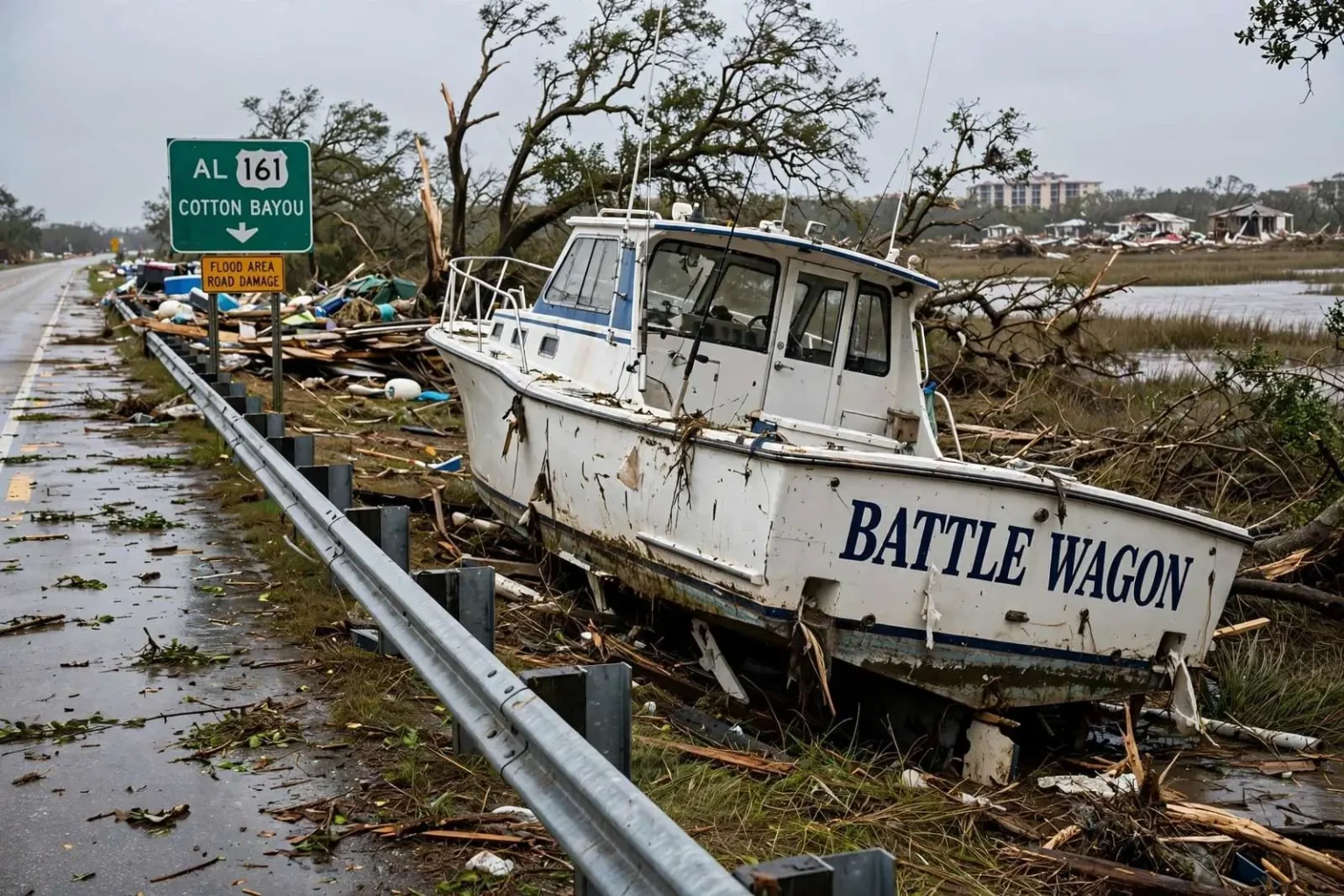
For days after Hurricane Sally came ashore, drivers along Alabama 161 in Orange Beach slowed for the same sight: a large boat propped against the guardrail at Cotton Bayou, close enough to passing traffic to read the name across its hull. The “Battle Wagon” became one of the enduring images of what the storm did to south Baldwin County, a photograph-worthy casualty that thousands of residents and returning evacuees passed daily as the coastal city began digging out.
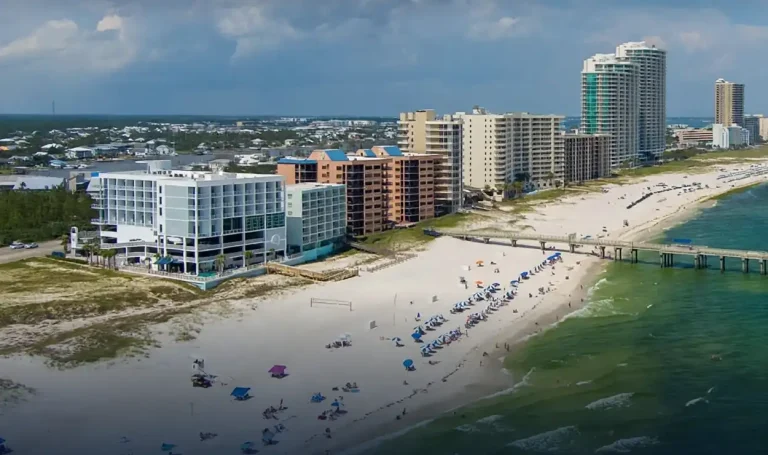
Sally made landfall in September 2020 as a slow-moving Category 2 storm near Gulf Shores, and its crawl across the coast — unlike the fast strikes that Gulf residents are used to — stacked storm surge on top of hours of relentless wind. Orange Beach, sitting directly on Perdido Pass and the back bays, took some of the worst of it. Marinas were shredded, boats broke loose by the dozens, and debris fields stretched for miles through neighborhoods that had never seen water from the bay before.
A Mile From Its Slip
The Battle Wagon had been docked at Zeke’s Marina before the storm, one of the largest and busiest marina operations on the Alabama coast. Zeke’s, positioned near Perdido Pass where the Gulf meets the Intracoastal waters, is home to hundreds of vessels, from charter fishing boats to private cruisers, and it took a direct beating when Sally’s surge swept through the basin. As the water rose and the wind pushed from the south, boats tore free of docks and cleats and went adrift across the flooded landscape.
Sally’s surge carried the Battle Wagon roughly a mile, depositing it on the far side of Cotton Bayou beside the roadway. The journey left the boat beached within feet of Alabama 161, the main north-south artery through Orange Beach, where it sat at eye level with commuters, contractors and storm tourists alike. For a vessel to cross a mile of flooded ground, clear roads and structures, and come to rest against a guardrail intact was remarkable — and that improbable landing is what made the boat a local landmark almost overnight.
Despite the journey, the boat came through in better condition than its owner expected. The hull was largely intact after the water receded, a survival that surprised even seasoned boaters who spent the weeks after the storm pulling apart damaged vessels. Storm-tossed boats typically suffer punctured hulls, crushed superstructures or grounded rudders; the Battle Wagon absorbed the trip with its structure essentially whole.
Family Memories on Board
Owner Roger Latham, who lives in Mississippi, said the boat’s value to him has little to do with resale price. For Latham, the Battle Wagon is a repository of family history: he described years of trips with his four children aboard, fishing runs and weekend outings that spanned their childhoods. The family even had matching Battle Wagon shirts made, the kind of gesture that turns a boat from property into a shared identity — and that made the sight of it beached beside a highway hit harder than any insurance estimate could capture.
Boat owners across the central Gulf Coast told versions of the same story after Sally. Vessels are passed down, named after children and grandchildren, and outfitted over decades, so when a storm scatters a marina’s fleet across dry land, the losses are measured in memories as much as in dollars. Latham’s boat surviving with its hull intact meant those trips could continue — a rare happy ending in a season when many Baldwin County boaters watched their vessels come apart on roads and lawns.
One Boat Among Dozens
The Battle Wagon was one of dozens of boats knocked loose from marinas and moorings around Orange Beach and Gulf Shores when Sally pushed water far inland. The surge reached into canals, bayous and residential canals along Cotton Bayou, Wolf Bay and the Perdido Pass area, floating boats over docks and into streets. Some vessels stacked against one another in marina basins; others traveled blocks from their slips. Insurance adjusters and salvage crews spent months sorting through the wreckage, and the sight of a boat in a road — once unthinkable — became routine in the weeks after landfall.
Cleanup crews spent weeks pulling vessels off roadsides, out of marsh grass and away from damaged docks along the Baldwin County coast. The work involved cranes, tow trucks and marine salvage teams, complicated by the fact that many grounded boats sat in environmentally sensitive wetlands where heavy equipment could do as much damage as the storm. Diesel and fuel had to be pumped from tanks before any boat could be moved, and every removal had to balance property recovery against the fragile marsh ecosystem that buffers the coast from future storms.
Alabama 161 itself was a focal point of the recovery. The highway, which runs the length of Orange Beach and connects the beachfront communities to Perdido Pass, is lined with condominiums, marinas and restaurants, and it served as the primary corridor for repair crews in the storm’s aftermath. A boat parked against its guardrail was more than an obstacle — it was a daily reminder, for everyone who drove past, of how far inland Sally’s water had reached.
Why Sally’s Damage Was So Widespread
The reason a boat could travel a mile inland goes back to how Sally moved. The storm’s slow forward speed meant onshore winds persisted through multiple tide cycles, pushing water into the bays and sounds faster than it could drain. Baldwin County’s low-lying topography — broad, shallow bays and flat coastal terrain — allowed that water to spread far beyond the shoreline. Cotton Bayou, where the Battle Wagon landed, sits at the heart of that flood zone, connecting the beachfront to the canal systems behind it.
For Orange Beach and Gulf Shores, the 2020 season marked a generation-defining event. Sally arrived six years after Ivan, the 2004 hurricane that remains a benchmark for coastal Baldwin County damage, and it tested rebuilt marinas, new construction codes and an expanded population. The recovery that followed — from marina reconstruction to debris removal along every road in south Baldwin County — stretched well beyond the initial weeks, but the images that endured were the ones like the Battle Wagon: improbable, specific and impossible to look away from.
In the end, the Battle Wagon’s story became the story residents told most readily about Sally — not the wind speeds or the rainfall totals, but the boat beside the highway. Storms leave behind statistics; communities remember scenes. A family’s boat, carried a mile from Zeke’s Marina and left intact beside Cotton Bayou, gave south Baldwin County a symbol of both the storm’s power and its strange luck: destruction everywhere, and one vessel that rode out the worst of it with a hull sound enough to carry Roger Latham and his four children back onto the water.
The scene also became part of the standard account of what Gulf Coast marina owners now plan for. Zeke’s Marina rebuilt after Sally, as did marinas across Orange Beach and Gulf Shores, with lessons learned about dock hardware, mooring lines and storm preparations. Boaters along the coast now talk about surge displacement the way they once talked only about wind categories — and the image of a boat against a highway guardrail is the shorthand they use for it.
For the Latham family, the boat’s second act after the storm is the part that matters. Matching Battle Wagon shirts still mark the family’s trips, and the vessel that survived a mile of floodwater is a story the four children will tell for the rest of their lives. In a region that measures its history in hurricane seasons, that is the kind of aftermath residents of Orange Beach understand best: the storm takes what it takes, and every so often, it gives something back.
Salvage operations along the Baldwin County coast after Sally ranked among the largest marine debris removals the county had undertaken. Every grounded vessel required an owner lookup through boat registrations, a damage assessment and, frequently, coordination with insurance companies before a single strap or sling was attached. Boats that landed in state road rights-of-way involved the Alabama Department of Transportation; those in city limits fell to Orange Beach and Gulf Shores crews; those in marsh grass required permits and careful timing around tides. The bureaucratic choreography stretched on long after the roads themselves were cleared, which is why some storm-tossed vessels remained where Sally left them for months.
The Battle Wagon’s visibility beside Alabama 161 also made it a stop for residents touring the damage — a runoff of the storm-tourism impulse that follows every major hurricane along the Gulf Coast. Drivers pulled over to photograph it, and the images circulated widely among former Orange Beach visitors checking on the places they knew. In a small coastal city where tourism drives the economy, even a wrecked landmark carried meaning for the thousands of families who vacation there each summer and watched the recovery from afar.