Van Fire Damaged Theodore Home in 2008
Archived WKRG coverage reported that a vehicle fire damaged a Theodore home on General Lee Avenue in 2008.
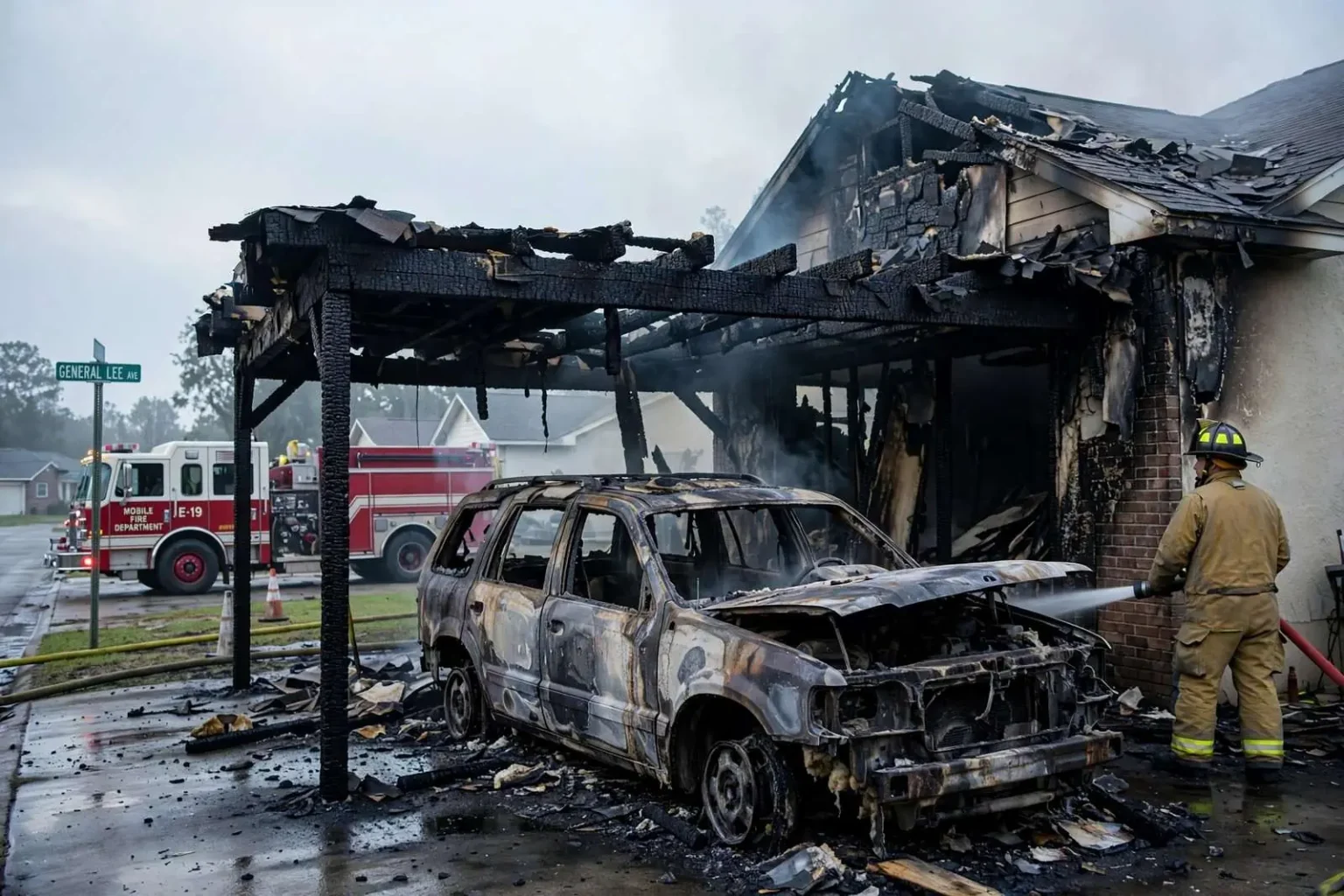
Theodore home was damaged by a vehicle fire in April 2008, according to an archived local news report that documented the early-morning blaze on General Lee Avenue. Mobile Fire Department crews were dispatched to the residential street after receiving a call reporting the fire, and when they arrived they found a vehicle, the attached carport and the house itself burning. The department worked to bring the fire under control before it could spread further into the surrounding neighborhood, and the incident was later recorded as one of the more serious structure-related calls of that spring in the Theodore area.
When the first units rolled onto General Lee Avenue, the scene presented the kind of compound fire that responders train for but rarely welcome. A burning vehicle parked in or near a carport creates a heat source directly adjacent to a home’s exterior wall, and in this case the flames had already found a path from the car into the carport structure and then into the house. Crews had to attack the fire on multiple fronts at once: knocking down the vehicle itself, cutting off extension into the carport, and pushing into the home to stop the interior spread. The combined operation required an organized water supply and coordinated handlines, standard practice for a working fire in a residential area of Mobile County.
The most dangerous development came when the fire reached the attic and began moving through the roof. Attic fires are among the most challenging for fire crews because the space is confined, heavily insulated and often difficult to access, allowing flames to travel along the top of a house far from the original room of origin. In this case the fire had climbed from the carport level up into the attic cavity, which meant the roof line itself was compromised by the time the extent of the spread became clear. Fires that break into attic space frequently cause damage across broad sections of a home even when the living areas below remain untouched, because heat, smoke and water all take a toll as crews open ceilings and pull insulation to reach hidden fire.
How investigators traced the fire to the vehicle
Investigators who examined the scene determined the fire appeared to begin under the vehicle’s hood, in the area near the battery, and said the blaze could have involved faulty wiring. That conclusion placed the origin of the entire incident inside the engine compartment rather than in the carport or the home, an important detail because it meant the house and carport were secondary casualties of a vehicle fire rather than the starting point. Engine-compartment fires that begin near the battery typically involve the electrical system, where damaged insulation, corroded connections or aging wiring harnesses can generate enough heat to ignite nearby components.
Vehicle fires of this kind are a recurring hazard on the Gulf Coast, where long, hot and humid seasons put extra strain on batteries, wiring and cooling systems. A car parked overnight in a driveway or carport gives few warnings before an electrical fault turns into open flame, and the first sign is often the early-morning call that brought Mobile Fire Department crews to Theodore on this occasion. Once a hood fire establishes itself, the plastic, rubber and fuel-line materials in the engine bay burn quickly, and a carport that connects the parking area to the house gives the flames a direct bridge into the structure.
The report noted that the incident was handled as a historical public-safety record, compiled from archived local news coverage of the April 2008 fire. It stands as a reminder of how quickly a vehicle malfunction can escalate into a major house fire, and of why fire investigators treat under-hood origins with particular attention when a burning car sits close to a home.
The damage tally and the human outcome
The archived report estimated about $165,000 in damage from the General Lee Avenue fire, a figure that reflected the combined toll on the vehicle, the carport and the house itself. Damage estimates in cases like this one are assembled after the fire is out, drawing on the extent of structural charring, the sections of roof and attic that had to be opened or rebuilt, the smoke and water damage throughout the living space, and the total loss of the vehicle. A six-figure estimate on a single-family home signals a fire that penetrated well beyond the point of origin, which matched what crews found when they tracked the flames into the attic and through the roof.
The most important line in the report, however, concerned people rather than property: no one was injured. Early-morning residential fires are among the deadliest scenarios in fire service experience, because occupants are typically asleep when flames and smoke begin to spread. That the household escaped the April 2008 fire without injury meant the smoke, the noise of the burning vehicle and the response of the fire department combined in time to get everyone out of danger. Fires that start in vehicles and carports also give occupants a head start compared with fires that begin inside a bedroom or kitchen, since the exterior origin point buys minutes that interior fires do not.
For the family involved, the weeks after such a fire involve insurance adjusters, contractors and decisions about repair versus rebuild. Fires that damage attics and roofs frequently render a home unlivable in the short term, even when the kitchen and bedrooms survive, because the roof envelope has to be sealed before the house is safe from weather and the electrical system can be fully inspected.
Theodore and its fire protection landscape
General Lee Avenue sits in Theodore, an unincorporated community in western Mobile County south of the city limits along the Highway 90 corridor. The area is a patchwork of older residential neighborhoods, small commercial strips and residential streets lined with homes of the kind damaged in the 2008 fire, many of them built in the postwar decades when carports were a standard feature of Gulf Coast house design. Theodore is home to its own schools, churches and civic institutions, and its residents rely on a combination of county and municipal services that differs from what incorporated cities provide.
The response by Mobile Fire Department crews to a Theodore address illustrates the way fire protection works across the edges of Mobile County, where jurisdictional lines are not always obvious to residents. In an emergency, calls are routed to whatever units can respond fastest, and mutual-aid arrangements between municipal departments and county fire agencies mean help converges from multiple directions. For a working fire involving a structure, that convergence matters: the earliest arriving crew begins attack and search operations while later units establish water supply, ventilate the roof and relieve the first companies.
Residents of communities like Theodore have long been advised to keep the area between their parked vehicles and their homes clear of combustibles, to have vehicle electrical systems inspected when warning signs appear, and to maintain working smoke alarms on every level of the house. Those measures are the practical front line against the exact scenario the General Lee Avenue fire represented.
What a carport fire teaches about home design and risk
The 2008 Theodore fire remains a case study in why carports, though convenient in a hot and rainy climate, carry a specific fire risk that attached garages and detached parking do not. A carport shelters a vehicle from sun and storms while leaving it open to the air, but that same openness means a burning vehicle radiates heat directly toward the house wall and sends flames up any surface that connects the two structures. In the General Lee Avenue case, the fire traveled exactly that path, from the vehicle to the carport and then into the house and attic. Fire-prevention guidance in coastal Alabama consistently urges homeowners with carports to store flammables such as gasoline cans, propane tanks, paint and pools of dry yard debris well away from the parked vehicle, since those materials turn a vehicle fire into a structure fire far more quickly.
Under-hood electrical fires also respond to prevention. Drivers are encouraged to watch for the warning signs of battery and wiring trouble, including a persistent smell of burning plastic, dimming lights, repeated battery failures and visible corrosion around battery terminals. A vehicle that shows those symptoms and is parked adjacent to a home is a hazard worth addressing before it becomes the early-morning call that fire crews dread. Routine inspection of battery cables and grounds, particularly on older vehicles that have lived through years of Gulf Coast humidity, is a small maintenance task with an outsized return.
A historical record, not a current event
This report is published from archived local news coverage and documents a fire that occurred in April 2008. It is not a notice of a current emergency, and the General Lee Avenue scene described here reflects conditions as they were reported at the time. The incident entered the public record through the ordinary channels of local news: a dispatch call in the early-morning hours, the arrival of Mobile Fire Department crews, the work of bringing the vehicle, carport and house fire under control, and the investigators’ determination that the fire appeared to begin under the vehicle’s hood near the battery and could have involved faulty wiring.
Archived reports like this one serve several purposes for the community. They preserve the record of how a particular neighborhood weathered a particular emergency, they document the response of the public-safety agencies involved, and they give current residents a concrete illustration of risks that otherwise remain abstract. The $165,000 damage estimate and the absence of injuries are the two numbers that summarize the outcome: an expensive morning on General Lee Avenue, but one that everyone walked away from.
For Theodore residents today, the story carries the same practical weight it did in 2008. Vehicles parked close to homes deserve attention when they show electrical trouble, carports deserve to be kept clear of anything that burns, and smoke alarms deserve to be tested on a schedule. The families who lived through the fire that April morning learned those lessons the hard way; the archive exists so that their neighbors do not have to.