
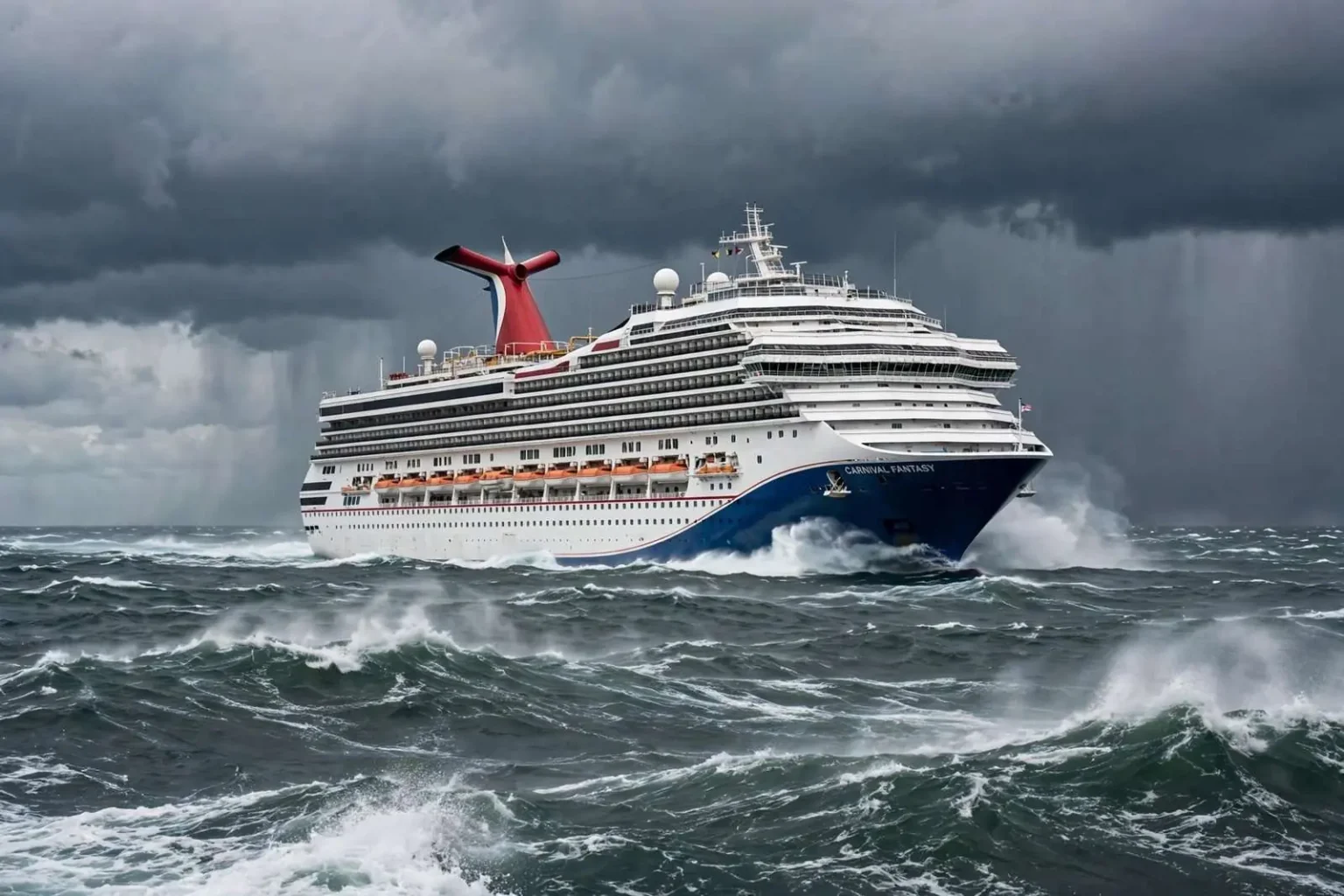
Tropical Storm Barry left its mark on Mobile’s cruise schedule in mid-July 2019, delaying one Carnival Fantasy sailing by a full day and trimming another by 24 hours as the storm churned through the Gulf of Mexico. The disruptions at the Alabama Cruise Terminal showed how even a moderate storm, hundreds of miles from landfall, can ripple through Gulf Coast travel plans.
An extra day at sea
The Carnival Fantasy arrived back at the Alabama Cruise Terminal a day behind schedule after high seas forced the ship to slow its return. Passengers on that sailing described widely different experiences on the water. Some said conditions were smooth enough that the bonus day felt like a gift, with the ship staying comfortable and activities continuing as normal. Others reported rough stretches on the way home as the vessel worked around the storm’s influence.
Passengers aboard praised the crew for keeping everyone fed and entertained through the delay. Cruise ships maintain full activity calendars — shows, games, dining events and children’s programming — and extending those schedules for an unplanned day at sea is precisely the kind of operational pivot crews train for. For the line, a delayed arrival also meant cascading adjustments: boarding for the next voyage, provisioning for the ship and parking arrangements at the terminal all had to shift.
A shortened departure
Travelers boarding the next cruise faced the opposite problem: their trip was cut by a day as the line worked to get the schedule back on track at the downtown Mobile terminal. The shortened itinerary compressed port calls and sea days to restore the ship’s rotation, a standard industry response when weather pushes a vessel off schedule.
Despite the shortened itinerary, departing passengers were in good spirits as they made their way through security, expressing relief that the storm had done limited damage along the Gulf Coast and excitement about getting their vacation underway. Terminal staff processed the adjusted boarding groups while the ship was turned around for its next sailing — a turnaround operation that normally requires every hour of a port day, made tighter by the late arrival.
Barry ultimately came ashore in Louisiana, but its wide reach disrupted shipping and travel across the northern Gulf, including Mobile’s growing cruise business at the Port of Mobile. Storms in the Gulf routinely affect ports far from the point of landfall: captains slow or reroute to avoid the worst seas, port authorities adjust channel traffic, and excursion-dependent industries brace for cancellations. For a system like Mobile’s, where cruise sailings and commercial shipping share the bay, a tropical system in virtually any quadrant of the Gulf can touch the schedule.
Cruising from Mobile
The Alabama Cruise Terminal sits on the Mobile River downtown, giving the city a cruise industry that departs from the heart of its historic district. The Carnival Fantasy, the ship affected by Barry, was a mainstay of the Mobile market for years, carrying short itineraries — typically four- and five-day cruises — to the western Caribbean and the Bahamas from the port on the state’s coastline. Short cruises are particularly sensitive to weather delays, since a single lost day cuts deeply into a four-day itinerary.
Gulf cruising operates within hurricane season, which runs from June through November, and lines build flexibility into their routing to steer around tropical systems. When storms threaten, the choice is often between leaving early, arriving late or cutting an itinerary short — exactly the alternatives Barry forced on the Fantasy’s consecutive sailings. Passengers booked during hurricane season are advised to expect the possibility of itinerary changes, though most disruptions end exactly as this one did: with a delayed homecoming, a trimmed voyage and vacations that proceeded safely.
Barry’s reach across the northern Gulf
Barry formed in the Gulf of Mexico in mid-July 2019 and strengthened into the first hurricane of the 2019 Atlantic season before making landfall in Louisiana. The storm’s approach pushed heavy rain bands and elevated seas across a broad swath of the northern Gulf Coast, from Texas to the Florida panhandle, prompting marine warnings that commercial and passenger vessels alike had to plan around. Ports from Mobile to New Orleans adjusted operations as the system approached, and the effects on scheduling lingered for days after the storm cleared.
For Mobile, the timing underscored how the city’s maritime economy is exposed to Gulf weather in multiple ways at once. The Port of Mobile handles container cargo, bulk commodities, breakbulk freight and passenger cruising, and every one of those operations depends on pilots, tugboats and channel conditions that deteriorate as seas build. When a tropical system enters the Gulf, port activity pauses or slows for the duration, and the backlog works itself out over the following week — a rhythm that Gulf ports have managed for generations.
The cruise business, in particular, operates on precision schedules. A ship like the Fantasy must arrive, disembark thousands of passengers, clean and provision the vessel, board the next group and sail — all within a fixed window. A day of delay compresses everything, which is why the line chose to shorten the following cruise rather than slide the schedule further. The decision got operations back on track, though it meant passengers who paid for a five-day vacation sailed a shorter one.
How crews and passengers weather the change
The reports from the delayed sailing offered a case study in how cruise operations absorb a weather day. The ship’s entertainment and dining programs continued as normal for passengers who experienced calm conditions, and the crew’s handling of the extended voyage earned praise from those aboard. Weather routing — the practice of steering a course around the worst of a storm’s seas — is standard practice in the industry, and it can add hours or days to a passage while keeping the ride as comfortable as safety allows.
For the passengers on the shortened sailing, the mood at the terminal reflected the broader relief along the Gulf Coast after Barry came ashore. The storm’s worst effects were concentrated in Louisiana, where it tested the region’s flood defenses, while Alabama’s coastline was spared significant damage. Travelers who had watched the forecast all week boarded with their vacations intact, if a day shorter than planned.
The episode also served as a reminder of the cruise market’s importance to downtown Mobile. Sailings bring thousands of visitors through the terminal on each departure, filling parking, restaurants and hotels around the waterfront. Preserving the reliability of that schedule — even when Gulf weather intrudes — is part of what sustains the city’s cruise business, and the handling of the Barry disruptions showed the system working as designed: ships routed safely, passengers informed, and the operation back on schedule within a single turnaround.
Weather planning in Gulf cruising
Hurricane season is a permanent feature of Gulf Coast cruise planning, and the Barry episode illustrates the standard playbook lines follow when a system threatens the basin. Meteorological services track tropical weather continuously during the season, and cruise lines adjust departures, arrivals and courses days in advance of an actual threat. The safest response is usually not cancellation but reshaping: leaving a port early, taking a longer route around the storm’s quadrant, or slowing to avoid following seas — all measures that cost schedule but protect passengers.
The Fantasy’s high-seas slowdown fits that pattern. By reducing speed as the storm’s swell field spread across the Gulf, the ship traded a day of schedule for a safer, more comfortable passage. Modern cruise ships are engineered for heavy weather, but prudent captains avoid it when they can, both for passenger comfort and to protect the vessel. The wide variability in passenger accounts — some reporting smooth seas, others rough stretches — reflected the ship’s position relative to the storm’s bands and the direction of travel through the swell.
Terminal operations on the back end are equally choreographed. When the ship arrived a day late, the Alabama Cruise Terminal staff reworked boarding logistics, baggage handling and parking reservations to match. Short cruises from Mobile typically turn around in a matter of hours, and every element — fueling, provisioning, housekeeping, safety inspections — runs against the clock. Compressing that turnaround to recover a lost day is the operational heart of a schedule reset like the one Barry forced.
The Fantasy’s place in Mobile’s cruise story
The Carnival Fantasy was the ship that built Mobile’s cruise market. The Fantasy-class vessel, which entered service in 1990, sailed from the Alabama Cruise Terminal for years, offering the accessible, affordable short cruises that introduced thousands of first-time cruisers to the industry. Its itineraries from Mobile generally ran four or five days, calling at Caribbean ports and giving the city a steady stream of weekend traffic through the downtown terminal.
Mobile’s cruise terminal, opened in the mid-2000s as part of the city’s waterfront development, was conceived as an economic engine for the historic downtown, connecting the cruise industry to the restaurants, hotels and attractions of the city center. Cruise passengers embarking from Mobile arrive in the shadow of the city’s skyline along the Mobile River, a different experience from driving to the massive terminals of Florida. That intimacy is part of the port’s identity — and also makes its schedules more sensitive, since a single ship serves the whole market.
Weather disruptions like Barry’s are a known cost of that Gulf location, accepted by the industry and its customers the same way Gulf Coast residents accept hurricane season itself. The alternative — a season without weather delays — would require a different ocean. Mobile’s cruise operation absorbed the storm’s punch with a delayed arrival and a shortened voyage, and the passengers’ own accounts suggest the system bent without breaking: crews kept ships running and travelers fed, the terminal recovered its schedule within one turnaround, and vacations went on, if in some cases a day shorter than the brochure promised.