Tuberville Tours Isaias Crop Damage in Conecuh County, Says Farm Bill Is Headed to Senate Floor
U.S. Sen. Tommy Tuberville toured a Conecuh County cotton field damaged by Hurricane Isaias and said a new farm bill is expected on the Senate floor around December. He blamed Democrats, including governor's race opponent Doug Jones, for the delay, while farm officials urged growers to document losses.
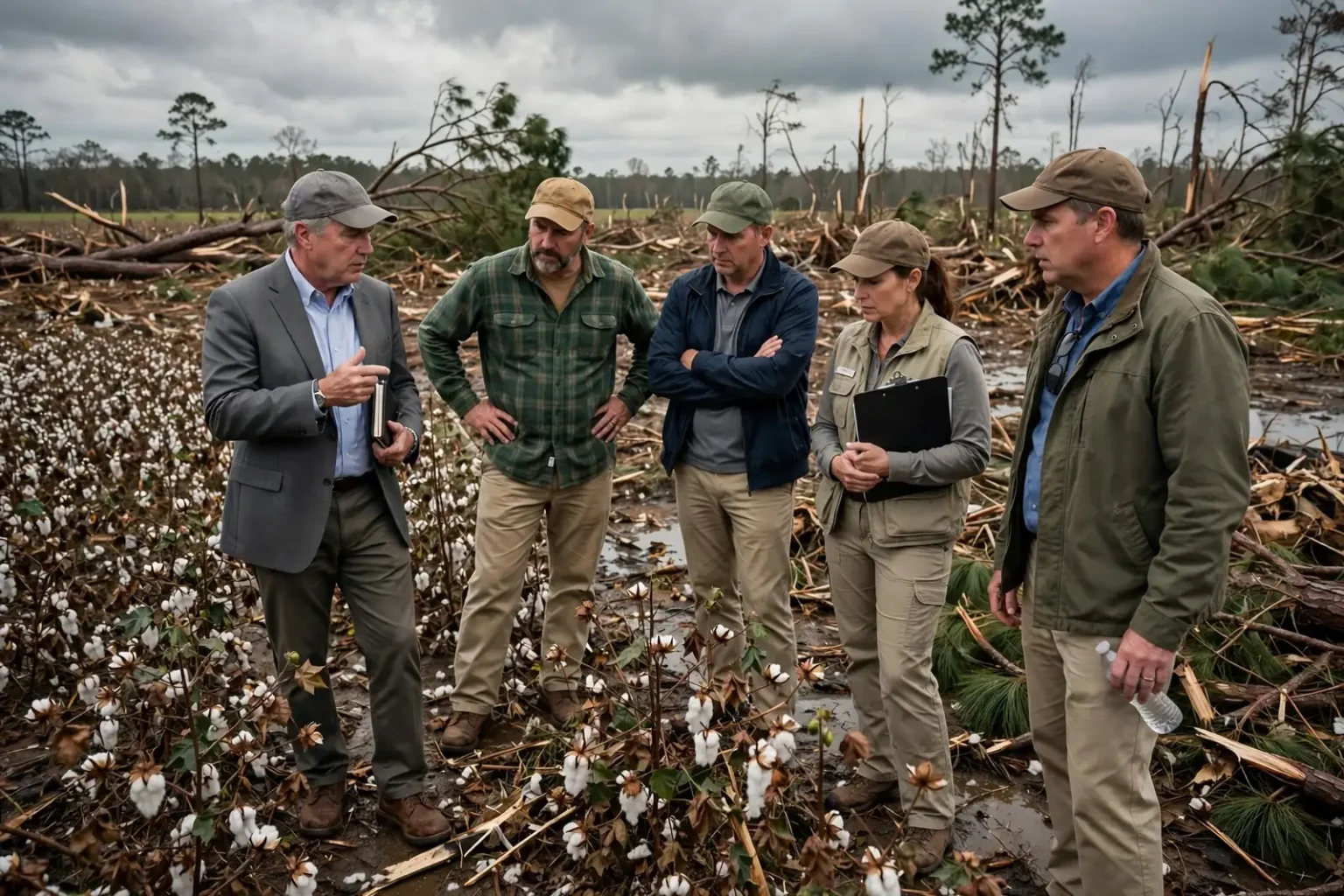
CONECUH COUNTY, Ala. — U.S. Sen. Tommy Tuberville toured Isaias crop damage in Conecuh County on Thursday, Oct. 15, and, standing in a cotton field the storm hit a week or so before harvest, told farmers that a new farm bill is finally headed for a vote on the Senate floor, and he blamed Democrats, including his opponent in the governor’s race, Doug Jones, for the years of delay.
The Alabama Farmers Federation hosted the tour at Chris and Will Booker’s farm. Ricky and Russell Wiggins leased the land for the first time this year and planted it in cotton. Tuberville, a Republican from Auburn and the GOP nominee for governor, was joined by Federation President Jimmy Parnell, Alabama Agriculture Commissioner Rick Pate, Republican agriculture commissioner nominee Corey Hill and Monica Carroll, state executive director of the U.S. Department of Agriculture’s Farm Service Agency in Alabama.
“The farmers work 12 months a year to get a crop, but there’s two things they can’t control,” Tuberville said. “They can’t control the price, nor can they control the weather, and that’s the reason it’s very, very hard on our people that grow crops.”
Storm losses in timber and crops
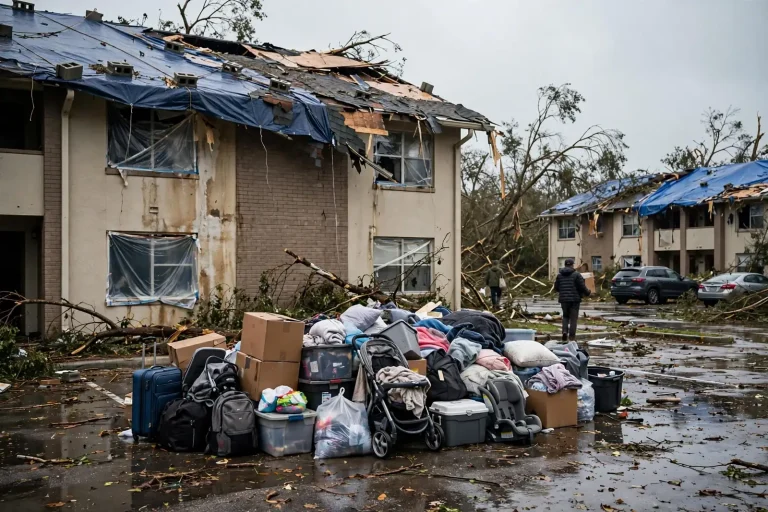
Isaias made landfall near Destin, Florida, on the night of Oct. 9 as a Category 2 hurricane and raced north into Alabama. Tuberville described a roughly 200-mile path of damage from south Alabama into the central part of the state.
The Alabama Forestry Commission estimates more than $30 million in timber losses in Conecuh, Escambia and Monroe counties, and the Farmers Federation puts crop losses in those counties at 20% to 50%.
Tuberville said the field behind him was “almost devastated” and “just a week or so away from being harvested.”
Conecuh County, whose county seat is Evergreen, is a largely rural county where agriculture and timber are central to the local economy. Along with Escambia and Monroe counties, it was among the places where power outages lasted longest after the storm.
Farm bill heads to the Senate floor, Tuberville says
Tuberville, who has served on the Senate Agriculture Committee during his six years in the Senate, used the setting to promote the farm bill the committee approved last month. He said the committee had been deadlocked 10-10 until U.S. Sen. Mitch McConnell, R-Kentucky, provided the deciding vote on his return to the committee. Tuberville said the bill is expected to reach the Senate floor around the first of December.
“We fought for six years to get a farm bill that helps our farmers, producers, and our foresters,” Tuberville said. “Unfortunately, we can’t get one Democrat to vote for it.”
“2018 was the last farm bill, and since then they have fought against President Trump. They have fought against the Ag Committee. They have fought against the farmers and producers and the foresters across the country, and again, not one Democrat has voted for it in almost 10 years,” he said.
The most recent full farm bill, the Agriculture Improvement Act of 2018, expired in 2023, and Congress has since relied on extensions of its programs. Farm bills set policy for crop insurance, commodity support, conservation, forestry, rural development and nutrition programs, typically for five years at a time.
Shots at Doug Jones
Tuberville also responded to criticism of his farm bill record from Jones, the Democratic nominee for governor.
“Guy I’m running for governor, he doesn’t know the difference between a cotton plant and a watermelon plant,” Tuberville said. “He just wants to talk bad. ‘Coach hadn’t got a farm bill done.’ Well, no kidding. We finally got it passed out of committee a few weeks ago.”
The characterizations of Jones and of Democrats’ votes are Tuberville’s. Jones, a former U.S. senator and U.S. attorney, has made fuel prices and household costs central themes of his campaign and has criticized Tuberville’s record in the Senate. In the U.S. House race in south Alabama, Democratic U.S. Rep. Shomari Figures has defended his own vote against the House farm bill, saying it fell short for farmers and would have cut funding for rural hospitals and land-grant institutions.
Tuberville and Jones meet in the Nov. 3 general election to succeed term-limited Gov. Kay Ivey. The race is a rematch of the 2020 U.S. Senate election, which Tuberville won. Independent Ronald Brunette Jr. is also on the ballot.
‘A hand up’ for growers
Asked what Washington can do for Alabama growers while the Senate is out of session, Tuberville said the answer runs through the farm bill and its crop insurance improvements.
“Our farmers don’t want a handout, they want a hand up when things like this happen,” he said. “They can’t do it on their own because you’re going to have situations like this happen.”
He tied the financial pressure on farmers to input costs and energy policy, pointing to diesel prices and what he described as the Biden administration’s record on refineries, permitting and drilling in the Gulf.
“The farmers and producers and the foresters of this country, they care more about the land and the environment than any one of these greenies that you’ll ever talk to,” Tuberville said. “So let’s turn our land back over to the farmers. Let them do what they need to be productive, and let’s make our food in this country and not some other country.”
Farm leaders back Tuberville’s record
Parnell introduced Tuberville by listing what he said the senator has delivered for Alabama agriculture: roughly $50 billion in disaster relief for production agriculture, tax relief and farm program provisions in the One Big Beautiful Bill Act, hurricane crop insurance and a years-long push for a new farm bill.
“Coach has truly been a friend to the Alabama farmers and foresters, and we appreciate him,” Parnell said.
Pate said Tuberville’s attention to agriculture predates the campaign, pointing to farm bill listening sessions the two held around the state several years ago.
“This is not some new thing in the last year, him showing the interest he has in the farming community,” Pate said. “It wasn’t really him or I or his staff talking. It was us trying to hear what farmers wanted to see in that farm bill.”
Working toward a disaster declaration
Pate said the close working relationship among the Farmers Federation, the Alabama Department of Agriculture and Industries, USDA and Auburn University’s Alabama Cooperative Extension System is unusual nationally and is speeding up the damage assessments needed for a federal agricultural disaster declaration. He said he met with the U.S. secretary of agriculture in Georgia on Wednesday night and invited her to visit Alabama.
What farmers with losses should do
Carroll thanked Tuberville “for being the voice that fights for our farmers in D.C.” and urged producers with losses to contact their local Farm Service Agency office. She said all of the offices have reopened and are fully staffed.
Carroll pointed to several USDA programs that may help, depending on the type of loss and any disaster designations:
- Emergency Conservation Program: help repairing farmland damaged by natural disasters, including debris removal and fence repair.
- Emergency Forest Restoration Program: cost-share help for private landowners restoring damaged forest land.
- Livestock Indemnity Program: payments for livestock deaths caused by eligible weather events.
- Tree Assistance Program: help for eligible orchardists and nursery tree growers replanting lost trees, bushes and vines.
- Emergency loans: low-interest loans available in counties covered by a disaster designation.
She said one piece of documentation matters most.
“That is a date-stamped photograph,” Carroll said. “Behind every damaged field is a family farm whose livelihood depends on this harvest.”
Producers who carry crop insurance should also report losses to their crop insurance agent promptly, since many policies and programs have notice and filing deadlines.
A forestry sector already under strain
Parnell, who described himself as a seventh-generation timber man, said the hurricane hit a forestry sector that was already in the worst shape he has seen.
“The paper industry particularly is hurting in the state,” he said. “We have lost a tremendous portion of our market to South America. South American pulp is coming into the U.S. and we got to do something about that to build markets back for our wood.”
“70% of the state of Alabama has trees growing on it. We have more trees today than we’ve had in the history of the state standing in the forest. We have to have a good market for our timber,” Parnell said.
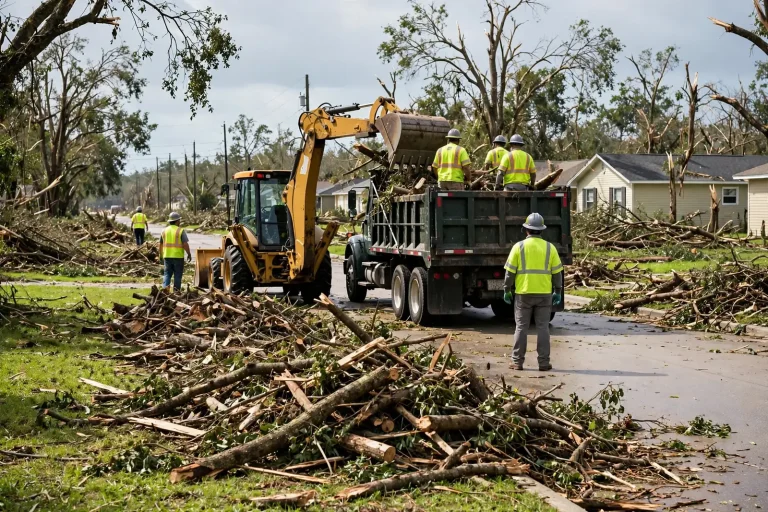
Storm-downed timber adds to that challenge, because trees blown down or broken by a hurricane generally must be salvaged quickly before insects, stain and decay reduce their value, and a flood of salvage wood can strain mills and markets at the same time.
Looking to November
Tuberville closed by saying the farmers in the field would recover, and he framed the November election as a test for future farm policy.
“Our farmers will bounce back,” he said. “If the Democrats take control, you won’t see a farm bill ever again.”
Earlier in the week, at a Baldwin County Republican Party event in Daphne, Tuberville had previewed the Conecuh County visit and talked about the storm’s damage in Escambia County, including broken power poles and salt damage to crops.
Alabama’s general election is Tuesday, Nov. 3. The deadline to register to vote or update voter information is Monday, Oct. 19.