
Two Mobile Churches, One Congregation: How a Shared Service Is Bridging the Racial Divide
A predominantly white Midtown Mobile church and a predominantly Black AME congregation are partnering in shared worship and civic work.
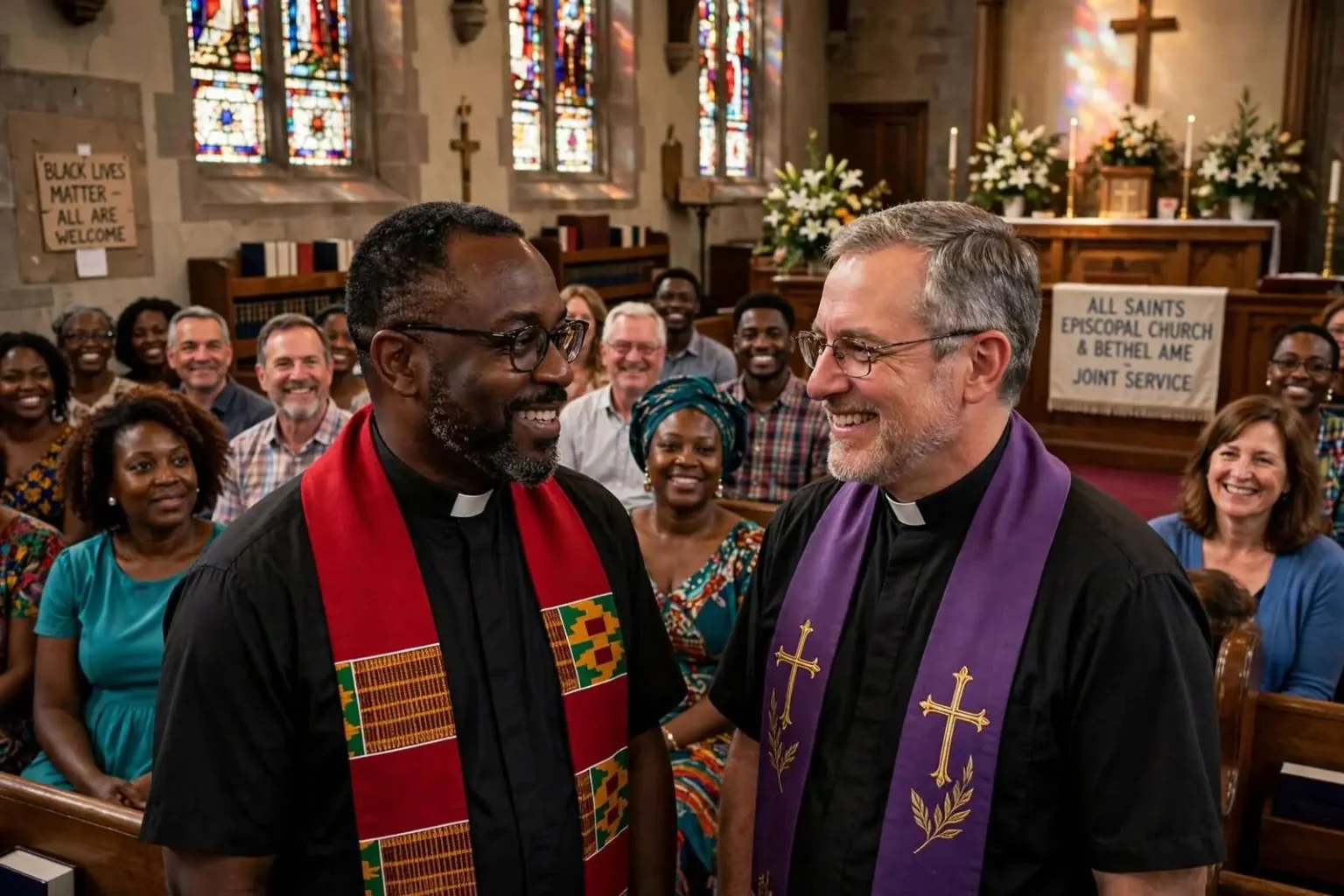
On a Sunday morning in Midtown Mobile, the pews at All Saints Episcopal Church were fuller than usual. Members of the predominantly white congregation were joined by worshippers from Bethel African Methodist Episcopal Church, a predominantly Black church, for a shared service that has become the centerpiece of an unusual and growing friendship between the two parishes.
The service joined two distinct worship traditions in one room — the liturgical cadence of the Episcopal rite alongside the spiritual energy of the AME tradition — and it marked one of the most visible expressions of a partnership that has been building between the two congregations for months.
It Began with a Sign
The partnership began, by the pastors’ account, with a single sign. The Rev. Trevor Woolridge, pastor of Bethel AME, said he noticed a Black Lives Matter sign outside All Saints and stopped to connect with the church’s rector, Jim Flowers. In a city where Sunday morning remains one of the most segregated hours of the week, that small act of recognition — a pastor driving past another church’s sign and deciding to act on it — set in motion everything that followed.
The gesture also reflected the particular public witness each church had already made. A Black Lives Matter sign posted outside a predominantly white Episcopal church in Midtown Mobile was itself a statement, a signal to passersby about where that congregation stood. Woolridge, whose Bethel congregation carries the heritage of the African Methodist Episcopal Church — a denomination founded in Philadelphia in 1816 by Black Christians who built their own church after facing segregation in existing congregations — saw in it an invitation.
That conversation grew into a relationship that has carried the two congregations from joint worship into cooperation on practical civic matters, including Mobile city council redistricting. The move from pulpit to civic engagement follows a pattern both traditions know well: the AME church’s history is inseparable from Black political life in America, and the Episcopal tradition has long institutional channels for public advocacy. When the two congregations turned their attention to how Mobile’s city council districts are drawn — a process that shapes which neighborhoods are joined together and how communities of interest are represented — they did it as partners rather than as two separate voices.
Common Ground
For Woolridge, working across racial lines is not optional for a faithful congregation. “To ignore problems and to fail to respond to these needs is to be disobedient to the Word and the will of God,” he said during the joint service. “Jesus never shied away from the difficult subject matters.”
The framing places the partnership squarely in the tradition of prophetic preaching — the conviction that faith communities are called to name the problems around them rather than comfort their members away from them. In Woolridge’s telling, the difficult subject in Mobile is the racial divide itself, and the shared service is a way of addressing it from inside the sanctuaries rather than only in the public square.
Flowers, All Saints’ rector, said the differences between the two congregations’ styles of worship are small next to what unites them. “A recognition of our common humanity, that we have the same hopes and dreams, we have the same problems,” Flowers said.
His emphasis on common humanity answers a question that every interracial church partnership eventually faces: what holds it together after the novelty of a joint service wears off? The answer both pastors have given is not shared taste in liturgy but shared stakes — the same city, the same civic questions, and the same hope for what Mobile’s congregations might model.
Midtown Mobile provides the geographic setting for that work. The neighborhood’s churches sit along the corridors of Government Street and Spring Hill Avenue, in the part of the city where the historic districts meet the older African American neighborhoods whose churches have anchored community life for generations. A partnership between a Midtown Episcopal parish and a Bethel AME congregation crosses lines that the city’s own history drew — lines of neighborhood, denomination, and race — and does so within a few minutes’ drive between the two sanctuaries.
Worship Traditions Side by Side
The joint services themselves are a study in the two traditions. The Episcopal liturgy follows a written order — prayers, readings, and communion drawn from the Book of Common Prayer, with music ranging from hymnody to Anglican chant. The AME tradition, born of the same 19th-century struggles that shaped Black religious life across America, brings its own musical heritage and a preaching style shaped by generations of prophetic witness. Merging them in a single service requires both congregations to meet each other partway, and the result is a liturgy neither church could produce alone.
Those who have attended joint services of this kind describe the experience as more than symbolic. The congregations sing together, pray together, and hear their two pastors teach from the same text, and the friendships formed across the pews outlast the service itself. It is that human infrastructure — relationships between members, not just between ministers — that turns a shared Sunday into an ongoing partnership.
From the Pulpit to the Council Chamber
The cooperation on Mobile city council redistricting shows where the partnership is headed. Redistricting is among the most consequential civic processes a city conducts: the drawing of district boundaries determines how neighborhoods are grouped, how communities of interest are kept whole or split, and how fairly the city’s growing Black population and its other communities are represented on the council.
Churches have long been central to civic life in Mobile’s Black communities, and the AME tradition in particular carries a history of engagement with exactly these questions. All Saints’ willingness to join that work as a partner extends the sign outside its doors into the substance of civic participation. Together, the two congregations add a faith-based voice to the public conversation about how the city’s districts are drawn — a voice that speaks from both sides of the city’s racial lines at once, which is a position few institutions in Mobile occupy.
What Comes Next
The two churches say they plan to keep gathering, pairing their distinct worship traditions with a shared commitment to addressing racial issues in the city they both call home. The joint service in Midtown, fuller pews and all, is thus less a milestone than a rhythm — a standing date between two congregations that discovered, over a yard sign, that they were already neighbors.
In a decade when congregations across the country have been searching for ways to bridge the divides that persist in American religious life — where the Sunday morning hour remains famously segregated — the All Saints-Bethel partnership offers a Mobile version of an answer. It started small: one pastor noticed a sign, stopped, and started a conversation. It has grown into shared worship and shared civic work, and by both pastors’ account, it is still growing.
For the members of both churches, the next steps are already visible: more joint services, more of the practical cooperation that has carried them into redistricting discussions, and the continuation of a friendship that began, like most friendships, with the simple decision to say hello.
The AME Heritage in Mobile
Bethel AME carries a tradition that stretches back two centuries. The African Methodist Episcopal Church was founded in 1816, when Richard Allen and other Black worshippers in Philadelphia organized their own denomination after being restricted within white-led congregations — making it the first independent Black denomination in the United States. From that beginning, the church grew across the South and the nation, and in Alabama its congregations became anchors of education, mutual aid, and civil rights organization long before those terms were common.
Mobile’s AME congregations have been part of that story in the city for generations, serving the neighborhoods east and north of downtown and producing leaders in the city’s civic life. A pastor like Woolridge speaking on redistricting continues a lineage in which Black Mobile clergy were frequently the public voices for their communities on exactly these structural questions.
All Saints, for its part, represents a different stream of Mobile religious history. Episcopal congregations in the South have historically been associated with the region’s established order, and a Midtown parish posting a Black Lives Matter sign represents a deliberate departure from the quietism often associated with that heritage. The sign was a statement about where the congregation stood; the partnership with Bethel is the follow-through.
Why Redistricting Brought Them Together
The choice of redistricting as an area of cooperation is telling. Church partnerships often confine themselves to charity — food drives, back-to-school events, holiday programs — and the All Saints-Bethel relationship includes that spirit, but the congregations chose to engage a structural question instead of stopping at service projects. Redistricting touches the foundation of local representation, and it is the kind of issue that benefits from broad public participation precisely because it is technical, low-visibility, and consequential for a generation.
A joint voice from two congregations also changes the audience. Residents of Mobile’s white and Black neighborhoods hear the same message from their own churches at the same time, which is a form of civic communication that few city institutions can produce. It builds on the credibility both pastors bring: Woolridge as a leader in the tradition of Mobile’s civic-minded Black clergy, and Flowers as a rector whose congregation’s public witness started the partnership.
The shared commitment both pastors describe is open-ended. Racial reconciliation work has no completion date, and the two congregations have structured theirs as an ongoing practice — worship together on a schedule, cooperation on civic questions as they arise, and the friendship between members that sustains both. What began with one sign on one lawn has become, by the pastors’ account, a defining feature of both parishes’ life.


