University of South Alabama Investigates Anti-Semitic Fax Sent to Campus Offices
University of South Alabama officials say campus police are investigating after an anti-Semitic message was faxed to offices on the Mobile campus, with President Tony Waldrop condemning the hateful message and calling for community unity.
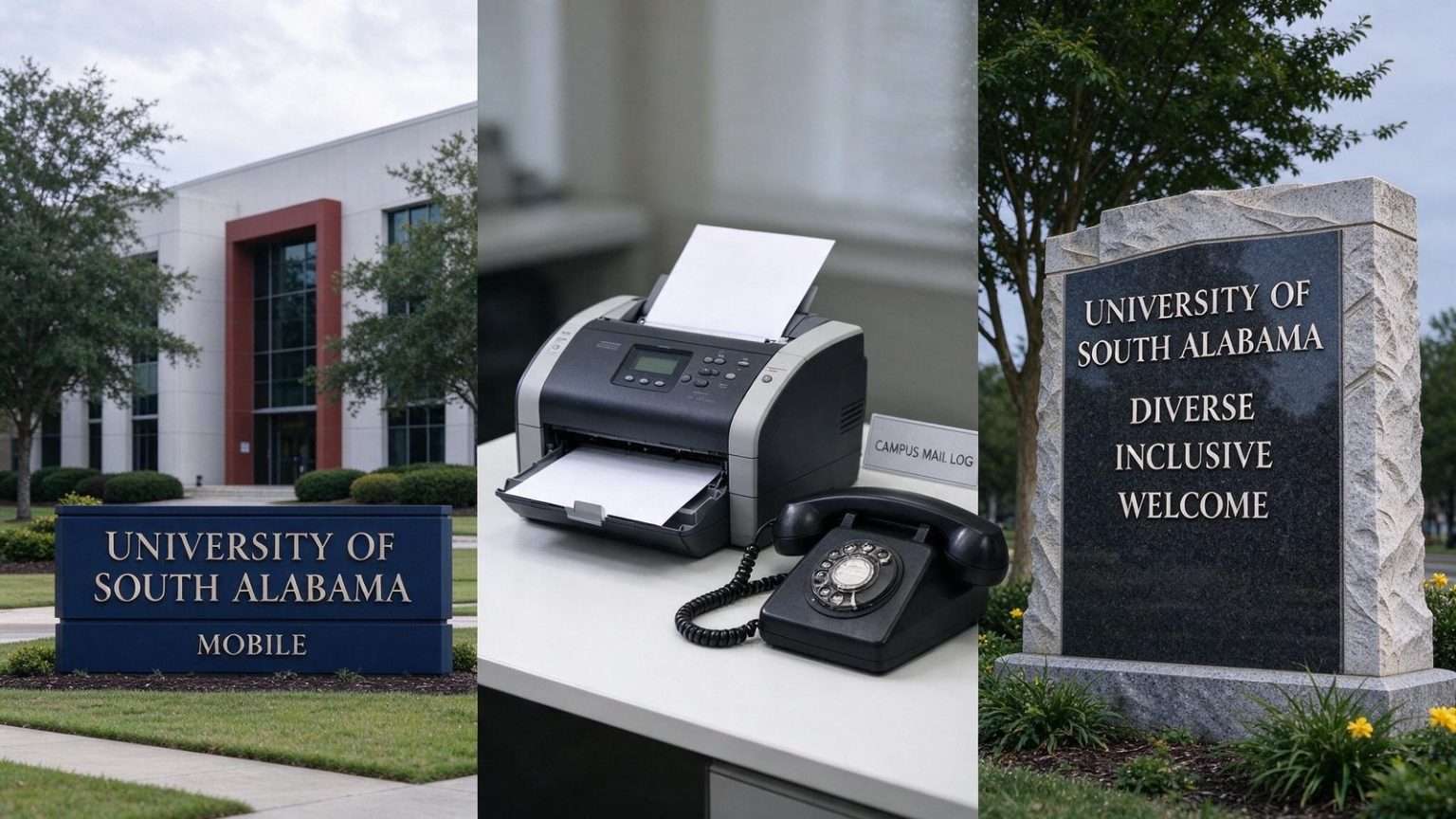
The University of South Alabama is investigating an anti-Semitic message that was faxed to offices on the Mobile campus this week, prompting a swift response from university leadership and a review by campus police. University President Tony Waldrop confirmed the incident in a message sent to the campus community, saying the hateful fax had circulated well beyond South Alabama.
According to Waldrop, the same message appears to have been sent to other universities and organizations around the country over the past several years, and it did not single out the University of South Alabama specifically. That detail shifted the university’s framing from a targeted threat against the campus to an incident of broad-based hate mail that landed, like others before it, at institutions across the country.
“Messages such as these have no place in our University community, and are in opposition to everything the University of South Alabama stands for,” Waldrop wrote, adding that the university would not tolerate bigotry directed at any group connected to the campus.
Leadership Frames the Response
Waldrop framed the incident as a moment for the university to reaffirm its values rather than be defined by an outside act of hate. “This incident reminds us to stand united, as a community, to support and respect one another,” he said. “Our mutual respect and support for each other is the best defense against these kinds of despicable actions.”
University leaders face a familiar balancing act in incidents of this kind: responding visibly enough to reassure the community, without amplifying the message the sender wanted circulated. By confirming the incident in a campus-wide message while declining to reproduce its contents, the administration followed the approach most universities now take with hate mail — acknowledge, investigate, and reaffirm institutional values.
University of South Alabama police have been notified and are looking into the fax’s origin, according to Waldrop. Investigators are expected to examine where the transmission came from and whether it is connected to similar messages reportedly sent to other institutions in recent years.
Tracing Hate Mail Sent by Fax
Bias-motivated incidents involving faxed or mailed hate mail have periodically targeted college campuses, houses of worship and civic organizations nationwide, often forwarded from unidentified senders using untraceable numbers or third-party services. Campus safety officials say such cases can be difficult to trace to a single source, particularly when the same material has been recirculated for years.
Fax transmissions leave technical trails — sending numbers, timestamps, and records held by telephone carriers and fax service providers — but mass-produced hate faxes are typically routed through voicemail-to-fax gateways or internet services that obscure the originator. Investigators who believe they are dealing with a template that has circulated nationally often coordinate with other victimized institutions and, when a federal hate-crime angle emerges, with the FBI, rather than working the case in isolation.
For campus police, the practical steps include preserving the physical document, checking whether other university departments received the same transmission, and comparing the message against databases of known circulated materials. Those steps determine whether South Alabama is dealing with a one-off local act or one more stop in a years-long national pattern.
The University’s History and Setting
The University of South Alabama, a public research university with more than 14,000 students, has faced isolated incidents of hate-related messaging in the past and has generally responded by emphasizing campus-wide messaging on inclusion and by referring cases to law enforcement for investigation. University officials did not indicate whether any specific department or individual was targeted by the fax, and no further details about its contents were released publicly.
The campus, anchored in Mobile’s Spring Hill area and spreading across hundreds of acres, houses colleges of medicine, engineering, nursing and business, along with a major health system that draws patients and staff from across the Gulf Coast. Its community extends well beyond students — faculty, hospital employees and contractors all receive mail through university offices, which is how a fax blast finds multiple doors on a campus of this size.
Jewish student organizations and campus ministries at universities that receive such mail typically coordinate with administration in the aftermath, offering programming and support for Jewish students while campus police handle the investigative side. National organizations that track anti-Semitic incidents document fax campaigns among the recurring forms of harassment directed at campuses, alongside vandalized property, mailed leaflets and online harassment, and their incident reports help institutions recognize when they have received part of a known campaign.
What Investigators Will Examine
Anyone with information related to the incident is asked to contact University of South Alabama police. The request extends to staff members who may have received the fax in departmental offices but had not yet reported it, since a complete picture of how many offices were hit helps investigators map the transmission and judge its scope.
Campus police departments investigating hate incidents operate with the same tools as municipal agencies — phone records requests, coordination with service providers, and reference databases — but with the added context of a closed campus community where the number of potential recipients is known and finite. That can accelerate the process of identifying every location the message reached and ruling out any local sender.
The university’s response reflects a broader effort by administrators to reassure students, faculty and staff following the incident, with Waldrop’s message aimed at underscoring the institution’s commitment to a welcoming campus environment for people of all backgrounds and faiths.
University officials have not announced any change to campus operations as a result of the incident, and classes and activities proceeded on their normal schedule. The investigation remains open, and updates will depend on what campus investigators learn about the fax’s origin in the days ahead.
For Jewish students and faculty at South Alabama, the arrival of the fax — even one aimed at many campuses at once — lands within a broader national climate in which reports of anti-Semitic harassment have risen sharply in recent years. Campus Hillel chapters and Jewish student associations at universities across the country have developed response protocols with administrators, and universities increasingly treat these incidents not as isolated pranks but as part of coordinated harassment campaigns that require documentation and reporting.
The university’s interfaith and diversity offices play a role in the aftermath as well. Programming that brings student groups together after a bias incident serves both the practical purpose of support and the symbolic one Waldrop’s message emphasized: that the campus community’s response to hate is solidarity rather than fear. Faculty members who received the fax in departmental offices were directed to preserve the document and report it, adding to the evidentiary record investigators will work from.
Because the same message has reportedly circulated for years at institutions nationwide, South Alabama investigators may find that much of their work has been done elsewhere — incident reports from other universities, known transmission patterns, and documented sender behaviors. Matching the Mobile fax against that record could quickly establish whether the university is looking at the work of the same unknown source that has targeted campuses and organizations repeatedly, information that would shape whether the case stays with campus police or draws in federal partners.
Either way, the university’s public posture is settled: leadership has condemned the message, campus police are investigating, and the institution has told its community — in the president’s words — that mutual respect and support is the best defense against such actions.
Universities that receive bias-motivated mail also face decisions about how much to disclose. South Alabama’s choice to confirm the incident, characterize it as part of a known national circulation, and withhold the contents follows guidance from campus safety professionals who warn that republishing hate material gives its senders the reach they seek. The same guidance encourages institutions to report incidents to organizations that track bias crimes, contributing to the national record that helps future victims recognize patterns quickly.
The Fax’s journey through university offices this week also served as an unplanned test of campus communication channels. Waldrop’s message went to the broad campus community rather than only to those who received the document, a decision aimed at preventing rumors from filling the information gap. Campus police and administration communicated through official channels in the days that followed, and offices that found the fax were asked to route it to investigators rather than discard it.
For now, the case joins a long line of hate-mail investigations in which the material itself is well documented and the sender is never found. What institutions can control — the swiftness of their condemnation, the seriousness of their investigation, and the support offered to targeted communities — is where South Alabama has focused its response, and campus officials say that focus will continue while the investigation runs its course.