MOBILE, Ala. — Two USA Health pathology residents have been elected to the College of American Pathologists Resident Forum Executive Committee for the 2026-27 term, claiming two of the seven seats on the national panel that represents pathology residents across the country.
Maha Babker, M.D., a third-year resident, and Rasha Mohammed, M.D., Ph.D., a fourth-year resident, won their positions during the College of American Pathologists (CAP) Annual Meeting, held Oct. 3-6 in Las Vegas.
With two members on the seven-person committee, residents from the University of South Alabama’s pathology program will make up nearly 30% of the group. According to USA Health, the elections highlight the department’s participation in national pathology leadership and its commitment to resident advocacy and professional development.
Two new national roles
Babker was elected digital strategy liaison. In that role, she will work to expand the Resident Forum’s digital presence, strengthen communication and engagement through digital platforms, and promote educational and leadership opportunities available to pathology residents nationwide.
Mohammed was elected member-at-large. She will represent the perspectives of residents, take part in committee initiatives and discussions, and advocate for resident education, professional development and engagement within the CAP.
What the Resident Forum does
The College of American Pathologists is the largest organization of board-certified pathologists in the world and is widely known for its laboratory accreditation program, which inspects and accredits clinical laboratories, as well as its proficiency testing and professional education. Its Resident Forum gives physicians in pathology training a formal voice within the organization, and its executive committee helps shape how the college engages with and supports residents.
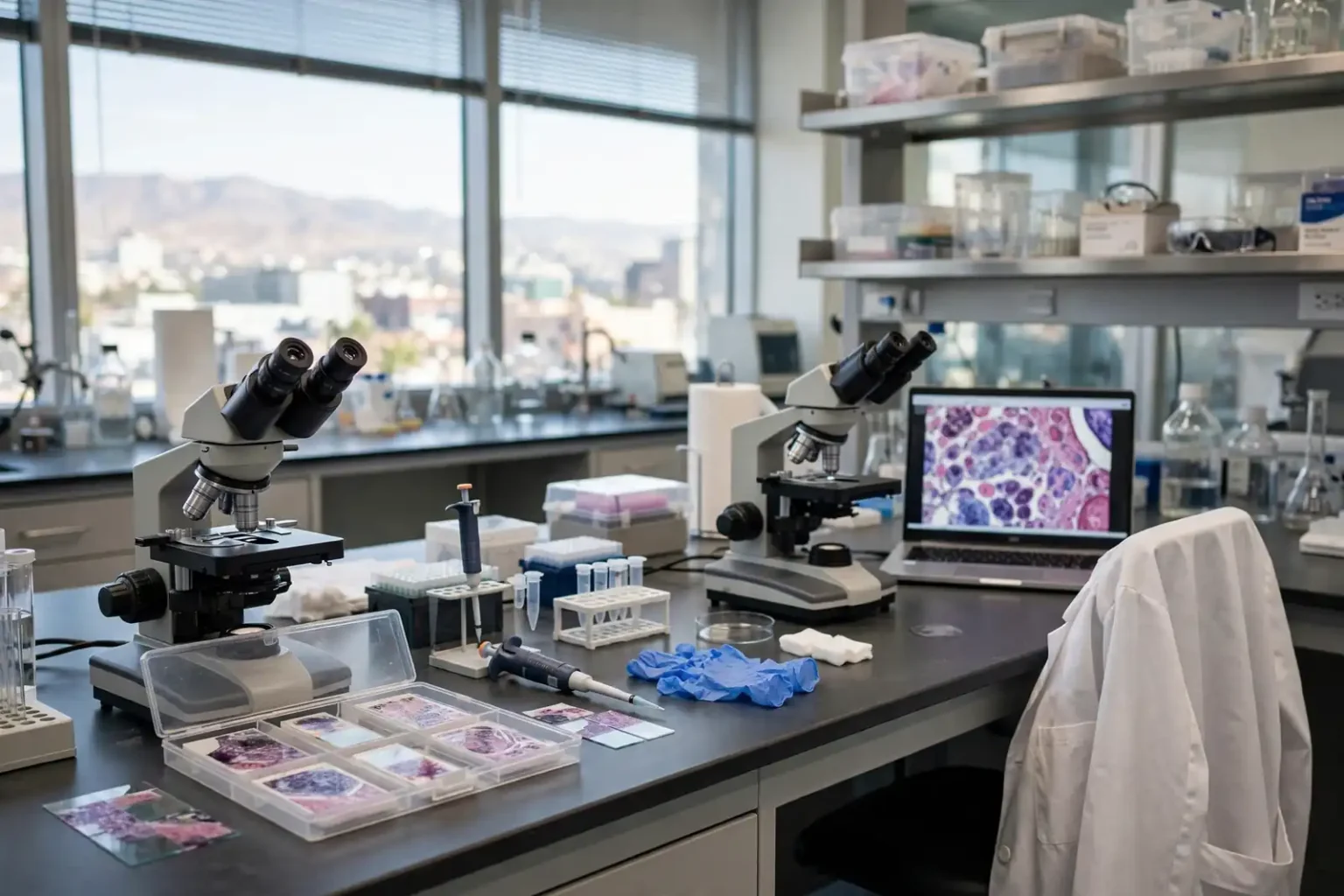
Pathologists are physicians who diagnose disease by examining tissue, blood and other body fluids. Their work underpins much of modern medicine, from confirming cancer diagnoses through biopsies to overseeing the hospital laboratories that run routine and specialized tests. After medical school, doctors who choose the specialty complete a residency, commonly four years for combined anatomic and clinical pathology training, before many go on to subspecialty fellowships.
Residents present research
In addition to winning their elections, Babker and Mohammed presented scholarly work at the annual meeting. They were joined by three other residents from the program who also presented: Jing Zhou, M.D., Ph.D.; Delaney Yu, D.O.; and Charu Shastri, M.D.
According to USA Health, the residents’ participation reflects the department’s ongoing research and academic efforts.
Presenting at a national meeting gives residents exposure to peers and senior pathologists from across the country and experience sharing research findings with a professional audience, both of which are important parts of training for physicians pursuing academic or clinical careers.
Program director credits mentorship
Osama R. Elkadi, M.D., director of the pathology residency program and an associate professor of pathology at the Frederick P. Whiddon College of Medicine, said the leadership appointments and conference presentations reflect the residents’ commitment to advancing the field of pathology. He said that work is supported by faculty mentorship and residency program leadership.
The Whiddon College of Medicine is the University of South Alabama’s medical school in Mobile, and USA Health is the university’s academic health system, which trains physicians and other health professionals while providing patient care across the region.
Representing South Alabama nationally
Holding two of the seven seats on a national resident committee gives the University of South Alabama’s program an unusually strong presence in a group that speaks for pathology trainees across the country. Babker and Mohammed will serve through the 2026-27 term alongside residents from other training programs.
Their terms come at a time when the specialty faces significant questions about its future workforce. Published research has documented a decline in the number of practicing pathologists in the United States over the past two decades, even as the volume and complexity of diagnostic testing has grown. That has made recruiting medical students into the field, and supporting the residents already in it, a priority for professional organizations such as the CAP.
Resident leaders often help bring the concerns of trainees, such as the quality of education, preparation for the job market and the transition into practice, to the attention of the broader profession. Babker’s focus on digital outreach and Mohammed’s role as an advocate for resident perspectives place both in positions to contribute to that work during the coming year.