University of South Alabama Mobile
USA’s Multicultural Student Affairs Office Grows After Strong Year
The University of South Alabama's Office of Multicultural Student Affairs added more than 50 new students this year under director Carl Cunningham Jr.
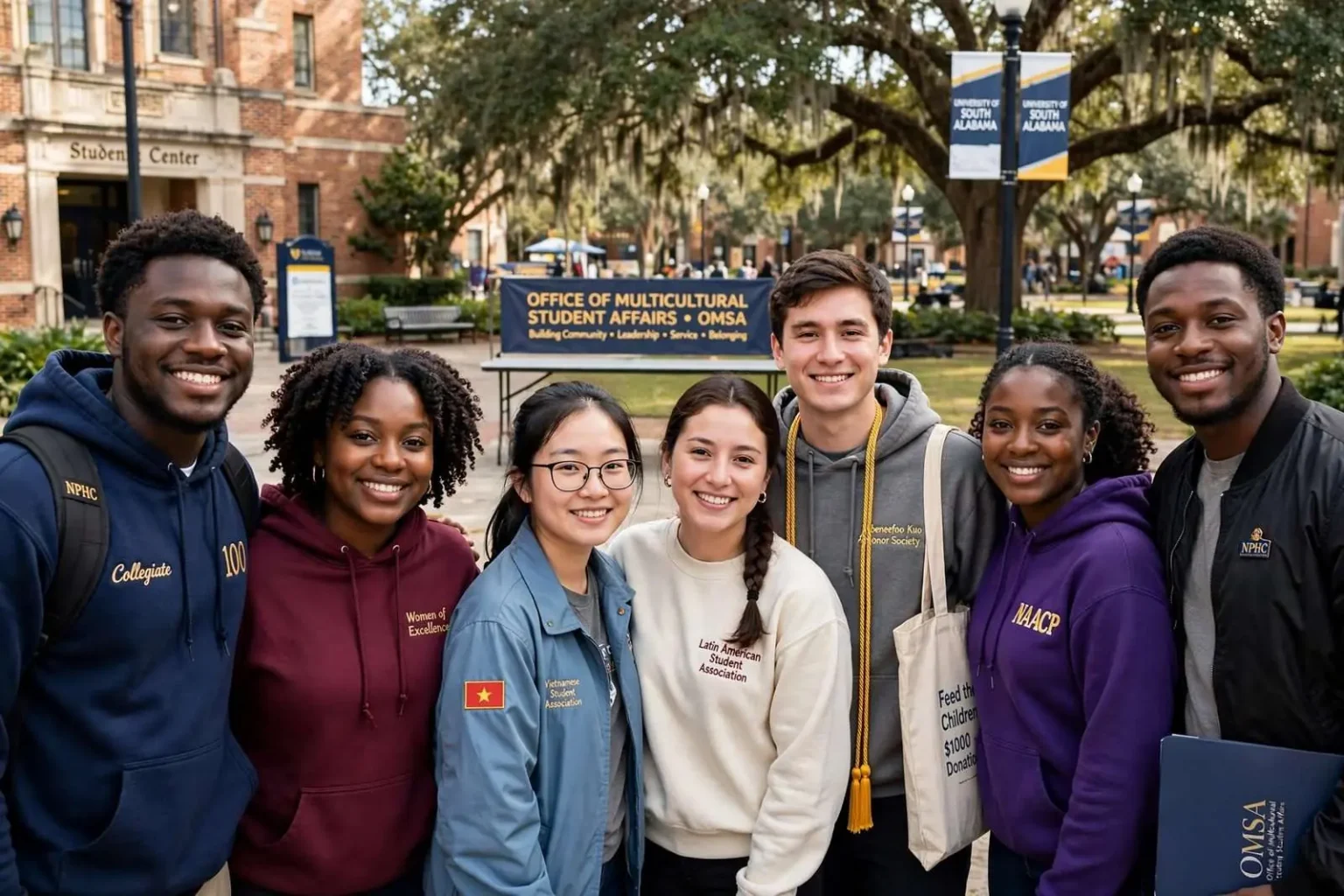
The University of South Alabama’s Office of Multicultural Student Affairs is closing out a strong academic year, reporting growth of more than 50 new students involved in its programming, according to the university.
The increase in participation reflects a broader effort at the Mobile campus to build communities within the larger university that give students a sense of belonging from their first semester onward. Offices like OMSA have become a fixture of student life at universities across the country, and South Alabama’s version has grown into a coordinating hub for a wide range of culturally focused student organizations.
The office, known as OMSA, coordinates a network of student organizations at the Mobile campus that support cultural engagement and student retention. Member groups include the African-American Student Association, the National Pan-Hellenic Council, the Abeneefoo Kuo Honor Society, Collegiate 100, Women of Excellence, Unity and Spectrum, the campus NAACP chapter, the Latin American Student Association and the Vietnamese Student Association.
Together those organizations span cultural celebration, academic honor, community service, faith and identity, and advocacy, giving students multiple entry points into campus life regardless of their background or interests. The breadth of the network is one of the office’s defining features, allowing students to find a group that fits them while still participating in the wider university community.
A mission built around graduation
Dr. Carl Cunningham Jr., director of the office, said the group’s central mission is helping students reach graduation. He credited the office’s growth to students choosing to continue their education at South Alabama and said staff aim to support them from arrival through commencement.
Retention has become the defining metric for student success offices across higher education, and the connection between belonging and persistence is well documented. Students who find a community on campus in their first year are measurably more likely to return for their second, and offices like OMSA exist in large part to make those early connections happen.
The work begins before classes do, with programming tied to orientation and the first weeks of the semester, when new students are making the decisions that research shows will shape whether they stay. From there, the office’s calendar stretches across the academic year, keeping students engaged through the mid-year months when isolation and academic pressure most often erode momentum toward a degree.
Coordinator Petré Freeman works alongside Cunningham to build out a full slate of programming for each academic year, with the goal of giving students both practical support and leadership opportunities during their time on campus. Freeman described the office’s approach as focused on helping students get the most out of their college experience while staying engaged with campus life.
University officials count the office among the campus resources aimed at keeping students on track to a degree, alongside academic advising, tutoring and counseling services. What distinguishes the OMSA network is its peer dimension: students draw each other into campus life through the organizations, and that peer pull often succeeds where institutional outreach alone falls short.
Leadership development runs through nearly everything the office does, from the way member organizations select their officers to the training and mentoring that student leaders receive. Students who take charge of an organization’s events, budgets and recruitment graduate with experience that translates directly to the workplace, and the office treats that growth as part of its core purpose rather than a byproduct.
The member organizations each carry their own calendars of meetings, service projects and signature events, and the office’s role is part convener, part support system, providing space, guidance and institutional backing while the students themselves do the organizing. That structure builds ownership among the students and keeps the programming responsive to what each generation of them actually wants.
An awards banquet to close the year
The academic year wrapped up with an awards banquet bringing together presidents from each of the office’s member organizations to recognize members for their work throughout the year. Banquets of this kind serve both as celebration and as transition, honoring the students who led the year’s work while passing responsibility to the officers who will take over in the fall.
During the year, members of the Abeneefoo Kuo Honor Society also donated $1,000 to Feed the Children, a national hunger-relief organization, reflecting the office’s emphasis on service alongside academics. The donation connected the Mobile campus to a national charitable effort and gave the honor society’s members a tangible way to put their values into practice beyond the university’s boundaries.
Service projects are a staple of the organizations under the OMSA umbrella, and they range from campus cleanups and food drives to mentoring efforts in the Mobile community. The philanthropic work builds the same kind of habits the office hopes to instill academically: commitment, follow-through and a sense of responsibility to something larger than oneself.
Four roles on campus
University officials describe OMSA’s broader role as fourfold: building cultural awareness and communication across the South Alabama community, encouraging participation in campus activities, developing student leaders, and easing the transition into college for new students. Each of those roles addresses a different pressure point in the student experience, and together they define the office’s place in the university’s larger retention strategy.
Cultural awareness work takes shape through heritage month celebrations, speakers and collaborative events that invite the whole campus to participate, not just the members of a particular organization. Those events give students from every background a window into traditions and perspectives beyond their own, which is part of what a university education is meant to provide.
Easing the transition into college is where the office’s work begins each year, and it is where the difference between a student who flourishes and one who quietly disappears from a roster is most often decided. Programming aimed at first-year students pairs them with organizations, mentors and resources before the first semester’s challenges arrive, and the payoff shows up years later in graduation lines.
The Abeneefoo Kuo Honor Society, whose name reflects its founding mission of academic achievement, inducts students who meet rigorous academic standards while committing to service. Its $1,000 donation to a national hunger-relief organization came from that commitment, and it stands as an example of the way honor societies on campus pair scholarship with outreach.
The awards banquet itself required months of planning by the office and the organization presidents, who nominate members for recognition and gather the details of each group’s year. Events of that scale also connect students to alumni and university staff who attend, widening the network that supports them after commencement.
The Mobile campus and its student body
The University of South Alabama sits in Mobile, the Gulf Coast’s oldest city, and draws students from across Alabama, the region and well beyond it. Like universities across the country, South Alabama has worked in recent years to build a campus community that reflects the diversity of the state it serves, and offices like OMSA are a visible part of that effort.
The student organizations coordinated by the office have deep roots on campus. The National Pan-Hellenic Council chapters represent historically Black fraternities and sororities with national histories stretching back more than a century, while groups like the Latin American Student Association and the Vietnamese Student Association reflect the communities that have shaped the Gulf Coast region itself.
Collegiate 100, modeled on the national 100 Black Men organization, connects male students with mentoring and service, and Women of Excellence provides a parallel space for leadership development among female students. Unity and Spectrum and the campus NAACP chapter round out a roster that gives students multiple avenues for advocacy and identity-based community building.
Momentum heading into the next year
With more than 50 new students joining its programming over the past year, the office heads into the next academic cycle with an expanded base to build on. Growth of that size changes what an office can do, creating larger audiences for events, deeper benches of student leaders and more capacity for the service work that extends the office’s reach into the Mobile community.
University officials frame the office’s contribution in terms that reach past individual events to the institution’s larger goals: students who stay, students who graduate and students who leave campus prepared to lead. The year’s growth, the banquet that closed it and the donation that accompanied it all feed into that same measure of success.
As the new academic year approaches, the office’s member organizations will recruit a fresh class of students, many of whom will arrive on campus knowing no one. The programming that meets them in those first weeks is where the office’s mission begins again, and the momentum built over the past year gives it a stronger starting point than it had before.
Retention efforts at South Alabama have grown in importance as universities across the country confront enrollment pressures and rising questions about the value of a degree. Campuses that succeed at keeping students through graduation tend to be the ones that invest in the unglamorous work of community building, and the growth reported by OMSA offers a measure of that investment paying off in Mobile.