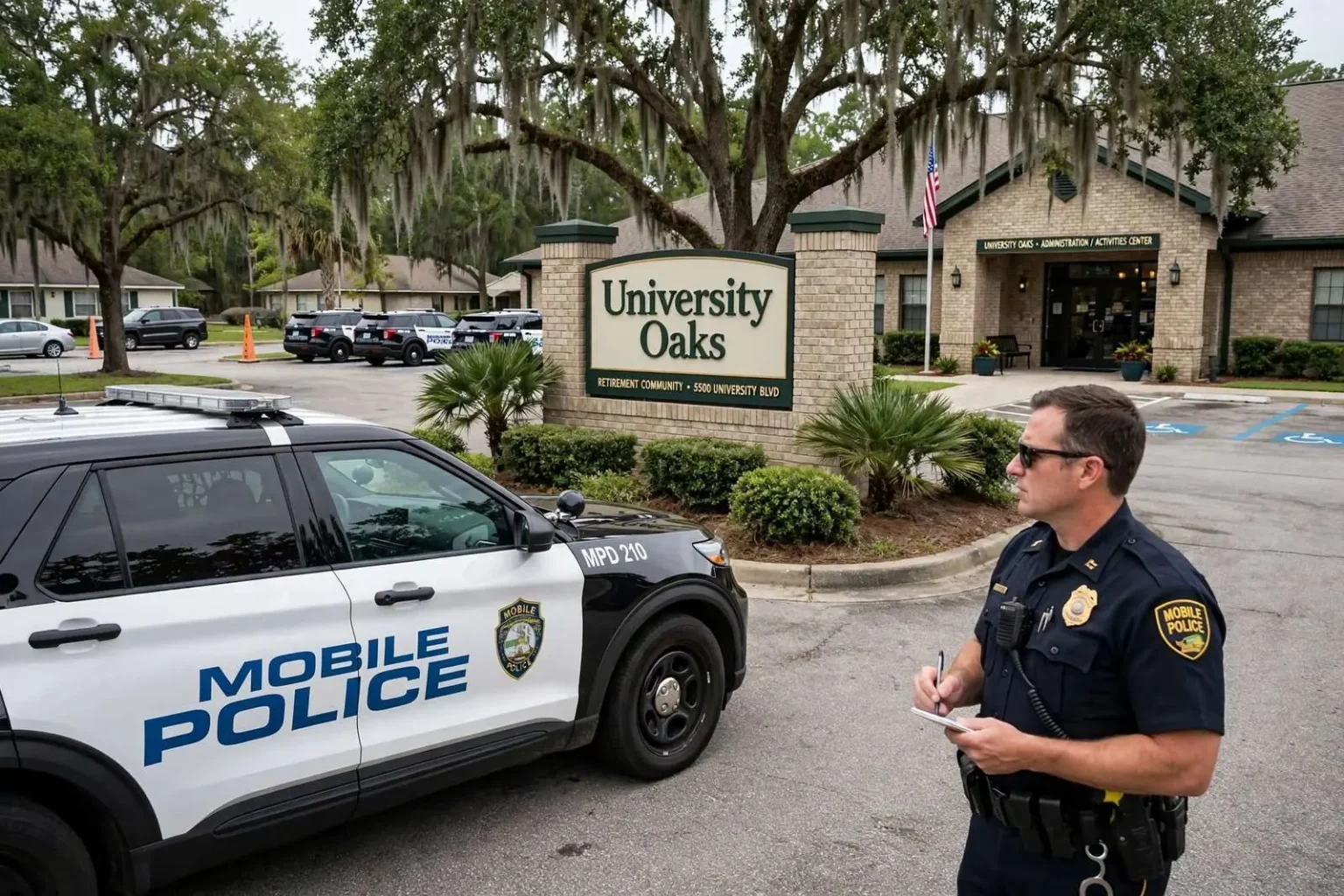
MOBILE, Ala. — Mobile Police are reminding drivers across the city that a running vehicle is an open invitation after a car was stolen from the parking lot of a Mobile retirement community while its owner had stepped inside. The department said the vehicle was taken Wednesday morning at University Oaks, a retirement community on University Boulevard in Mobile, when a stranger seized on a moment of carelessness that lasted only a minute or two.
The victim told officers she pulled into the parking lot and went inside the building, leaving her vehicle running. A man she did not know then got into the vehicle and drove away. From the moment the driver’s door closed to the moment the car rolled out of the lot, the theft required no tools, no broken glass and no confrontation — only a running engine, an unlocked door and an owner who was out of sight.
The story did not end in that parking lot. A short time later, the victim’s husband spotted the stolen vehicle in a parking lot off Government Boulevard and alerted police, turning a routine errand gone wrong into a same-morning arrest. Officers responding to the tip found more than the car; they found the person who allegedly took it.
Officers Find the Suspect at the Scene
When officers arrived, they located the suspect at the scene. The suspect was identified as 27-year-old Zaquan Packer. He was arrested in connection with the theft, and the vehicle was recovered before it could be stripped, abandoned or used in any further offense. For a stolen-vehicle case, the resolution was unusually quick and clean.
According to Mobile County court records, Packer had no prior arrests on file in the county at the time of the incident. The absence of a record is notable in a crime category where repeat offenders are common, and it means the case will likely be his first significant appearance in the county’s court system. Prosecutors will review the circumstances alongside the arrest report in the weeks ahead.
The quick recovery mattered as much to the family as the arrest. Vehicles taken in opportunistic thefts are often damaged within hours, driven hard or left somewhere out of the owner’s knowledge. Because the sighting was reported immediately, this vehicle never had time to travel far from where it was taken.
The Same Warning, Repeated
The case highlights a recurring concern for law enforcement in the Mobile area. Mobile Police have repeatedly cautioned residents against leaving vehicles unlocked or running unattended, as such situations create easy opportunities for theft. The department’s point is not scolding but arithmetic: a theft that takes ten seconds cannot be stopped by an officer who is minutes away, so prevention has to happen at the driver’s door.
Mobile’s climate feeds the habit. In the heat and humidity of a South Alabama summer, drivers leave engines running to keep air conditioning going during brief stops, and on the region’s occasional cold mornings they leave engines idling to warm up. Police note that thieves are aware of both patterns and deliberately patrol parking lots — apartment complexes, fitness centers, convenience stores, senior communities — at hours when such vehicles are most likely to appear.
Local ordinances across the area, including in Mobile, prohibit leaving a vehicle unattended with the engine running and the key in the ignition, so the habit carries a potential ticket on top of the theft risk. Insurance coverage adds another layer: when a vehicle is stolen with the keys in it, owners can find themselves in a dispute over the claim that they would never face if the car had been locked and secured. The financial consequences of a thirty-second shortcut can stretch on long after the police report is filed.
Inside the Setting: University Oaks
University Oaks sits along a stretch of University Boulevard that mixes senior living communities, medical offices and apartment complexes, and its parking lot is by design an open and welcoming place. Residents’ families come and go, caregivers and medical transport make regular stops, and deliveries arrive throughout the day. Gating a lot like that would work against the community’s purpose, which means the lot functions much like any public parking area in the city.
That openness is exactly what makes the police department’s advice relevant for senior communities in particular. Residents may be more inclined to leave a car running for comfort, and a vehicle in a retirement community lot often contains items — medications, mobility equipment, personal papers — that make a theft especially disruptive. Family members who drive residents to appointments can help by making sure every stop is a locked-and-keyless stop.
The victim in this case followed the best possible practice once the theft occurred: her husband stayed alert, recognized the vehicle, and called police immediately rather than trying to handle the situation himself. Officers prefer that witnesses not confront a suspect directly. A phone call with a good description and a precise location lets responding units approach with proper support, as they did when they located the suspect at the scene.
Vehicle Theft in the Mobile Area
Opportunistic thefts of running vehicles are a durable feature of the crime picture in Mobile and cities like it. They cluster where people predictably step away from cars — gyms, day care drop-off lines, coffee shops, dog parks and workplaces — and they spike during weather extremes when idling engines are most tempting. The vehicles themselves can end up anywhere: used in another offense, sold for parts, or abandoned once the thief’s interest moves on.
Police departments combat the pattern with awareness campaigns as much as enforcement, because the underlying vulnerability sits with owners. Modern vehicles increasingly offer features that blunt the risk, including key fobs that allow the engine to run without the key inside, factory tracking services and smartphone alerts when a locked vehicle is disturbed. Owners who use those tools, and who still take the basic step of locking the doors, face a far smaller chance of losing their car on a routine errand.
The department’s standing checklist is short enough to fit on a refrigerator magnet. Take the key. Lock the vehicle. Never leave it running unattended, even for what feels like too brief a moment to matter. And if a stolen vehicle is spotted, call police at once with the location and a description rather than approaching it.
A Fast Ending, A Lasting Lesson
By the end of Wednesday, the vehicle taken from University Oaks was back in its owner’s hands and the suspect was in custody facing theft charges, with an otherwise empty Mobile County court record ahead of him. The retirement community returned to its ordinary rhythms. What remains is the lesson the case writes in plain terms for drivers across the city: the few seconds saved by leaving a vehicle running are never worth the hours of trouble that follow when someone else decides to drive it away.
What Witnesses Should Do
Police also use cases like this to coach the public on the right response to a sighting. Anyone who spots a vehicle they believe has been stolen should call police immediately, give the exact location, describe the vehicle and note any direction of travel. Staying nearby to observe is helpful only from a safe distance; approaching the vehicle or its driver is not, because an opportunistic thief caught in the act can behave unpredictably.
The quick tip in this case worked because it contained the essentials: a specific parking lot off Government Boulevard, a recognizable vehicle and an immediate phone call. Responding officers arriving at a scene within minutes of such a call have a realistic chance of finding both the vehicle and whoever is with it, which is exactly what happened when they located the suspect at the scene and took him into custody without incident.
Delay is the enemy of recovery. A sighting reported hours later becomes a search rather than an interception, and stripped or abandoned vehicles are far harder to return to their owners in good condition. Mobile Police have long told residents that they would rather respond to ten reports that turn out to be nothing than miss the one call that recovers a car.
The Practical Cost of a Stolen Vehicle
Even a successful recovery leaves owners with paperwork and inconvenience. There is the insurance claim and any deductible, the towing or repair of whatever damage occurred during the theft, and the days a vehicle spends out of service while locks or ignition components are replaced. For a family in a retirement community that depends on the car for medical appointments and errands, those weeks of disruption are the real price of the thief’s ten-second decision.
Personal property inside the vehicle adds to the loss. Registration documents, garage door openers, keys to the house and other items routinely left in cars can expose owners to follow-on problems, from identity questions to home security concerns. Police advise anyone recovering a stolen vehicle to treat the contents as compromised: replace locks, re-key what needs re-keying and keep sensitive documents out of the car going forward.
None of that happened at scale here because the vehicle was recovered so quickly, which is the quiet benefit of the husband’s fast call. The system worked the way it is designed to: an alert citizen, a prompt report, a rapid response and an arrest the same morning. It is the version of this story police would like to see repeated — and, more than that, the version they would like to make unnecessary.
Moving Forward
The case now rests with the courts, where the facts of Wednesday morning will be weighed against the theft charge. For the wider public, the takeaway requires no legal analysis at all. A running vehicle with its keys inside is not parked; it is offered. Take the key, lock the door, and the next opportunity thief who tours a Mobile parking lot will find nothing to take.