

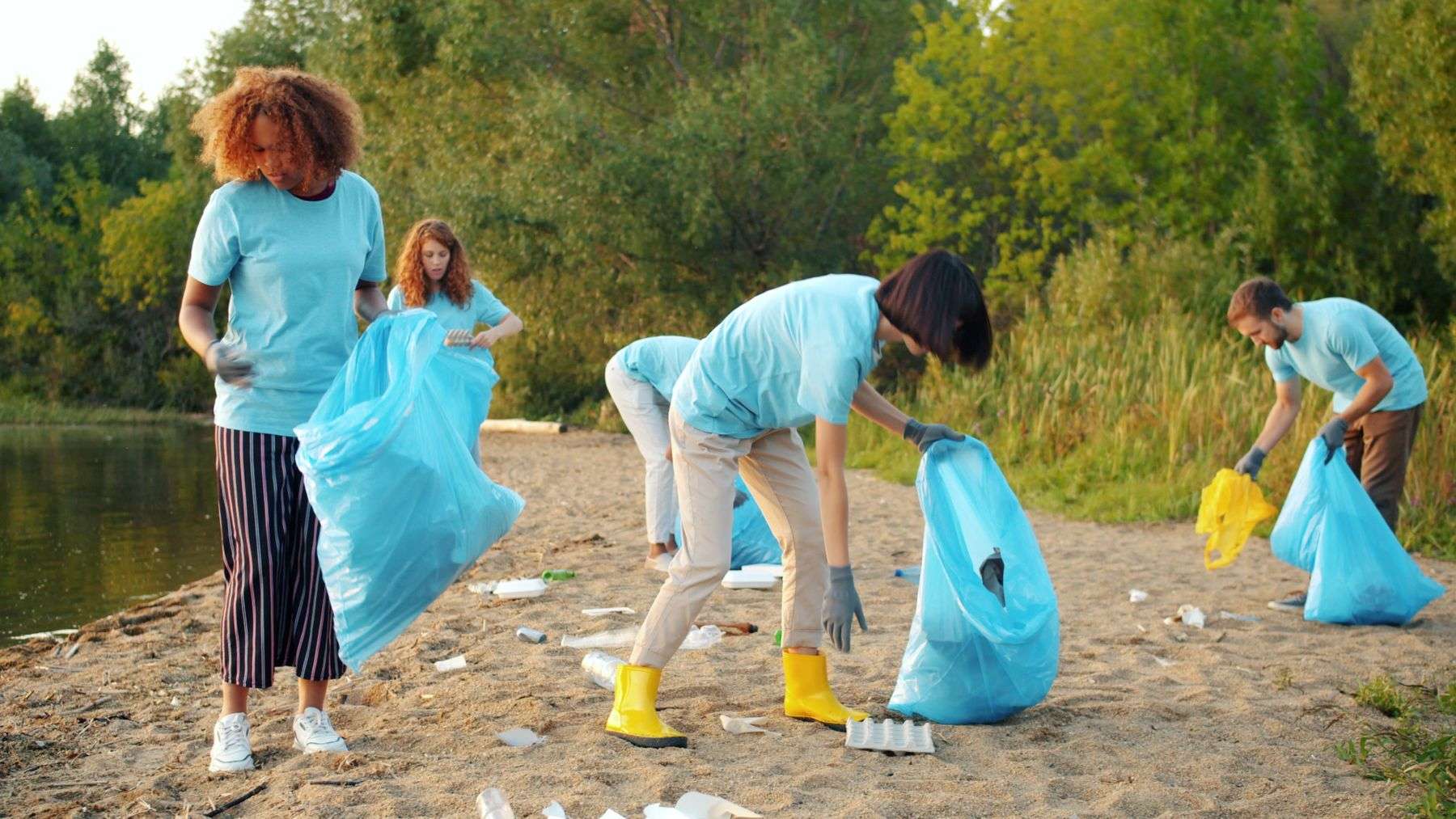
Nearly 50 volunteers fanned out along the Gulf Shores public beach district for a 90-minute cleanup effort organized by Eco Clean Marine, a Baldwin County-based nonprofit dedicated to keeping South Alabama’s beaches and waterways free of litter. The event brought together two organizations with overlapping missions and produced one of the more productive short-window cleanups the stretch of shoreline has seen this season.
The volunteer group, made up of 46 members of the Lower Alabama Young Professionals working alongside the Eco-Marine team, collected 65 five-gallon buckets of trash from the beach and surrounding waterways. Before heading out, volunteers were treated to a free breakfast provided by The Hangout, the Gulf Shores restaurant and entertainment venue that has long anchored the public beach district’s social scene.
“At Eco Clean Marine, we believe that building a stronger community is just as important as cleaning our environment. Every cleanup is about more than removing trash. It’s about bringing people together, creating meaningful connections, and showing what can happen when we all work toward a common goal. That’s how real, lasting change begins,” said Eco-Marine founder Courtney Dombroski.
How the Cleanup Came Together
The partnership with the Lower Alabama Young Professionals made sense for both groups. LYYP, as the organization is known locally, connects young professionals across the Mobile Bay and Baldwin County region through networking, service, and leadership development — and hands-on cleanup events are among the most direct ways its members can see their community impact in a single morning. For Eco Clean Marine, the group supplied exactly what a cleanup needs most: a large, organized, energetic crew.
The math of the morning tells the story of the effort. Forty-six volunteers, ninety minutes, and sixty-five buckets of debris — each a five-gallon pail — amount to thousands of pieces of litter lifted off one of the most visited public beaches in Alabama. The haul included the familiar categories that plague Gulf Coast shorelines: plastics of every description, fishing line, cigarette butts, beverage containers, and the fragments of larger items that break down into hazards for wildlife.
The Gulf Shores public beach district draws visitors from across the region and far beyond it, with its white sand and clear water serving as the postcard image of Alabama’s coastline. That popularity carries a cost: with millions of beach visits a year, even small amounts of litter per visit accumulate quickly, and the beach requires constant attention to stay ahead of what the tides and the crowds leave behind.
The Founder and the Fish Machines
Dombroski founded the nonprofit in Gulf Shores in 2022 after noticing trash accumulating in the marsh while servicing her fish-feeding vending machines along the coast. The origin story is unusual — few environmental nonprofits trace their beginnings to vending machines — but it reflects the way a small business owner’s daily rounds can reveal a problem that everyone else simply walks past.
The fish-feeding machines themselves are a familiar curiosity at Gulf Coast piers and docks, letting visitors buy pellets to feed the marine life below. Servicing them took Dombroski to the marshes and waterfronts where the coastline’s litter problem is most visible up close: plastic caught in the reeds, debris tangled in the grass, and the slow accumulation of everything that washes off the beach and out of the waterways.
Since then, Eco Clean Marine has grown into a regular presence on the Alabama and Florida Panhandle coastline, hosting both public and private beach cleanups that stretch from Fort Morgan to Panama City Beach. The span covers more than 150 miles of coastline across two states, taking in the entire length of Alabama’s beaches and much of the Florida Panhandle’s — territory that no single municipality or county could keep clean on its own.
Buckets, Not Bags
The organization collects debris in reusable five-gallon buckets rather than plastic bags, a small but deliberate choice meant to keep additional plastic out of the environment during each event. The logic is straightforward: a cleanup that fills hundreds of disposable plastic bags has, by the end of the morning, added its own contribution to the plastic waste stream it exists to fight.
The buckets have become something of a signature. Volunteers carry them down the sand, fill them with the day’s haul, and return them to be emptied and reused at the next event — a cycle that can repeat dozens of times before a bucket retires. The approach also makes the results visible and countable: sixty-five buckets is a metric anyone can picture, in a way that a figure in pounds of collected trash rarely is.
Sorting matters too. Cleanup organizations along the Gulf Coast increasingly separate what they collect, recycling what can be recycled and properly disposing of what cannot, and the bucket system lends itself to that discipline. Fishing line, which entangles wildlife and snags boat propellers, is a particular target of coastal cleanup programs, as are plastics that photodegrade in the sun into fragments small enough for sea turtles and shorebirds to swallow.
Community Building by Design
Organizers say the cleanups are as much about community building as environmental stewardship, giving residents and visitors a hands-on way to help protect the beaches that anchor the region’s tourism economy. The model is deliberate: pair the work with hospitality — as The Hangout’s breakfast did — and the event becomes a social occasion that people return to, rather than a chore they perform once.
The connection between clean beaches and the coastal economy is not abstract. Baldwin County’s beach towns draw their lifeblood from tourism, with lodging, restaurants, fishing charters, and retail all depending on the shoreline’s appeal. Litter on the beach is not merely an aesthetic problem; it is a direct threat to the image that draws millions of visitors, which is why local businesses have proven willing partners in cleanup efforts.
Events that bring young professionals into that work serve a second purpose for the community: they build the networks of engaged, invested residents that coastal towns need for everything from civic boards to volunteer fire support. The young professionals who spent a morning hauling buckets may return for the next cleanup, and the one after — and that accumulated commitment, Dombroski’s organization believes, is where lasting change begins.
Getting Involved
Eco Clean Marine continues to host public cleanups along the coast, and its private events with partner organizations like the Lower Alabama Young Professionals demonstrate one template for groups that want to organize their own. Volunteers generally need little more than appropriate footwear, sun protection, and a morning’s time; the organization supplies the buckets, the coordination, and the plan for what gets collected where.
For the beaches between Fort Morgan and Panama City Beach, the work continues event by event, bucket by bucket. The morning’s sixty-five five-gallon pails of trash are already gone from the shoreline — and the volunteers who removed them, organizers say, came away with something of their own: a stake in the coast they helped clean.
Why the Gulf Coast Coastline Needs the Help
The stretch of coast Eco Clean Marine covers faces pressures that most beachgoers never see. What washes ashore is only partly what visitors leave behind: stormwater runoff from inland streets carries litter into Mobile Bay and the Gulf, fishing and boating traffic leaves debris of its own, and storms redeposit what previous cleanups collected. The shoreline functions as the catch basin for an entire watershed, which is why coastal cleanup organizations describe their work as ongoing maintenance rather than a series of one-time victories.
The wildlife stakes are concrete. Sea turtles nest on Alabama’s beaches each summer, shorebirds feed at the waterline, and the marshes Dombroski first noticed while servicing her fish machines shelter juvenile fish, crabs, and birds. Plastic debris in those environments is not merely unsightly — it is ingested, entangling, and persistent, breaking into smaller fragments over years without ever truly disappearing.
The region’s cleanup culture has grown accordingly. Beach towns across Baldwin County and the Panhandle now support a network of environmental groups, adopt-a-beach programs, and municipal initiatives, with Eco Clean Marine among the newer and more energetic entrants. What distinguishes the organization is its coverage — the full run from Fort Morgan, at the mouth of Mobile Bay, all the way east to Panama City Beach — and its insistence that the social side of the work matters as much as the tonnage collected.
A Model Built on Partnership
The morning’s event showed how the organization’s partnerships function. The Lower Alabama Young Professionals brought a ready-made volunteer force of forty-six; The Hangout, whose grounds sit at the heart of the public beach district, supplied the breakfast that turned a work morning into an occasion; and Eco Clean Marine contributed the organization, the buckets, and the experience of running cleanups across two states.
That kind of three-way coordination is what makes a 90-minute effort productive. Volunteers arriving to breakfast form teams quickly, work familiar stretches of the district, and finish with a shared result they can measure — sixty-five buckets — rather than a vague sense of having helped. For the young professionals in the group, the event doubled as service and as networking, with members working shoulder to shoulder who might otherwise have met only at evening mixers.
Local businesses have their own reasons to participate. A cleaner public beach district means a better experience for the customers who fill restaurants and shops along the shoreline, and visible support for the coast’s upkeep earns goodwill that advertising cannot buy. The breakfast partnership reflects that alignment: when the beach wins, the businesses behind it win too.
The Work Ahead
One morning, however productive, does not finish the job. The tides will deliver more debris to the Gulf Shores public beach district, the next storm will stir new litter out of the waterways, and the marshes that first drew Dombroski’s attention will keep catching whatever drifts in. The organization’s answer is repetition — a steady calendar of public and private cleanups from Fort Morgan to Panama City Beach, each one chipping away at the accumulation.
Residents and visitors who want to help need not wait for an organized event, though the organization’s calendar makes joining easy. The simple habits matter: packing out what you pack in, declining the single-use plastics that dominate beach litter, and remembering that anything left on the sand is headed somewhere — usually the water.
The sixty-five buckets from the latest cleanup are proof of what a few dozen people can accomplish in ninety minutes. The organization’s bet is that community, like the tide, keeps coming back — and that each return leaves the coast a little better than it found it.