
Volunteers Head to Water and Shoreline for Annual Alabama Coastal Cleanup
Volunteers gathered at 5 Rivers and One Mile Creek for the annual Alabama Coastal Cleanup, including a kayak-based sweep hosted by Mobile Baykeeper.
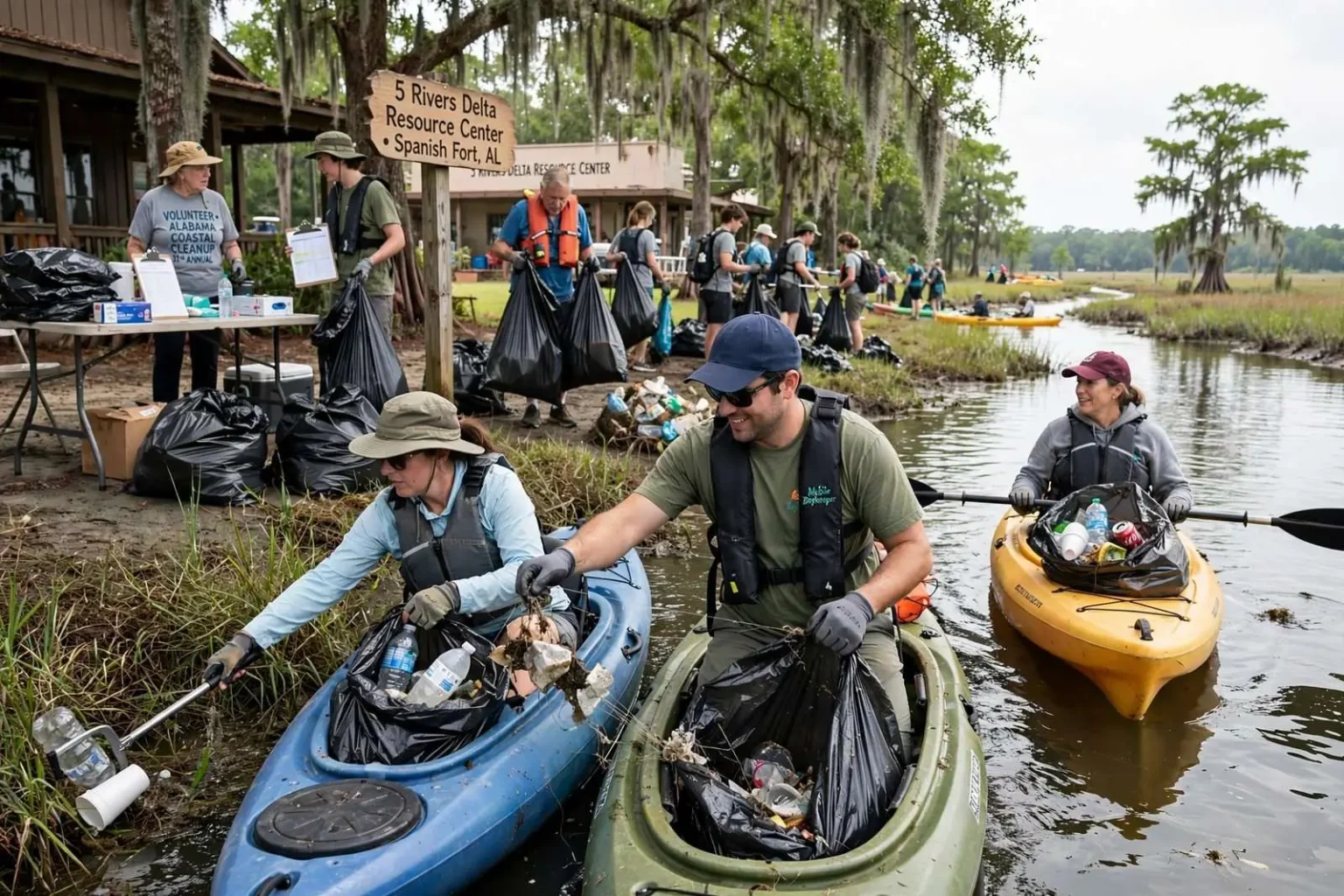
Dozens of volunteers from across the coast turned out Saturday morning for the annual Alabama Coastal Cleanup, spreading across multiple sites around the region to pull litter from shorelines and waterways.
The statewide event draws participants to beaches, bayous, creek banks and boat launches each year, and this edition again mobilized residents from Mobile and Baldwin counties and beyond in a single morning of coordinated collection work.
Paddlers take to the water
Among the gathering points were the 5 Rivers Delta Resource Center and One Mile Creek, where Mobile Baykeeper hosted a water-based cleanup. Paddlers with canoes and kayaks were recruited for that effort, reaching trash-strewn spots along the creek that cannot be accessed on foot.
Water-based cleanups fill a gap that land crews cannot. Storm drains, ditches and tributaries funnel litter into the Mobile Bay watershed all year, and a meaningful share of it lodges along the banks of small creeks and in the marsh grass of the delta, where it stays until someone paddles in to pull it out. Debris trapped in those spots eventually breaks down into smaller fragments, works its way into the food chain, or washes into the bay with the next heavy rain.
The 5 Rivers Delta Resource Center, at the head of Mobile Bay in Spanish Fort, sits where the Mobile, Tensaw, Apalachee, Blakeley and Spanish rivers meet, making it a natural staging point for paddle crews working the upper delta. One Mile Creek, which winds through communities on the eastern shore, is one of the waterways where accumulated litter is most visible after storms.
A 31-year tradition
The cleanup has become a fixture of the Gulf Coast environmental calendar — the previous year’s event marked its 30th anniversary, making this edition the 31st time volunteers have turned out for the statewide coastal litter sweep.
Over more than three decades, the event has grown into Alabama’s largest single-day volunteer cleanup effort, organized through a partnership of state agencies, conservation groups, businesses and local governments. Thousands of volunteers have taken part over the years, and the tonnage of debris recorded at check-in stations across the coast has become part of the long-term data set that researchers and policy makers use to understand where litter comes from and what kinds of waste are most persistent.
The annual count also does quieter work: it teaches each new group of volunteers exactly what kinds of trash dominate the coast. Plastic bottles, foam cups, fishing line, cigarette butts and single-use bags consistently rank among the most-collected items, and those results have fed into local ordinances, business practices and education campaigns across the region.
Mobile Baykeeper’s role
Mobile Baykeeper, the clean-water advocacy organization based in Mobile, has built its reputation on swimmable, fishable waterways across the coastal counties. The group’s work ranges from monitoring pollution and pressing for infrastructure repairs to organizing volunteer events like the One Mile Creek paddle cleanup, which pairs the organization’s local knowledge with hands-on labor from the community.
For the paddlers, the morning is equal parts work and education. Volunteers see firsthand how trash travels from streets and storm drains into the creeks, and many return year after year to the same sites, giving the organization a corps of experienced volunteers who know where the problem spots are and what equipment the job requires.
How the cleanup works
Each cleanup site operates from a check-in station where volunteers register, receive gloves, trash bags and data cards, and get a safety briefing before heading out. Team captains — usually longtime volunteers or staff from the sponsoring organization — stay at each site to coordinate groups, track supplies and handle anything unexpected.
The data cards matter as much as the bags. Volunteers record what they collect by category, and those tallies are compiled statewide after the event. The results shape the following year’s planning, showing organizers which sites need more volunteers, what supplies to stock and where the region’s litter problems are concentrated.
Organizers directed participants to event pages for site details, supplies and last-minute updates on each location. Because the cleanup covers dozens of sites across two coastal counties and beyond, conditions can vary widely — a site on the bay can be windy when an inland creek site is calm, and rain in the days before an event changes access to some shorelines. The event pages let volunteers confirm times, parking and any weather-related changes before driving out.
Why the work matters for the bay
Everything collected on cleanup day is material that would otherwise ride the watershed downstream. The Mobile Bay system drains a vast interior — rain that falls in parts of Alabama, Georgia and Mississippi eventually finds its way through the Mobile-Tensaw Delta into the bay and the Gulf — which means litter dropped far inland can still end up on an Alabama beach or in a delta marsh.
Marine debris harms wildlife in familiar ways: birds and fish ingest plastic fragments, turtles and marine mammals become entangled in fishing line and rope, and marsh grasses smother under accumulated trash. Cleanup crews on Saturday removed those hazards before the next tide and the next storm moved them deeper into the system.
There is a public dimension as well. Clean shorelines support the coastal economy — tourism, fishing and the waterfront property values that fund local services — and they signal to visitors that the community takes pride in its waterways. Volunteers often say the visual difference after a single morning is the reason they come back the next year.
Getting involved next year
The Alabama Coastal Cleanup is open to volunteers of all ages, and no experience is required. Families with children, church and school groups, scout troops and businesses that send employee teams all take part, and site captains can match newcomers with tasks that fit their ability — from shoreline walking crews to the paddle teams working the creeks.
Residents who want to take part in a future cleanup can watch for registration announcements ahead of the event, typically publicized in late summer, and choose a site near home or one that needs the most help. Sturdy closed-toe shoes, sun protection, water and a hat are the standard recommendations, and gloves and bags are provided at every site.
For the dozens who turned out on Saturday, the reward was immediate: shorelines and creek banks visibly cleared, bags of debris tallied at the check-in stations, and one more year added to a Gulf Coast tradition now in its fourth decade.
Sites across two counties
While the paddle crews worked the delta and One Mile Creek, land-based teams fanned out across the full sweep of the cleanup zone. Beaches along the Gulf, bayfront parks, boat launches on Mobile Bay and the Tensaw Delta, roadside pull-offs near tidal creeks and neighborhood ditches all fall within the event’s footprint, and each site draws a slightly different crowd.
Baldwin County’s Gulf beaches traditionally field some of the largest turnouts, with volunteer teams walking the sand at dawn while visitors are still off the beach. In Mobile County, sites around the bay and the delta draw a mix of families, student groups and kayakers, and urban creek sites attract volunteers who want to see where the region’s litter problem actually starts — well upstream of the shoreline.
Site captains assign zones to keep coverage efficient and safe. Volunteers are asked not to pick up hazardous materials such as syringes, drums or chemical containers, which are flagged for professional disposal, and anyone working near roadways or boat ramps is reminded to stay visible and watch traffic.
The numbers behind the event
Annual totals from the Alabama Coastal Cleanup tell a story in aggregate. Across three decades, volunteers have removed tons of debris from Alabama’s coast, and the category data collected each year has remained remarkably consistent — plastic and foam products dominate, followed by smoking-related litter and derelict fishing gear.
Those numbers feed into national and international coastal cleanup databases, where Alabama’s results sit alongside data from cleanup events around the world. Researchers use the combined figures to track trends in single-use plastics, to document the scale of the debris problem and to support policies aimed at the sources rather than just the symptoms.
Local officials also pay attention. Cleanup results have been cited in discussions of bottle bills, bag ordinances, storm-drain filter programs and public education campaigns in coastal municipalities, giving the annual morning of volunteer labor a policy echo that lasts well beyond the weekend.
A morning that becomes a habit
For many volunteers, the cleanup is the entry point to year-round involvement. Mobile Baykeeper and the other organizations behind the event run volunteer programs through the year — water-quality monitoring, additional cleanups after major storms, and advocacy campaigns on issues affecting the bay — and the annual event is where they meet the next wave of participants.
Residents who missed this year’s edition can still contribute: cleaning up storm drains near their homes, securing trash cans on windy days, choosing reusable bottles and bags, and reporting illegal dumping all reduce the load that the next cleanup has to carry.
Saturday’s turnout once again showed the appetite for that work. From the delta paddlers pulling debris out of spots no truck could reach, to the beach crews filling bag after bag before the crowds arrived, the 31st Alabama Coastal Cleanup sent another year of litter out of the watershed — and sent another group of volunteers home already talking about next September.


