
WAVE Transit Adds Four New Buses as Mobile’s Fleet Modernization Rolls On
Mobile's WAVE Transit received four new buses ahead of July 4, with a $4.3 million federal grant helping modernize the entire fleet.
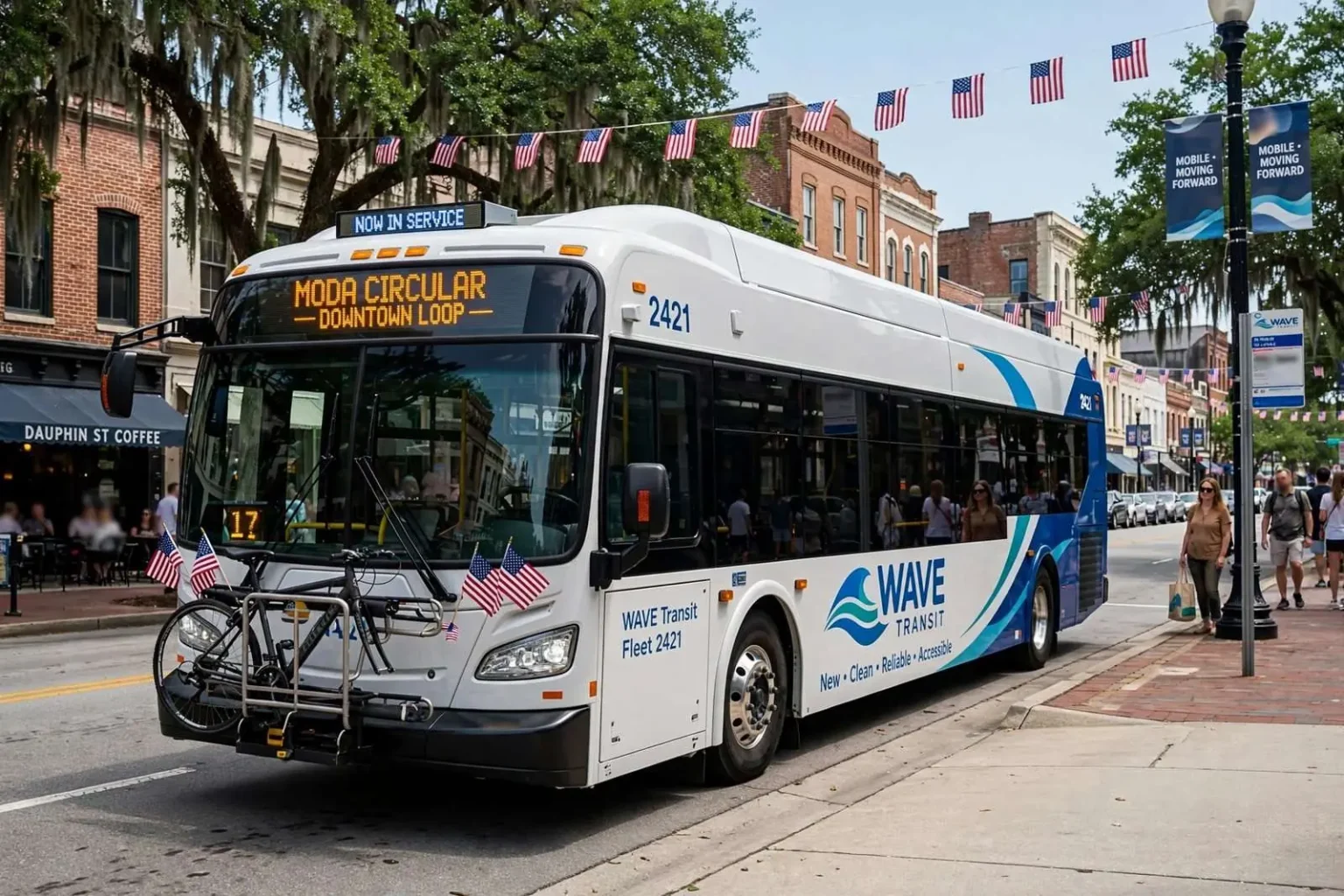
Mobile’s WAVE Transit system received four new buses that were slated to enter service by the Fourth of July, according to Mayor Sandy Stimpson.
The delivery continued a fleet-wide refresh: since the previous summer, the city had taken in nine new WAVE buses, including the modernized MODA Circular route dedicated to riders in downtown Mobile. Stimpson said he expected another six buses to join the fleet in 2023 and 2024.
Once all of the new vehicles arrive, city officials noted, the average bus in service would be less than three years old — a marked turnaround for a system long criticized for aging equipment. The upgrades are part of broader efforts to improve reliability and ridership on Mobile’s public transit network.
A fleet in transition
The four buses delivered to WAVE Transit represent one installment in a rolling replacement that has reshaped the system’s fleet over roughly three years. Since the previous summer, the city had accepted nine new buses, and the vehicles slated for service by the Fourth of July pushed that count higher still. With another six expected in 2023 and 2024, the total refresh reaches into the dozens — a scale of replacement that changes what kind of transit system Mobile operates.
Age matters enormously in bus operations. A transit bus runs all day, every day, accumulating mileage at a rate that a private vehicle owner would find staggering, and as a fleet ages its maintenance burden grows, its fuel efficiency declines and its breakdowns multiply. A system running buses well past their useful life spends its budget keeping old vehicles moving rather than improving service, and every breakdown on a route strands riders who depend on the bus to get to work, school and medical appointments.
That was the criticism WAVE had long faced: aging equipment that undermined reliability. City officials’ observation that the average bus in service would be less than three years old once the deliveries complete is the kind of statistic that signals a genuine reversal. A fleet averaging under three years of age is a young fleet by any transit standard, and it means riders board vehicles with modern features — accessibility equipment, climate control, cleaner emissions — that older buses lack.
The MODA Circular and downtown service
Among the new vehicles put into service was the modernized MODA Circular, the route dedicated to riders in downtown Mobile. The Circular’s role is distinct from the system’s cross-town routes: it shuttles riders through the downtown core, connecting workplaces, government buildings, courthouses, restaurants and attractions in the district where Mobile’s daytime population swells each morning and drains each evening.
Downtown circulator routes serve a particular function in a transit network. They carry commuters from parking areas to workplaces, give visitors and employees a car-free way to move through the district, and provide mobility for residents who live downtown and depend on transit. A modernized vehicle on that route is visible to the widest possible audience — downtown workers, visitors and residents see it all day — which makes it a rolling advertisement for the system’s overall condition.
The naming of the MODA Circular route reflects the branding effort that has accompanied WAVE’s modernization, and the investment in dedicated modern vehicles for downtown service signals the priority the city places on the district’s accessibility. A downtown that is easy to move around without a car supports the retail, hospitality and office activity that anchors Mobile’s economy, and the circulator is the piece of transit infrastructure that makes that ease possible.
The federal money behind the refresh
A $4.3 million grant from the U.S. Department of Transportation is expected to help modernize the bus fleet overall. Federal transit funding flows to systems like WAVE through grant programs administered by the federal government, with local systems applying for awards and using them for vehicle purchases, facility upgrades and service improvements.
The scale of the grant is significant relative to the cost of transit buses, which run well into hundreds of thousands of dollars per vehicle. A $4.3 million award covers the purchase of multiple buses, and combined with other funding sources it supports the multi-year replacement schedule the city has described — buses arriving in waves from the previous summer through 2023 and 2024.
Federal support is the financial backbone of fleet replacement for midsized transit systems everywhere. A city the size of Mobile cannot fund a full fleet refresh from local dollars alone, and the grant programs that exist for exactly this purpose are what make a “young fleet” attainable. The city’s ability to attract and manage those federal awards is the quiet competence behind the visible improvements riders notice.
Reliability, ridership and what riders experience
The upgrades are part of broader efforts to improve reliability and ridership on Mobile’s public transit network. The two goals are connected: ridership follows reliability, and reliability follows the condition of the fleet. A system whose buses run on time, break down rarely and offer a comfortable ride earns the kind of daily dependence that transit systems need to justify their budgets and expand their service.
For the riders who depend on WAVE — workers commuting to jobs across the city, students, seniors and residents without cars — the arrival of new buses is experienced in concrete terms. Fewer mechanical failures mean fewer missed connections. Newer climate systems mean tolerable rides through Mobile’s long, hot summers. Modern accessibility equipment means riders using wheelchairs or other mobility devices board more smoothly and quickly, which also improves the schedule for every other rider on the route.
The improvements also matter to the employers whose workforce rides the bus. Manufacturers, hospitals, retailers and service businesses across Mobile depend on transit to bring workers to their doors, and reliability in the bus system translates directly into reliability in the labor market. City officials have framed the fleet refresh in exactly those terms: a transit system that works is part of the infrastructure that makes the city function.
WAVE’s role in the city
WAVE Transit is Mobile’s public transportation system, operating fixed routes across the city and serving the downtown core with the MODA Circular. The system connects neighborhoods to employment centers, medical facilities, shopping and schools, and it provides an option for residents who cannot or choose not to drive.
The system has historically faced the challenges common to transit in Gulf South cities of Mobile’s size: a car-oriented street network, dispersed destinations and limited funding for service expansion. Against that backdrop, the fleet modernization is the most visible piece of a broader effort to make the system worth riding, and the city’s stated expectation — an average fleet age under three years — would place WAVE among the younger fleets in the region.
The deliveries scheduled through 2023 and 2024 will complete the replacement cycle that began the previous summer, and the system that emerges will look little like the one criticized for aging equipment. Whether ridership grows to match the improved service is the measure city officials will watch, but the foundation for it — buses that show up, run reliably and carry riders in comfort — is arriving four vehicles at a time.
For now, the four buses slated for service by the Fourth of July are the latest evidence of the commitment: nine new buses since the previous summer, six more on the way, $4.3 million in federal support and a downtown circulator modernized for the riders who use it daily.
What a modern fleet costs and why it pays
The economics of bus replacement explain why the fleet refresh is treated as an achievement rather than routine maintenance. A transit bus is among the most expensive vehicles a city operates, and a full replacement cycle normally spans years of planning, procurement and delivery. Manufacturers build buses to order, and the interval between an order and a delivered vehicle can run long enough that systems must stagger purchases to avoid gaps in their fleets.
The staggered arrival schedule Mobile has described — vehicles arriving since the previous summer, four more by the Fourth of July, and six additional buses in 2023 and 2024 — reflects exactly that kind of staged procurement. Staggering deliveries also means the fleet’s average age declines steadily rather than in jumps, and maintenance operations can absorb new vehicles in manageable groups rather than all at once.
New buses pay for themselves in maintenance savings over their service lives. Older buses require disproportionate shop time, and parts for discontinued models become scarce and expensive. Every hour a mechanic spends reviving an aging bus is an hour not spent on preventive work, and every day an old bus sits disabled is a route running short. A young fleet breaks the cycle: predictable maintenance, available parts and vehicles that spend their days on the street rather than in the bay.
The riders the system serves
WAVE’s ridership includes many people for whom the bus is not an alternative but a necessity. Residents without vehicles, seniors who no longer drive, riders with disabilities and workers commuting to shifts that begin before or end after conventional hours all rely on fixed-route service, and the system’s condition shapes their daily lives in ways that car-owning residents rarely see.
When a bus breaks down mid-route, the rider heading to a job interview or a medical appointment bears the consequence. When a bus’s air conditioning fails in an Alabama summer, the rider arriving at work does so heat-soaked. When wheelchair lifts malfunction, riders with mobility devices face delays at every stop. These are the everyday failures that an aging fleet produces and that a modern fleet eliminates, and they are the reason city officials describe the refresh in terms of reliability rather than prestige.
The system’s schedules also matter to the employers along its routes. Businesses in west Mobile’s commercial corridors, the medical district and downtown all draw workers who arrive by bus, and the predictability of the service is part of the region’s employment infrastructure. A transit system that runs reliably widens the labor pool available to local employers, connecting workers to jobs they could not otherwise reach.
A visible signal of investment
There is a civic dimension to the new buses as well. A transit fleet is one of the most publicly visible indicators of a city’s condition — its buses roll past every resident every day, and their appearance tells a story about how the city invests in itself. Buses that look tired reinforce an impression of decline; buses that look new reinforce an impression of momentum.
That visibility is part of what city officials hope will translate into ridership. Residents who have never ridden WAVE form opinions about it from what they see on the street, and a modern fleet lowers the psychological barrier to trying the service. Combined with the modernized downtown circulator and the reliability improvements riders experience directly, the new vehicles are intended to change the system’s reputation as much as its performance.
The deliveries through 2023 and 2024 will complete the transformation the mayor described, and the system that results will be measured by the standard city officials set for it: buses less than three years old on average, running reliably, carrying more riders than before. The four buses slated for service by the Fourth of July are a step on that path, and each additional delivery brings the system closer to the fleet its supporters have long argued it needed.
For a system long criticized for aging equipment, the arithmetic of the refresh tells the story: nine new buses since the previous summer, four more entering service by the holiday, six still to come and $4.3 million in federal support behind them.


