Why Jazz Has Never Quite Taken Root in Mobile
A look at why jazz has struggled to build a lasting audience in Mobile, Alabama, from a failed jazz society to the influence of smooth jazz on local tastes.
Mobile has never been much of a jazz town, and those who have tried to change that over the years say the reasons run deeper than simple taste. The city’s musical identity has long been built on pop, country, blues, R&B and, more recently, hip-hop, with each genre finding a strong audience at churches, dance halls, juke joints and concert venues across the metro area. Jazz, by contrast, has struggled to find the kind of sustained, organized following that other genres enjoy, even as musicians from the Port City have gone on to make names for themselves in other styles.
An Effort That Fell Short
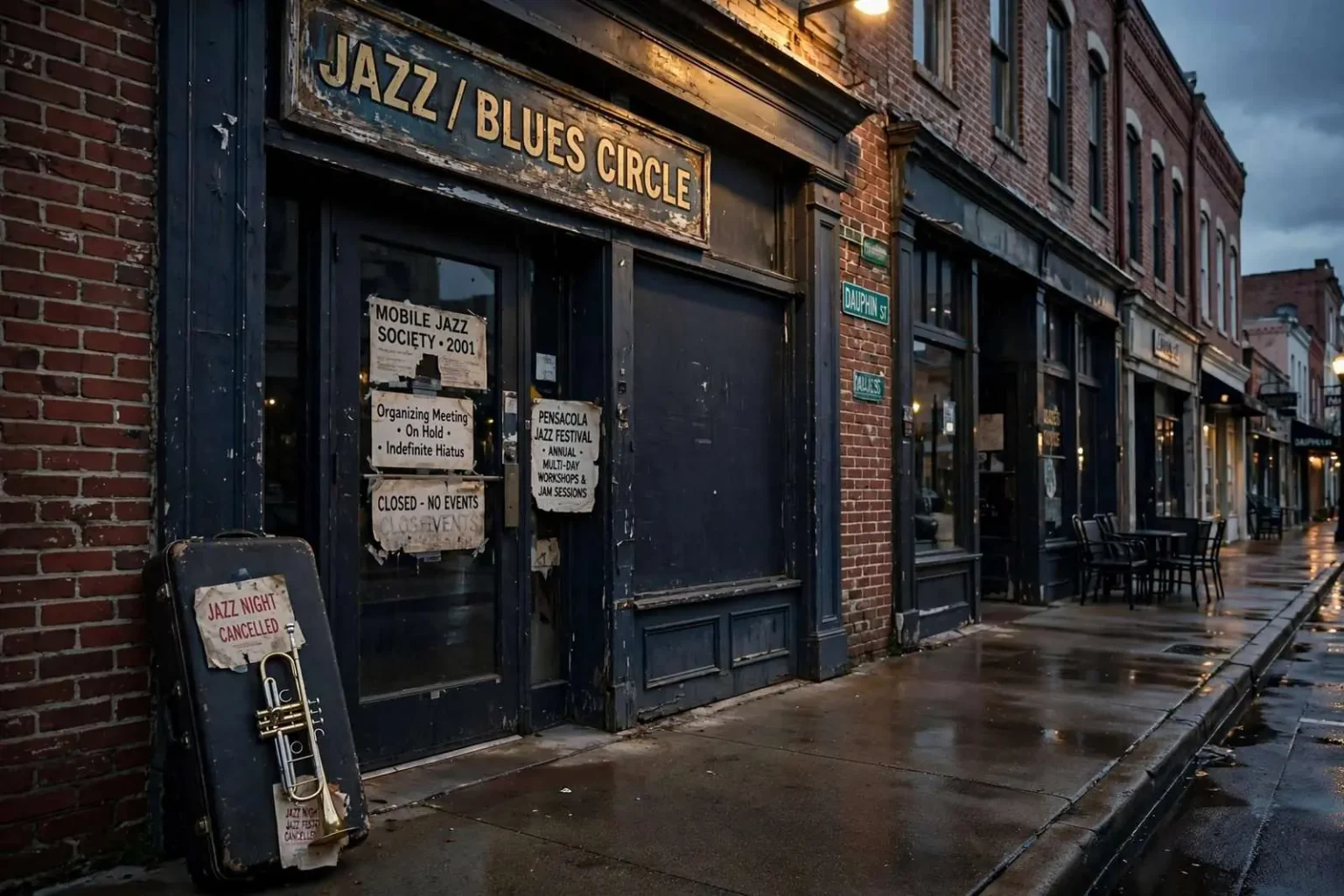
Back in 2001, a local music enthusiast set out to organize a jazz society in Mobile, hoping to build the kind of sustained audience and infrastructure that Pensacola, a smaller city just across the state line, had managed to create. Pensacola’s jazz society had already been staging a multi-day festival, drawing loyal crowds year after year, while in Mobile fans of the genre often had to search hard just to find a place to hear it played live. The math seemed to make sense on paper. National data at the time suggested jazz accounted for roughly four percent of annual music sales, a figure that, applied to Mobile’s population, could theoretically translate into a couple hundred committed local fans. The thinking was that if even a couple hundred people made a point of showing up and getting involved, it would be enough to sustain a real scene.
Reality proved more stubborn. Leaders of the Jazz Society of Pensacola warned early on that building something similar in Mobile would be an uphill climb. Former members of the Mobile Jazz/Blues Circle, a support group that had formed in the 1990s and folded after about five years, offered similar warnings. Even a well-regarded local arts observer dismissed the four-percent estimate as wildly optimistic, describing Mobile as too “hardscrabble” a place for jazz to take root.
Why the Numbers Never Materialized
Looking back over the years since, those early skeptics were largely right. Every city tends to gravitate toward certain musical forms, and in Mobile that has traditionally meant pop, country, blues and R&B, with hip-hop added to the mix as it has grown in popularity nationally. Some longtime jazz fans in the area attribute the local resistance to the genre partly to racial divisions and a broader anti-intellectual streak in the region’s culture, though that explanation only tells part of the story. The Mobile Jazz/Blues Circle, which was active during the 1990s, included both Black and white members and drew respectable crowds to its events. Its founders believed, like the jazz society organizers who came later, that there was a real appetite for the music in Mobile. They were able to keep the organization going for roughly five years before folding.
The Festival That Did Not Return
The Pensacola Jazz Festival, run by the Jazz Society of Pensacola, became the model that Mobile organizers hoped to replicate. Each year the festival drew several hundred attendees from across the Gulf Coast for a weekend of performances, workshops and jam sessions. The festival’s longevity was tied directly to the support it received from local businesses, the University of West Florida and a small group of donors who treated the event as a permanent fixture of the regional cultural calendar. Mobile’s brief attempt at something similar faltered in part because the volunteer base was smaller and the corporate underwriters more skeptical. Organizers found that local restaurants and bars were willing to host individual jazz nights, but reluctant to commit to a multi-day event with the kind of budget the Pensacola festival required.
Venue Woes and Audience Habits
Another factor was the venue landscape. Mobile’s downtown has long been known for live music, but the venues that draw the biggest crowds tend to favor cover bands, blues and contemporary pop rather than straight-ahead jazz. Clubs along Dauphin Street, in particular, lean toward sets designed to keep bar traffic flowing rather than toward the extended improvisation that jazz audiences tend to expect. The few Mobile restaurants and lounges that have experimented with regular jazz programming have generally done so on weeknights, when audiences are thin and word-of-mouth takes longer to build. The result is that jazz in Mobile tends to appear in spurts — a special event here, a visiting artist there — rather than as a regular part of the city’s nightlife.
Lessons From Other Gulf Coast Cities
New Orleans is the obvious counterexample, with a jazz tradition so deep that the city’s identity is essentially inseparable from the genre. But New Orleans has structural advantages Mobile never had: a steady flow of tourists looking for jazz specifically, a population that grew up hearing the music at family gatherings, and venues like Preservation Hall that have operated for generations. Smaller Gulf Coast cities have had mixed results. Biloxi and Gulfport have supported occasional jazz programming tied to casino entertainment schedules, but neither has built the kind of year-round society that Pensacola maintains. Pensacola itself benefits from proximity to the University of West Florida and from a population of part-time residents who expect cultural programming during their stays.
What Jazz Would Need to Take Root in Mobile
Anyone hoping to revive the jazz society idea today would face the same headwinds the 2001 organizers encountered, and then some. The economics of running a small arts nonprofit are tougher now than they were two decades ago, and competition for both audience attention and donor dollars has only grown. Still, there are reasons for cautious optimism. Mobile’s downtown has added new restaurants, lofts and arts spaces in recent years, and the city’s broader music scene has continued to expand, with organizations like the Mobile Arts Council providing support that did not exist in the same form in 2001. A jazz society that found a niche audience among those newcomers could potentially build the kind of small but loyal following that organizers said was missing the first time around.
A Different Kind of Audience Today
Mobile’s population has also changed in ways that might matter for jazz. The city’s downtown has drawn a growing number of young professionals, many of them transplants from other parts of the country who moved to Mobile for jobs in healthcare, aerospace and shipbuilding. Some of those newcomers arrived with experience of jazz scenes in larger cities and may be looking for ways to recreate that experience locally. The Mobile Jazz Society effort in 2001 was aimed at a population that was overwhelmingly born and raised in the area. A new effort could potentially tap into a different demographic, one that is more willing to drive across town for a late set and more accustomed to paying cover charges at small venues.
Whether that combination is enough to overcome the cultural headwinds the original organizers identified is an open question. For now, Mobile’s jazz story remains one of occasional bursts of programming rather than a sustained scene, and the city’s reputation as a place where country, blues and pop dominate looks unlikely to change any time soon.
For now, the absence of a jazz society or a recurring festival leaves a notable gap in Mobile’s cultural calendar. The Mobile Jazz/Blues Circle’s run in the 1990s and the brief jazz society effort in 2001 both ended for similar reasons: a small, dedicated core of supporters ran out of energy before the broader audience they hoped to attract ever materialized. Pensacola’s jazz society, by contrast, has been able to count on a deeper bench of volunteers and a more reliable revenue stream from sponsors who see the festival as a way to bring visitors to the Florida side of the Gulf Coast during the slow winter months. Mobile has never quite had the same alignment of community partners.
Local musicians who play jazz say the issue is not a lack of talent. Mobile has produced a steady stream of skilled players over the decades, many of whom have moved on to New Orleans, Nashville or larger Southern cities to pursue full-time careers. The University of South Alabama’s music department has long offered jazz programming, and the region’s high school bands routinely perform jazz standards at concert festivals. What the area has lacked, by general consensus, is the connective tissue between those players and a paying audience. Without regular venues willing to book jazz, and without an organization willing to spend the time and money required to build a festival, the music tends to remain an extracurricular interest rather than a living scene. The result is a familiar pattern in cities of Mobile’s size: talented musicians, a curious audience and no permanent bridge between them.