Why Mobile County Gardeners Are Already Planning Fall Vegetable Beds in July’s Heat
Even as summer tomatoes ripen in the July heat, Mobile County Extension experts say now is the time to test soil and prep beds for a fall harvest of lettuce, broccoli and other cool-weather vegetables.
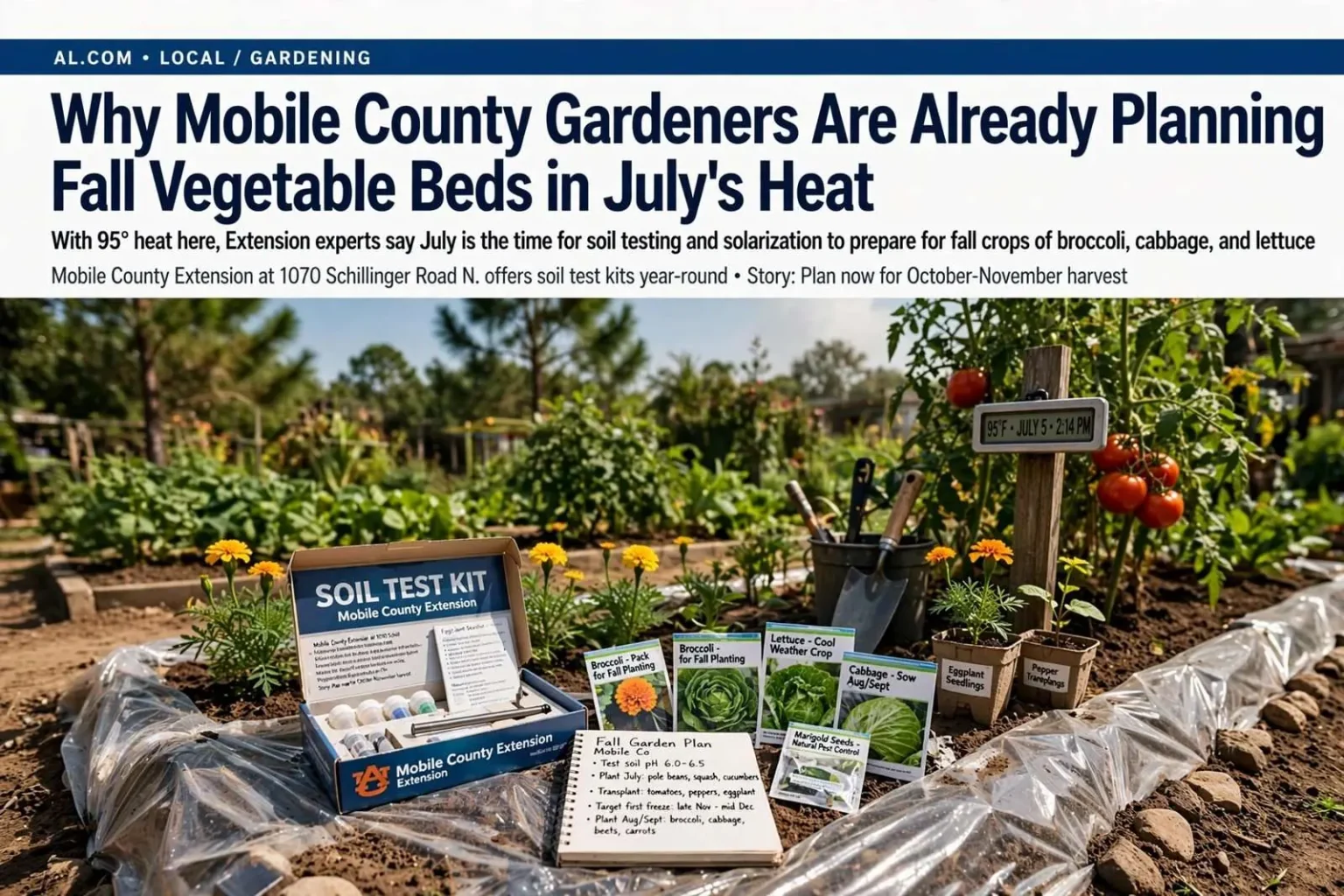
The Fourth of July fireworks have barely faded, but for South Alabama gardeners, the sweltering middle of summer is already the right time to start thinking about the fall vegetable garden. It sounds like a contradiction — planning for lettuce, broccoli and cabbage while the thermometer sits near 95 degrees and the tomatoes are still coming in hot off the vine — but local Extension experts say the work done now in the soil determines how well a cool-weather garden performs once the weather finally breaks in October and November.
Unlike a spring garden, where the calendar mostly takes care of itself once the last frost passes, a fall garden in Mobile County requires gardeners to work backward from the first expected freeze, which typically arrives sometime between late November and mid-December in the Mobile area. Extension specialists recommend counting back from that date using the number of days a given crop needs to reach maturity, then using that math to set a planting schedule for each vegetable.
July, despite the heat, is considered prime time for one of the most important and most often skipped steps in vegetable gardening: testing the soil. Soil chemistry shifts throughout the year, and nutrients such as nitrogen can move unevenly through a garden bed even if a test was done as recently as the previous season.
The Mobile County Extension office, located at 1070 Schillinger Road N. in Mobile, offers soil test kits to home gardeners year-round.
A completed test identifies the soil’s pH level and nutrient needs for the specific crops a gardener plans to grow. Extension agents say the ideal pH range for most vegetables falls between 6.0 and 6.5, and correcting deficiencies early can prevent common headaches later in the season, including blossom end rot in tomatoes, which is caused by inadequate calcium uptake.
Beyond testing, midsummer is also the recommended window for adding compost or other nutrients to garden beds and for solarizing the soil, a process that uses the sun’s heat trapped under clear plastic sheeting to kill off weed seeds, soil-borne diseases and pest larvae before fall planting begins. While August and September remain the primary planting months for a full fall garden in Alabama, there is still work gardeners can do in July.
Extension guidance calls for using the back half of the month to get a head start by direct-seeding a handful of heat-tolerant crops, including pole beans, winter squash and cucumbers. Small seeds should be planted about a quarter- to a half-inch deep, while larger seeds like beans need to go slightly deeper, roughly a half-inch to a full inch.
Keeping the soil consistently moist is critical for germination in the summer heat. July is also the time to set out transplants for a fall crop of tomatoes, peppers and eggplant.
Gardeners are advised to keep new transplants and seedlings well watered and to use shade cloth or other covers if young plants show signs of heat stress. For tomato transplants specifically, burying roughly half the length of the exposed stalk helps the plant develop a stronger root system for both water uptake and stability later in the season.
The bulk of the fall garden gets underway in August and September, when gardeners typically sow the vegetables most associated with the Southern fall table: squash, cabbage, beets, carrots, red potatoes, broccoli and Swiss chard. The Alabama Cooperative Extension System publishes detailed planting-date charts for these crops in its “Alabama Vegetable Gardener” guide, available online through Alabama Extension’s website.
Gardeners in South Alabama should note that recommended fall planting dates for this region run about 10 days later than the general statewide chart, and that most of the published dates refer to when seeds should be sown rather than when transplants should go in the ground. Copies of the guide are also available in print at the Mobile County Extension office.
Early August is the target window for direct-seeding winter squash, beets and carrots, while mid- to late August is reserved for certified seed potatoes, particularly Irish red varieties, along with beans, broccoli, brussels sprouts, cabbage, carrots, cauliflower, collards, kale, lettuce, mustard greens, summer squash and turnips. Tomato and pepper transplants can continue during this stretch as well.
By September, direct-seeding shifts to beets, brussels sprouts and turnips early in the month, followed by carrots, collards, kale, lettuce, mustard greens, onion seeds, radishes, spinach, Swiss chard and parsley in mid- to late September. Moist soil remains essential for germination during this period.
That same window is also when many gardeners transplant seedlings started earlier from flats or pots, including beets, broccoli, cabbage, brussels sprouts, collards, kale, lettuce, mustard greens, spinach and onions. Extension agents also recommend interplanting marigolds among vegetable crops as a natural way to help reduce nematode populations in the soil.
Come October, gardeners can continue setting out winter-hardy transplants such as beets, carrots, collards, kale, parsley, lettuce and spinach, while keeping a close eye on the forecast and being ready to cover tender plants during any early cold snaps. Looking further ahead, November through January bring the harvest of the fall garden’s bounty, along with the start of soil preparation for the following spring in December and the ongoing task of protecting crops from frost, freezing temperatures and hungry winter pests.
Gardeners looking for exact planting windows can consult “SOW,” a seasonal gardening calendar maintained by the Alabama Cooperative Extension System, available at the Mobile County Master Gardeners’ website. The Alabama Cooperative Extension System’s main site also offers a broad library of publications covering vegetable varieties, pest management and soil health for home gardeners across the region.
How Soil Testing and Solarization Work
Soil samples sent in through the Extension office are analyzed by Auburn University’s Soil, Forage and Water Testing Laboratory, which returns lime and fertilizer recommendations for the crops a gardener lists on the submission form. The Alabama Cooperative Extension System itself is a partnership between Alabama A&M University and Auburn University.
Solarization works best during the hottest, sunniest weeks of summer. The bed should be tilled and watered before it is covered, and the clear plastic sealed at the edges and left in place for roughly four to six weeks so heat can build in the top few inches of soil.