‘A Cause to Clean’ Brings Volunteers to the Mobile Bay Causeway This Weekend
Volunteers can join 'A Cause to Clean' on May 14 to pick up litter along the western Mobile Bay causeway. Lunch provided; bring vests and gloves.
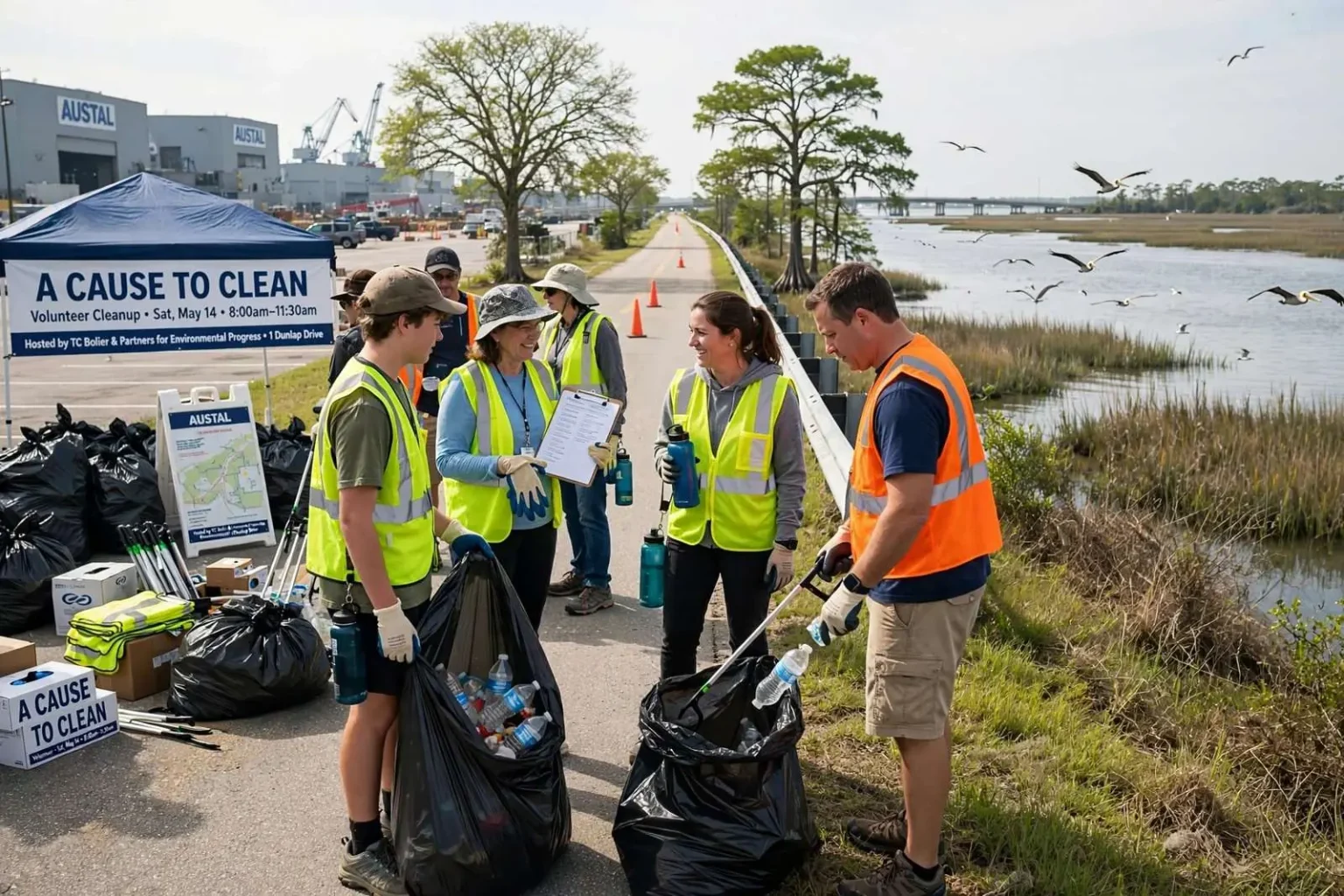
MOBILE, Ala. — Residents looking to do something good for one of Mobile Bay’s most scenic corridors can pitch in this weekend at “A Cause to Clean,” a community effort to spruce up the western end of the causeway. TC Bolier and Partners for Environmental Progress are hosting the cleanup on Saturday, May 14, from 8 a.m. to 11:30 a.m., based out of Austal’s parking lot at 1 Dunlap Drive.
The event is open to anyone willing to spend a morning picking up litter along the waterfront route, and organizers are casting a wide net for volunteers. No advance signup hurdles or special skills are required — just a few hours of time and a willingness to walk the roadside collecting trash. Families, church groups, coworkers, and students looking for service hours are all the kind of turnout organizers hope to see. Because the work happens along an active roadway, participants should expect to stay alert to traffic while they work, following instructions from event leaders on where it is safe to operate.
Staging the cleanup at Austal’s parking lot on Dunlap Drive puts volunteers right at the western gateway to the causeway, near the shipyard that dominates the Mobile riverfront. From that base, teams can spread out along the western stretch of the roadway without having to shuttle far, keeping the morning efficient and keeping participants close to restrooms, parking, and the lunch that follows.
What Volunteers Need to Bring
Organizers will supply garbage bags and litter pickers on site, and lunch will be provided for everyone who turns out. Volunteers do need to come prepared with three things of their own: a reusable water bottle, safety vests and gloves.
Each of those three items matters for the kind of work a roadside cleanup involves. A reusable water bottle keeps volunteers hydrated through a late-spring morning on the bay, where temperatures climb quickly once the sun is up and there is little shade along the open water. High-visibility safety vests make sure drivers can spot workers along the shoulder, and gloves protect hands from broken glass, sharp metal, and the other hazards that accumulate along a busy highway. Anyone who forgets a vest or gloves should still come out — checking in with organizers at the Austal lot is the best way to sort out equipment before teams head onto the roadway.
Comfortable, closed-toe shoes are also a sensible addition, since volunteers will be walking grass shoulders, ditch lines, and rocky edges rather than sidewalks. Sunscreen, a hat, and bug spray round out a practical kit for a Gulf Coast morning. Volunteers should plan to arrive close to the 8 a.m. start so they can be briefed, geared up, and assigned to a section of the causeway before the work begins.
A Morning on One of the Bay’s Most Scenic Routes
The event targets the western stretch of the causeway, the busy roadway linking downtown Mobile to the Eastern Shore that routinely collects roadside litter. Locals simply call it “the Causeway,” and it is one of the most recognizable drives in south Alabama: a low, narrow ribbon of pavement running for miles along the northern edge of Mobile Bay, with open water on one side and the miles of marsh and cypress at the head of the bay on the other.
For generations the causeway has been more than a commuter route. It carries drivers past popular seafood restaurants, bait shops, and boat launches, and it offers one of the best vantage points in the region for watching pelicans, gulls, and herons work the shallows. Because the road sits just above the water, every piece of litter dropped or blown out of a truck bed tends to end up in the grass along the shoulder or floating along the shoreline — there is nowhere for it to hide. That visibility is part of why the causeway inspires such loyalty among Mobile-area residents, and part of why a cleanup there delivers results that everyone who drives it can see.
The western end near downtown Mobile faces its own particular pressures. Traffic from the city funnels onto the roadway at high volume during rush hours, and the stretch near the industrial riverfront sees heavy truck traffic alongside the daily commuter flow. Wind and rain move loose trash toward the bay side of the road, where it collects in the grass and along the waterline until someone removes it by hand.
Why the Causeway Collects Litter
Roadside litter is a persistent problem on any highway, but the causeway’s geography makes it especially visible and especially vulnerable. The roadway is essentially a long levee across open water and wetlands, so there are no shoulders of developed land to catch windblown debris. Anything that escapes a vehicle or an unsecured load ends up either in the grass along the narrow right of way or in the bay itself, where tides and wind push it against the rocks and shoreline.
The causeway is also famously low-lying. Storm surge from Gulf hurricanes and even strong north winds routinely push water over the roadway, and sections of the route have been closed many times over the years while floodwater receded. Each high-water event leaves behind a fresh layer of debris — everything from household items carried off properties to plastics, foam, and construction material — scattered across the roadway and the wetlands on either side. Volunteers who work the causeway after such events often find trash that traveled miles from where it started, which is a reminder that litter on any street in the Mobile Bay watershed can eventually end up on the causeway’s edge.
That is the broader point cleanup organizers tend to emphasize: litter is mobile. A bottle tossed in a downtown parking gutter drains to a storm sewer, the storm sewer feeds a creek, the creek feeds the Mobile River, and the bay does the rest. Cleaning the causeway does not just make a scenic drive prettier — it removes trash at one of the final checkpoints before it settles into the bay’s wetlands and open water for good.
Partners for Environmental Progress
Partners for Environmental Progress, the Mobile-based organization announcing the effort in a news release encouraging area residents to spend a morning giving the waterfront route some attention, has made volunteer cleanups a signature part of its work around the coastal region. The organization brings together businesses, industries, and community members with a shared interest in environmental stewardship along the Gulf Coast, and it has a long track record of mobilizing volunteers for projects ranging from roadside cleanups to habitat restoration across the Mobile area.
Partnering on the event is TC Bolier, a Mobile firm whose name longtime residents will recognize from the local business community. Pairing a company with an environmental nonprofit is a common model for cleanups on the Gulf Coast, and it works for practical reasons: businesses can supply logistics, equipment, and volunteers, while the nonprofit organizes the effort, handles outreach, and makes sure the event reaches people who want to help. For volunteers, that partnership means a well-organized morning with supplies, safety planning, and food already handled.
Events like “A Cause to Clean” also serve a purpose beyond the bags of trash they collect. Each cleanup introduces new people to the causeway’s fragile setting and to the habits — securing loads, carrying trash bags in vehicles, reporting illegal dumping — that keep litter from returning. Organizers around the region consistently find that volunteers leave a cleanup more likely to get involved in the next one, and more likely to think twice about where their own trash goes.
What the Morning Will Look Like
Volunteers should plan on arriving at Austal’s parking lot at 1 Dunlap Drive by the 8 a.m. start. Check-in is where the event comes together: participants sign in, pick up garbage bags and litter pickers, pull on safety vests and gloves, and get a short briefing on which sections of the western causeway will be covered and how teams will be arranged. Working in pairs or small groups along the shoulder is the standard approach, with each team taking a segment and filling bags until the segment is clean.
The schedule runs until 11:30 a.m., which gives volunteers roughly three and a half hours of actual work time — enough to make a visible difference along the western stretch without consuming the whole day. Filled bags get collected and hauled away as the morning wraps up, and lunch provided by the organizers follows for everyone who took part. The shared meal at the end is as much a part of the event as the cleanup itself, giving volunteers a chance to compare notes on the strange assortment of items they pulled from the roadside and to hear about the next round of volunteer opportunities.
Weather is the usual wild card for outdoor events on the coast, and a late-morning start on a May Saturday on Mobile Bay can turn warm quickly. The early 8 a.m. start helps volunteers put in their best hours during the cooler part of the day, and the reusable water bottles on the required list are there for a reason. Anyone with questions about conditions on the day of the event should watch for updates from the organizers before heading out.
Why Cleanups Matter for Mobile Bay
Mobile Bay sits at the bottom of a watershed that drains a huge swath of Alabama, and everything that washes into creeks and rivers across the region eventually funnels through the bay on its way to the Gulf of Mexico. Plastic bags, bottles, foam cups, and fishing line that end up in that current do not simply disappear. They snag in the marsh grass at the head of the bay, tangle in shoreline vegetation, and pose a known threat to the fish, birds, and sea turtles that live in and pass through the estuary. Litter along the causeway is a small part of that larger problem, but it is one of the parts that a single morning of volunteer work can actually fix.
The bay’s economy gives residents one more reason to care. Seafood, boating, fishing, and waterfront tourism all depend on clean water and clean shorelines, and the causeway is where many visitors get their first close-up look at the bay. A roadside free of litter sends a message about how the community treats its natural resources; a shoulder buried in trash sends the opposite one. Volunteer cleanups are one of the few tools that improve the corridor immediately, at no cost to taxpayers, simply by putting willing hands on the problem.
There is also a quieter argument for showing up: the work is genuinely satisfying. Three and a half hours along the water, with an immediate before-and-after visible in every section a team finishes, is a different experience from most forms of community service. Volunteers who have worked past cleanups on the Gulf Coast routinely describe the pile of full bags at the end of the morning as the best part.
The Details
Here is the full picture for anyone planning to take part. “A Cause to Clean” runs Saturday, May 14, from 8 a.m. to 11:30 a.m., with volunteers staging at Austal’s parking lot at 1 Dunlap Drive in Mobile. The cleanup targets the western stretch of the causeway, the roadway linking downtown Mobile to the Eastern Shore. Hosts are TC Bolier and Partners for Environmental Progress.
Garbage bags and litter pickers are provided on site, along with lunch for all volunteers. Participants should bring their own reusable water bottle, safety vest, and gloves, and are wise to add sun protection and closed-toe shoes for a morning of work along an open, breezy stretch of roadway.
For residents who have driven the causeway a thousand times and wished someone would pick up the trash, this weekend offers the chance to be that someone. A few hours of Saturday morning, a pair of gloves, and a full water bottle are all it takes to help one of Mobile Bay’s most scenic corridors look the way the people who love it know it should.