Alabama Education Department Proposes Flat Staffing Again as Insurance, Tech Costs Climb
Alabama's education department is again proposing no new positions for its budget, even as insurance and technology costs rise, officials say.
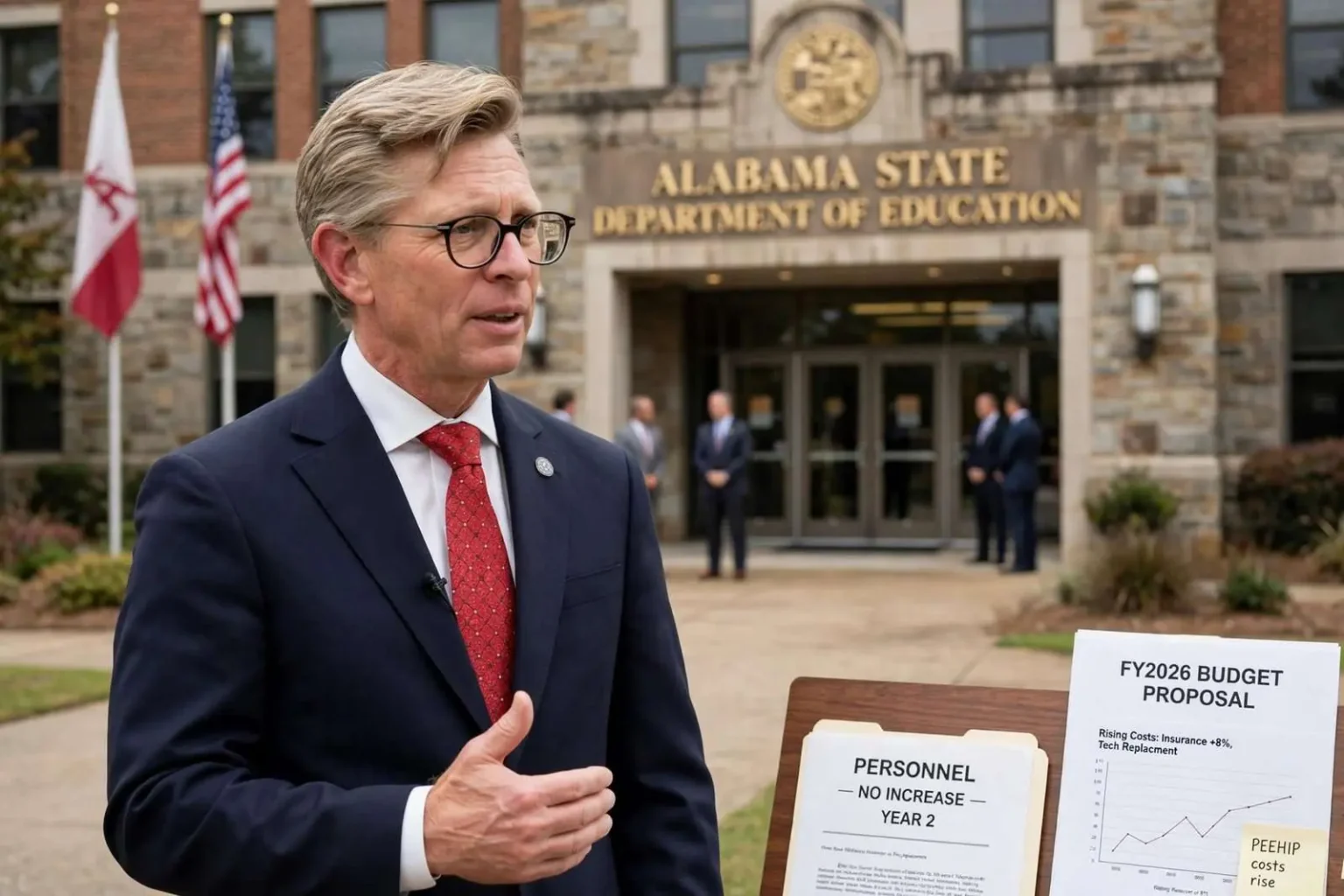
The Alabama State Department of Education is proposing no increase in funded personnel for the second consecutive year as it prepares its budget for the next fiscal year, even as it faces rising insurance costs, employee raises and technology replacement needs.
During a discussion of the department’s proposed operating budget, officials said the Legislature increased funding to cover a 2 percent pay raise for state employees beginning Oct. 1, along with higher employee benefit costs. That additional funding will allow the department to cover the increases without drawing from reserve funds.
State Superintendent Eric Mackey noted that past legislatures have approved pay raises without providing enough funding to cover them, forcing the department to dip into reserves to make up the difference. “We are, for the second year, telling the legislature, we don’t want any more personnel funded,” Mackey said. “We just think that you can always use more people, but we can manage what we have.” Mackey said the department would prefer to see additional funding flow to local school systems rather than add positions to its own workforce.
The proposed budget fully funds the increase in employee insurance costs, though officials warned that rising health care and prescription drug costs could eventually force changes to the state’s insurance plans. “I just think it’ll have to change. I just don’t see how we continue to keep it without some changes in the plan,” Mackey said. Potential changes could include higher premiums, increased copays or a combination of the two, with newer prescription drugs among the fastest-growing costs.
Officials said the growing number of retirees receiving coverage through the Public Education Employees’ Health Insurance Plan, known as PEEHIP, also contributes to rising costs, noting that number now exceeds the number of active employees. Despite the financial pressure, officials said affordable health insurance remains an important recruitment and retention tool, particularly for support staff such as cafeteria workers, custodians, teacher aides and office personnel.
The department is also expecting a notable increase in equipment spending, largely because computers and other technology purchased with federal COVID-19 relief funds are reaching the end of their useful lives. The State Board of Education is expected to consider adoption of the department’s budget in September.
How the Budget Process Works
Alabama’s public schools and the State Department of Education are funded primarily through the Education Trust Fund, which is supported mostly by state income and sales taxes and is budgeted separately from the state’s General Fund. The Legislature passes a new Education Trust Fund budget each spring for the fiscal year that begins Oct. 1. The State Board of Education, which is made up of eight elected district members and the governor, who serves as its president, approves the department’s own spending plan.
PEEHIP, which provides health coverage to active and retired public education employees, is administered by the Retirement Systems of Alabama and governed by its own board, which sets premiums and plan designs.