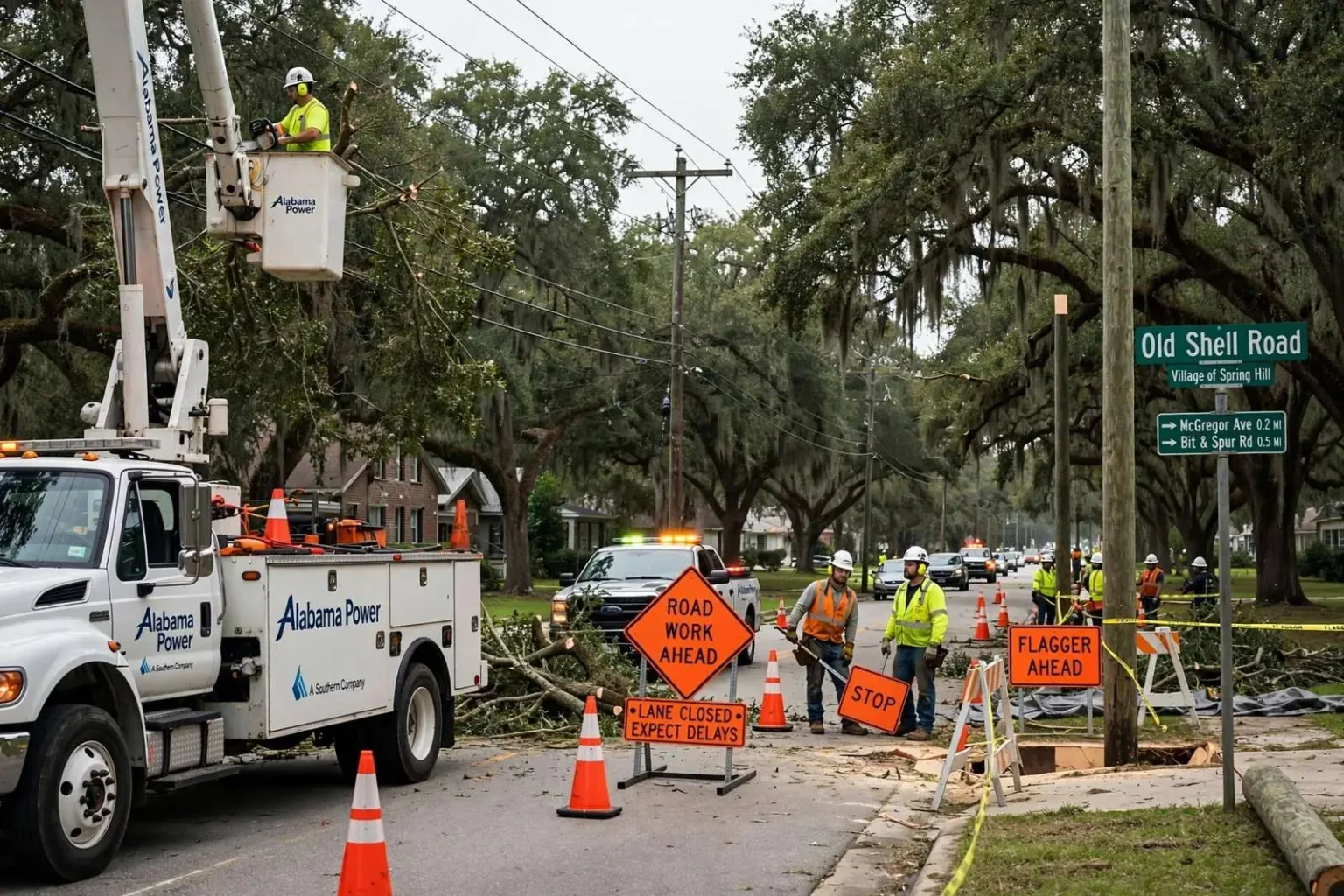
Drivers and residents along Old Shell Road in the Village of Spring Hill should expect ongoing lane closures and tree work in the coming months as Alabama Power replaces aging utility poles between McGregor Avenue and Bit and Spur Road.
The project, which has already begun, is expected to take several months to complete, according to Alabama Power spokeswoman Beth Thomas. Crews will remove and replace poles that sit adjacent to or embedded in the sidewalk along the busy corridor, a process that requires trimming trees near the lines and, in some cases, closing a single lane of traffic while work is underway at each pole location.
“Alabama Power trims trees regularly to protect the safety of our customers and our employees who maintain the power lines,” Thomas said. “Trimming trees also helps us as we work to keep electric service reliable for our customers.”
It remains unclear whether any trees will need to be removed outright as part of the project. Thomas said the company will work directly with property owners if a tree poses a safety risk, whether it stands on private land or within the public right-of-way.
“When trees on private property pose a danger to the public or our workers who maintain the power lines, Alabama Power works closely with private landowners to determine how we can best ensure that we provide a safe environment,” Thomas said. “That may include trimming trees or even cutting down trees if that is warranted. Many times, we are able to offer options to a land owner so that he or she can decide what actions they prefer us to take.”
For trees located in the city right-of-way, Alabama Power coordinates with Mobile’s Urban Forester and works within guidelines set by the city’s Tree Commission, Thomas said.
However, Tree Commission Chairman Jesse McDaniel said the utility isn’t required to seek the commission’s approval for this kind of work. He said Alabama Power has held a standing permit since the 1960s that allows the company to remove trees within the rights-of-way as it sees fit, bypassing the review process the commission would normally handle for other tree removal requests in public areas.
McDaniel said Alabama Power does send a representative to the commission’s meetings, a practice that has continued throughout his time as chairman. Even so, he said the commission had not been notified in advance about the specific pole-replacement work planned for Spring Hill.
Beyond the tree work, residents can also expect some sidewalk disruption. Thomas confirmed that small sections of sidewalk where old poles are currently embedded may need to be removed to make way for new poles. Any sidewalks damaged during the process will be repaired by the company once the new poles are in place, she said, though sections may be temporarily closed for public safety while crews are actively working in the area.
“Our contract crews will be working as quickly and as safely as they can to complete this work,” Thomas said. “Meanwhile, we encourage motorists to take an alternate route if possible or allow extra time when traveling in the area and please watch out for workers along the route.”
Old Shell Road is one of the more heavily traveled corridors connecting Spring Hill to downtown Mobile, and it regularly carries school, commuter and commercial traffic throughout the day. With lane closures expected to move along the route as crews complete each pole, residents who travel the corridor regularly may want to plan for delays and watch for flaggers or work crews near active pole sites in the weeks ahead.
This story unfolds across the distinctive landscape of South Alabama, a region defined by its pine forests, winding rivers, and Gulf Coastal Plain geography. The area’s communities—from the port city of Mobile to the agricultural heartlands of the Black Belt—share interconnected economies and histories shaped by timber, agriculture, shipping, and more recently, aerospace and advanced manufacturing. Local governance across county lines often coordinates on regional planning, workforce development, and infrastructure projects that affect residents throughout the southern tier of the state. The geography itself shapes daily life: low-lying coastal plains face hurricane exposure, while inland counties contend with river flooding and rural transportation challenges. Understanding the setting helps explain why local decisions carry weight far beyond municipal boundaries.
The institutions involved operate within Alabama’s framework of local governance, where county commissions, municipal councils, and independent boards each hold specific authorities granted by state statute. These bodies navigate budget cycles tied to ad valorem taxes, state allocations, and federal grants, balancing mandated services with community priorities. Intergovernmental agreements and regional councils of governments frequently facilitate cooperation on shared challenges like transportation corridors, waste management, and economic development recruitment. Public meetings and open records laws provide avenues for residents to follow decisions, while state agencies—from the Alabama Department of Environmental Management to the Department of Transportation—exercise regulatory and funding roles that ripple down to the local level. The interplay between local autonomy and state oversight is a recurring theme in how South Alabama communities address growth and change.
Economic activity in South Alabama reflects both deep-rooted industries and emerging sectors. The region’s forest products industry remains a cornerstone, while the Port of Mobile anchors global trade connections. Aerospace manufacturing has grown significantly around the Mobile Aeroplex at Brookley, and automotive suppliers feed assembly plants across the Southeast. Workforce development initiatives through community colleges and the Alabama Industrial Development Training program aim to align skills with employer needs. Broadband expansion and highway improvements—including the I-10 Mobile River Bridge project and I-65 corridor enhancements—address longstanding connectivity gaps that affect business recruitment and quality of life. Small businesses, agriculture, tourism, and the service sector round out a diverse regional economy that has weathered national downturns through a mix of resilience and adaptation.
The environmental context of South Alabama is inseparable from its waterways and Gulf coastline. The Mobile-Tensaw Delta, one of the nation’s most biodiverse river systems, filters freshwater into Mobile Bay while supporting fisheries, recreation, and flood mitigation. Coastal communities face recurring hurricane exposure and long-term sea-level considerations, shaping building codes, insurance markets, and emergency planning. Conservation efforts by organizations like the Alabama Coastal Foundation, The Nature Conservancy, and state agencies work to preserve critical habitat while balancing development pressures. Water quality monitoring, oyster reef restoration, and living shoreline projects represent collaborative approaches to sustaining the natural resources underpinning both ecology and economy. Inland, working forests and farmland form the backbone of a rural landscape where land use decisions carry generational significance.
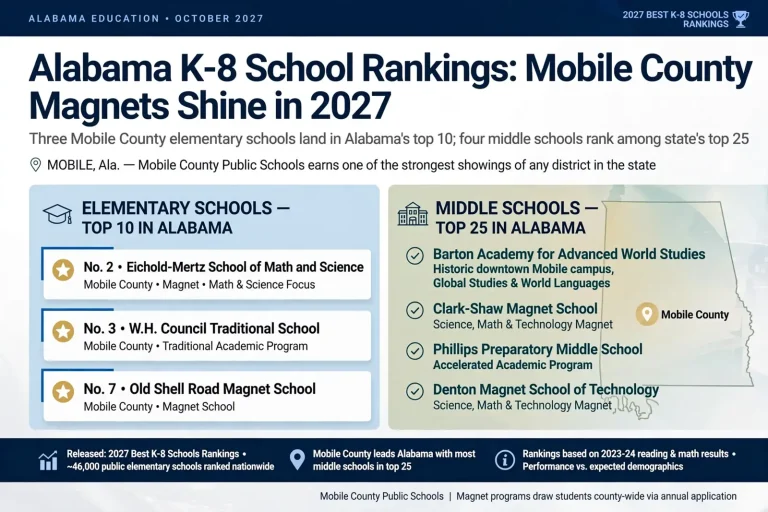
Education across South Alabama spans a network of public school districts, community colleges, and universities serving diverse student populations. The University of South Alabama in Mobile anchors higher education with medical, engineering, and marine science programs, while Troy University, Faulkner University, and Spring Hill College provide additional four-year options. The Alabama Community College System—including Coastal Alabama, Bishop State, Reid State, and Lurleen B. Wallace Community Colleges—delivers workforce training, dual enrollment, and transfer pathways. K-12 districts navigate state accountability measures, teacher recruitment challenges, and facility needs across urban, suburban, and rural settings, with local tax referendums often determining supplemental funding for programs and capital improvements. Partnerships between schools, employers, and nonprofits aim to keep opportunity tied to place, so that graduates can build careers without leaving the region.
The cultural fabric of South Alabama weaves together Indigenous heritage, colonial-era settlements, Civil War history, civil rights milestones, and enduring folk traditions. The region’s Mardi Gras traditions—centered in Mobile as the birthplace of North American Mardi Gras—coexist with community festivals celebrating shrimp, peanuts, watermelons, cattle, and maritime heritage. Historic districts in Mobile, Fairhope, Monroeville, and elsewhere preserve architectural character while supporting heritage tourism. The Alabama Historical Commission, local preservation societies, and the Alabama Trust for Historic Preservation work to protect significant sites. Oral history projects and university archives document the stories of communities shaped by agriculture, timber, shipbuilding, and the ongoing negotiation of identity in a rapidly changing South. These traditions not only enrich daily life but also anchor a sense of place that newcomers and longtime residents share.
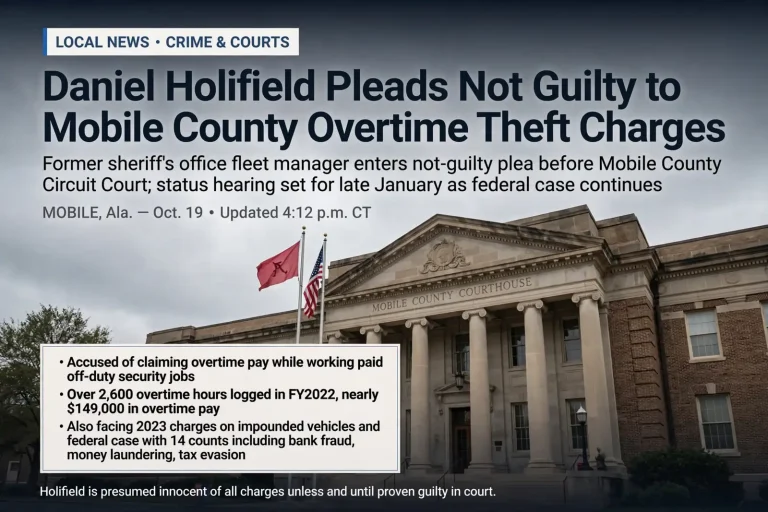
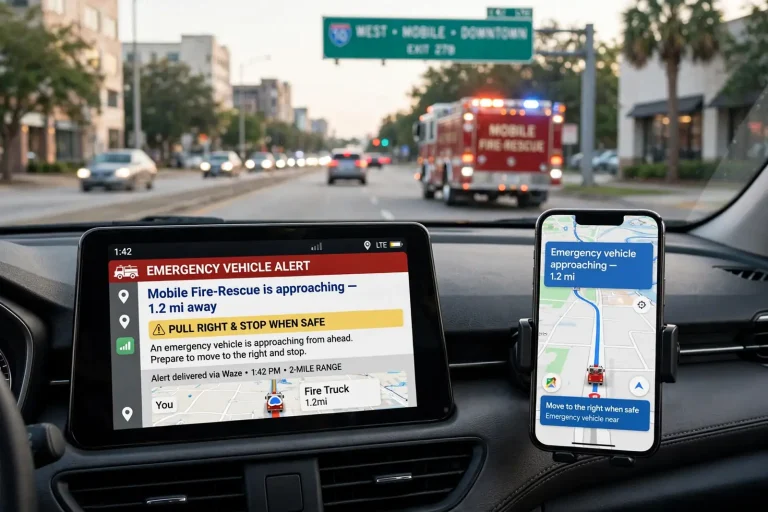
Public safety across South Alabama depends on layered coordination among municipal police, county sheriffs, state troopers, and federal partners. Sheriffs’ offices in rural counties often serve as the primary law enforcement presence, while city departments handle municipal policing and community outreach. Emergency management agencies at the county and state level plan for hurricanes, flooding, and other hazards, coordinating shelters, evacuations, and recovery aid. Fire districts, volunteer rescue squads, and emergency medical services bridge gaps in coverage where paid staffing is thin. The Alabama Law Enforcement Agency and programs like AMBER Alert and the state fusion center extend resources regionally. How these agencies communicate and cooperate—through joint task forces, mutual aid compacts, and shared dispatch systems—directly affects response times and community trust in the places where people live and work.
Animal welfare organizations across South Alabama operate with limited resources and a steady stream of need. Municipal animal shelters in Mobile, Baldwin, and neighboring counties manage intake, adoption, and reunification efforts, often partnering with nonprofit rescues that provide foster networks, spay-neuter assistance, and transport to out-of-region adopters. Volunteer-driven groups fill gaps that public funding cannot, relying on donations, fundraisers, and grant support to keep operations running. The Gulf Coast’s position as both a tourist destination and a growing residential region has increased demand for pet services, while rural areas contend with stray and feral populations that strain capacity. Community education on responsible ownership, microchipping, and low-cost veterinary care has emerged as a practical lever for reducing shelter overcrowding. Efforts like local giving campaigns demonstrate how resident participation can translate directly into care for animals that might otherwise go without.
As this situation continues to develop, stakeholders across the affected communities will monitor outcomes and adjust responses accordingly. The interconnected nature of South Alabama’s counties means that decisions in one jurisdiction often ripple outward, affecting neighbors in ways that underscore the value of regional communication and coordinated planning. Residents seeking to stay informed can engage with local government meetings, school board sessions, and community forums where these matters are discussed in public. The ongoing dialogue between officials, experts, and citizens reflects the democratic processes through which the region navigates change while preserving the character and resilience that define its communities. Continued attention from local news outlets helps ensure that decisions remain transparent and that the people most affected have the information they need to participate in shaping what happens next.