Alabama Power Defends Plant Barry Coal Ash Pond Closure Plan Amid Groundwater Concerns
Alabama Power is defending its plan to permanently cap in place the coal ash pond at Plant Barry, even as environmental groups question the utility's approach to groundwater contamination and dam safety along the Mobile River.
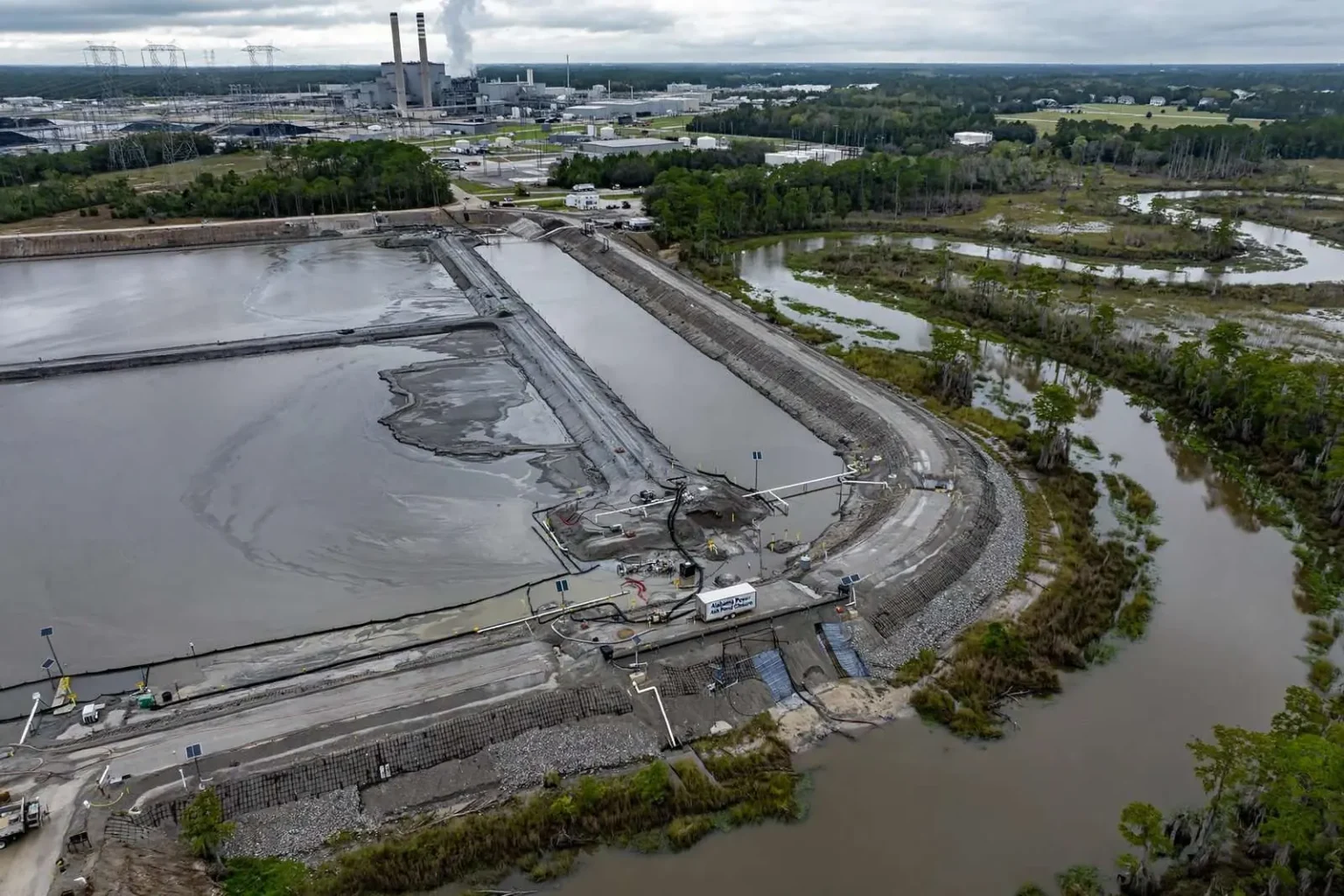
Alabama Power is standing behind its plan to permanently close the massive coal ash storage pond at Plant Barry using a cap-in-place method, even as environmental groups and Mobile County residents raise ongoing concerns about groundwater contamination near the site.
The 597-acre pond sits in an oxbow of the Mobile River at the James M. Barry Electric Generating Plant, where more than 21 million cubic yards of coal ash residue has accumulated over roughly 50 years of operation. The utility has said it stopped sending ash to all of its storage ponds statewide as of April 2019 and is now moving toward permanent closure of the impoundments, including the one at Plant Barry.
Alabama Power was fined in 2018 for groundwater contamination at six of its power plants across the state, including Plant Barry, and the company faced a similar penalty tied to contamination at the now-closed Plant Gadsden, which used the same cap-in-place closure method now planned for Barry. Company representatives say the safety of customers and surrounding communities remains the utility’s top priority and that it is committed to complying with all state and federal environmental regulations as it moves forward with closure.
Environmental advocacy groups, including Mobile Baykeeper, have published interactive mapping tools showing the scope of groundwater pollution linked to coal ash sites across Alabama, arguing the data underscores the risk posed by unlined, cap-in-place ash ponds sitting near waterways. Alabama Power has pushed back on the significance of that mapping, saying it contains no new information beyond what the company has already reported to the Alabama Department of Environmental Management and posted publicly on its own website.
Questions have also lingered about the structural safety of the earthen dam separating the ash pond from the Mobile River. The Environmental Protection Agency rated the dam a “significant” hazard in 2010. Alabama is also the only state without its own dam safety program or state-specific dam safety regulations.
Alabama Power maintains that its ash ponds have undergone rigorous, decades-long inspection programs, including annual reviews by licensed professional engineers and more frequent checks by plant personnel, and that no structural failure has ever occurred at any of its impoundments. According to the company, no ash was used in the original construction of the dike at Plant Barry, though some ash material was incorporated into a later extension of the uppermost portion of the structure.
That extension, the company says, raised the dike to an elevation three feet above the highest flood level ever recorded at the site and included reinforcements such as structural geogrid material for additional stability. The pond itself, Alabama Power says, is designed to manage at least a 1,000-year rain event.
The closure plan calls for dewatering the pond, consolidating the ash material into a smaller footprint, and capping it in place rather than excavating and hauling the material to a lined landfill elsewhere. Dewatering at Plant Barry is expected to begin later this year, according to the utility.
Alabama Power has said the permanent closure process is expected to take approximately 13 years and cost the company more than $2 billion across all of its ash pond closures statewide, including Barry. By the company’s own estimates, excavating and removing the material instead would cost three to five times more and take three to five times longer to complete.
The company says it considered excavation as part of its site-specific review process for every plant, but ultimately determined that closing in place, paired with additional engineering safeguards, was the more practical path forward at Barry and its other Alabama facilities. That decision has drawn scrutiny given that other Southern Company subsidiaries in different states, including Georgia Power, have opted to excavate at least a portion of their coal ash for disposal in lined landfills.
Alabama Power maintains that closure decisions are site-specific and that both the cap-in-place and excavation methods are considered equally protective under EPA rules, with Alabama’s own environmental regulators also permitting cap-in-place closures. Cost recovery for the closure work is also part of the broader conversation.
Alabama Power raised its rates earlier this year to help cover costs tied to compliance with federal environmental laws governing ash pond closures. The company says those costs, which stem from federal mandates, are recoverable through the state Public Service Commission and must be justified as reasonable, with any reduction in the underlying environmental costs over time factored back into future rate calculations.
Alabama Power has also pointed to major coal ash-related accidents elsewhere in the country, including the 2008 TVA-Kingston spill in Tennessee and the 2014 Duke Energy Dan River spill in North Carolina, both of which triggered cleanups exceeding $1 billion. The company argues that comparisons between those incidents and the ash pond at Plant Barry are misleading, saying the design, topography and site conditions at Barry are not comparable to the facilities involved in those earlier disasters.
As part of its closure commitments, Alabama Power says it will monitor groundwater around the Plant Barry site for at least 30 years to help ensure long-term protection of local water quality. The company also points to a broader environmental record in the region, saying it has invested more than $4 billion over the past 15 years in environmental controls across its power plants and has partnered with groups such as the Nature Conservancy, the Alabama Department of Conservation and Natural Resources, the U.S. Fish and Wildlife Service and the Mobile Bay National Estuary Program on habitat restoration, shoreline recovery and other conservation initiatives in the Mobile area.
The federal rules behind the closure
Coal ash disposal at power plants is governed by the EPA’s Coal Combustion Residuals rule, adopted in 2015, which sets national standards for ash ponds, including groundwater monitoring and requirements for how unlined ponds must be closed. The rule allows two closure approaches: removing the ash, or leaving it in place under a cover system, which is the method Alabama Power has chosen for Barry. Plant Barry is located near Bucks in north Mobile County.