Annunciation Greek Orthodox Church Moves Closer to 3.58-Acre Campus as Mobile Planning Commission Approves Subdivisions
The Mobile Planning Commission approved two subdivisions and recommended changes to Annunciation Greek Orthodox Church's development approvals, a step toward an approximately 3.58-acre campus at 50 South Ann Street. No immediate construction is planned.
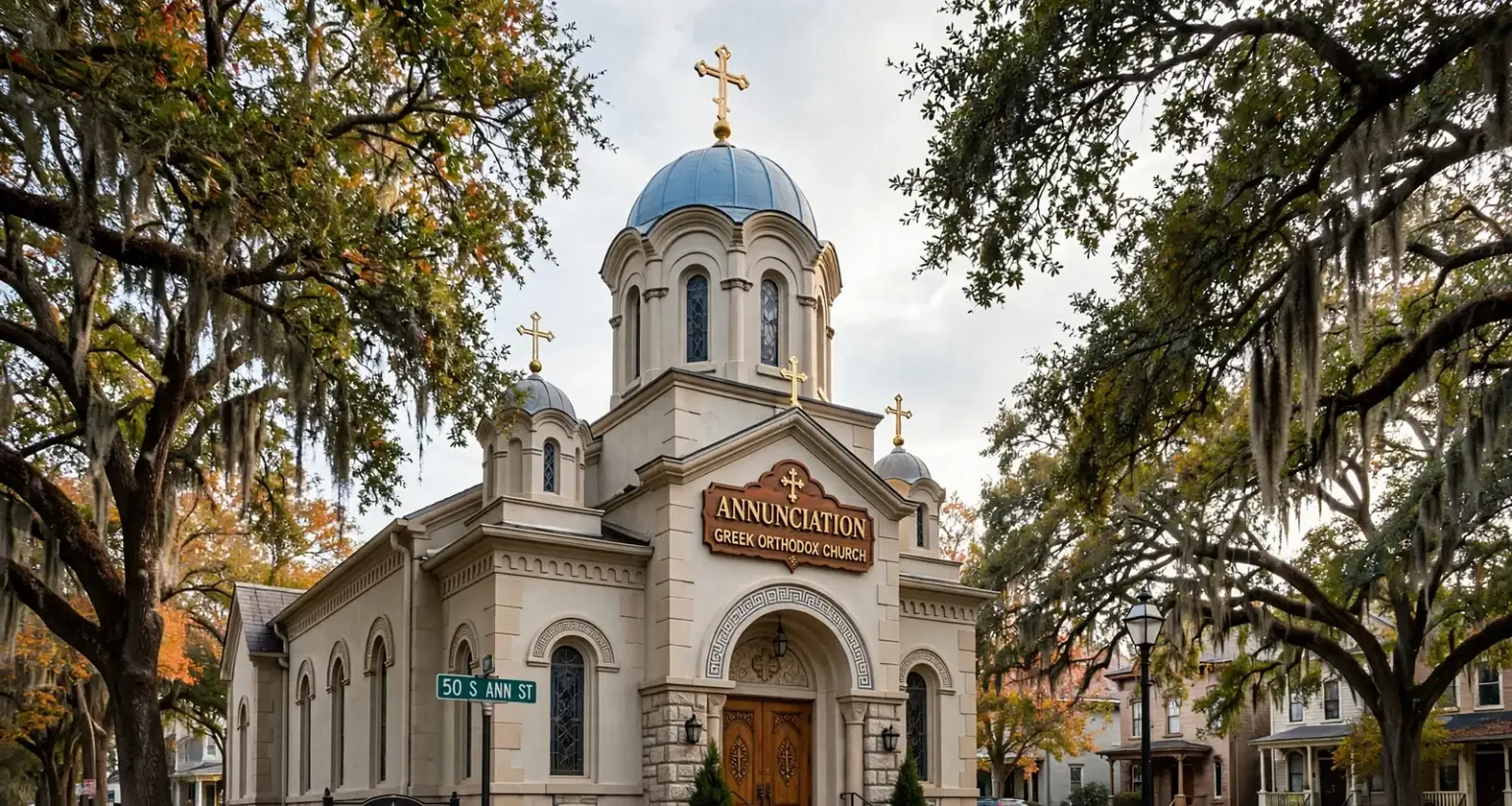
MOBILE, Ala. — Annunciation Greek Orthodox Church moved a step closer to expanding its property in Midtown Mobile on Thursday, Oct. 15, when the Mobile Planning Commission approved two related subdivisions and recommended changes to the church’s existing development approvals.
If the remaining steps are completed, the church at 50 South Ann Street would grow into a campus of approximately 3.58 acres. Church representatives said no immediate construction is planned.
What the commission approved
The project involves adjoining properties at 59 and 61 Bradford Avenue and 1311 Azalea Street, which border the church property.
Under the plan, three smaller parcels carved from the rear of those properties would be incorporated into the church’s land, creating the roughly 3.58-acre campus. Three separate residential lots would remain facing the streets.
The Planning Commission approved both subdivisions. It also recommended approval of modifications to the church’s existing Planning Approval and Planned Unit Development, the documents that govern how the church property can be used and developed.
Two rental homes must come down first
The approval comes with a condition. Two existing rental dwelling units must be demolished, with the necessary permits obtained, before the subdivision plat can be finalized.
A subdivision plat is the official map that records how land is divided into lots. Until the plat is finalized and recorded, the new property lines are not official. Requiring the rental units to be removed first ensures that no structures end up straddling the new boundaries or sitting on land that becomes part of the church campus.
A church member’s role
During the hearing, the applicant’s representative explained that a church member is involved in acquiring the adjoining property and donating portions of it to the church.
Gregory Saad of Saad Development Corp. is listed as the applicants’ representative.
That arrangement explains the shape of the plan. Rather than the church buying entire residential properties outright, the rear portions of the lots would be added to the church grounds while the front portions remain as residential lots.
No construction planned yet
The representative said there are no immediate construction plans. Instead, the church intends to consider a comprehensive development plan for the enlarged property in the future.
This is not the first time the church has looked at expanding. Annunciation previously received expansion approval in 2007, including a proposed large pavilion that apparently was never built.
Taking the time to assemble the land first and plan later gives the congregation flexibility. With a larger, consolidated property, the church can design a long-range plan for parking, gathering space or other facilities rather than fitting projects onto a smaller site piece by piece.
Understanding Planning Approval and PUDs
In Mobile, churches and other institutional uses in residential areas often require Planning Approval, which allows the city to review how a use fits into the surrounding neighborhood. A Planned Unit Development, or PUD, is a site-specific approval that ties development on a property to an approved site plan, allowing flexibility in layout while giving the city a say in what is built.
Because the church’s footprint is changing, its existing Planning Approval and PUD need to be modified to reflect the larger property. Those modifications are what the commission recommended for approval.
City Council has the final say
The modifications to the Planning Approval and PUD require final approval from the Mobile City Council. The Planning Commission’s role on those items is to make a recommendation.
Any future development on the property must also comply with the requirements of the Old Dauphin Way Historic District. The district is one of Mobile’s designated historic neighborhoods, known for its tree-lined streets and late 19th- and early 20th-century homes. New construction and exterior changes in historic districts typically go through additional review to make sure they fit the character of the area.
A busy month for Annunciation
The Planning Commission action came during the same week that Annunciation hosted the Mobile Greek Festival, held Oct. 15-17. The annual festival is one of the city’s best-known cultural events, drawing crowds for Greek food, music and dance, and it reflects the church’s long presence in Mobile’s community life.
Other business at the same meeting
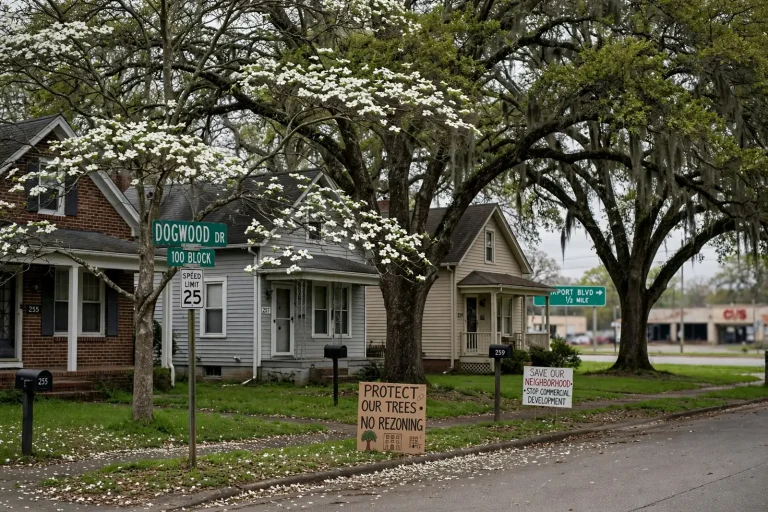
The Oct. 15 Planning Commission meeting handled several other notable items. Commissioners declined to advance a contested rezoning request on Dogwood Drive near Airport and University boulevards after neighbors objected, and a Greer’s Ace Hardware and Greer’s Spirits project downtown cleared the commission.
At a glance
- Church: Annunciation Greek Orthodox Church, 50 South Ann Street
- Adjoining properties: 59 and 61 Bradford Avenue and 1311 Azalea Street
- Result: Three rear parcels added to church property, creating an approximately 3.58-acre campus; three residential lots remain
- Condition: Two rental dwelling units must be demolished, with permits, before the plat is finalized
- Commission action: Approved both subdivisions; recommended approval of Planning Approval and PUD modifications
- Next step: Mobile City Council must approve the Planning Approval and PUD changes
- Construction: None planned immediately; a comprehensive development plan may come later
- Historic district: Future development must meet Old Dauphin Way Historic District requirements
Neighbors and church members interested in the project can follow it when the Planning Approval and PUD modifications go before the Mobile City Council.