Atmore Turns Gold for Childhood Cancer Awareness in Memory of Denver Shuttlesworth
Atmore Flower Shop is selling gold bows in memory of Denver Shuttlesworth, raising money for St. Jude Children's Research Hospital.
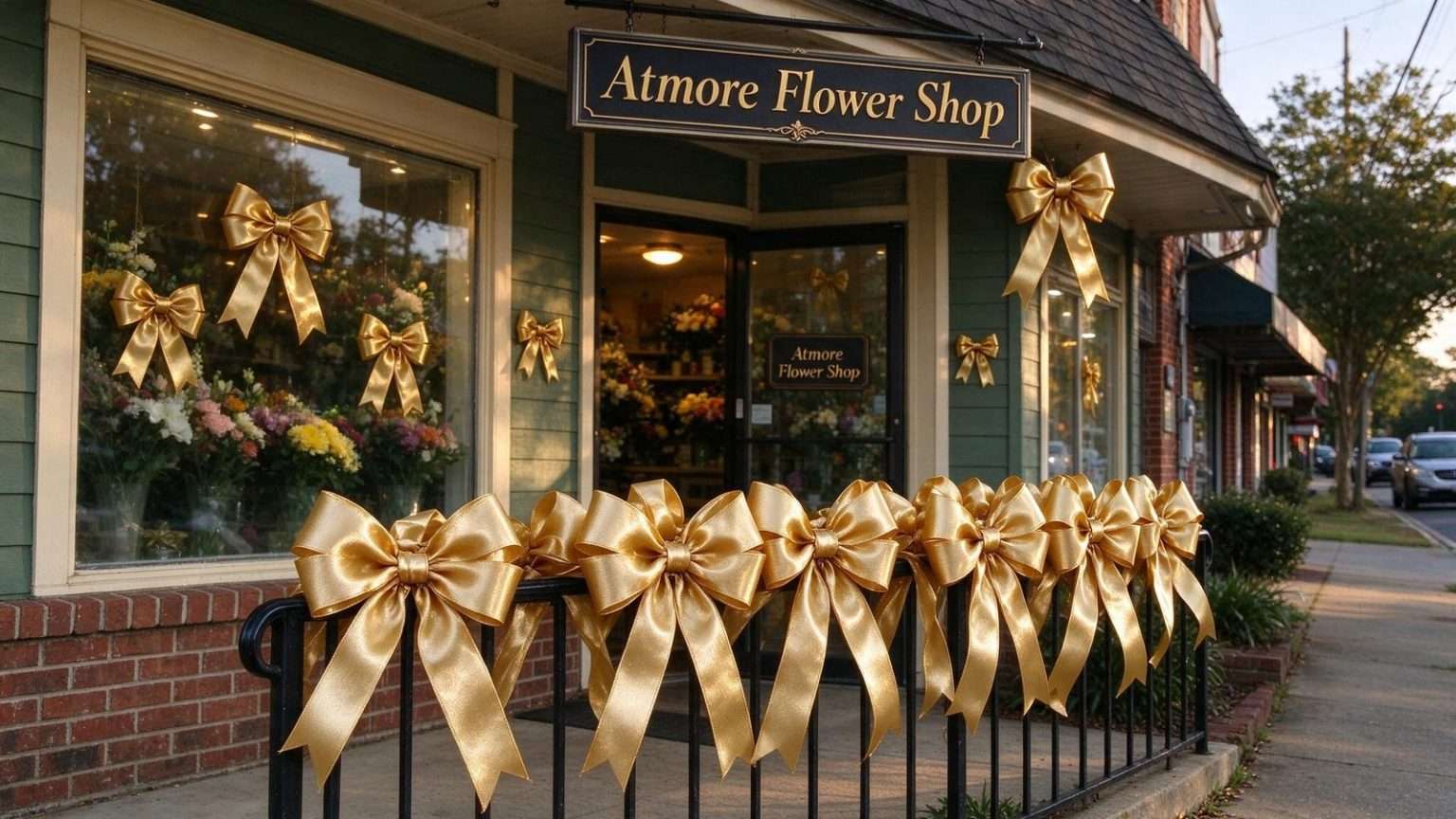
Atmore is dressed in gold this September as the community rallies around Childhood Cancer Awareness Month and remembers a young man who spent years fighting the disease. The gold ribbons and bows appearing around town are part of a national observance that turns September into a month of awareness for childhood cancer — but in Atmore, the observance carries a face and a name that everyone knows.
Denver Shuttlesworth, a 19-year-old Atmore native, battled cancer for several years before dying on September 6, 2018. In his honor, a longtime local business is turning the town gold one bow at a time, converting grief into fundraising and a private loss into a public cause. The effort has grown far beyond anything its organizer imagined when she started it.
Hundreds of bows for a hometown cause
Joyce Petty, who has owned the Atmore Flower Shop for more than 25 years, began selling gold bows to raise money for childhood cancer research. She expected to sell 25 or 30. Instead, orders climbed past 200, with five dollars from each bow covering costs and another five dollars going directly to St. Jude Children’s Research Hospital to fund research. The math of the response tells its own story — a project sized for a few dozen neighbors outgrew its expectations tenfold within days.
Petty said customers new and old have stopped in specifically asking for the gold bows, some making donations without buying anything at all. That kind of response is familiar in small towns like Atmore, where a community’s grief and generosity tend to move together, but the scale has been striking even by local standards. Bows have gone up on homes, storefronts and porches around town, marking Atmore in the color that represents children fighting cancer.
The decision to route the money to St. Jude connects the fundraiser to one of the most respected research institutions in the world. St. Jude Children’s Research Hospital, based in Memphis, Tennessee, treats children with cancer and other catastrophic diseases regardless of a family’s ability to pay, and its research breakthroughs have helped drive dramatic improvements in childhood cancer survival rates over the past half-century. For a family in Atmore, St. Jude is a realistic resource — close enough for treatment trips, and famously free of the bills that can otherwise overwhelm families already facing the worst news of their lives.
Remembering Denver Shuttlesworth
Petty described Shuttlesworth as a 2017 graduate who loved fishing, hunting and Alabama football. The portrait that emerges is a familiar one for a young man of his generation in south Alabama — someone equally at home on the water, in the woods, or in front of a television on a fall Saturday afternoon, with the Crimson Tide on and the whole town pulling in the same direction.
His years fighting the disease made him one of the children and young people that Childhood Cancer Awareness Month exists to recognize. Families who navigate cancer with a child describe a long road of treatments, hospital stays and cycles of hope and setback — a road that parents, siblings and entire communities travel together. In Atmore, that road was not Denver’s alone; a town of neighbors watched and rooted for him through it.
Shuttlesworth’s funeral was set for September 11. The observance around his life and the fundraiser in his memory have unfolded side by side through the month, and the gold bows around town serve as both tribute and rallying point — a visible reminder, at every porch and shop that displays one, of why the research dollars matter.
The gold ribbon and what it represents
Gold was chosen as the color of childhood cancer awareness because gold is precious — the idea being that children are more precious than any treasure. September’s observance grew from that symbolism into a coordinated national campaign, with landmarks illuminated in gold, fundraising drives launched, and families sharing their stories to push research funding forward. Childhood cancer remains the leading cause of disease-related death for children in the United States, and awareness campaigns like the one Atmore has embraced are part of how research organizations keep the issue in front of the public and the policymakers.
Local observances carry particular weight because they translate an abstract national problem into faces and names. National statistics can feel distant; a 19-year-old graduate from down the street does not. When a town like Atmore ties its September awareness effort to a young man the whole community watched grow up, the cause stops being a ribbon color and becomes personal — which is exactly what turns sympathy into donations.
Small towns and big generosity
The bow fundraiser is also a study in how small-town businesses anchor community responses. A flower shop occupies a particular place in a town’s life: it is where the community marks its weddings, its holidays and, inevitably, its losses. Petty’s quarter-century behind the counter of the Atmore Flower Shop has made her shop one of the places where the town’s joys and sorrows pass through, so it is fitting that the town’s response to Shuttlesworth’s death would be organized from behind her counter.
Her plan to keep her own gold bow up through the rest of the month in support of the fight against childhood cancer extends the gesture beyond the fundraiser itself. A bow displayed on a business is a small thing — a few dollars of ribbon and wire — but strung across a town over the course of a month, the bows amount to a public statement: this community knows what childhood cancer costs, and it intends to do something about it.
The dollars raised through the effort flow to research, which is where organizations like St. Jude say the difference gets made. Survival rates for many childhood cancers have climbed dramatically over the past several decades, improvements that researchers attribute directly to the clinical trials and lab work that donations fund. Every five-dollar share of a bow’s price in Atmore joins a stream of contributions from communities across the country that keeps that work moving.
A community’s way forward
For Atmore, September has become a month with a double weight: the annual call for awareness, and the very recent, very local loss of one of its own. The gold bows manage both at once — honoring Shuttlesworth’s memory while directing the town’s energy toward the broader fight that took him.
The response also demonstrates something small towns know well: that modest efforts can grow quickly when a community gets behind them. A flower shop owner expecting to sell a few dozen bows found orders passing two hundred within weeks, with customers giving money without taking anything in return. Scale like that does not come from advertising; it comes from a town that already knew the young man the effort honors and did not need convincing that the cause was worthy.
The bows will come down eventually, as observances do, but the work they funded will not. Research continues, families continue to fight, and the awareness that Atmore has built this September — one gold bow at a time — becomes part of the town’s way of showing up for its children, in memory of a young man who loved this town’s rivers, woods and football Saturdays, and who gave the community that remembers him a reason to fight for the ones still battling.
What comes after September
Childhood Cancer Awareness Month ends when October arrives, but the needs it highlights do not. Families across Escambia County and southwest Alabama continue to face diagnoses, treatment schedules and the financial strain that comes with both, and research hospitals like St. Jude continue their work funded by the steady accumulation of community gifts like Atmore’s. The gold bows will come down; the question each October through August is whether the awareness built in September carries into the rest of the year.
Towns like Atmore have an answer to that question that larger communities sometimes struggle to match: they remember. A 2017 graduate’s love of fishing and Alabama football will be recounted at ballgames and hunting camps for years, and the flower shop that organized this September’s effort will still be at the center of the town’s life next September when the ribbons go up again. Grief in a small town is a long commitment, and so is the generosity that accompanies it.
For now, the month’s work continues — orders still arriving at the Atmore Flower Shop, bows still appearing around town, and a goal that has long since outgrown its first estimate still growing. It is, by any measure, a remarkable response to a heartbreaking occasion, and it says something lasting about the town that produced it.