‘Baby Shark Live!’ Canceled Altogether at Mobile Saenger Theatre
The Baby Shark Live! show at Mobile Saenger Theatre is canceled due to COVID-19. Here's how Ticketmaster and box office buyers get refunds.
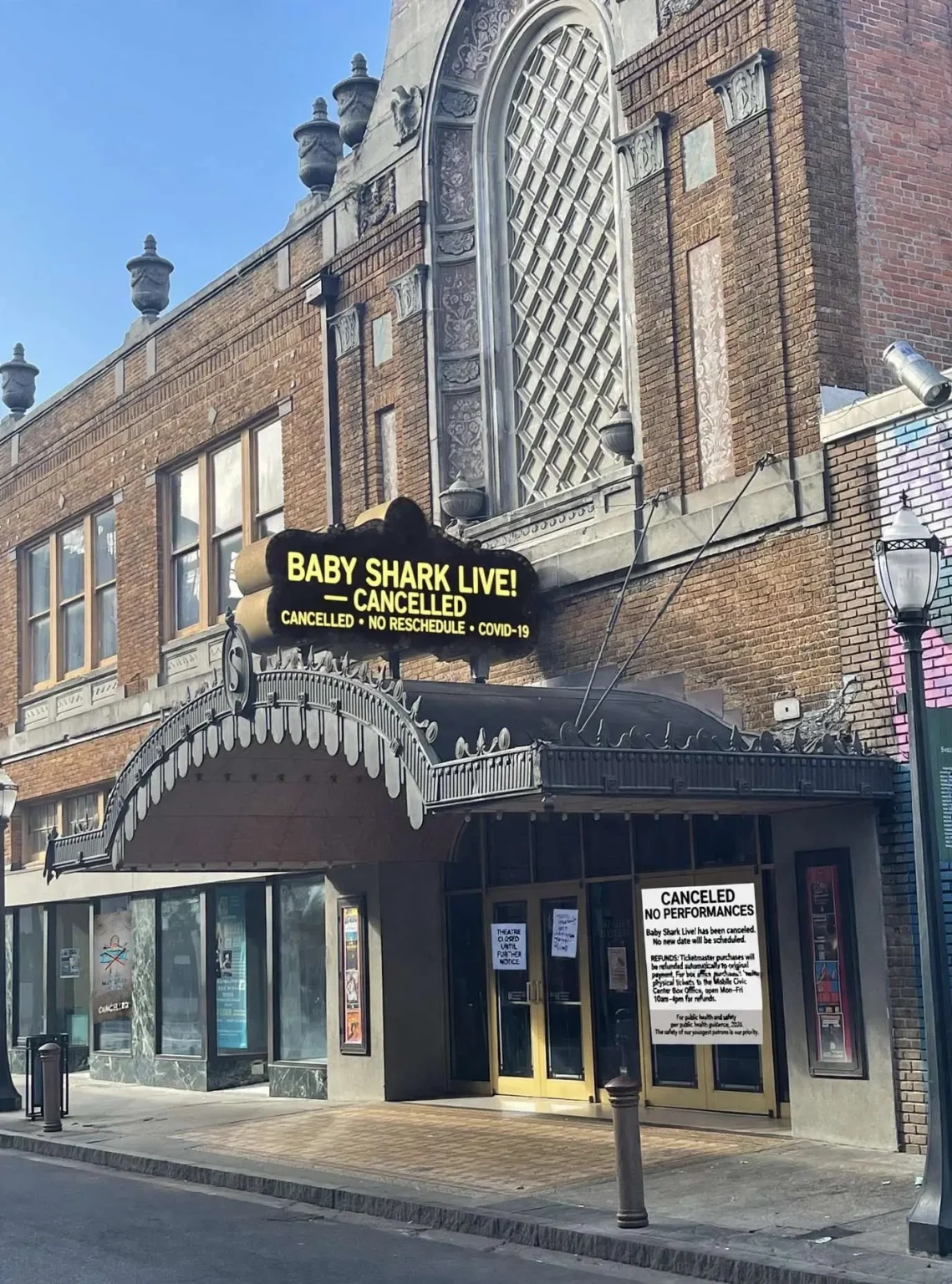
MOBILE, Ala. — Families hoping to see “Baby Shark Live!” at downtown Mobile’s historic Saenger Theatre are out of luck: the children’s stage show has been canceled outright rather than rescheduled, a casualty of the ongoing COVID-19 pandemic. The touring production, built around the wildly popular “Baby Shark” song, had originally been expected to shift to a new date. Instead, venue officials announced the engagement was off for good.
The announcement was a blow to the local families who had planned their calendars around it. “Baby Shark Live!” is not a typical concert stop — it is a full stage production aimed squarely at preschoolers, complete with costumed characters, sing-along choreography and the kind of production design built to hold the attention of an audience that measures its age in single digits. For parents of young children along the Gulf Coast, the show represented one of the few touring productions sized for the smallest fans, and tickets to the Saenger date were snapped up by families planning their kids’ first live theater experience.
The outright cancellation also carried a message beyond this single show. Rescheduling had been the default move of the pandemic’s early months: venues pushed spring dates to the fall, then the fall dates to the following year, assuming the virus’s disruption would be measured in weeks. By the time this production’s reroute was abandoned entirely, the touring industry had learned that nobody — promoters, venues or families — could predict when large indoor gatherings would be safe again, and indefinite postponements were giving way to clean cancellations.
Refunds Available
“We had hoped to proceed with a new performance date, but due to the continuously evolving situation, we have been advised to take this unfortunate action,” the Saenger Theatre said in a statement. “The safety and health of our audiences is our highest priority and we encourage everyone to follow the guidelines put forth by public health officials.”
The statement’s language — “advised to take this unfortunate action” — reflected the layered decision-making of 2020’s entertainment economy. Touring productions, booking agencies and venue managements consulted public health guidance, state gathering limits and their own insurers before canceling engagements outright. For a family show in particular, the calculus was unforgiving: the audience is composed almost entirely of children too young to vaccinate, and parents who would have accepted risk for themselves were far less willing to accept it for a three-year-old in a crowded theater.
Ticket holders have two paths to their money back. Orders placed through Ticketmaster will be refunded automatically, with no action required. Patrons who bought hard tickets at the box office should bring them to the Mobile Civic Center Box Office to receive a refund. The split reflects how ticketing actually worked at the Saenger: most online and phone orders flowed through the Ticketmaster system, which could reverse charges to the original payment method without any paperwork from the buyer, while cash and in-person purchases had to be handled face to face.
Box office refunds required the physical tickets themselves — a detail worth noting for families who tucked them in drawers after buying. The Mobile Civic Center Box Office, a short walk from the Saenger in the heart of downtown’s civic district, handles such transactions for the city’s cultural venues, and patrons were encouraged to bring the entire order, including any service stubs, to speed the process.
The cancellation was one more ripple from the pandemic, which emptied performing arts venues across the Gulf Coast in 2020 as tours shut down and theaters went dark to comply with public health guidance. The Saenger Theatre itself — the grand 1920s movie palace on Dauphin Street that anchors downtown Mobile’s live entertainment calendar — sat silent through the spring and summer, its marquee dark for a stretch longer than at any time in its modern history.
The economics of a canceled touring show ripple outward in ways most ticketholders never see. A single engagement at a theater the Saenger’s size means days of work for local stagehands, sound and lighting technicians, ushers, box office staff and the nearby restaurants and bars that absorb a pre-show and post-show crowd. Family matinees bring their own pattern: grandparents, strollers parked in lobbies, and lunch reservations on Dauphin Street after the final bow. None of that revenue appears on the cancellation announcement, but all of it disappears with the show.
For the touring production itself, the losses compound across an entire route. A children’s show lives on densely booked runs through mid-sized markets — exactly the theaters, like the Saenger, that make a national tour viable. When a date cancels, the production loses the revenue but keeps the payroll; when enough dates cancel, the tour itself becomes unsustainable, which is how a viral phenomenon with a household-name hook ended up going dark along with everything else in 2020.
“Baby Shark” had become a genuine cultural force in the years before the pandemic. The simple children’s song, driven to global ubiquity by its videos and its earworm repetition, broke into the Billboard Hot 100 and became one of the most-viewed pieces of video content in internet history. The live tour translated that digital fame into theaters, betting that toddlers who knew every word would beg their parents for tickets. For a season, it worked — until the pandemic removed the audience from every theater in the country at once.
For Mobile families, the practical takeaway was straightforward: the show will not return on a new date, automatic refunds are already in motion for Ticketmaster orders, and box office purchases need only a trip to the Civic Center to be made whole. For the Saenger, the cancellation joined a long line of 2020 losses — but the theater’s management emphasized the same promise venues across the Gulf Coast were making that spring: the safety of the audience comes first, and the shows will come back when public health officials say the coast is clear.
The Saenger’s closure period hit a venue that had only recently completed its own comeback story. The theater, which opened in 1927 as a grand movie palace and survived decades of downtown decline, was restored and returned to service as the city’s premier mid-sized performance hall, hosting touring Broadway productions, comedians, concerts and community events that fill the gap between the Civic Center’s arena-scale shows and the small clubs along Dauphin Street. Its operations depend almost entirely on event revenue, which made the pandemic shutdown an existential stretch for the building and the nonprofit and city partners behind it.
Families who held tickets found themselves in one of the pandemic’s smallest disappointments, but for parents of toddlers those disappointments landed hard. A canceled arena concert can be rescheduled into adult lives that stretch for decades; a canceled preschool show exists inside a window of childhood that closes quickly. The three-year-old who bought tickets to sing along with Baby Shark will outgrow the show before any rescheduled date could arrive — a reality every family production navigating 2020 faced, and one reason outright cancellation was more honest than another postponement.
The Saenger’s statement also captured the tone venues were striking across the region that spring: apologetic but firm on safety. Audiences had been reading headlines about gathering restrictions changing week to week, and venue operators understood that confidence, once lost, is expensive to rebuild. Canceling cleanly, refunding promptly and explaining the reasoning were all part of keeping ticketholders willing to return when lights came back up — a lesson the live entertainment industry absorbed collectively during the shutdown.
The wider performing arts ecosystem along the Gulf Coast took the same hits in the same months. Pensacola’s theaters went dark, the Mobile Symphony and Mobile Opera suspended seasons, and the Civic Center’s own calendar emptied of the concerts and shows that normally pass through the port city on national tours. Cancellations that spring were announced in a grim drumbeat — each one a separate email to ticketholders, a separate settlement between promoter and venue, and a separate loss of work for the local crews who stage every visiting production.
Against that backdrop, the automatic Ticketmaster refund mattered as a small gesture of good faith. The live industry’s treatment of ticket buyers during the shutdown became an early test of its relationship with the public: venues and ticketing platforms that refunded quickly and completely earned goodwill, while those that sat on cancellations or pushed credit-only policies drew justified anger. Mobile’s path — no action required for online orders, a simple window refund for box office purchases — put the venue on the right side of that test and let families close the book on the canceled date with their money back and their patience intact.