Baldwin County High FCA Sells Jambalaya Oct. 28 to Help Girl Awaiting Liver Transplant
Baldwin County High School's FCA club will sell $7 jambalaya bowls Oct. 28 in Bay Minette, with all proceeds going to COTA for Rosalynn, a 6-year-old awaiting a liver transplant.
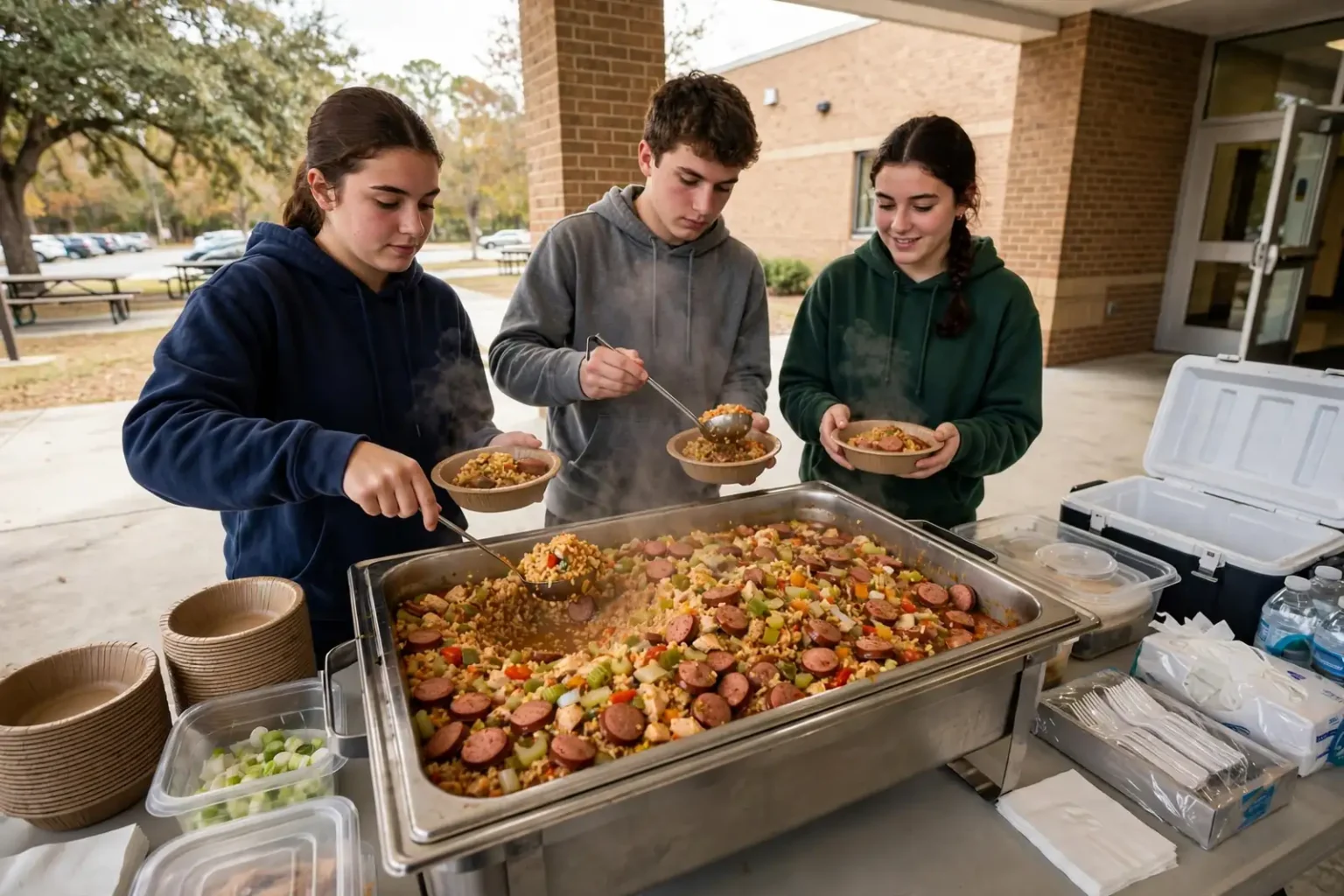
BAY MINETTE, Ala. — The Fellowship of Christian Athletes club at Baldwin County High School will sell jambalaya at lunch on Wednesday, Oct. 28, to raise money for 6-year-old Rosalynn Randall, who is waiting for a liver transplant. Every dollar from the fundraiser will go to COTA for Rosalynn, a campaign helping her family pay for transplant-related costs.
Bowls of chicken and Conecuh sausage jambalaya served over rice will cost $7. Students will be able to buy them during lunch, and community members who do not attend the school are invited to pick up bowls outside the cafeteria, near the student parking lot, from 11 to 11:20 a.m.
At a glance
- What: Jambalaya fundraiser for COTA for Rosalynn
- Hosted by: Baldwin County High School Fellowship of Christian Athletes club
- When: Wednesday, Oct. 28, during lunch; community pickup 11-11:20 a.m.
- Where: Outside the Baldwin County High School cafeteria, near the student parking lot, in Bay Minette
- Cost: $7 per bowl of chicken and Conecuh sausage jambalaya with rice
- Proceeds: 100% to COTA for Rosalynn
Because the community pickup window is just 20 minutes, people planning to stop by may want to arrive on time. Those who cannot make it can support the campaign online through COTA.
Why the family is raising money
Rosalynn has Alpha-1 Antitrypsin Deficiency, a rare genetic condition that has severely scarred her liver. Her liver can no longer work well enough on its own, and she has been placed on the transplant waiting list at Children’s of Alabama in Birmingham.
Her family is working with the Children’s Organ Transplant Association to raise $250,000. The money is meant to cover transplant-related costs that insurance does not pay, along with recovery expenses, travel, lodging and the lifelong medical care that follows a transplant. Her medications and checkups alone are expected to cost about $8,000 a year.
Understanding Alpha-1 Antitrypsin Deficiency
Alpha-1 Antitrypsin Deficiency is an inherited condition that affects a protein called alpha-1 antitrypsin, which is made in the liver and normally helps protect the lungs. In some forms of the condition, the protein is shaped abnormally and builds up inside liver cells instead of being released into the bloodstream. Over time, that buildup can damage the liver and lead to scarring, known as fibrosis or cirrhosis.
The condition can affect people at different ages and in different ways. In some children it causes liver disease, while in many adults it is more often associated with lung problems such as emphysema. Because it is genetic, it is passed down through families, and a child must typically inherit an affected gene from each parent to develop the most serious forms. When liver damage becomes severe, a transplant can be the main treatment option.
How the transplant waiting list works
In the United States, the national Organ Procurement and Transplantation Network manages the system that matches donated organs with patients who need them. When a donor organ becomes available, a computer system generates a list of potential recipients based on medical factors such as blood type, body size, how urgently the patient needs a transplant and distance between the donor and the transplant hospital. Children receive certain priorities in the allocation of organs from pediatric donors.
For liver patients, there is another possibility. Because the liver can regenerate, a healthy adult can sometimes donate part of his or her liver to a patient in what is called a living donor transplant. Transplant teams decide which options are appropriate for each patient.
Even after a successful transplant, recipients usually take anti-rejection medications for the rest of their lives and need regular follow-up visits and lab work. Those ongoing needs are part of why families often face significant costs long after the surgery itself.
About COTA
The Children’s Organ Transplant Association, known as COTA, is a national nonprofit founded in 1986 in Bloomington, Indiana. It helps families of children and young adults who need life-saving transplants by organizing community fundraising campaigns in honor of each patient.
COTA trains local volunteers to run campaigns and provides marketing support. Donations are made in honor of a specific patient and are used only for transplant-related expenses, such as lodging, transportation and prescription medications. COTA does not charge families for its services. The organization reports that it has raised more than $160 million since 1986 and supported thousands of patients.
About the Fellowship of Christian Athletes
The Fellowship of Christian Athletes is a national Christian sports ministry founded in 1954 and based in Kansas City, Missouri. It works with athletes and coaches at the middle school, high school, college and professional levels, and its school-based groups, often called huddles or clubs, are typically led by students with the support of coaches or other adult sponsors. Many FCA chapters take on service projects in their schools and communities, like the Baldwin County High fundraiser.
About Baldwin County High School
Baldwin County High School is a Baldwin County Public Schools high school in Bay Minette, the county seat. The school, whose teams are known as the Tigers, serves students from Bay Minette and surrounding communities in north Baldwin County.
A south Alabama staple on the menu
The jambalaya will feature Conecuh sausage, a smoked sausage made in Evergreen, in neighboring Conecuh County. The Conecuh Sausage Co. has been making it since 1947, and it has become a fixture at tailgates, church suppers and fundraisers across south Alabama.
Other ways to help
Community members who want to support Rosalynn’s family can buy a bowl at the Oct. 28 lunch or give online through the COTA for Rosalynn campaign page on COTA’s website.
Anyone who wants to help transplant patients more broadly can also register as an organ, eye and tissue donor. In Alabama, residents can sign up when they get or renew a driver’s license or state ID, or online through Donate Life Alabama. Legacy of Hope, formerly the Alabama Organ Center, is the organ procurement organization that coordinates donation in Alabama. Registering takes only a few minutes, and families are encouraged to talk about their wishes with one another.