

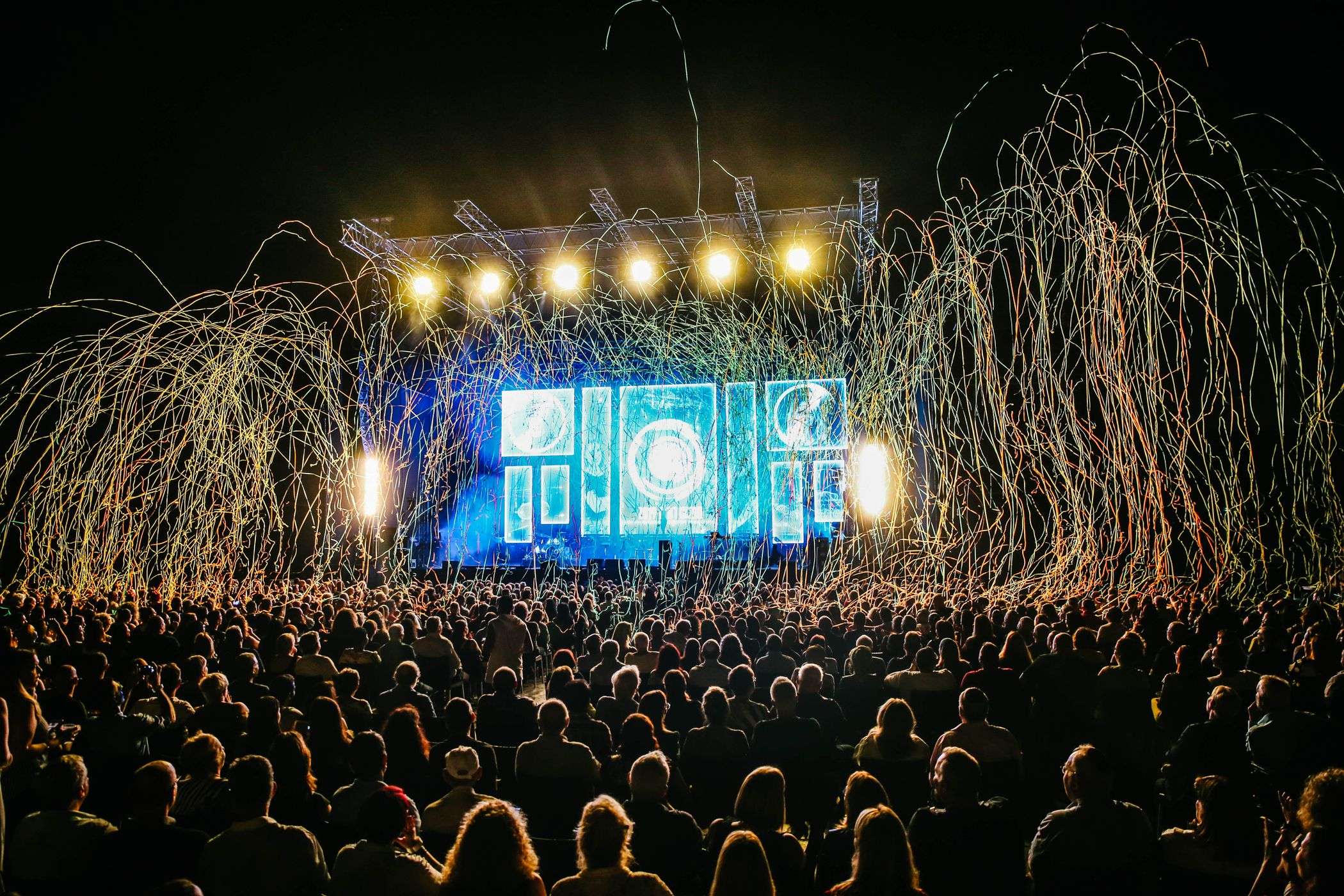
Word is spreading across the Wiregrass that a country music entertainment complex on a scale never before attempted in Alabama could be headed for the Enterprise area, and if the plans announced this spring come anywhere close to reality, they would reshape the region’s identity for a generation. According to a press release posted March 10 on BamaJam’s website, a group led by Alabama businessman Ronnie Gilley of Ronnie Gilley Properties, LLC, in partnership with country music star Kix Brooks of the duo Brooks & Dunn, intends to build what has been described as a “Nashville in Alabama” near Dothan — an ambitious, roughly $300 million entertainment destination that organizers are positioning as a Southern answer to Branson, Missouri.
Rumors Years in the Making
For anyone who has spent time around Coffee and Houston counties over the past couple of years, the announcement will not come as a total surprise. Whispers that a major country music figure had set his sights on the Wiregrass have circulated locally since around 2006. Early versions of the rumor centered on country legend George Jones, who was said to be exploring a restaurant venture called “Possum Holler,” reportedly with fellow star Toby Keith as a business partner. That specific plan never materialized publicly.
A separate and more elaborate rumor held that Jones was quietly working to purchase much of the historic downtown of New Brockton, a small Coffee County town just outside Enterprise, along with large tracts of surrounding land. The idea, as it was described around town, was to remake the community into an idealized, old-fashioned Southern village — evoking the fictional Mayberry of “The Andy Griffith Show” — paired with the kind of large-scale planned hospitality development seen at Seaside on the Florida Panhandle. New Brockton’s town leaders, however, never confirmed receiving any formal offer, and that version of the story likewise faded without official confirmation.
The March 10 announcement is the first time any of this speculation has been attached to a specific, named project with identified backers. Gilley and Brooks are the two principals publicly tied to the effort, though local sources say other prominent names in the country music industry may also have a stake, information that has not been independently confirmed.
What’s Being Proposed
The scope described in the announcement is substantial. Plans reportedly call for multiple live-music venues, several hotels — including one branded as the “Nashville Grand” — a possible theme park, a midway, and a recreational-vehicle park, all anchored by a cluster of themed restaurants and entertainment venues carrying the names of well-known country artists. According to the release, the design team includes veterans of major theme park projects, among them Walt Disney World’s EPCOT and Universal Studios, brought on to produce conceptual drawings for the site.
The dining and entertainment lineup described in the announcement includes Tracy Lawrence’s Barbecue and Opry House, John Anderson’s Seminole Wind Grill, the Worley Bird Cafe tied to singer Darryl Worley, and, finally, a nod to the earlier Jones rumors: a Possum Holler dinner theater, said to seat 700 to 800 guests. Local officials and business boosters have reportedly begun floating estimates of the potential economic impact, including the promise of thousands of jobs and millions of dollars in investment for a part of the state that has not traditionally been associated with large-scale tourism development.
Deep Country Roots in the Wiregrass
Skeptics might wonder why a country music mega-resort would take root in the Wiregrass rather than somewhere closer to Nashville or an existing tourist corridor. But longtime residents of the area point out that the region’s country music credentials run deep, even if they are not always obvious to outsiders. Cowboys, a long-running country dance hall and music venue in Dothan, has quietly built a reputation as one of the more significant country venues in the Southeast, hosting performers ranging from Hank Williams Jr. to Merle Haggard over the years despite an unassuming exterior. That track record helps explain why major country acts have periodically shown interest in doing more in the area, even when specific deals have not come together.
The Wiregrass region — a strip of southeastern Alabama and parts of the Florida Panhandle and southwestern Georgia named for the native wiregrass groundcover that once dominated its longleaf pine forests — has historically built its identity around agriculture, most famously peanuts, and around military installations such as Fort Rucker near Enterprise. Enterprise itself is home to the famous Boll Weevil Monument, a landmark that has long been used to illustrate how the town turned a devastating agricultural pest into an opportunity by diversifying its farm economy in the early 20th century. A large-scale entertainment and tourism venture would represent a similarly significant pivot for a local economy built primarily on farming, aviation training, and small manufacturing.
The Branson Comparison
Organizers have explicitly framed the project as a “neo-Branson,” an unmistakable reference to Branson, Missouri, the Ozark Mountains town that transformed itself from a small rural community into one of the country’s most visited live-entertainment destinations. Branson’s rise began in earnest in the 1960s and 1970s with the opening of theme attractions and grew rapidly through the 1980s and 1990s as country and variety-show theaters multiplied along its main strip, eventually drawing millions of visitors a year and dozens of dedicated performance theaters. The city built its brand on family-friendly live shows, nostalgia-driven entertainment, and a concentration of venues large enough that visitors could plan a multi-day trip around them.
Comparisons to Branson have been used by economic development boosters in numerous other communities over the years as shorthand for a specific kind of tourism strategy: cluster live entertainment venues, hotels, and family attractions together in one walkable or drivable district, then market the destination itself rather than any single venue. Few of those attempts have replicated Branson’s scale, in part because Branson’s growth took place over several decades and relied on a large number of independent theater operators making individual investments over time, not a single master-planned development. Whether the Wiregrass proposal follows a similar organic path or attempts to build most of its infrastructure at once remains to be seen.
A History of Grand Announcements
Longtime observers of South Alabama development news have learned to treat big-ticket announcements with a healthy dose of patience. The region has seen ambitious projects announced with fanfare before, only to stall or quietly disappear. A proposed NASCAR short track in Saraland, for instance, generated considerable buzz in Mobile County in past years without breaking ground as originally described. Various theme park proposals have likewise been floated for the central Gulf Coast over time without coming to fruition. And longtime residents of the Mobile area still trade a local legend holding that Walt Disney once considered Theodore, Alabama, as a potential site for what became Walt Disney World in Florida, only to be turned away by local officials uninterested in making a deal — a story that persists in local lore, whatever its factual basis, precisely because it captures a recurring theme of big opportunities that never quite landed in South Alabama.
Given that history, a measure of caution around the BamaJam announcement is understandable. Large entertainment and hospitality developments of the scale described — with hotels, themed dining, live venues, and possibly a theme park — typically require years of site work, zoning and infrastructure coordination with local and county governments, environmental and traffic studies, and, critically, financing commitments from lenders or investors willing to back a project of that size. Multi-hundred-million-dollar tourism developments frequently proceed in phases, with an initial signature venue or event opening well before ancillary hotels, restaurants, and attractions are completed, if they are completed at all. Communities weighing whether to support this kind of project typically look for evidence of committed capital, executed land agreements, and firm construction timelines before treating an announcement as a certainty.
What Comes Next
For now, the publicly available information amounts to a name, a set of backers, a location description of “near Dothan,” and an ambitious wish list of venues and attractions. Formal announcements of this kind are often followed by a slower, less publicized phase of land acquisition, permitting, and fundraising before any construction becomes visible to the public. Local governments in Coffee and Houston counties would likely play a role in any zoning, road improvements, or utility extensions needed to support a project of this scale, and public hearings are a standard part of that process for developments expected to draw large crowds or require significant new infrastructure.
It is worth noting that the following year did bring a visible step toward the project’s music festival component: an inaugural BamaJam Music & Arts Festival was staged on farmland near Enterprise in June 2009, drawing a lineup of major touring acts, including pop-country star Taylor Swift, to the Wiregrass for a multi-day outdoor concert event. That successful festival launch suggests organizers were able to move at least one piece of the broader vision from announcement to reality, even as the full scope of hotels, themed restaurants, and a possible theme park described in the original proposal represents a far larger and longer-term undertaking.
Residents across the Wiregrass, and across South Alabama more broadly, are likely to watch the project’s progress with a mixture of hope and healthy skepticism. A development of the scale being discussed would mark one of the most significant tourism investments in the region’s history if it comes together as described. Whether it ultimately reaches anything close to Branson’s scale, or instead becomes another chapter in the area’s long list of big plans that changed shape along the way, is a story that will play out over months and years, not weeks.