Permanently Suspended Mobile Attorney Rachel Macon Powell Resurfaces in Atlanta, Back Practicing Law
Rachel Macon, a Mobile attorney repeatedly disciplined and suspended by the Alabama State Bar, has resurfaced in Atlanta as a senior paralegal at a high-volume family law firm.
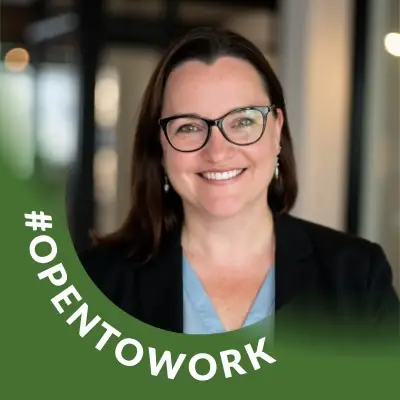
The LinkedIn profile is polished and professional, framed against a backdrop of gleaming city lights. Rachel Macon, as she now calls herself, lists her new position with quiet pride: “Senior Paralegal” at Jaffe Family Law, a prominent Atlanta firm. Her “About” section offers a simple, almost noble mission statement: “Helping people in their most difficult time of need.”
But a closer examination of the public record reveals a far more troubling narrative—one that traces a path from a troubled solo law practice in Mobile, Alabama, through a series of disciplinary actions by the Alabama State Bar, to a new, unregulated role in Georgia’s legal industry. The woman now presenting herself as a seasoned paralegal is, according to state bar records, an attorney who was repeatedly sanctioned, suspended, and ultimately forced out of the practice of law for misconduct that included failing to remit employee taxes and violating the terms of her probation.
Rachel Macon Disciplinary Timeline at a Glance
| Date | Event |
|---|---|
| 2011–2016 | Operates The Macon Firm, a solo practice in Mobile, Alabama |
| September 2015 | Public reprimand from the Alabama State Bar for violating Rules 7.2(b) and 7.3 (advertising and solicitation) |
| October 2016 | Disciplinary Commission revokes probation; 91-day suspension effective Nov. 1, 2016, over unremitted employment taxes |
| 2017 | Additional suspension; Avvo status now reads “Suspended – Disciplinary” |
| February 2017 | Joins Sage as an account manager, “winding down” her law practice |
| 2018–2020 | Sales roles at Veeam Software and Checkmark |
| February 2026 | Listed as “Senior Paralegal” at Jaffe Family Law in Atlanta |
The Alabama Record: A Pattern of Discipline
The woman behind the profile has practiced under several names—Jacqueline Rachel Powell, J. Rachel Powell, Jacqueline Rachel Macon, and simply Rachel Macon. Her disciplinary history with the Alabama State Bar is not a single lapse in judgment, but a sequence of events that spans years.
The first public mark on her record came in September 2015, when she received a public reprimand for violating Rules 7.2(b) and 7.3 of the Alabama Rules of Professional Conduct, according to a state bar bulletin. Those rules govern lawyer advertising and direct solicitation; the reprimand stated that Macon had sent a potential client a solicitation letter. For the state bar, this was a warning.
Less than a year later, the warning escalated into a suspension. In October 2016, the Disciplinary Commission of the Alabama State Bar revoked her probation and imposed a 91-day suspension from the practice of law, effective November 1, 2016. The reason was not a technical violation, but a new act of professional misconduct: Macon had failed to remit employment taxes withheld from her employees’ pay to the appropriate federal and state agencies.
The suspension, however, was only the beginning of her troubles. By 2017, the state licensing authority had issued yet another suspension, according to her Avvo profile, which now lists her status as “Suspended – Disciplinary”. The profile notes a suspension issued in Alabama in 2017, following the 2016 suspension and the 2015 reprimand, indicating a cascading series of disciplinary events rather than an isolated incident.
For a period, it appeared that the legal career of Jacqueline Rachel Macon had come to an end in Alabama. Her solo practice, The Macon Firm, which she operated from 2011 to 2016, was shuttered. Public records and her own professional history show a pivot away from the courtroom. She took a position as an Account Manager at Sage, a software company, in February 2017—a move that her own professional biography would later describe as “winding down her very active law practice”.
The Rebrand: From Attorney to “Senior Paralegal”
The transition from a suspended attorney in Mobile to a “Senior Paralegal” in Atlanta’s competitive family law market was not immediate. Between 2018 and 2020, she worked as an Inside Sales Representative for Veeam Software, and then as an Account Manager for Checkmark, a SaaS company, where she claims to have been a top renewal sales representative. It was a five-year departure from the legal world.
But the pull of the law—and the authority and access it affords—appears to have been strong. By February 2026, according to her LinkedIn profile, she had returned to the legal field, not as an attorney, but as a paralegal at Jaffe Family Law in Atlanta. The role is a careful recalibration. A paralegal cannot give legal advice, appear in court, or sign pleadings. Yet, in a busy family law practice, a senior paralegal is often the client’s primary point of contact, managing case files, drafting documents, and handling sensitive information.
Her new employer, Jaffe Family Law, markets itself as a high-volume, flat-fee divorce and custody firm, handling “more family law cases than any other firm in Georgia”. The firm’s website emphasizes its team of “experienced attorneys, paralegals, and client-care specialists” dedicated to guiding clients through domestic cases. In hiring Macon, the firm has brought on board someone with extensive—if controversial—legal experience, and a demonstrated knowledge of family law and criminal defense procedure.
The Question of Fitness and Transparency
The central issue is not whether Rachel Macon is capable of performing paralegal work. Her resume, after all, includes five years as a practicing attorney, managing “several hundred clients” and up to five direct reports. The issue is one of fitness, transparency, and the safeguards that are supposed to protect the public from those who have abused their positions of trust.
The disciplinary actions against her were not minor. The failure to remit employment taxes is a serious breach of fiduciary duty, both to employees and to the government. The violation of probation, followed by another suspension, suggests a pattern of non-compliance with the very authorities regulating her conduct. And the 2015 reprimand for improper solicitation points to an early disregard for the ethical boundaries of the profession.
For the Alabama State Bar, the message was clear: Jacqueline Rachel Macon was not fit to practice law. Yet, in Georgia, the bar for becoming a paralegal is significantly lower. There is no mandatory state licensing or disciplinary registry for paralegals in Georgia. A law firm is free to hire whomever it chooses, provided the individual does not engage in the unauthorized practice of law. The responsibility for vetting a paralegal’s background—and for ensuring they do not cross the line into giving legal advice—rests almost entirely with the employing attorney.
This raises uncomfortable questions for Jaffe Family Law. Did the firm conduct a thorough background check? Were they aware of the 2015 reprimand, the 2016 tax-related suspension, or the subsequent 2017 suspension? And if they were aware, what assurances do clients have that a former attorney, suspended for misconduct, will not, even inadvertently, overstep the bounds of a paralegal’s role?
The firm did not respond to requests for comment for this article. Rachel Macon, through her LinkedIn profile, also did not respond to a direct message seeking comment.
The Broader Implications: The Shadow Legal Workforce
The case of Rachel Macon is not an isolated one, but it highlights a structural vulnerability in the legal profession. The paralegal profession is a vital part of the legal ecosystem, but it lacks the uniform, state-level oversight that governs attorneys. While national paralegal associations offer voluntary certification, there is no universal mechanism to track disciplinary actions or to prevent an individual who has been sanctioned in one state from simply rebranding and finding work in another.
For clients, particularly those in vulnerable situations like a divorce or a custody dispute, the distinction between an attorney and a paralegal can be blurry. A charismatic and experienced paralegal can easily become the face of a case. If that paralegal has a history of professional discipline, the client may never know.
In her LinkedIn “About” section, Macon writes that she is “Helping people in their most difficult time of need.” It is a sentiment that, in isolation, sounds admirable. But when read alongside the public record of suspensions, probation violations, and tax failures, it takes on a different meaning. It is a reminder that in the legal profession, the desire to help must be matched by an unwavering commitment to ethical conduct—a commitment that, according to the Alabama State Bar, Jacqueline Rachel Macon repeatedly failed to uphold.
She has found a new stage in Atlanta, a new title, and a new firm. The question now is whether the legal community—and the clients it serves—will look closely enough at the past to ensure that the mistakes of Mobile are not repeated in Georgia. The lights of the Atlanta skyline that form the backdrop of her profile may be bright, but they cannot obscure the paper trail that follows her.