Bay Minette House Fire That Killed Teenager Still Under Investigation
The cause of a deadly Bay Minette house fire that killed a 15-year-old Baldwin County High School student remains under investigation.
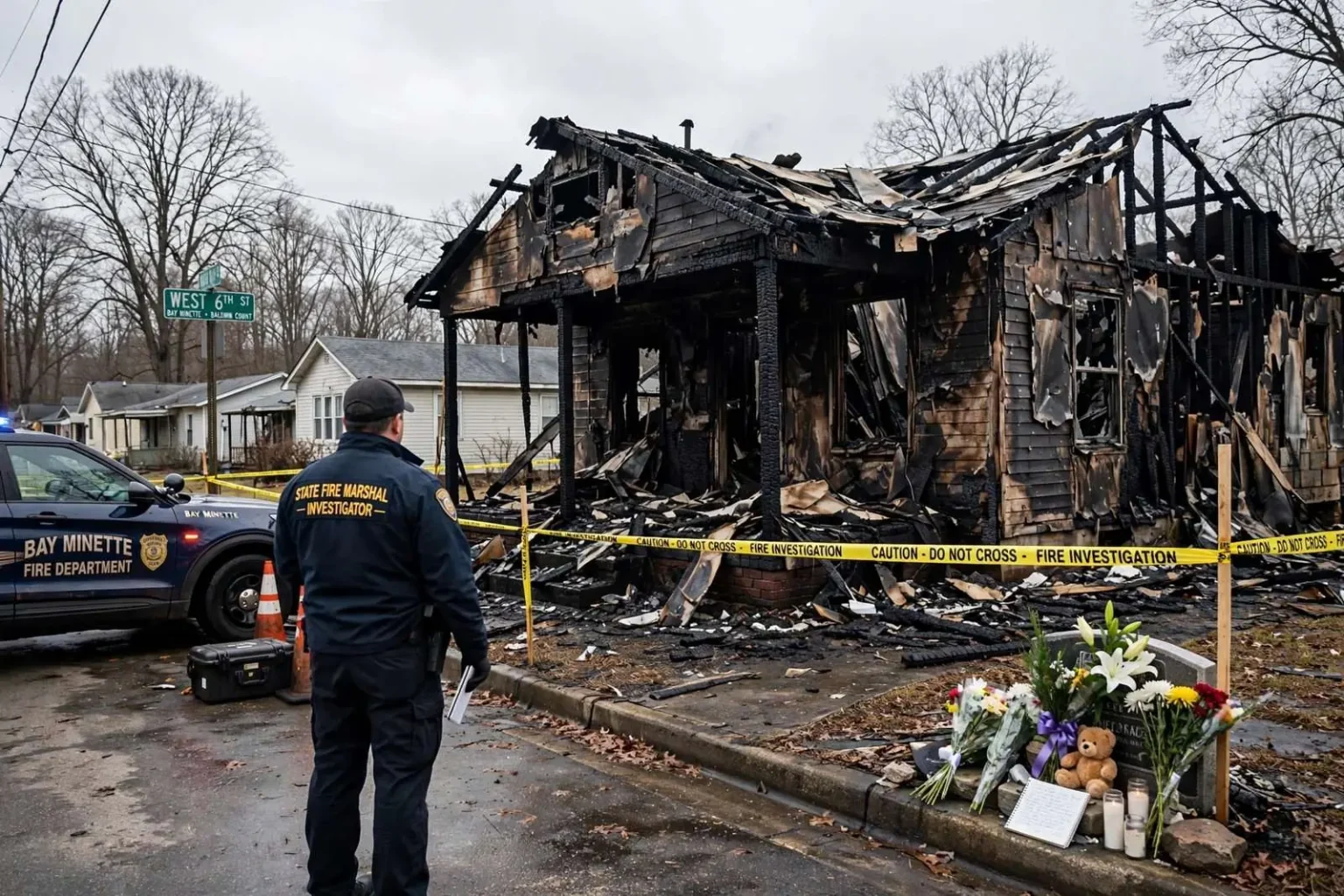
More than a week after a house fire on West 6th Street in Bay Minette claimed the life of a 15-year-old girl, investigators are still working to determine what caused the blaze, and authorities have not publicly identified the victim. The fire broke out on a Friday morning in the residential neighborhood, and firefighters who knocked down the flames discovered the teenager’s body inside the home once the fire was out.
The loss has weighed heavily on the community, where the girl was known to classmates and staff at Baldwin County High School. Principal Craig Smith described her as a student who will be deeply missed, and said the school has seen an outpouring of support from residents who wanted to help in the aftermath. He noted that the timing, coming just ahead of the holidays, made the sudden loss especially difficult for students and staff.
Bay Minette, the county seat of Baldwin County, is a close-knit city where news of a tragedy travels quickly, and the fire’s aftermath has drawn expressions of support from across the community — from the school where the girl was a student to the neighborhoods surrounding the West 6th Street scene where the fire occurred.
Identity withheld pending testing
Police said they are awaiting forensic testing before releasing the victim’s name. Such testing is standard practice when visual identification is not possible, and the process can take days or weeks depending on the laboratory workload. Authorities have not indicated that the delay reflects any complication in the investigation, only the procedural care that follows a fatal fire.
Officials confirmed the teenage girl and her mother lived in the home together. The mother’s status in the aftermath — whether she was home at the time of the fire, whether she was injured and where she has been staying — has not been the subject of public updates from authorities, who have kept the focus of their releases on the investigation itself.
In the meantime, word of the loss spread quickly through the community. Grief counselors and support resources typically mobilize in the days after a student’s death, and the school’s principal said the response from residents who wanted to help has been substantial. The outpouring, he noted, has been a source of comfort for students and staff grappling with the sudden loss of a classmate just ahead of the holiday season, when families gather and the absence of a missing friend is felt most keenly.
Evidence work continues
Fire investigators returned to the scene days later to examine evidence as they work toward a cause determination. Officials have not announced a cause, and authorities have not said whether the investigation points toward anything suspicious. The inquiry remains open.
Fire origin-and-cause investigation is a meticulous discipline. Investigators examine burn patterns, the condition of electrical systems and appliances, heating equipment, and the sequence of fire spread through the structure to determine where and how the fire began. When the remains of a victim are found, the State Fire Marshal’s office and local investigators coordinate with forensic examiners, and final determinations can take considerable time. Investigators returned to the West 6th Street house days after the fire — a sign that the scene was being treated with the thoroughness that fatal fires require, whether the eventual finding is accidental or otherwise.
The agencies involved in such investigations in Baldwin County typically include the local fire department, city police and the state fire marshal’s office, with the district attorney’s office consulted if evidence points to criminal conduct. The absence of any announcement about a suspicious element in the fire leaves the cause an open question that only the evidence work can resolve, and authorities have given no timeline for a finding.
Bay Minette and the school community
Bay Minette sits in the northern part of Baldwin County, serving as the seat of county government and home to the Baldwin County High School campus whose students and staff are grieving the loss. The city’s residential neighborhoods, including the West 6th Street area where the fire occurred, are the kind of close-knit blocks where families know one another — a fabric that shows in moments of tragedy, when meal trains, fundraising and simple presence with grieving families become the community’s shared work.
The school’s role in the aftermath is significant. When a student dies, the campus becomes a focal point for grief, and principals face the task of both honoring the student and stabilizing a student body in shock. Smith’s account of an outpouring of support from residents reflects the pattern familiar to small-city school communities across Alabama: flowers at the entrance, donations for the family, counselors in the hallways and students leaning on one another. The holiday timing, he noted, deepened the difficulty — a season that ordinarily gathers families was instead marking an empty chair.
Baldwin County High School draws students from Bay Minette and surrounding northern Baldwin communities, and its halls carry the relationships of families who have attended for generations. A loss of this kind touches not only the current student body but the wider network of alumni and neighbors who followed the news as it spread in the days after the fire.
House fires and the questions they leave
Fatal house fires remain a persistent danger across Alabama, which has historically ranked among the states with the highest per-capita fire death rates in the nation. Older housing stock, rural response distances and the prevalence of heating equipment in older homes all contribute to the risk. Fire safety officials use tragedies like this one to renew the standing public health message: working smoke alarms cut the risk of dying in a home fire roughly in half, and families should test them monthly and practice escape plans with children.
Winter is the peak season for home fires nationally, driven by heating equipment, holiday cooking and decorations — a seasonality that makes the timing of the Bay Minette fire, just ahead of the holidays, a familiar pattern for fire investigators. Kitchen fires, space heaters placed too close to bedding or curtains, electrical faults in older wiring and chimney problems are among the leading causes investigators encounter when they comb through a fire scene.
The West 6th Street investigation will conclude with a cause determination when the evidence supports one. Until then, the family’s loss remains the community’s loss, felt in the school where the 15-year-old was known and remembered. Authorities have committed to releasing the victim’s name once forensic testing is complete, and any further findings — a cause determination, or a statement on whether anything suspicious was involved — will come from the agencies conducting the inquiry, which remains open and active more than a week after the fire that took a young life from a grieving Baldwin County community.
The investigation’s standards and timeline
When a fire claims a life, the investigation takes on a dual character: a fire cause investigation and a death investigation running in parallel. Fire investigators work the scene for origin and cause, while law enforcement and forensic examiners address the circumstances of the death. The results have to be reconciled — the location of the victim in the home, the fire’s point of origin, the speed of spread and the condition of the structure all bear on the final conclusions. This is why fatal-fire scenes are revisited, as investigators did on West 6th Street days after the blaze, and why public findings often lag weeks behind the event itself.
The decision to withhold the victim’s name pending forensic testing follows standard protocol designed to protect the family from confusion and error during identification. Once testing is complete, authorities typically release the name and may provide preliminary findings on the fire’s cause. Residents of the neighborhood and classmates awaiting confirmation have so far been left with the community’s informal knowledge — the girl’s identity was known at her school — while officials observe the formal process.
Whether the investigation concludes with an accidental cause or a criminal referral, the outcome will be announced by the agencies leading the inquiry. If evidence of arson or criminal conduct were found, the case would move to prosecution; if accidental, the finding would close the public record on the fire’s cause while the community continues to grieve. Nothing announced so far indicates which direction the evidence points, and authorities have been careful not to speculate.
Support for a grieving community
Communities in Baldwin County have established patterns for responding to the loss of a young person. Schools coordinate with district counseling staff, local churches open their doors for vigils, and neighbors organize support for the affected family. In Bay Minette, the response described by the high school’s principal — an outpouring of residents wanting to help — reflects those networks at work, offering the family privacy and practical support while the school community absorbs the shock.
Grief specialists note that the death of a classmate is among the hardest events a school community processes, particularly when it is sudden and violent-feeling, as a fire is. Adolescents often experience a classmate’s death as a confrontation with mortality that is new to them, and structured support — counselors available, routines maintained, opportunities to share memories — helps stabilize the weeks that follow. The holiday season’s arrival amplified the challenge, as Smith noted, because it is precisely the time when families and school communities pause together and feel absences most.
For the neighborhood on West 6th Street, the burned home stands as a visible reminder of the loss, and the investigation’s continued presence — investigators returning to the scene days after the fire — kept the questions alive even as the community moved toward mourning and remembrance. The open inquiry, the pending identification and the undetermined cause leave the fire’s full story untold. What is known is what the community holds: a 15-year-old girl, remembered at Baldwin County High School as a student who will be deeply missed, died in a Friday morning fire at her home, and the people around her — family, classmates, teachers and neighbors — are left to grieve while investigators finish their work.